How Many Times a Day Should a Horse Poop? What’s Normal
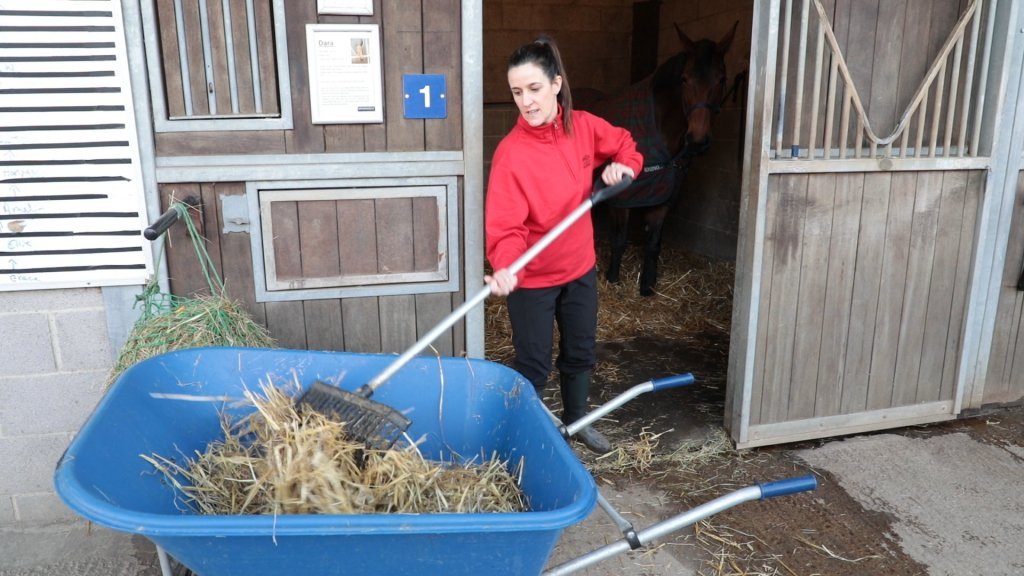
It is the least glamorous job on the yard, and one of the most informative. If you have ever stood over a wheelbarrow wondering how many times a day should a horse poop — and whether the four piles in this stable, compared with yesterday’s nine, mean anything at all — you are asking exactly the right question.
Manure is the one health report a horse files every single day, for free. A healthy Quarter Horse, Thoroughbred, cob, or Arabian on a forage diet produces piles at a remarkably steady rate, and a change in that rate is often the first visible sign of dehydration, a diet problem, or the impaction colic every owner dreads. This guide explains how many times a day should a horse poop for mares, geldings, stallions, and foals, and what a change in the count means.
Direct answer: A healthy adult horse typically passes manure 6–12 times a day — roughly 6–10 piles for most mares and geldings, more for stallions and foals — producing about 15–25 kg (35–55 lb) of faeces a day for a 500 kg (1,100 lb) horse. The exact number matters less than your own horse’s normal: a sudden drop to about half his usual piles, very dry hard balls, or no manure at all for 12 hours or more, especially with reduced appetite or restlessness, is a same-day call to your vet.
Why Horses Produce Manure So Steadily
The frequency is a direct result of how the equine gut is built. Horses are hindgut fermenters. The small stomach — only about 8–15 litres in a 500 kg horse — empties quickly, and the real work happens behind it, in the cecum and large colon, where microbes ferment fibre into volatile fatty acids, the horse’s main energy source. That system is designed for a near-constant trickle of forage in at one end, which is why horses evolved to graze 14–18 hours a day, and a near-constant stream of manure out at the other.
That steady output is the reason how many times a day should a horse poop is such a useful daily health check.
The second fact owners rarely hear is the delay. Food takes roughly 36–72 hours to travel the full length of the digestive tract, depending on the feed — faster for lush pasture and concentrates, slower for coarse, stemmy hay. So the piles you count this morning largely reflect what your horse ate two or three days ago. That lag explains a common puzzle: a horse moved onto rich spring grass on Monday may not show looser, greener droppings until Wednesday, and a horse whose hay changed at the weekend may only show the effect midweek.
It also means a single odd day, right after a known feed or routine change, is information to note rather than a reason to panic — while a change with no explanation deserves more respect.
That lag is also why how many times a day should a horse poop is best judged over several days, not a single morning.
Water is the third driver. The large colon absorbs water from digesta as it passes, and it absorbs more whenever the horse is short of fluid. Fewer, drier piles are therefore an early dehydration signal as well as a gut signal — one reason the two checks belong together, as we cover in the guide to a senior horse not drinking enough water in winter, where dry, hard droppings are the warning that arrives before colic does.
Normal Frequency: How Many Times a Day Should a Horse Poop, by Type of Horse
Averages hide the differences that matter at mucking-out time. Stallions deliberately pass manure more often — piling droppings on top of other horses’ piles is scent-marking behaviour, not digestive urgency. Foals, on a milk and early-forage diet with a fast transit time, go far more often than adults. Seniors may go less often and less efficiently if chewing is poor.
Use this table as a starting range, then replace it with your own horse’s measured normal. Stallions and foals sit at the top of the range, which is why how many times a day should a horse poop has no single right number.
| Horse type (approx. 500 kg / 1,100 lb adult unless stated) | Typical piles per day | Typical faeces per day |
|---|---|---|
| Mare or gelding, forage diet, light work | 6–10 | 15–22 kg (35–50 lb) |
| Stallion | 8–14 | 18–25 kg (40–55 lb) |
| Foal or youngster (under 12 months) | 10–20+, smaller piles | Varies widely with age and milk intake |
| Horse on lush pasture | 8–12, looser and greener | 18–25 kg (40–55 lb) |
| Horse on a higher-concentrate, lower-forage diet | 5–8, smaller piles | 12–18 kg (26–40 lb) |
| Senior with worn teeth, on soaked or chopped forage | 5–9, check for long fibre in piles | 14–20 kg (31–44 lb) |
Body size scales the weight, if not always the count. A 250 kg (550 lb) Welsh or Connemara pony may pass a similar number of piles to a big Warmblood, but each pile is smaller and the daily total may be half as much. A heavy draft such as a Percheron or Shire, at 800 kg (1,760 lb) or more, can produce 30 kg (66 lb) or more of faeces a day.
If you are setting a forage ration to match — forage at 1.5–2% of body weight a day is the usual baseline — the Horse Hay Calculator and the Horse Feeding Calculator will keep the input side of the equation as measured as the output side you are now counting. A steady count is the simplest proof the ration is working, and how many times a day should a horse poop stays in its normal range when the forage and water are right.
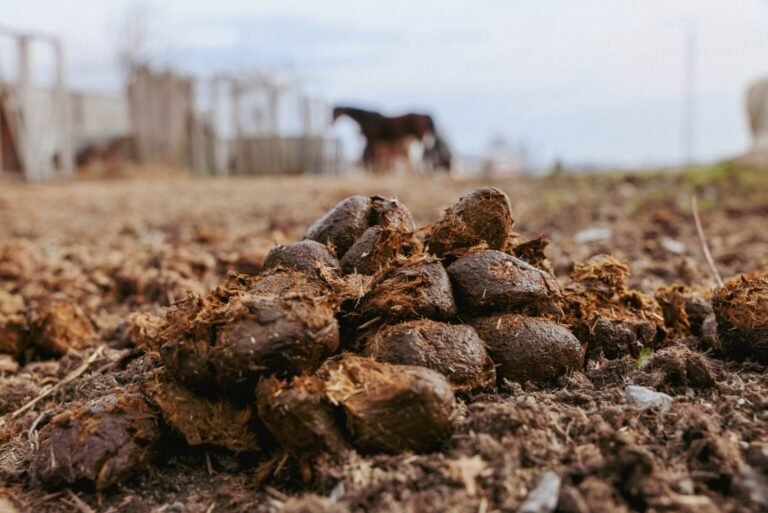
What should a normal pile actually look like? Formed balls, roughly apple-sized, that hold together and then break apart when they land, with a slight sheen, a green-brown colour on a forage diet, and visible fine fibre rather than long undigested stems.
Balls that are hard, dry, dark, and pellet-like suggest the colon has taken too much water out. Piles that fall as loose cow-like pats, or with water running out separately, suggest the hindgut is moving too fast, the diet has changed abruptly, or something — stress, parasites, dental pain, or illness — needs investigating if it lasts beyond a day or two. The count and the look go together: how many times a day should a horse poop matters less if every pile is loose or full of whole grain.
Whole grains or long hay stems in the droppings point back to chewing: check the teeth before you change the feed.
Finding Your Horse’s Normal: The Three-Day Baseline
Published ranges are a starting point. Your horse’s normal is the number that will actually warn you early, and it takes only three ordinary days to establish. Once you know it, how many times a day should a horse poop becomes a number you can trust, because it is your horse’s number, not a textbook average.
- Count for three normal days. In a stable, count piles at each muck-out and skip-out. At grass, you cannot count reliably — so for field-kept horses, judge by the stable, trailer, or yard piles when he is in, and by pile freshness and quantity in his usual areas, accepting that the in-hand checks (appetite, droppings when he is handled, water intake) carry more weight.
- Write it down with the context. Date, piles, consistency (formed / dry / loose), water drunk if you know it, and any feed or routine change. Three lines in a phone note is enough.
- Repeat the count whenever something changes — new hay batch, new yard, season change, medication, or a worming treatment — and after any illness, so the baseline stays honest.
- Judge changes against the baseline, not the internet. A cob who always passes 6 piles and drops to 5 on a hot day is probably fine and needs water and watching. The same cob at 2 piles, with dry balls and a dull manner, is a vet call. A Thoroughbred who always passes 11 piles and drops to 5 has changed just as much, even though 5 sits inside the “normal” range in the table above.
While you are counting, keep the forage clock in mind too. Long gaps without forage slow gut movement and dry the contents, which is one more reason the 4-hour forage guideline in how long a horse can go without hay matters to what comes out the next day. The University of Minnesota Extension’s guidance on using hay in horse diets is a sound, non-commercial reference for the forage side of that relationship.
When the Count Is a Veterinary Problem
Most variation is harmless. The following are not — they are the patterns vets want to hear about the same day, because reduced manure output is one of the earliest and most reliable signs of impaction and other forms of colic. The Merck Veterinary Manual’s overview of colic in horses explains the conditions behind these signs in more detail. Most owners who ask how many times a day should a horse poop are really asking when a change is worth a vet call, and the patterns below are the answer.
Call your vet the same day if: your horse has passed no manure for 12 hours or more; piles drop to roughly half his normal count over a day and stay there; droppings become hard, dry, dark, and scant; or a reduced count arrives with any of the following — pawing, rolling, flank watching, getting up and down, reduced appetite, dullness, or not drinking. Do not wait for all the signs to appear together.
An impaction caught while the horse is still passing a little dry manure is often managed medically with fluids and monitoring; the same impaction found a day later can be a far harder problem.
Book a prompt (non-emergency) vet or dental visit if: loose droppings persist beyond 48 hours without an obvious feed change; you repeatedly find whole grain or long fibre in the piles; a senior is losing weight despite eating his ration — check his body condition honestly with the Horse Body Condition Score tool — or the count has drifted gradually over weeks. Gradual change usually means teeth, parasites, or a ration that no longer matches the horse, and all three are fixable when they are found early.
Note that a faecal egg count, not the pile count, is what guides worming decisions; frequency tells you about gut function, not worm burden. In short, how many times a day should a horse poop is a baseline question, not a worming question.
One special case: the newborn foal. A foal must pass meconium — the dark, firm first manure — within roughly the first 6–12 hours of life. A foal that is straining, tail-swishing, rolling, or has passed nothing in that window needs a vet urgently, as retained meconium is a common and treatable emergency in the first day of life.
Frequently Asked Questions
How many piles should I find in the stable in the morning?
For a horse stabled for about 10–12 hours overnight, expect roughly a third to a half of his daily total — typically 3–5 piles for a mare or gelding who passes 6–10 in 24 hours. Consistently finding only 1–2 piles, or none, in a horse that ate his hay is worth investigating the same day, starting with water intake and how he seems in himself.
Is it normal for a horse to poop while being ridden?
Yes. Horses can and do pass manure at walk, trot, and even canter, and many will pass a pile shortly after exercise begins because movement stimulates gut motility. A horse that strains repeatedly, stops to try and cannot pass anything, or becomes uncomfortable under saddle is different — finish the ride quietly and treat it as a health check, not a behaviour problem.
My horse poops much more when travelling or at a show. Is that normal?
Usually, yes. Stress and excitement speed up the hindgut in many horses, producing more frequent, looser droppings at shows, on the trailer, or in a new yard. It should settle within a day of returning to a normal routine. If loose, frequent droppings continue at home beyond 48 hours, or come with poor appetite or weight loss, have your vet check for other causes.
How long does food take to pass through a horse?
Roughly 36–72 hours from mouth to manure, depending on the feed. Lush pasture and concentrates move faster; coarse, mature hay moves slowest. That is why droppings today mostly reflect feed from two or three days ago, and why diet changes should be made gradually over 7–14 days — the hindgut microbes need time to adapt, and abrupt changes are a recognised colic and loose-droppings risk. That 36–72 hour journey is also why how many times a day should a horse poop changes slowly after a feed change, over days rather than hours.
Can a horse poop too much?
A high count on its own is rarely a problem in a bright horse eating well — stallions, foals, and horses on lush pasture all sit at the top of the range naturally. What matters is consistency and company: frequent loose droppings, especially with weight loss, a dull coat, or a poor body condition score, can point to parasites, dental problems, hindgut disturbance, or other disease, and deserve a veterinary work-up rather than a feed change alone.