Why Does My Horse Grind His Teeth? Causes & Fixes
You are grooming your horse in the stable when you hear it: a low, grating, crunching sound from its mouth, as if it is chewing on gravel. The jaw moves side to side, the teeth grind together, and the sound sets your own teeth on edge. It is not chewing. Your horse is grinding its teeth, and it is doing it for a reason.
So why does my horse grind his teeth? In most cases it is pain. Sore teeth, stomach ulcers, colic, or a sore back can all make a horse grind its teeth. It can also be a sign of stress or conflict under saddle, when the horse is being asked to do something it cannot do comfortably. This guide explains how to tell which one you are hearing, what to check first, and when the grinding means you should call the vet today.
Direct answer: A horse usually grinds its teeth because something hurts — most often sharp teeth or dental pain, stomach ulcers, colic, or pain somewhere else in the body. It can also be a conflict behaviour under saddle, when the bit or the rider’s hands make the horse feel trapped. Occasional brief grinding is not always serious, but grinding that is frequent, loud, or paired with weight loss, drooling, dropping food, or not eating needs a vet and an equine dentist. Check the mouth and the feed first, then the saddle and the riding.
Why Does My Horse Grind His Teeth? The Main Causes
The table below is the fastest way to sort the causes. Find the row that matches your horse, then read the section that follows for the full detail. The timing of the grinding — when it happens — is the biggest clue of all.
| When the grinding happens | Most likely cause | What to do first |
|---|---|---|
| While eating hay, drops food, drools, bad breath | Dental pain, sharp hooks or broken tooth | Book an equine dentist; check the mouth |
| Before or after feed, girthy, poor condition, dull coat | Gastric ulcers | Vet examination; feed more forage, less grain |
| Sudden onset, with pawing, rolling, looking at belly | Colic | Call the vet now; this is an emergency |
| Only under saddle, when asked for contact or a movement | Conflict behaviour, bit or hand problem | Check bit fit, soften the contact, get a lesson |
| At rest in the stable, with head pressing or circling | Neurological problem | Call the vet; do not wait |
| Foal grinding teeth, dull, not nursing well | Ulcers in the foal | Call the vet; foals go downhill fast |
| Grinding that goes on after the cause is fixed | Learned habit | Improve management; the habit may fade slowly |
Keep this table in mind as you read on. The rest of the article explains each row, so you can listen to your horse and know which one you are hearing.
What Teeth Grinding Actually Is
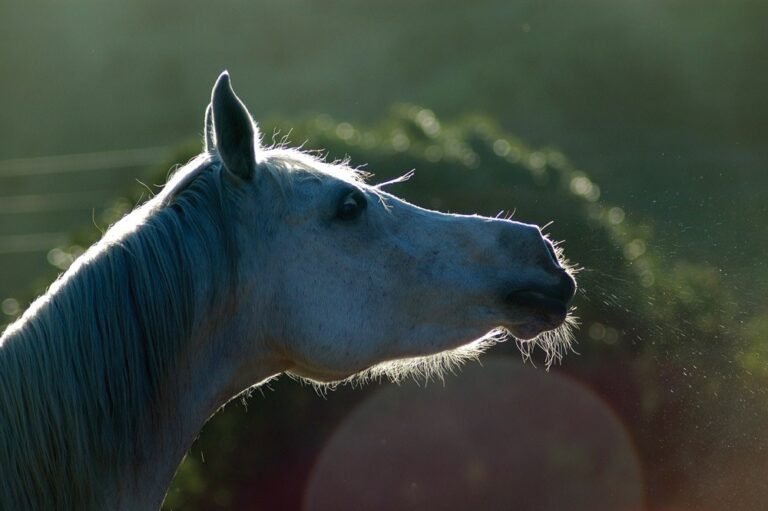
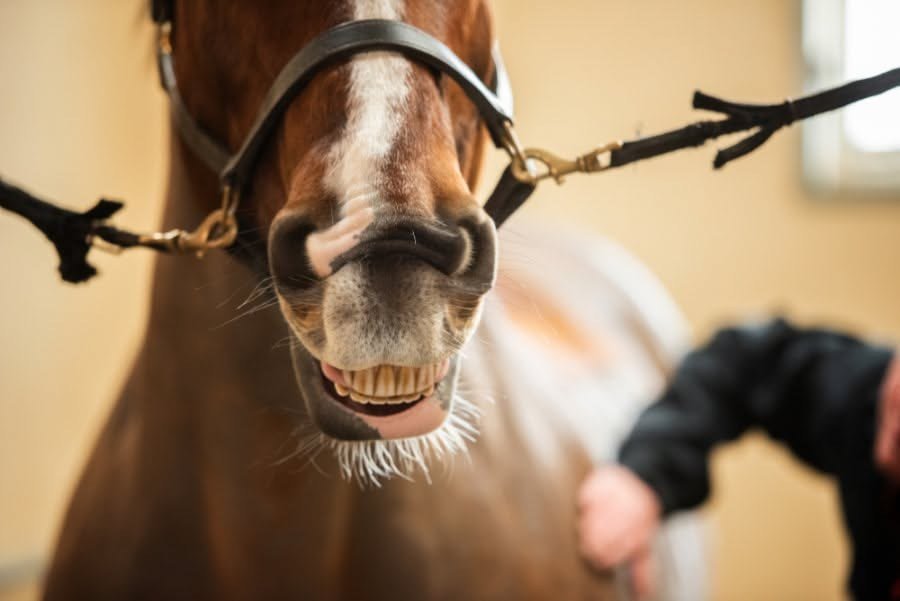
Teeth grinding in horses has a medical name: bruxism. It is the repeated grinding, clenching, or gnashing of the teeth, and you can usually hear it as a grating or rumbling noise, or see it as a strange side-to-side movement of the jaw. It is different from normal chewing, which is a steady up-and-down motion with food in the mouth. Grinding often happens with an empty mouth, and it sounds harsher and more uneven than chewing.
One thing to know from the start: grinding is uncommon in a healthy, comfortable horse. Most horses do not grind their teeth at all. So if your horse has started grinding, do not dismiss it as a quirk. It is a signal, and it deserves a proper check.
Dental Pain: The First Place to Look
Dental pain is the most common cause of teeth grinding in horses, and it is the first thing to check. Horses’ teeth wear down all their lives, and they do not always wear evenly. Sharp points, called hooks, form on the edges of the cheek teeth, and they can cut into the cheek and tongue every time the horse chews. A broken tooth, a cracked tooth, or a tooth that is infected can be just as painful.
The signs of dental pain are easy to spot once you know them. The horse may drop half-chewed food from its mouth, a habit called quidding. It may drool, have bad breath, or chew slowly and carefully on one side. It may eat its grain but leave its hay, because hay takes far more chewing than grain. It may also be head-shy, tossing its head when you touch its face or put the bridle on.
The fix is an equine dentist or a vet who does dentistry. A horse’s teeth should be checked at least once a year, and more often for young horses and old horses. The dentist will use a speculum to hold the mouth open, feel the teeth, and file down the sharp points, a process called floating. If you have never seen your horse’s teeth properly checked, book a visit before you look anywhere else for the cause of the grinding.
Stomach Ulcers: The Hidden Cause
Stomach ulcers are the second big cause of teeth grinding, and they are far more common than most owners think. Studies of racehorses and competition horses have found ulcers in more than half of them, and they are common in leisure horses too. An ulcer is a raw sore in the lining of the stomach, and stomach acid stings it every time the horse eats, or even between meals.
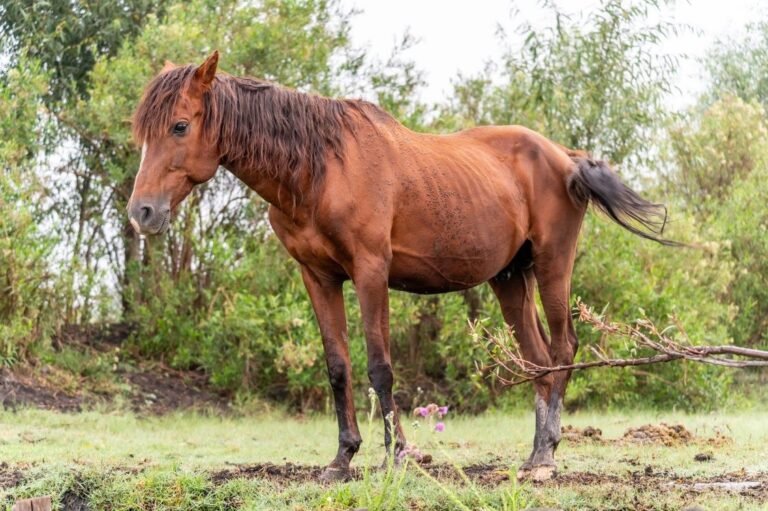
A horse with ulcers often grinds its teeth before or after eating, when acid levels are highest. It may also be girthy, pinning its ears or biting when you tighten the girth. It may eat slowly, leave its grain, lose condition, or have a dull coat. Some horses with ulcers become dull and grumpy, while others stay bright but picky about their feed. If your horse has gone off its feed, the guide from Kentucky Equine Research on dealing with a picky eater explains how pain, ulcers, and feed problems are linked.
Ulcers are caused by the way many horses live. Long gaps without forage let acid build up in an empty stomach. Big grain meals make the gut more acidic. Stress, travel, competition, and being stabled for long hours all raise the risk. That is why ulcers are so common in horses that work hard and live in stables, and less common in horses that live out and graze all day.
The best first step is more forage and less grain. A horse should have hay or grass in front of it for most of the day and night, because chewing makes saliva, and saliva buffers stomach acid. Split grain into small meals, never more than about 2 kg at a time, and feed a little hay or chaff before riding so the stomach is not empty. If the grinding and the girthiness continue, your vet can scope the stomach to confirm ulcers and prescribe treatment.
Colic and Other Belly Pain
Sudden teeth grinding with pawing, rolling, sweating, or looking at the belly is a colic warning, and it needs a vet now. Colic means belly pain, and a horse in pain will grind its teeth as part of its distress. The grinding is not the problem here: the belly pain is. Do not try to treat the grinding. Treat the colic.
Grinding can also be an early sign of colic before the more obvious signs appear. A horse that starts grinding in the stable, then goes off its feed, then starts pawing, is moving through the early stages of a colic episode. That is why a new grinding habit should never be ignored, even if the horse looks fine in every other way. Check the droppings, check whether the horse is drinking, and take the temperature.
Other belly problems can cause grinding too. A horse with a stomach impaction, a twisted gut, or a bad worm burden may grind its teeth as part of its discomfort. A heavy worm burden is worth checking, because it can cause dullness, weight loss, and a poor coat at the same time as the grinding. Regular faecal egg counts, rather than worming on a fixed schedule, tell you whether your horse actually needs worming.
If your horse is grinding and has also gone off its hay, time matters. A horse that stops eating forage is at risk of its gut slowing down, which can make colic worse. Our guide to how long a horse can go without hay explains the risks and what to do while you wait for the vet.
Conflict Behaviour Under Saddle
Not all teeth grinding is pain in the mouth or belly. Some of it is conflict under saddle, and this is the cause that riders most often miss. A horse that grinds only when ridden, and never in the stable or the field, is telling you something about the riding, not about its stomach.
The classic pattern is a horse that is being asked to go forward and slow down at the same time. The rider’s legs say go, while the hands hold the reins tight. The horse is trapped between two opposite signals, and it has no way out. Grinding its teeth is one way it shows that conflict. It is more common in dressage, eventing, and racehorses, where contact with the bit matters most, and it is less common in horses ridden on a loose rein.
The fix starts with the hands. The reins should be a way of giving signals, not a way of holding the horse up. If your horse grinds when you take up the contact, try riding on a longer rein for a few sessions and see if the grinding stops. Ask your instructor to watch you ride, and ask a saddle fitter to check the saddle, because a sore back can make a horse grind too. If the grinding stops when the riding changes, you have found your answer.
Pain Elsewhere in the Body
Teeth grinding can be a sign of pain anywhere in the body, not just in the mouth or belly. A horse with sore feet, a sore back, or arthritis may grind its teeth when the pain flares up. This is why a horse that grinds after work, or grinds when you press on its back, needs a full check, not just a dental check.
Laminitis is one cause to rule out. A horse with sore feet may grind its teeth when it stands, shifts its weight, or tries to walk. Look at the feet for heat, feel for a strong pulse in the fetlock, and watch how the horse stands. A horse with laminitis often rocks back onto its heels and is reluctant to turn. If you see that, call the vet and take the horse off grain at once.
The pattern to watch for is grinding that appears with a specific activity. Grinding after jumping, grinding when the horse is asked to bend one way, or grinding when it is led out of the stable in the morning all point to pain in a particular place. Note the pattern and tell your vet. It saves time, and it saves your horse from being treated for the wrong thing.

Foals That Grind Their Teeth
Foals grind their teeth too, and in a foal it is more urgent than in an adult. A foal that grinds its teeth often has stomach ulcers, and foals can go downhill very fast. The signs to watch for are grinding, lying down more than usual, not nursing well, and a dull, tucked-up look. A foal that is not nursing is a vet call, not a wait-and-see.
Foal ulcers are often linked to stress or illness. A foal that has been ill, has had a rough start, or has been separated from its mother early is more likely to develop them. The treatment is a vet’s job, and it usually involves medicine to reduce stomach acid and a change in feeding. Do not try to treat a foal yourself.
Older foals and weanlings can also grind their teeth when they are teething. Losing baby teeth and growing adult teeth is sore, and a weanling may grind for a few days while a cap is loose. This is normal if it passes quickly and the foal keeps eating. If it goes on for more than a few days, or the foal stops eating, get the mouth checked.
When Grinding Becomes a Habit
Sometimes the grinding goes on even after the cause is fixed. A horse that ground its teeth for months because of ulcers may keep grinding after the ulcers have healed, because the action itself has become soothing, like a person biting their nails. This is called a learned or compulsive habit, and it is common in horses that have spent a long time in a stable.
A habit grinder is usually easy to spot. The horse is healthy, eats well, holds its weight, and has no dental problems, but it still grinds at certain times, often before feeding or when it is bored in the stable. The grinding is a coping habit, not a sign of pain, but it still deserves attention, because it tells you the horse’s life could be better.
The best fix is management, not punishment. More turnout, more forage, and more company all help. A horse that spends most of its day in a field with friends and hay to eat has less reason to grind than a horse that spends twenty hours a day in a stable with nothing to do. Toys, a slow feeder, and a stable mirror can help in the short term, but they are no substitute for turnout and forage.
Do not use gadgets that stop the horse opening its mouth. They hide the sign without fixing the cause, and they can make the horse more stressed. If the grinding is a habit, accept that it may fade slowly, and focus on making the horse’s life as natural as you can.
What to Do When Your Horse Grinds Its Teeth
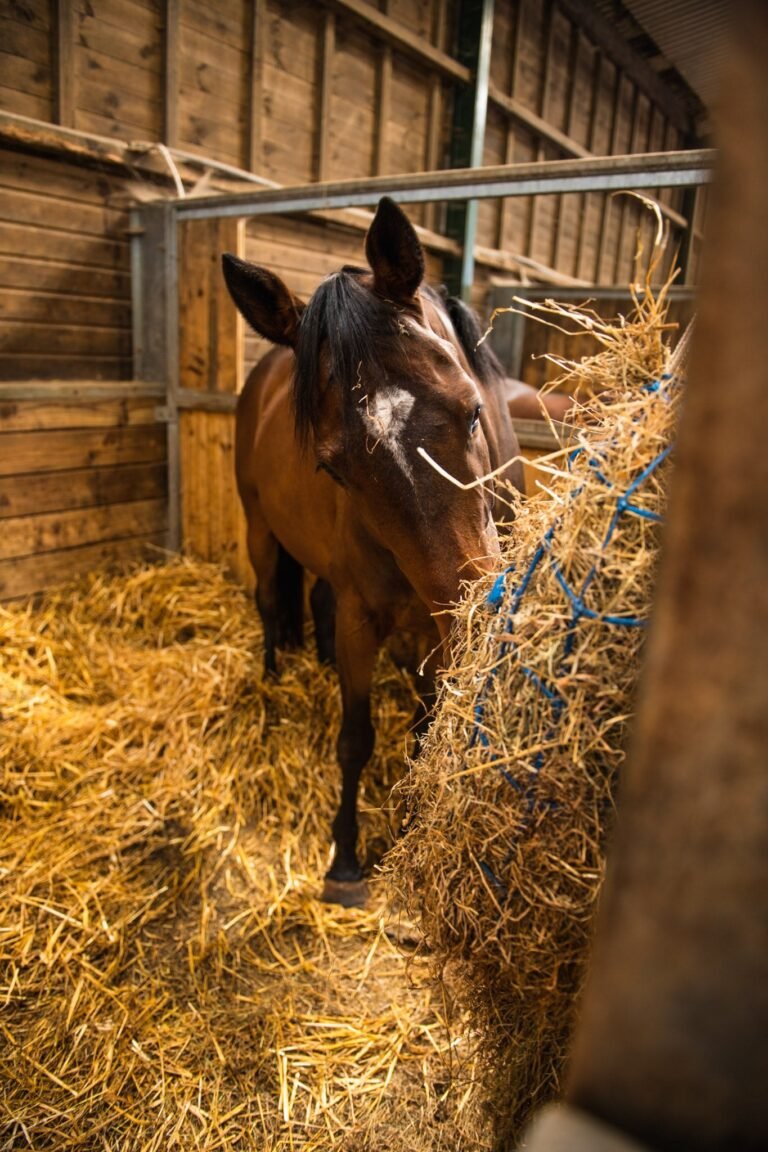
Start with a simple check that takes ten minutes. Watch the horse eat a net of hay. Does it chew evenly on both sides? Does it drop food? Does it drool? Then offer a handful of grain. Does it eat eagerly or pick at it? Look at the droppings and the water bucket. A horse that is eating, drinking, and passing droppings normally is in a better place than one that is not.
Next, book the two appointments that matter most: an equine dentist and your vet. The dentist checks the mouth, and the vet checks the rest of the horse, including the gut. Tell both of them when the grinding happens, how long it has been going on, and what else you have noticed. A short written note with dates is far more useful than a vague description.
While you wait for the appointments, make two easy changes. First, give the horse more forage and less grain, and split the grain into smaller meals. This helps whether the cause is ulcers or dental pain, because forage is easier on the stomach and keeps the gut moving. Second, check the horse’s weight and condition, because weight loss is one of the earliest signs that something is wrong. Our horse weight calculator and our horse body condition score page show how to track this at home.
If the grinding happens under saddle, add a third step: get your saddle and bridle checked, and ask your instructor to watch you ride. A small change in bit, saddle fit, or hand position can end the grinding in a single session. If the grinding stops when the riding changes, you have saved yourself a vet bill and your horse a lot of discomfort.
How to Tell Grinding From Other Mouth Habits
Teeth grinding is often confused with other mouth behaviours, and telling them apart matters, because the causes are different. The most common confusion is with cribbing, which is when a horse grabs a fence or a door with its teeth, arches its neck, and sucks in air. Cribbing makes a grunting sound, not a grinding sound, and the horse needs something to grab onto. Grinding needs nothing at all.
Another confusion is with bit chomping. Some horses chomp and play with the bit when they are ridden, and this is usually a sign of a busy mouth or a horse that is learning to accept the contact. Chomping is a chewing motion with the mouth open and closed, while grinding is a side-to-side motion with the teeth pressed together. A horse that chomps the bit but never grinds in the stable is a different case from a horse that grinds all day.
Yawning is sometimes confused with grinding too. A horse that yawns opens its mouth wide and stretches its jaw, then closes it. Grinding is a repeated, rhythmic motion. If you are not sure what you are hearing, take a short video on your phone and show it to your vet or dentist. A video is worth more than a description, and it can be sent to the vet before the visit.
Finally, remember that horses do grind their food, and that is normal. Chewing hay is a grinding action, and a horse eating hay will make a steady grinding sound. The difference is the context: grinding food happens with a full mouth and a steady rhythm, while bruxism happens with an empty mouth, often at rest, and often with other signs of pain. If the sound happens when the horse is not eating, it is bruxism, and it needs checking.
Frequently Asked Questions
Can teeth grinding damage a horse’s teeth?
Yes, over time it can. Repeated grinding wears the teeth unevenly, flattens the chewing surfaces, and can create sharp edges or hooks that then cause more pain. In severe cases it can crack a tooth or wear it down to the nerve. That is why a horse that grinds for months needs regular dental checks, even after the original cause is treated. The dentist can smooth the wear and stop the damage from building up.
How can I tell teeth grinding from cribbing?
Cribbing needs something to grab: the horse takes hold of a fence, a door, or a manger with its front teeth, arches its neck, and pulls back while sucking in air. It makes a grunt, not a grind. Teeth grinding needs nothing at all and can happen anywhere, even in the middle of a field. The jaw moves side to side, and the sound is a harsh grating. If your horse only does it while holding onto something, it is cribbing. If it does it with an empty mouth, it is grinding.
What does a horse’s teeth grinding sound like?
It sounds like a low, harsh crunching or grating, as if the horse is chewing on gravel or sand. It is slower and rougher than normal chewing, and it often comes in short bursts rather than a steady rhythm. Some owners describe it as a rumbling noise that they can feel through the horse’s head as well as hear. If you put your hand on the horse’s cheek while it grinds, you can feel the jaw moving side to side.
Do horses grind their teeth when they eat?
Horses do grind their food when they eat, and that is normal. Chewing hay is a grinding action, and a healthy horse makes a steady, rhythmic sound while it eats. The difference is the context and the sound. Normal eating happens with a full mouth and a steady pace, and the horse looks relaxed. Bruxism happens with an empty mouth, often at rest or under saddle, and the sound is harsher and more uneven. If your horse grinds when it is not eating, that is the grinding that needs checking.
Teeth grinding is your horse’s way of telling you something hurts, or something in its work does not feel right. Listen to when it happens, check the mouth first, then the belly, then the saddle and the riding. Most causes are fixable, and the sooner you find them, the sooner the grinding stops. If your horse has also started coughing while it eats, read our guide to why a horse coughs when eating, because mouth pain and coughing often have the same root. And if you want to understand how long food stays in the gut, our article on how long it takes a horse to digest food explains the timing that makes ulcers so common.