Why Does My Rabbit Dig in the Litter Box? Fixes
You clean the litter box, fill it with fresh litter, and step back. Ten minutes later your rabbit has kicked half of it across the floor, and the box looks like a building site. If that scene is familiar, you are probably asking: why does my rabbit dig in the litter box, and is there any way to stop the mess? The short version is that digging is normal rabbit behaviour — but the litter box is the wrong place for it, and the fix is to give the digging a better home.
Direct answer: Rabbits dig in the litter box because digging is a hard-wired instinct — wild rabbits dig burrows to live in — and the litter box is often the only diggable surface in the enclosure. Boredom, a cage that is too small, a litter they dislike, nesting urges in unspayed does, or a need for attention are the usual triggers. The fix is a dedicated digging box, a bigger enclosure, more free-roam time, and a litter that is hard to dig, such as wood pellets with a straw top layer.
That answer has two parts, and both matter. The digging itself is not a problem to cure. It is a need to redirect. Owners who try to train it away usually fail and frustrate the rabbit. Owners who give the rabbit somewhere proper to dig usually see the litter-box mess stop within a week or two.
Digging is in the blueprint, not a bad habit
Domestic rabbits descend from the European rabbit (Oryctolagus cuniculus), a species that lives in networks of underground tunnels called warrens. A wild rabbit’s burrow is its home, its nursery, its escape route and its temperature control, all in one. Digging is not something rabbits learn. It is something they are born ready to do, and domestication has not removed it.
That is why digging shows up everywhere, not just in the litter box. Rabbits dig at carpets, at sofa cushions, at their owner’s lap, at the corners of their enclosure. The litter box is simply the most diggable thing in a typical cage: it is full of loose material, it is at ground level, and the rabbit is already standing in it several times a day.
Understanding this changes the goal. You are not trying to stop a rabbit from digging. You are trying to move the digging somewhere it does no harm. That is a much easier job, and it is one that respects how a rabbit’s brain works.
Age and sex matter too. Young rabbits dig more than old ones — they have more energy and more curiosity. Unspayed females dig the most of all, especially in spring and when they are building a nest, real or imagined. A doe that has suddenly started digging hard, pulling hay into a pile, and plucking fur from her chest is probably experiencing a false pregnancy, and no digging box will fix that on its own. Spaying is the long-term answer for a doe that nests repeatedly.
Why does my rabbit dig in the litter box? The seven causes
Not all litter-box digging is the same. The pattern tells you the cause, and the cause tells you the fix. Use this decoder before you change anything:
| What the digging looks like | Likely cause | What to do |
|---|---|---|
| Frantic digging, mostly in the evening, then the rabbit runs laps | Boredom and excess energy | More free-roam time, more toys, a digging box |
| Slow, steady digging while sitting in the box, every day | Instinct — the box is the only diggable surface | Provide a digging box with soil or shredded paper |
| Digging only after you clean the box, or only with a new litter | Dislike of the litter type or smell | Switch litter (see the litter table below) |
| Digging plus hay-piling and fur-pulling (does) | Nesting / false pregnancy | Give nesting material, discuss spaying with your vet |
| Digging at the box, then at you, then back at the box | Attention-seeking | Respond with play at set times, not when digging |
| Sudden digging in a rabbit that never dug before | Stress or a change in the home | Find the change (new pet, building work, moved cage) and reduce it |
| Digging plus not eating, small droppings, or sitting hunched | Pain or illness — possibly gut stasis | Vet the same day; do not wait |
Most owners will recognise the first two rows. Boredom and instinct together explain the large majority of litter-box digging. But do not skip the last row. A rabbit that stops eating, produces small or no droppings, and sits hunched while digging or scratching at its box is not bored. It is in pain, and gut stasis can become fatal within 12–24 hours. That rabbit needs a vet, not a digging box.
The attention-seeking row surprises people. Rabbits are smarter than they look, and they learn fast. If digging in the litter box reliably brings you running — even running to scold — the rabbit has learned that digging summons its human. The fix is to stop rewarding the behaviour with attention and to schedule play at regular times instead, so the rabbit does not need to demand it.
The boredom test: is your rabbit’s life too small?
Before you buy anything, check the enclosure. A rabbit’s pen should be at least three to four times the rabbit’s length in its longest direction, and tall enough for the rabbit to stand on its hind legs. Most shop-bought “rabbit cages” fail this test badly. A rabbit kept in a small cage all day will dig at the only thing available to it, because there is nothing else to do.
Free-roam time matters just as much. One hour a day is not enough. A healthy rabbit needs several hours of exercise outside its enclosure every day, in a rabbit-proofed room or run. Rabbits that get three to four hours of free time dig far less in their litter box than rabbits that get one hour, because they have already spent their energy exploring, running and binkying — the joyful twisting jump that is a rabbit’s way of saying it feels good.
Enrichment is the third leg. A bare enclosure with a food bowl and a water bottle is a boring place to live. Cardboard boxes to hide in and chew, tunnels to run through, willow balls, a pile of hay to burrow in, and a rotating set of toys all give a rabbit something to do with its paws and teeth. Change the toys every few days. A toy that never changes becomes part of the furniture, and the litter box becomes interesting again.
Company matters too. Rabbits are social animals, and a single rabbit kept alone is more likely to develop repetitive behaviours — digging, bar-chewing, circling — than a rabbit with a bonded companion. If your rabbit is alone and you can manage it, a bonded partner is the single biggest quality-of-life change you can make. Ask a rabbit rescue about bonding; they will usually help match your rabbit with a compatible partner.
Build a digging box your rabbit will actually use
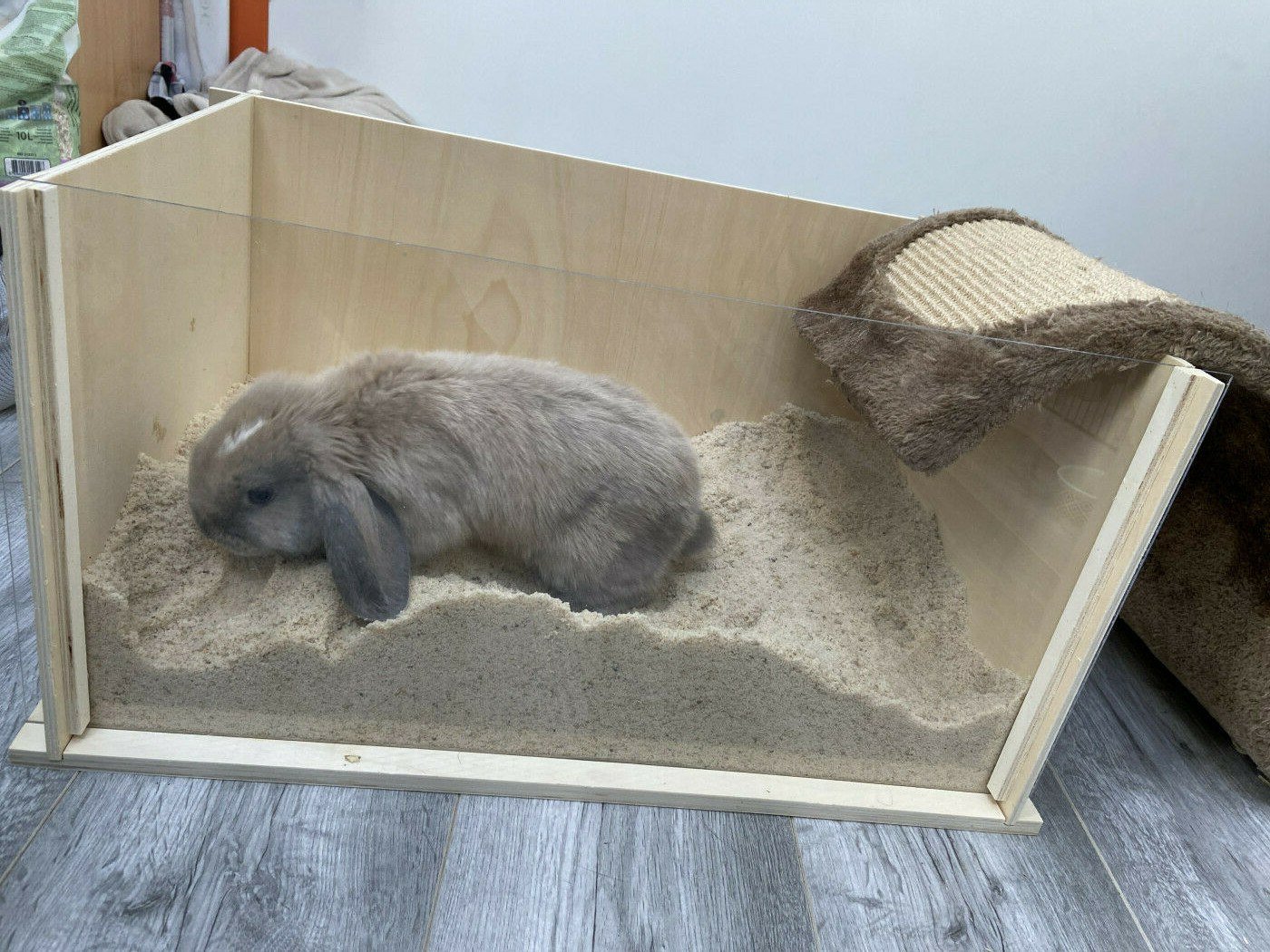
A digging box is a container filled with something safe to dig in, placed where the rabbit can use it freely. It is the single most effective fix for litter-box digging, and it costs almost nothing. The mistake most owners make is building one that is too small, too shallow, or filled with the wrong material — and then concluding that digging boxes do not work.
Here is a build that works:
- Pick a big container. A large plastic storage tub, a deep cardboard box, or a child’s sandpit tray. It should be at least twice as long as your rabbit and deep enough to hold 15–20 cm of filling. Cut a low entrance in one side if the walls are high, so the rabbit can hop in and out easily.
- Fill it with a safe material. Good options: plain topsoil (no fertiliser, no pesticides), children’s play sand, shredded plain paper, or a thick layer of hay. Soil and sand feel most natural to a rabbit. Shredded paper is the cleanest indoor option. Hay is the easiest to replace.
- Hide treats in it. Bury a few pellets, a dried herb sprig, or a small piece of carrot in the filling. The rabbit has to dig to find them, and the first successful dig teaches it that this box is more rewarding than the litter box.
- Put it where the rabbit already digs. If your rabbit digs in the litter box, place the digging box next to it. If it digs the carpet in one corner, put the box in that corner. Location matters more than looks.
- Refresh it weekly. Digging boxes get stale. Turn the filling, add a fresh handful of hay or paper, and hide new treats. A box that never changes stops being interesting.
Outdoor rabbits can have a digging area in their run instead: a patch of bare earth, or a sandpit sunk into the ground. Make sure the run is dug-proof at the edges — rabbits can dig under a fence in a single afternoon — by burying wire mesh 30 cm deep around the perimeter or laying paving slabs along the fence line.
Give the digging box a week before you judge it. Most rabbits take a few days to trust a new object, then use it enthusiastically. If your rabbit ignores it, try a different filling. Some rabbits love soil and ignore paper; others are the opposite. The rabbit gets a vote.

The litter that stops the digging
Litter choice changes digging behaviour more than most owners expect. Some litters invite digging. Others discourage it. The table below compares the common options:
| Litter type | How diggable is it? | Safety notes |
|---|---|---|
| Wood pellets (compressed sawdust) | Low — heavy, hard to kick around | Safe; breaks down into sawdust when wet |
| Paper-based pellets | Medium — light enough to scatter | Safe; absorbent and dust-free |
| Shredded paper | High — very easy to dig and scatter | Safe if plain and ink-free; messy |
| Aspen shavings | High — light and fluffy | Safe; the only safe wood shaving |
| Straw (as a top layer) | Low — mats together and resists digging | Safe; best used over pellets |
| Hay (as a top layer) | Medium — rabbits dig through it to eat | Safe; rabbits eat hay in the box, which is normal |
| Clay cat litter | Medium | Never use — dust damages lungs, and eating it can block the gut |
| Pine or cedar shavings | High | Never use — the aromatic oils damage the liver and lungs |
The combination that works best for digging rabbits is wood pellets on the bottom with a layer of straw or hay on top. The pellets are heavy and hard to dig, the straw mats together and resists scratching, and the hay gives the rabbit something to nibble while it sits in the box — which is what rabbits naturally do. Many owners find the digging stops the day they switch to this combination.
Two other litter-box changes help. First, use a high-sided box, or place the litter box inside a larger plastic tub so that anything kicked out lands in the tub, not on your floor. Second, use a box that is at least twice as long as your rabbit. A box that is too small feels cramped, and a cramped rabbit digs. A generous box gives the rabbit room to turn, sit and eat hay in comfort.
Cleanliness matters too. A dirty litter box invites digging — the rabbit is trying to find a clean spot, or is bothered by the smell. Scoop soiled litter daily and change the whole box every two to three days. A weekly wash with white vinegar and water keeps smells down without harsh chemicals. Never use bleach or strong disinfectants in a rabbit’s box.
When digging means something is wrong
Most litter-box digging is harmless. But three situations need a vet, not a digging box. The first is a sudden change: a rabbit that has never dug suddenly digs frantically, especially if it is also restless, thumping, or refusing to settle. Sudden behaviour changes in rabbits are always worth checking, because rabbits hide illness well.
The second is digging with other symptoms. Not eating, small droppings, no droppings, a hunched posture, teeth grinding, or a bloated belly alongside digging means pain — and the most likely cause is gut stasis, the slowing or stopping of the digestive system. Gut stasis is the most common rabbit emergency and it kills quickly. A rabbit that has not eaten for eight hours, or has not produced droppings for twelve, needs a vet the same day.
The third is a doe that nests constantly. A single false pregnancy is common and usually passes in a couple of weeks. Repeated false pregnancies — nesting, fur-pulling and digging every few weeks — are stressful for the doe and raise her risk of uterine cancer. Spaying removes the problem and the risk together. Talk to a rabbit-savvy vet about timing; most does can be spayed from around five to six months old.
Dental pain can also show up as digging. A rabbit with overgrown teeth or mouth sores may dig and scratch at its face and box, and may drop food or eat more slowly. If your rabbit’s digging comes with messy eating, wet fur around the chin, or a reluctance to eat hay, ask your vet to check its teeth. Rabbits’ teeth grow continuously, and hay is what wears them down — which is another reason unlimited hay matters so much.
What about the mess right now?
While the long-term fixes take effect, you can contain the mess in an afternoon. Place the litter box inside a larger, low-sided storage tub — a “box in a box” — so that kicked litter lands in the outer tub. Put a washable mat or an old towel under the whole setup. Switch to wood pellets with a straw top layer, as above, because they scatter far less than loose paper or shavings.
Some owners use a litter box with a plastic grid or sifting tray over the litter. The rabbit sits on the grid and its droppings fall through, but it cannot reach the litter to dig. This works for some rabbits and frustrates others — a rabbit that cannot dig at all in its box may start digging the carpet instead. Try it if the digging box alone is not enough, but watch for the behaviour moving elsewhere.
Do not use a covered litter box to trap the mess inside. Most rabbits dislike covered boxes: they trap smell, they are dark, and a rabbit that feels trapped will simply stop using the box and choose a corner of your room instead. A high-sided open box is almost always the better choice.
And do not punish the digging. Clapping, shouting, squirting water or tapping the rabbit teaches it to fear you, not to stop digging. Rabbits do not connect punishment with a behaviour that happened seconds earlier. The digging will continue when you are not in the room, and your rabbit will be more stressed — which usually means more digging, not less.
Food, water and the digging rabbit
A rabbit that is digging out of boredom is often also a rabbit that is eating too fast and has too little to do with its food. Scatter feeding helps: instead of putting pellets in a bowl, scatter them through the hay or hide them in the digging box. The rabbit has to forage, which is what its wild ancestors did all day. A forage-based feeding routine turns mealtimes into enrichment.
Hay is the other half of the equation. Unlimited timothy or meadow hay should be available at all times, and a generous pile of hay in the litter box itself is normal and good — rabbits like to eat while they sit in the box, and a rabbit that is eating hay is a rabbit that is not digging. If your rabbit is digging the hay out of the box instead of eating it, offer the hay in a rack above the box as well, so there is always a clean supply.
Water matters too. A rabbit that is not drinking enough can become restless and irritable. Check that the water bottle works — ball-valve bottles jam more often than owners realise — and offer a heavy ceramic bowl as well. Many rabbits drink more from a bowl than from a bottle. The rabbit water intake calculator gives a guide to how much water your rabbit should be drinking by weight, and the rabbit food calculator helps balance hay, vegetables and pellets.
Weight is worth watching as well. A bored rabbit that digs all day and eats little hay can drift into weight problems in either direction — too heavy from pellets and treats, or too light from stress. A weekly weigh on a kitchen scale catches both early. The rabbit weight calculator gives a healthy range by breed size, and our guide to can rabbits eat parsley every day shows how to build a daily greens rotation that keeps a rabbit busy and well fed.
A two-week plan to end the mess
Here is the plan, in order. Do it all in one weekend and the digging usually drops sharply within two weeks:
- Day 1: Measure the enclosure. If it is smaller than three to four times your rabbit’s length, enlarge it or add a pen.
- Day 1: Switch the litter to wood pellets with a straw top layer, and put the box inside a larger tub.
- Day 1: Build a digging box and place it beside the litter box, with treats buried in the filling.
- Day 2: Start scatter feeding the pellets instead of using a bowl.
- Daily: Increase free-roam time to at least three hours, split into morning and evening sessions.
- Daily: Add one new toy or cardboard box, and rotate the toys every few days.
- Daily: Scoop the litter box and top up the hay.
- End of week 1: If digging has moved to the digging box, you have won. If it has moved to the carpet, add a second digging box in that spot.
- End of week 2: If the rabbit is still digging in the litter box, check the decoder table again — is it nesting, stressed, or in pain?
- Ongoing: For an unspayed doe that nests repeatedly, book a vet visit to discuss spaying.
Our guide to why rabbits thump at night covers another behaviour that looks alarming but is usually a rabbit telling you something about its environment. The same rule applies here: the behaviour is a message, and the fix is to listen to it.
For the veterinary background on rabbit behaviour and enrichment, the House Rabbit Society’s care pages are the standard reference most rabbit vets point owners to, and they cover housing, litter training and digging in depth.
Frequently asked questions
Why does my rabbit dig on me?
Digging on your lap or your leg is usually a rabbit asking for attention, or trying to get comfortable. It can also mean “move, please” — a rabbit that wants past you will dig at your leg as a polite shove. If the digging is gentle and the rabbit settles afterwards, it is affection or comfort-seeking. If it is frantic and paired with grunting or nipping, the rabbit is frustrated or overstimulated, and it needs space. Offer a digging box nearby and do not reward lap-digging with treats, or the rabbit will dig on you every time it wants a snack.
Is it normal for rabbits to eat their litter?
Nibbling a little paper-based litter is common and usually harmless, because paper litter is made to be safe if eaten in small amounts. Eating a lot of litter is not normal, and it can mean the rabbit is bored, hungry, or short of fibre. Wood pellets and clay litter are more dangerous to eat — clay can block the gut, and wood pellets expand when wet. If your rabbit is eating litter regularly, increase the hay supply first, then switch to a litter it is less tempted to eat, and ask your vet to check its teeth and diet.
Can I use a covered litter box for a digging rabbit?
You can try, but most rabbits hate covered boxes. The cover traps smell and heat, blocks the rabbit’s view, and makes the box feel like a trap. A rabbit that dislikes its covered box will often stop using it and choose a corner of the room instead, which is a worse problem than scattered litter. A high-sided open box, or a box inside a larger tub, contains the mess without changing how the box feels to the rabbit. That is almost always the better choice.
Should I punish my rabbit for digging in the litter box?
No. Punishment does not work on rabbits and it damages trust. A rabbit cannot connect a shout or a squirt of water with digging it did a minute ago. What it learns is that you are unpredictable and frightening, and a frightened rabbit digs more, not less. The fix is always redirection: give the rabbit a digging box, more space, more exercise and a better litter. If you need the mess to stop today, contain it with a box-in-a-box setup while the long-term fixes take effect.
So, why does my rabbit dig in the litter box? Because it is a rabbit, doing what rabbits have done for thousands of years — and because the litter box is the only place in its home where digging is possible. Give it a digging box, a bigger pen, more free time and a litter that resists digging, and the mess usually ends within a fortnight. The digging does not stop. It just moves somewhere it belongs.