Can Rats Eat Grapes? Safe or Not
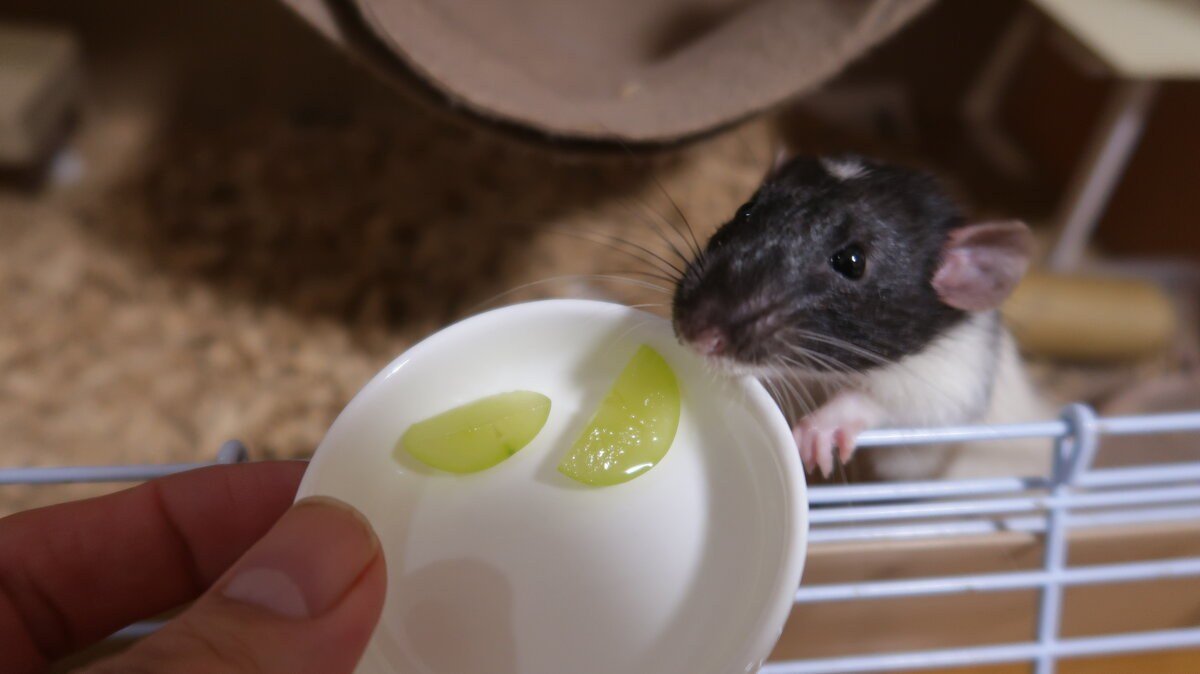
You are holding a grape over your rat’s cage, and your rat is already standing on its back legs, sniffing the air. It looks like a perfect treat. Then you remember the warning lists. Grapes are on them. So you stop and ask the question every rat owner asks at some point: can rats eat grapes, or is this little fruit actually dangerous?
Direct answer: Yes, rats can eat grapes in small amounts as an occasional treat. Offer half a grape, once or twice a week, as part of the treat allowance — not as a daily food and never as a meal. Grapes are not poisonous to rats the way they are to dogs. Wash the grape, cut it in half, remove any seeds, and skip grapes entirely for a rat with diabetes, obesity, or diarrhoea.
That short answer hides a real argument. Search the question online and you will find trusted names on both sides. The RSPCA says to avoid grapes. A rat specialist writing for Lafeber says grapes are a perfectly healthy treat. Some websites even claim grapes cause kidney failure in rats. They cannot all be right, and this guide sorts out who is right, why the lists disagree, and exactly how much grape is safe.
Can rats eat grapes? The short answer, in full
Yes, with limits. A grape is a sweet, watery fruit, and rats are omnivores built to eat a wide range of foods. Wild rats eat fruit, seeds, grains, insects, and the occasional egg. A small piece of grape fits easily into that diet. It is not a poison, it is a treat.
The sugar is the real limit. Grapes are about 16 grams of sugar per 100 grams of fruit. That is sweet for an animal that weighs 300 to 500 grams. A whole grape is roughly 5 grams, so one grape carries about 0.8 grams of sugar. That sounds tiny to us. For a rat, it is a meaningful dose of sugar in one bite.
That is why the portion is half a grape, not a bunch. Half a grape gives your rat the taste, the moisture, and the vitamins without loading it with sugar. It also keeps the treat inside the 10 percent rule: treats should make up no more than 10 percent of what your rat eats in a day, and the other 90 percent should be a balanced rat food.
The water in a grape is a small bonus. Grapes are about 80 percent water, so a piece of grape adds moisture to the diet. That matters most for older rats, or for rats that do not drink enough. It is not a replacement for fresh water, which must always be available, but it helps.
One more thing matters before you offer the first piece. Your rat’s health comes first. A rat with diabetes, a rat that is overweight, or a rat with soft droppings should not get grapes at all. Sugar makes all three problems worse. If your rat is on any medication, or if it has a health problem you are unsure about, ask your exotic vet before adding any new treat.
What the websites say — and why they disagree
The reason this question is so confusing is that the ranking pages genuinely contradict each other, and some of them are names you would normally trust. Here is what the main ones actually say, side by side:
| Website | What it says about grapes for rats | How old / how reliable |
|---|---|---|
| RSPCA rat diet guide | Avoid grapes, raisins and chocolate; lists them with onion, citrus and rhubarb as harmful foods | Current official guidance; a bare list, with no reasoning or evidence given |
| Guernsey government pet-rat guidance | Rats must not be fed grapes or raisins, listed as harmful to rodents | Official welfare guidance; repeats the RSPCA list without evidence |
| Lafeber (Brandi Saxton) | Grapes, in moderation, are a safe treat; the toxic claims come from old lab studies and dog advice | Rat specialist writing for a pet-food educator; the only page that explains the disagreement |
| ChefsResource (vet guide) | Yes, rats can eat grapes; limit to one or two small pieces a day as a treat | 851 days old; thorough, but its daily portion is more generous than most rat keepers use |
| Rodent Friends | Yes, a very healthy treat; one grape per rat, once a month or every two weeks | 1,288 days old; cautious to the point of being stricter than the evidence needs |
| VIVO Pets | Yes, generally safe; too many cause diarrhoea and obesity risk from sugar | 1,365 days old; reasonable, but thin on portions and evidence |
| Dakoa rat diet guide | Grapes and raisins: sometimes, tiny pieces, treat only; high sugar is the risk | Fresh page; sensible, but gives no source for the verdict |
| All Food FAQ / Know Animals | Grapes and raisins cause kidney failure in rats | Recent pages; this is the dog claim copied across species, with no rat evidence |
Look at the pattern. The “avoid” side is official: the RSPCA and a government guide. The “safe” side is specialist: a rat expert and several vet-reviewed guides. The “kidney failure” side is low-quality pages repeating a dog fact as if it applied to rats. Nobody on the “avoid” side explains why grapes would harm a rat. Nobody on the “safe” side is a veterinary authority. That is the gap this guide fills.
Our own food-safety guides on this site follow the same pattern. Our guide to can guinea pigs eat celery leaves and our guide to can guinea pigs eat cucumber every day both start from the same place: two trusted sources disagreeing, and the answer hiding in the details. Grapes for rats are the same kind of question.
Where the “grapes are toxic” warning really comes from
The warning has a real origin, and it is a good warning — for dogs. Grapes and raisins can cause sudden kidney failure in dogs, and vets still do not know exactly which compound in the grape is responsible. The dose that harms a dog is small, and the effect is unpredictable. That is why every dog owner is told never to feed grapes. It is correct advice, and it has saved dogs’ lives.
The problem is that the dog warning leaked into rat lists. Writers building “foods toxic to rats” pages copied the dog list, and grapes came along with it. The claim then got repeated from site to site until it looked like settled fact. If you read those pages closely, you will notice something: none of them cites a rat study, a rat case, or a vet source for the kidney claim. They cite each other.
The lab studies tell a different story. The old laboratory work that people point to fed rats enormous doses of grape products — far more than any pet rat would eat in a treat — and looked for toxic effects. A 2002 study fed male and female rats raw grape seed extract at concentrations far above what eating grapes would deliver, for 90 days, and found no toxic effects. That is the opposite of what the warning lists claim.
The RSPCA’s position is easier to understand once you see how the list was built. The RSPCA writes for every pet owner, including first-time owners, and its list is deliberately cautious. It groups grapes with foods that are genuinely harmful to rats, like onion and rhubarb, and with foods that are only a problem in large amounts, like chocolate. A cautious list is a safe choice for a charity writing general guidance. It is not the same as evidence that a grape harms a rat.
There is also a second, quieter reason the lists disagree: sugar. Grapes are high in sugar, and rats are prone to obesity and diabetes. A charity that sees overweight rats every week has good reason to tell owners to skip sweet fruit. The advice is sound as a general rule — most owners overfeed treats — but it is a portion warning dressed up as a toxicity warning, and that confusion is exactly what this guide clears up.
So here is the honest summary. Grapes are not toxic to rats. There is no documented mechanism, no rat case series, and no study showing kidney damage from grapes in rats. Grapes are, however, sugary, and sugar is a genuine health risk for rats when treats are overfed. The danger is the dose, not the fruit.
How much grape is safe — and how often
Here is the serving rule in one table. It works for a healthy adult rat. Young rats, old rats, and rats with health problems need smaller amounts or none at all, and a vet should decide for a sick rat.
| Rat | Serving of grape | How often |
|---|---|---|
| Healthy adult (300–500 g) | Half a grape, cut in half, seeds removed | 1–2 times a week at most |
| Smaller adult or young rat over 8 weeks | A quarter of a grape | Once a week at most |
| Rat under 8 weeks old | None yet | Wait until 8 weeks, then start with a tiny piece |
| Overweight rat | None until the weight is under control | Ask your vet first |
| Rat with diabetes or soft droppings | None | Skip grapes; use cucumber or a leafy green instead |
Start smaller than the table says. On the first day, offer a piece the size of a pea. Watch the droppings for the next 24 hours. Normal rat droppings are firm, dark, and pellet-shaped. Soft or watery droppings mean the grape did not agree with your rat, and you should wait a week before trying again with a smaller piece.
Never feed grapes every day. The “once or twice a week” limit is the whole point. A food that is fine twice a week can still cause weight gain and loose droppings when it becomes a daily habit. If you want a daily fresh food, use a leafy green or a piece of cucumber instead. Those are low in sugar and safe every day.
Count grapes inside the treat allowance. A rat’s daily food should be about 15 to 20 grams of a balanced rat food, plus a small amount of fresh vegetables. Treats — fruit, cooked egg, a little cooked chicken, a seed — should stay under 10 percent of the total. Half a grape is about 2.5 grams. That fits easily, as long as it is the only sweet treat that day.
Do not serve grapes on the same day as other sweet treats. If your rat already had a piece of banana or a blueberry today, skip the grape. Sweet treats add up fast in a small animal, and the sugar total is what matters, not which fruit it came from.
How to serve grapes to a rat
Serving a grape safely takes less than a minute. Follow these five steps every time, and the risk drops to almost nothing.
- Wash the grape well. Rinse it under cold running water for 20 seconds and rub the skin gently with your fingers. Grapes are often sprayed with pesticides, and the skin holds the residue. Organic grapes are the safest choice, but washing still matters.
- Cut the grape in half. A whole grape is a choking risk for a small rat, and it is also a full portion in one bite. Cut it lengthways so the flesh is exposed. Your rat will smell it faster and eat it more easily.
- Remove any seeds. Most shop grapes are seedless, but check. Seeds are a choking risk, and they are the one part of the grape that some guides worry about. A 2002 study found no toxic effect from grape seed extract in rats, but there is no reason to feed seeds when the flesh is the treat.
- Serve fresh, at room temperature. Take the grape out of the fridge 15 minutes before serving. Cold fruit can upset a rat’s stomach. Never serve a mouldy, wrinkled, or fermenting grape. If it smells like wine, throw it away.
- Remove leftovers. Rats stash food. A half grape hidden in the bedding will rot within a day, and a rotten grape can cause stomach upset. Check the cage an hour after treat time and remove anything uneaten.
Red grapes and green grapes are both fine. Red grapes have slightly more antioxidants, and green grapes are slightly less sweet, but the difference is small. Choose whichever your rat likes. The portion rule is the same for both colours, and the same for seedless and seeded grapes once the seeds are out.

Raisins: the same fruit, with a stricter rule
Raisins are dried grapes, and drying concentrates everything — including the sugar. A raisin is about 72 percent sugar by weight, compared with about 16 percent for a fresh grape. That means one small raisin carries roughly the same sugar as a whole fresh grape, in a bite a quarter of the size.
The same logic applies, but the portion shrinks. A healthy adult rat can have one small raisin, once a week at most, as a training reward or an occasional treat. That is the maximum, not the target. Most rats do not need raisins at all, and a fresh grape is a better treat because it brings water with the sugar.
Raisins are also sticky. They cling to a rat’s teeth, and rats are prone to dental problems when sweet food stays on the teeth. If you do offer a raisin, watch your rat eat it, and do not leave raisins in the cage. A raisin hidden in the bedding will be found, eaten, and counted twice.
The RSPCA lists raisins with grapes on its avoid list, for the same precautionary reasons. The rat-fancier view is the same as for grapes: safe in tiny amounts, risky when overfed. The gap between the two sides is smaller for raisins than for grapes, because the sugar concentration is so high. If you want to play it safe, skip raisins entirely and stick to fresh fruit.
One warning matters more than the rest. Never feed a raisin mix from a trail mix or a muesli. Those mixes often contain chocolate chips, yoghurt-coated pieces, salted nuts, and dried fruit with added sugar. The mix is the problem, not the raisin. Only ever offer a plain, unsweetened raisin, and only one.
What to do if your rat eats too many grapes
Most of the time, nothing bad happens. A rat that eats three or four grapes in one sitting will usually just have soft droppings for a day and feel a bit sluggish. The sugar rush passes, the gut settles, and the rat is fine. Do not panic, and do not try to make your rat sick.
Take the grapes away first. Remove any grapes left in the cage, and check the usual stash spots — under the hammock, behind the hide, in the corner of the litter tray. Rats hide food, and a rat that found a bunch will keep going back to it.
Watch the droppings and the water bottle for 24 hours. Soft droppings are the most common sign of too much fruit. Less drinking, less eating, or a rat that stays hunched in a corner needs more attention. Those signs can mean stomach pain, and they deserve a vet call if they last more than a day.
Offer plain food only for the next day. Go back to the balanced rat food and a little cucumber or leafy green. No more fruit, no treats, no new foods until the droppings are firm again. The gut needs a quiet day to recover.
Call your vet if the diarrhoea lasts more than 24 hours, if there is blood in the droppings, or if your rat stops eating and drinking. Those are not normal reactions to grapes, and they point to a bigger problem. Bring the grape packaging with you if you can, so the vet can see exactly what was eaten.
Our guide to can guinea pigs eat cucumber every day makes the same point for a different animal: the danger in fruit is almost always the amount, not the fruit itself. A rat that eats too many grapes needs the same response as any small pet that overdoes a sweet treat — remove the food, watch the droppings, and keep the diet plain until things settle.
Foods that are genuinely dangerous for rats
It helps to put grapes in context. Some foods really are dangerous for rats, and they deserve the warning lists far more than grapes do. Knowing the difference keeps you from worrying about the wrong food.
Raw dried beans are dangerous. They contain lectins that survive drying and can poison a rat. Cooked beans are fine, but raw kidney beans, raw soya beans, and raw dried beans of any kind should never be offered. This is one of the few foods where “never” is the right word.
Green potatoes and potato sprouts are dangerous. They contain solanine, a natural toxin that builds up in green skin and sprouts. A normal cooked potato is fine, but a green or sprouting potato is not. Cut away any green parts, and throw away potatoes that have sprouted heavily.
Alcohol, caffeine, and carbonated drinks are dangerous. Rats are small, and even a tiny amount of alcohol or caffeine can harm them. Never offer beer, coffee, tea, or fizzy drinks, even as a joke.
If you want a second opinion on the full list, the RSPCA’s rat diet guide is a good place to start. It is cautious, and that caution is useful for the foods that are genuinely risky. You can read it at the RSPCA rat diet guide. For the other side of the argument — why rat specialists disagree with the list — Lafeber’s rat food myths page lays out the case clearly at Lafeber’s rat food myths guide.
Frequently asked questions
Can baby rats eat grapes?
Wait until a baby rat is at least 8 weeks old before offering any fruit, including grapes. Young rats need their mother’s milk, then a balanced rat food, to grow properly. Their guts are still developing, and sweet fruit can cause diarrhoea more easily than in an adult. When you do start, offer a piece the size of a pea, once a week, and watch the droppings for a day.
Can rats eat grape leaves and stems?
Grape leaves are not a good treat for rats. They are tough, bitter, and offer nothing a rat needs. The stems are woody and a choking risk. Only the flesh of the fruit is worth offering. If your rat nibbles a leaf from a grape vine in the garden, a tiny amount is unlikely to cause harm, but do not offer leaves on purpose, and never offer leaves from a vine that has been sprayed.
Can rats eat grape juice or jelly?
No. Grape juice and jelly are concentrated sugar with almost no fibre, and they are far too sweet for a rat. A few licks of juice will not poison a rat, but it adds sugar with no benefit, and jelly often contains added sugar, pectin, and preservatives. Stick to the fresh fruit, in a small piece, and skip anything made from grapes.
Can rats eat frozen grapes?
Yes, as an occasional summer treat, with two conditions. Cut the grape in half first, and let it soften for a few minutes out of the freezer. A whole frozen grape is hard and cold, and it can hurt small teeth and upset the stomach. One frozen half-grape on a hot day is plenty, and it works well as enrichment because it takes longer to eat.
My rat ate a whole bunch of grapes — what should I do?
Take any grapes left in the cage away, including the ones your rat has hidden. Offer fresh water and plain rat food only for the next day, and watch the droppings. Soft droppings for a day are the most likely result. Call your vet if the diarrhoea lasts more than 24 hours, if there is blood, or if your rat stops eating or drinking. Do not try to make your rat sick, and do not give any human medicine.
For portion help with other small pets, our guinea pig food calculator and our hamster food calculator work out daily food amounts with the same treat-size logic used in this guide. We do not yet have a rat food calculator, so use the 10 percent treat rule from this article as your guide for rats.