Why Does My Cat Sit in the Sink? 7 Reasons
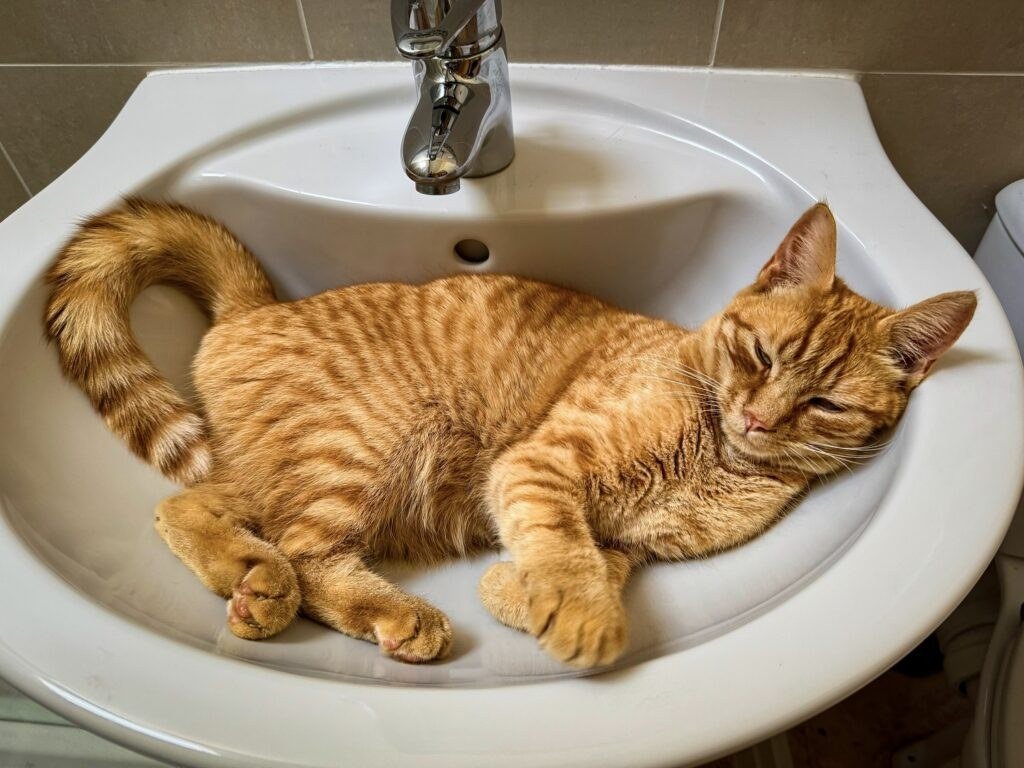
You walk into the bathroom, and there she is again. Your cat is curled up in the sink like it is the finest bed in the house. She ignores the soft bed you bought her, the sunny windowsill, and the warm blanket on the sofa. The cold, hard, porcelain sink wins every time.
If you have ever wondered why does my cat sit in the sink, you are not alone. It looks completely illogical to us.
The answer is simpler than it looks. To a cat, the sink is not a strange choice at all. It is cool, it is safe, it is shaped like a nest, and it sits right next to running water and your scent. Once you see the sink through your cat’s eyes, the habit makes perfect sense.
Direct answer: Your cat sits in the sink because the porcelain stays cool, the curved basin feels like a safe nest, the spot is raised with a good view, and it sits next to running water and your scent. Cats run hot, with a normal body temperature of 100.5 to 102.5°F, so a cool sink is a relief in a warm house. The habit is usually harmless, but a sudden change in sink sitting, especially with extra drinking or weight loss, can be an early sign of kidney disease or thyroid trouble and deserves a vet visit.
Why Does My Cat Sit in the Sink? The 7 Real Reasons
Most cats sit in the sink for more than one reason at a time. Cool porcelain brings her in, the nest shape keeps her there, and your reaction teaches her to come back. The seven reasons below cover almost every sink cat, and the first two explain most cases on their own.
1. The porcelain is cool, and cats run hot
Cats run warmer than people. A healthy cat’s body temperature sits between 100.5 and 102.5°F (38 to 39.2°C), a couple of degrees above ours. Cats also lose heat slowly, because they have few sweat glands and only really sweat through their paw pads. To cool down, they must find a cool surface.
Porcelain and ceramic are brilliant at this. The material pulls heat away from the body the moment skin or fur touches it, and it stays cool far longer than carpet, bedding, or wood. A sink in a tiled bathroom is often the coolest spot in the whole house, especially in summer or in a home with the heating on.
Watch when your cat uses the sink most. If she claims it on hot afternoons and ignores it in winter, cooling is almost certainly the main reason. Long-haired cats, such as Persians and Maine Coons, are even more drawn to cool porcelain, because their thick coats trap heat all day.
This is the same instinct that sends cats to tile floors, bathtubs, and the shady side of a windowsill. The sink is simply the coolest object that also happens to be shaped like a bed.
2. The basin is a perfect little nest
A sink is shaped almost exactly like the nests wild cats seek out. The curved walls rise on three or four sides, the space is just big enough for one cat, and the edges give her something solid to press against. To a cat, that shape means safety.
Cats are both hunters and prey animals, and that double role never leaves them. A resting cat wants to see without being seen, and she wants her back protected. The sink gives her both: a raised rim to hide behind and an open view of the bathroom door.
The snug fit matters too. Cats love spaces that hug their bodies, which is why they squeeze into boxes, baskets, and drawers that look far too small. A basin cradles the body in the same way, and the gentle pressure feels calming. Behaviour researchers call this thigmotaxis, the comfort animals get from touching a surface on several sides at once.
If your cat sleeps curled in a tight ball in the sink, the nest is doing its job. She has found a spot where she can relax deeply and still feel protected.
3. The sink is next to running water
Many cats are fascinated by running water, even cats that hate baths. In the wild, moving water is safer than still water, because stagnant pools can carry germs and parasites. Domestic cats keep that old preference, and a sink puts them right beside the freshest water in the house.
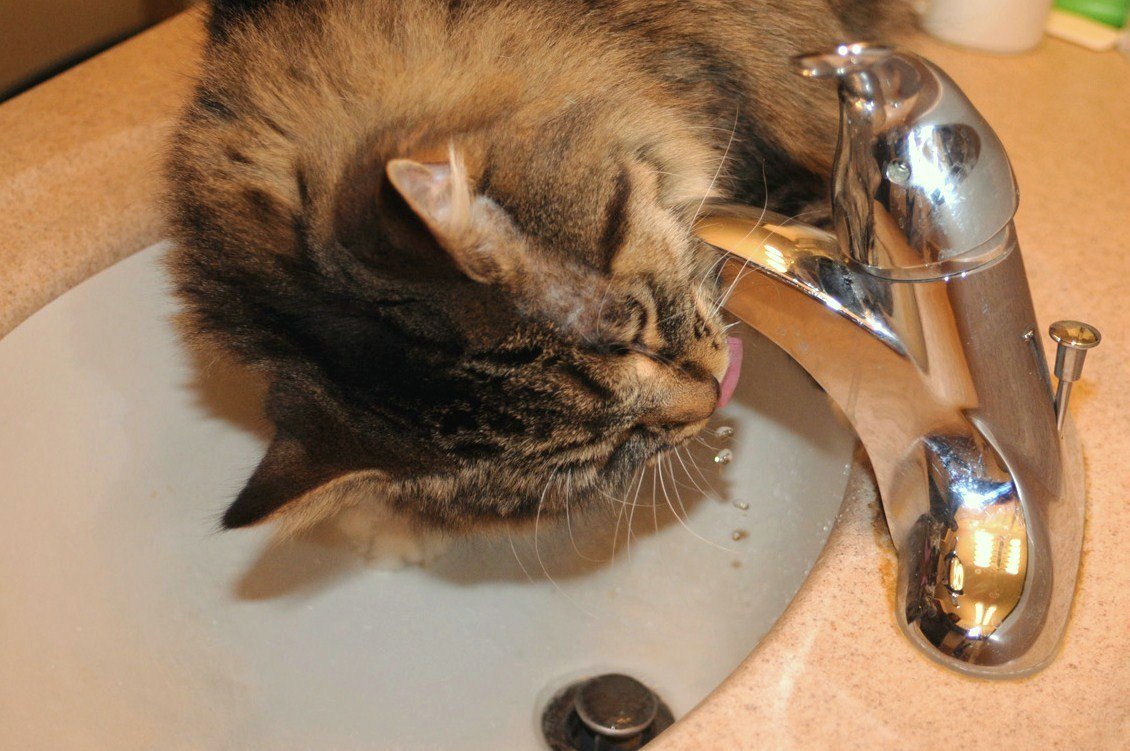
The faucet is the attraction. A slow drip, the sound of water in the pipes, and the shine of wet porcelain all pull a cat’s attention. Some cats sit in the sink and stare at the tap for minutes, waiting for it to move. Others paw at drips or lick condensation from the basin.
This also explains why the habit often starts after you use the sink. You brush your teeth, wash your hands, and leave behind damp porcelain and the smell of fresh water. To your cat, you have just switched on the most interesting spot in the room.
A cat that sits in the sink and then drinks from the tap is telling you something useful. She may find her water bowl stale, too close to her food, or too narrow for her whiskers. The sink is her way of asking for better water, and a wide bowl or a pet fountain often fixes it.
4. The bathroom smells like you
Cats live by scent far more than we do. Your bathroom is one of the most scent-rich rooms in the house, full of towels, clothes, soap, and the smell of the person they love most. To a cat, that smell means home and safety.
When your cat sits in the sink, she is also adding her own scent to the spot. Cats carry scent glands on their cheeks, chin, forehead, and paws. Every time she rubs her face on the rim or presses her paws into the basin, she leaves a little of her own scent behind. The sink slowly becomes hers.
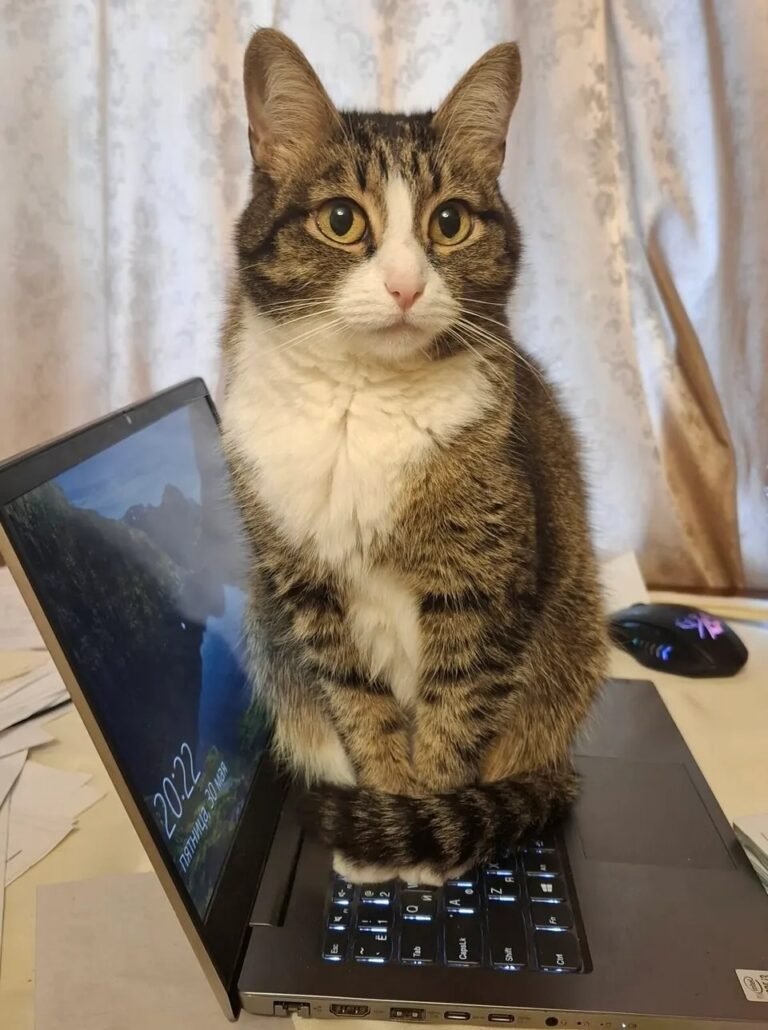
This is the same instinct behind cats sleeping on your clothes and sitting on your laptop. They are not being difficult. They are surrounding themselves with the smell of their favourite person, and marking the spot as part of their territory at the same time.
If your cat only uses the sink after you have been in the bathroom, scent is likely a big part of it. She is following your smell to the place where it is strongest.
5. The sink is high, with a good view
Cats love height. A high spot lets them watch the room without being approached from behind, and the bathroom sink sits at exactly waist height. That is high enough to feel safe, but low enough to jump into easily.
From the sink, your cat can see the door, the hallway, and anyone coming in. She can also see the mirror, the dripping tap, and the whole small room at a glance. For a cautious animal, that view is worth a lot.
6. Sitting in the sink gets your attention
Cats learn fast what makes their owners react. The first time your cat sat in the sink, you probably laughed, talked to her, or took a photo. She noticed. To a cat, any reaction is a reward, and a funny reaction is a big one.
Now the sink is part of her routine with you. She goes to the bathroom when you do, claims the sink, and waits for the greeting she knows is coming. The behaviour is self-reinforcing, because it works every single time.
Many owners report the same pattern: the cat appears in the sink at the same time each day, usually when the owner brushes their teeth or gets ready for bed. That is not a coincidence. Cats love routines, and the sink has become her part of yours.
This reason is easy to test. If she only uses the sink when you are in the bathroom, and leaves the moment you leave, attention and routine are doing most of the work.
7. She is bored, and the sink is interesting
Indoor cats with little to do invent their own entertainment, and a bathroom is full of interesting things. There is a dripping tap, a shiny drain, a mirror, a toothbrush, and a roll of toilet paper to bat at. The sink sits in the middle of all of it.
A bored cat is also more likely to develop fixed habits. If the same spot gives her cool porcelain, a view, and your attention every day, it becomes her default place. The habit then runs on its own, even on days when she is not especially bored.
The fix for boredom is not to ban the sink. It is to give her something better to do. Two short play sessions a day with a wand toy, a puzzle feeder, and a tall cat tree near a window will drain far more energy than any scolding ever will.
Is It Safe for My Cat to Sit in the Sink?
For most cats, yes. A clean, dry sink is a safe place to nap. But there are four real risks to check, and most of them are easy to remove.
The biggest risk is cleaning chemicals. Bleach, disinfectant, and toilet cleaner can leave residues on porcelain that burn a cat’s mouth or paws if she licks them. Never let your cat into a sink you have just cleaned until you have rinsed it well with plain water and it is fully dry. Keep cleaning products in a closed cupboard, not on the sink edge.
Hot water is the second risk. A cat that jumps into a sink while the tap is running can be scalded, and a cat that sits under a dripping hot tap can burn her skin over time. Always turn taps fully off, and never leave a cat alone with running water.
Slippery porcelain is the third risk. Young and healthy cats manage it easily, but an older cat with arthritis can slip and strain a joint when she jumps in or out. A small non-slip mat in the basin, or a folded towel, gives her grip and softens the landing.
The drain is the fourth risk. Some cats lick the drain or chew at the plug chain, and drains can harbour bacteria.
As a rule, a clean and dry sink with the taps off is fine. A sink full of soapy water, cleaning spray, or a running tap is not a cat bed.
What the Pattern Tells You: A Quick Diagnostic Table
Use this table to work out which reason drives your cat. Look at when she uses the sink, what she does there, and what changed recently.
| What you see | Most likely reason | First fix to try |
|---|---|---|
| Uses the sink mainly on hot days, stretches out flat on the porcelain | Cooling down | Offer a cool tile, a ceramic tile bed, or a damp towel in a shady spot |
| Curls in a tight ball, sleeps deeply, ignores you | Safety and the nest shape | Give her a covered bed or a box in a quiet corner |
| Stares at the tap, paws at drips, drinks from the faucet | Running water | Try a wide ceramic bowl away from food, or a pet water fountain |
| Only uses the sink when you are in the bathroom | Your scent and attention | Put a worn T-shirt in her bed so your scent is there too |
| Sits in the sink at the same time every day | Routine | Shift the routine slowly with a play session before bathroom time |
| Uses the sink all day, every day, and will not leave it | Boredom or stress | Add two play sessions a day, a puzzle feeder, and a tall cat tree |
| Suddenly starts using the sink after never caring about it | Possible health change | Watch drinking, eating, and weight, and book a vet visit |
How to Win Your Sink Back: The 7-Day Plan
You do not need to ban the sink, and you should not punish your cat for using it. Punishment only teaches her to fear you, and she will simply use the sink when you are not looking. The better plan is to offer something she likes more, in a spot she likes as much.
Next, fix the water. Many sink cats are really water cats, and a wide ceramic bowl placed away from the food bowl solves the problem for a surprising number of them. Cats often dislike drinking next to their food, and narrow bowls press on their whiskers. A pet fountain is even better, because it gives her the moving water she wants without the sink. If you are unsure how much she should be drinking, the cat water intake calculator gives a quick daily target based on her weight and diet.
Then give her a better nest. A covered bed, a cardboard box with a blanket, or a cat cave in a quiet room gives her the same snug, protected feeling as the sink. Put a worn T-shirt of yours inside it, so it carries your scent. Place it near the bathroom at first, then move it a little further away each day.
Add play to the plan. Two ten-minute sessions a day with a wand toy, one in the morning and one before bed, will drain the hunting energy that sends bored cats to the sink. End each session with a small meal or treat, so she settles down to groom and sleep afterwards.
Finally, make the sink boring. Keep the taps fully off, wipe the basin dry, and remove anything interesting from the rim. Close the bathroom door when you are not using it, at least for a week. Do not make a fuss when she gets in, and do not make a fuss when she gets out. Calm indifference is the fastest way to break a habit that runs on attention.
Most cats shift within a week. If she still prefers the sink after seven days of a better bed, better water, and daily play, let her have it. A clean, dry sink is a safe nap spot, and some cats simply love it. The goal is a happy cat, not an empty sink. If her sleep seems restless or she wakes often, the cat sleep calculator can show whether her total sleep hours are normal for her age.
For more on why cats claim the spots we use most, read our guide on why cats sit on laptops — the reasons are remarkably similar. And if your cat also vanishes when guests arrive, our guide on why cats hide when visitors come explains the safe-spot instinct in full.
When Sink Sitting Needs a Vet
Occasional sink sitting is normal. Sudden sink sitting is not always normal, and the difference matters. A cat that has never cared about the sink and suddenly starts spending hours in it is telling you something has changed.
The main concern is thirst. Cats with kidney disease, diabetes, or an overactive thyroid drink far more than usual, and they often hang around water sources. A cat that camps in the sink and demands the tap be turned on, again and again, may be trying to drink more because her body needs more water. The ASPCA’s guide to common cat behavior issues is a useful starting point for telling normal habits from warning signs.
Watch for the same red flags you would watch for anywhere else. Weight loss, a dull coat, eating less, vomiting, hiding more than usual, or urinating more often all deserve a vet visit, especially in a cat over ten years old. Older cats are far more likely to develop kidney disease, and catching it early makes a real difference. The cat age calculator can help you work out your cat’s age in human years, which is a useful guide to how closely you should watch her.
Heat-seeking can also flip. A cat that suddenly lies on cold surfaces all day in cool weather, and seems lethargic or shivery, may have a fever or pain. A cat that pants, breathes fast, or lies flat and will not move should be seen the same day.
Stress is the other cause of sudden sink sitting. A house move, a new baby, a new pet, building work, or a change in your work hours can all push a cat to hide in the bathroom. If the habit started the same week as a big change, treat the stress first: give her a quiet room and keep routines steady. International Cat Care’s guide to understanding your cat explains how stress shows up in small behaviour changes like this one.
As a simple rule, ask three questions. Did the habit start suddenly? Is she drinking or urinating more? Is anything else different about her? If the answer to any of these is yes, book a vet visit. If the answer to all three is no, and she is eating, playing, and grooming normally, the sink is almost certainly just her favourite spot.
Frequently Asked Questions
Why does my cat sleep in the bathtub?
The bathtub attracts cats for many of the same reasons as the sink: cool porcelain, a den-like shape, and quiet. The tub is bigger and lower, so cats that want to stretch out fully often prefer it, especially in summer. The same safety rules apply — keep it clean and dry, and rinse off cleaning products. If your cat suddenly starts sleeping in the tub and drinking much more than usual, book a vet visit, because that combination can be an early sign of kidney disease or diabetes.
Why does my cat only drink from the tap and ignore her water bowl?
Three bowl problems cause most tap drinking. The bowl may be too narrow, so her whiskers touch the sides with every lap. It may sit next to her food, and cats prefer to drink away from where they eat. Or the water may be stale, with a slimy layer forming within a day. Fix all three at once: use a wide ceramic bowl, move it away from food and the litter tray, and wash it daily. A pet fountain is the next step if she still prefers the tap.
Can a cat get stuck in the sink?
Almost never. Cats are excellent judges of space, and a healthy adult cat can jump out of any normal bathroom sink with ease. The only real risk is a very young kitten, a very old cat with arthritis, or a sink with steep, slippery sides and no grip. If your cat is elderly or seems to struggle getting out, place a folded towel in the basin for grip, or give her a low-sided bed on the bathroom floor instead. Never leave a kitten alone in a bathroom with a deep sink full of water.
Why does my cat lick the sink drain?
Drain licking is usually about moisture and smell. The drain holds condensation and tiny traces of water, soap, and toothpaste, and a cat’s nose can detect all of it. Some cats lick the drain because they are thirsty, especially if their bowl is empty or stale. The behaviour itself is not dangerous in small amounts, but drains carry bacteria, so discourage it by keeping the basin dry and the bowl full. If the licking is constant, or comes with extra drinking and weight loss, ask your vet to check her kidneys and thyroid.
Should I buy a cat water fountain instead?
For most sink cats, yes. A fountain gives your cat moving, filtered water all day, which is exactly what she is looking for in the tap. Choose a ceramic or stainless steel model, because plastic bowls can develop scratches that harbour bacteria and cause chin acne. Clean it every few days and change the filter as the maker directs. Place it away from her food bowl, in a quiet spot she already visits. Most cats switch to a fountain within a week, and many drink more overall, which is good for urinary health.
Your cat is not being strange when she sits in the sink. She has found a cool, safe spot that smells like you and sits next to fresh water. Give her a better bed, better water, and a little more play, and she may move on. If she does not, and she is healthy and happy, let her keep her favourite seat.