Why Does My Cat Hide When Visitors Come?
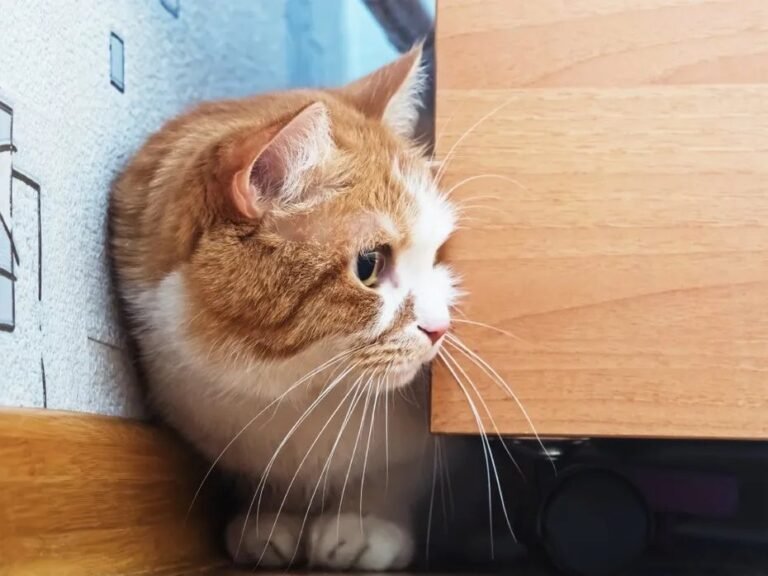
The doorbell rings, and your cat vanishes. One second she is on the sofa, the next she is under the bed or squeezed into a gap you did not know existed. She stays there for the whole visit, and only reappears when the front door closes behind your guests.
If you have ever wondered why does my cat hide when visitors come, the short version is that hiding is how a cat copes with something unpredictable. Visitors bring new sounds, new smells, new movements, and new people who might reach for her — and for a small animal that is both predator and prey, disappearing is the safest answer.
Hiding is not rudeness, and it is not a sign that your cat dislikes your friends. It is a normal survival strategy, and most cats that hide from visitors are perfectly confident with their own family. The goal is not to turn your cat into a greeter. It is to make visits less frightening, so she can choose whether to come out — and to know when hiding means something more than shyness.
Direct answer: Your cat hides when visitors come because unfamiliar people make her home unpredictable. New voices, footsteps, perfumes, bags, and sudden movements all signal possible danger to a cat, and hiding gives her distance, cover, and control while she works out whether the visitor is safe. Most cats come out within 20 minutes to 4 hours after guests leave. Hiding is normal unless it is new, sudden, or paired with not eating or litter box changes — those need a vet.
Why Does My Cat Hide When Visitors Come? The 7 Real Reasons
Cats hide from visitors for overlapping reasons, and most cats have more than one. The list below runs from the most common cause to the one that needs a vet, and knowing which ones apply to your cat changes what you should do about it.
1. Visitors destroy predictability
Cats love routine more than almost anything. They know the sounds, smells, and movements of a normal day at home, and they feel safe because nothing surprises them. A visitor changes all of that in seconds: a new voice, a different laugh, unfamiliar footsteps, a bag dropped on the floor, a coat hung in the hall.
Each change on its own is small, but together they add up to an environment your cat no longer recognises. Research on feline stress has found that environmental change and unfamiliar human interaction are among the most common triggers for stress in indoor cats. Hiding is the fastest way to restore a sense of control: under the bed, the world is small, dark, and predictable again.
This is why the same cat that hides from a stranger will happily sleep on your lap all evening. She is not afraid of people in general — she is afraid of the unknown, and your guests are unknown until she has had time to learn them.
2. Cats are prey animals as well as predators
Domestic cats sit in an unusual position: they hunt small animals, and they are also hunted by larger ones. That double role shaped their instincts over thousands of years. When something unfamiliar appears, the safest first move is not to fight or investigate — it is to disappear and watch from cover.
Dogs evolved as pack animals and often greet strangers as potential pack members. Cats evolved as solitary hunters, and their default response to an unfamiliar stimulus is caution. A visitor entering the home is, in the cat’s mind, an intruder in her territory, no matter how welcome they are to you.
Hiding also gives the cat a vantage point. From under the bed or behind the sofa, she can hear, smell, and watch what is happening without being seen or approached. That is not cowardice. It is information gathering, and it is exactly what a wild cat would do when something large and unfamiliar moved into its territory.
3. She missed the early socialisation window
Kittens have a short window, roughly 2 to 7 weeks of age, when their brains are most open to new people, sounds, and experiences. Kittens handled gently by several different people during those weeks usually grow into adults that take strangers in their stride. Kittens that met few people, or met people only after that window closed, often grow into adults that treat every new person as a potential threat.
You cannot always know what happened in your cat’s early weeks, especially if she came from a shelter, a farm, or a rescue. A cat that hides from visitors may simply have had a quiet start in life, and no amount of scolding will undo it. What helps is the opposite: slow, patient, low-pressure exposure, which is covered in the 4-week plan below.
Adult cats can still learn, but one that missed the window will need weeks or months of calm, predictable visits to change her mind, and some cats will always prefer watching from a distance to greeting anyone.
4. A bad experience taught her that visitors are trouble
Cats remember negative encounters, and a single frightening visit can shape years of behaviour. A guest who picked her up without asking, chased her for a cuddle, cornered her in a room, or dropped something loud near her can teach a cat that visitors mean danger. Children are a common trigger, because they move quickly, speak loudly, and often reach straight for the cat.
The lesson sticks because cats generalise: one bad visitor becomes “all visitors are risky” until enough calm visits prove otherwise. Forcing a cat to meet guests backfires — every forced introduction confirms the lesson, and the cat hides faster and longer next time.
If you know a particular visit went badly, that is useful information, because it tells you the fear is learned rather than built-in. Learned fear responds well to the trust plan below, as long as every new visit is calm, short, and entirely on the cat’s terms.
5. Her senses are overwhelmed
A cat’s senses are far sharper than ours, and a visit is a sensory storm. Cats hear frequencies up to 64 kHz — humans top out around 20 kHz — so a high-pitched greeting or a sudden laugh can be painfully sharp to them. Their sense of smell is about 14 times stronger than ours, so perfume, aftershave, laundry detergent, and the smell of another pet on a guest’s clothes all arrive at full strength.
Movement is the third overload. Guests stand up, gesture, reach for bags, and walk between rooms, and tracking five moving people at once is exhausting. Add a doorbell and a phone ringing, and the living room becomes a place to escape from.
This is why the same cat may tolerate one quiet visitor sitting on the sofa but vanish when four people arrive at once. The number of people matters, because each new person multiplies the noise, smell, and movement in the room.
6. She has nowhere safe to watch from
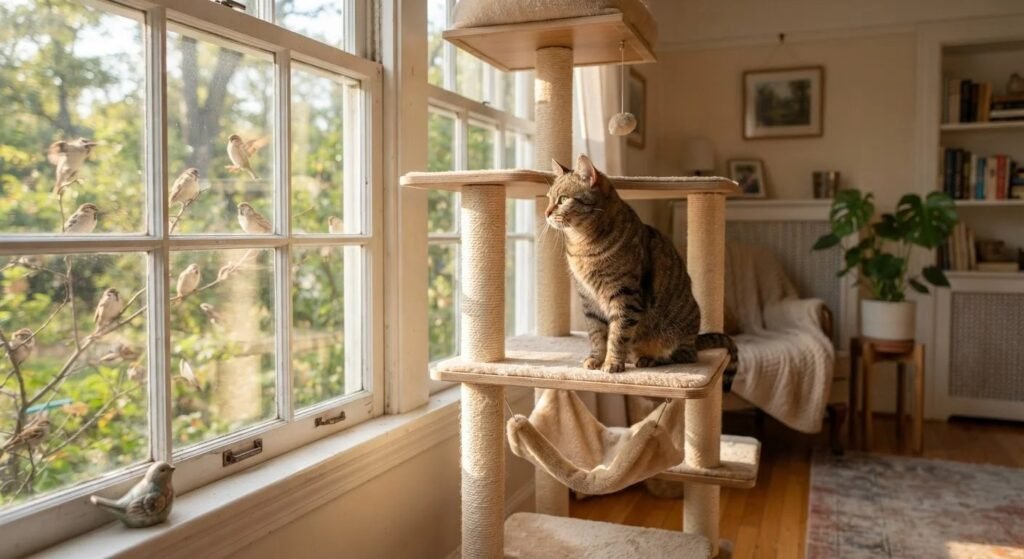
Some cats hide not because they are terrified of people, but because the house gives them no middle ground between “in the middle of the party” and “under the bed.” A cat with a tall cat tree, a shelf, or a doorway perch can watch the guests from above and stay in the room. A cat with no such spot has only two options: endure the visit in the open, or disappear entirely.
Vertical space matters because height feels safe to cats. A cat on a high shelf can see the whole room, cannot be reached without effort, and can leave by jumping down if she wants to.
The fix is simple and cheap: a cardboard box on its side in a quiet corner, a covered bed, a tall cat tree near the living room, and a clear escape route to a quiet room. The safe-room setup below covers this in detail, and it is the single most useful change you can make before your next guests arrive.
7. She is unwell, in pain, or getting older
A cat that used to tolerate visitors and suddenly starts hiding may not be shy at all — she may be unwell. Pain, illness, and cognitive changes all lower a cat’s tolerance for stress, and a cat that feels fragile will hide more, because hiding is how she protects herself when she cannot run or fight.
Arthritis makes jumping and quick escapes painful, so an older cat may hide early rather than risk being cornered. High blood pressure, kidney disease, hyperthyroidism, and dental pain can all make a cat more withdrawn and easily startled. In senior cats, cognitive dysfunction can make familiar things feel strange, and strangers become frightening in a way they never were.
This is the reason that matters most, because it is the only one that needs a vet rather than patience. If the hiding is new, sudden, or getting worse, or if it comes with eating less, drinking more, missing the litter box, or losing weight, book a vet visit before you start any behaviour plan. Our cat age calculator can help you work out whether your cat is in the senior range where these conditions become common.
How Long Do Cats Hide After Visitors Arrive?
Recovery time is the best measure of how serious the hiding is. A cat that comes out twenty minutes after the door closes is coping well. A cat that hides for the rest of the day is struggling, and one that hides for a full day or more needs help — or a vet.
| How long she hides | What it usually means | What to do |
|---|---|---|
| Comes out while guests are still there | Mild caution; she is curious and fairly confident | Nothing — let her choose, and ask guests to ignore her |
| 20 minutes to 1 hour after guests leave | Normal recovery for a shy cat | Keep the routine calm; no changes needed |
| 1 to 4 hours after guests leave | Moderate stress; the visit was a lot for her | Set up a safe room and brief guests before the next visit |
| 4 to 12 hours, or until the next morning | High stress; she needs a better plan | Safe room, visitor rules, and the 4-week trust plan below |
| More than 24 hours, or she stops eating | Serious distress or possible illness | Vet visit — do not wait |
Two details matter when you read this table. First, the clock starts when the guests leave, not when they arrive. Second, recovery should get shorter over time as visits become more predictable. If recovery is getting longer instead, the visits are too big, too loud, or too frequent, and you need to scale them back.
The Safe-Room Setup: What to Do Before Guests Arrive
A safe room is a quiet room your cat can retreat to, with everything she needs, and a door your guests know to leave alone. Set it up before the visit, not during it, because a cat that is already frightened will not settle into a new room easily. A spare bedroom or a quiet study works well, as long as it is away from the party and the music.
Inside the room, put her familiar bed, a hiding box or two (a cardboard box on its side works well), fresh water, and a clean litter box placed away from the food and water. Add a scratching post, a couple of familiar toys, and a worn item of your clothing in the bed so the room smells like home. Keep the room open even when no visitors are expected, so it feels like part of her territory rather than a place she only goes when scared.
Check her water intake if she hides for long stretches, because a cat that will not cross a busy house to drink can become dehydrated. Our cat water intake calculator can help you work out how much she should drink each day, and it is worth checking the safe-room bowl after a long visit.
Before guests arrive, give them three simple rules. First, ignore the cat completely: no calling, no reaching, no staring, no following — the same no-staring rule from our guide to why does my cat stare at me, because a direct stare feels like a challenge. Second, sit down and talk quietly, because people sitting on a sofa look far less threatening than people standing and moving around.
Third, if the cat does come near, toss a treat gently away from them rather than holding it out, so she can take it without coming close.
Never pull your cat out of hiding, and never block the way back in. Reaching under a bed or lifting a blanket to drag her out breaks her trust, makes her hide for longer, and teaches her that hiding places are not safe after all. If she chooses to watch from a doorway or a staircase, that is progress, even if she stays there all evening. Let her set the pace, and she will come further next time.
The 4-Week Trust Plan
If your cat hides from every visitor, a short, structured plan works better than hoping she will get used to it on her own. The method is called desensitisation and counter-conditioning: tiny, easy steps, each paired with something good, so her feelings about visitors slowly change from fear to neutrality — and sometimes to pleasure. Most cats improve in 2 to 8 weeks, though very shy cats may need months.
Week 1 is about the room, not the people. Set up the safe room, keep the routine steady, and practise visitor sounds at low volume during meals: play a doorbell or knock recording very quietly while she eats, then make it slightly louder over several days. The goal is for the sound to predict food, not danger. If she freezes, flattens her ears, or stops eating, the step was too big — go back to an easier version.
Week 2 adds a real person at a distance. Ask a calm friend to visit, sit in a different room, and ignore the cat entirely, while your cat enjoys a puzzle feeder or a favourite meal in her safe room. The visitor is present but not a threat, and the food is good. Repeat this two or three times with the same friend, because familiarity is the whole point: the same calm person, the same quiet visit, the same good outcome.
Week 3 brings the visitor into the same room. The guest sits quietly, avoids eye contact, speaks softly, and tosses treats toward the cat without looking at her. Every time the guest is present, good things happen, and the cat starts to associate strangers with food rather than fear. Keep the visit short — twenty minutes is plenty.
Week 4 is about letting the cat choose. If she approaches, the guest stays still, lets her sniff a hand, and does not reach out. If she slow blinks — a long, deliberate narrowing of the eyes — the guest can slow blink back. A 2020 University of Sussex study found cats were more likely to approach a stranger who slow blinked at them than one with a neutral face.
Two warnings matter. First, never force a frightened cat to face her fear — behaviourists call that flooding, and it usually makes fear much worse. Second, measure progress by smaller signs: shorter recovery times, eating normally during a visit, and watching from the doorway instead of hiding under the bed. Those are real progress, even if she never sits on a stranger’s lap.
When Hiding Needs a Vet
Most hiding from visitors is normal shyness, and the safe room and trust plan will handle it. But hiding that is new, sudden, or paired with other changes deserves a vet visit, because cats hide illness well.
Call your vet promptly if your cat stops eating for more than 24 hours, stops using the litter box, hides while also losing weight or looking dull-coated, shows pain when touched, or becomes aggressive when approached. A cat that hides all day, every day — not just when visitors come — is not shy. She is unwell, in pain, or deeply stressed, and she needs medical attention rather than more patience.
Senior cats deserve extra attention here. A cat over ten that suddenly starts hiding from visitors may be dealing with arthritis, failing vision or hearing, high blood pressure, or cognitive dysfunction. Our cat food calculator can help you check whether her daily portions still match her weight and activity level, which is useful information to take to the vet — but it is not a substitute for an exam.
For trustworthy background reading, the ASPCA’s guide to common cat behavior issues covers fear and hiding with practical steps, and International Cat Care’s guide to understanding your cat explains how cats use hiding places, scent, and body language to feel safe. Both agree on the core rule that runs through this whole article: never force a frightened cat out of hiding, and let her decide when she feels safe enough to come out.
Frequently Asked Questions
Why does my cat hide when the doorbell rings?
Because the doorbell is a sudden, loud, unpredictable sound that predicts strangers. To a cat, the ring means the front door is about to open and someone unknown is about to walk in, and the safest response is to disappear before that happens. Many cats start hiding at the sound of the bell itself, before they have seen anyone at all. Cats are very tuned to doors — as we cover in our guide to why does my cat meow at the door.
You can desensitise the sound separately from the visitors. Play a recording of a doorbell very quietly during meals, and make it slightly louder over several days, so the sound starts to predict food instead of strangers. Once the bell itself stops scaring her, the visits become much easier to handle.
Do pheromone diffusers help a cat that hides from visitors?
They can help, but they are a support, not a solution. Pheromone diffusers release a synthetic copy of the facial pheromone cats deposit when they rub their cheeks on objects, which signals that a place is safe and familiar. Some studies have found they reduce stress-related behaviours in cats, though the effect varies a lot from one cat to another.
Plug one in the safe room 12 to 24 hours before guests arrive, and keep it running through the visit. Do not expect it to turn a hiding cat into a greeter on its own — it works best alongside a safe room, calm visitors, and the trust plan. If your cat shows no change after a few visits, the diffuser is probably not doing much for her, and the behaviour plan matters more.
Should I get another cat to help my shy cat feel braver?
Usually not, and it can make things worse. A second cat is another unpredictable animal in the house, and a shy cat that is already overwhelmed by visitors may find a new cat far more stressful than a new person. Cats do not automatically comfort each other, and two cats that do not get along will create a whole new set of hiding, spraying, and litter box problems.
A second cat only helps if the two cats genuinely bond, and that is impossible to guarantee in advance. If your cat is the only pet and she is happy with your family, the better investment is a safe room, a tall cat tree, and patient visitor training — not a companion she did not ask for.
Why is my cat scared of men specifically?
Because men are often bigger, louder, and heavier-footed than women, and those three things all read as threatening to a cat. A deep voice carries further and vibrates more, large hands reach further, and heavy footsteps shake the floor that a cat feels through her paws. If your cat’s early socialisation was mostly with women, or if a man once frightened her, the pattern can be very specific.
The fix is the same as for any visitor fear, but with the right volunteer: ask a calm, quiet man to be the practice guest in the trust plan. He should sit down, speak softly, avoid eye contact, and toss treats without reaching out. Over several visits, most cats learn that this particular man is safe, and the fear usually softens for men in general as well.