Why Does My Dog Push Me With His Nose? Explained
You are sitting on the sofa, minding your own business, when a cold wet nose presses into your arm. Then it happens again, a little harder this time. If you have ever wondered why does my dog push me with his nose, you are not alone. It is one of the most common things dogs do, and it is also one of the most misunderstood.
A nose push is not random. Dogs use their noses the way people use their hands and their voices. A push can mean “I love you,” “feed me,” “play with me,” or “something is wrong.” The same push can mean very different things depending on when it happens and what the rest of the body is doing.
This guide explains the eight reasons dogs push you with their nose, how to tell them apart in seconds, and what to do about the ones that become a habit. It also covers when a sudden change in nudging needs a vet.
Direct answer: Dogs push you with their nose to communicate. Most of the time it means affection, a request for attention, or a specific want such as food, a walk, play, or more petting. A soft, relaxed nudge during quiet time is usually love or comfort. A firm, repeated push while you are busy is usually a learned request. Sudden, constant, or frantic nudging paired with restlessness, lethargy, or loss of appetite can signal anxiety or pain and deserves a vet visit.
The nose is a dog’s main tool for exploring the world. Dogs have around 300 million scent receptors, compared with about 6 million in people, and they learn about you by pressing that nose against you. When your dog pushes its nose into you, it is reading your scent, asking for something, or both at the same time.
Why Does My Dog Push Me With His Nose? The Short Answer
A nose push is a dog’s way of starting a conversation. Dogs cannot point, speak, or tap you on the shoulder, so they use the tool they were born with. The nose is sensitive, precise, and always with them. A gentle press against your hand, leg, or side is a message, and the meaning is in the timing.
If the push comes during a quiet cuddle, with a loose body and a slow wag, it is almost always affection. Your dog is saying it feels safe and wants to be close. If the push comes while you are working, eating, or on the phone, it is almost always a request. Your dog has learned that a nose bump gets your attention faster than sitting and waiting.
Context is the key that unlocks the meaning. A nudge near the back door at walk time means something different from a nudge at 3 a.m. A nudge from a relaxed dog means something different from a nudge from a stiff, panting dog. This guide gives you a simple decoder so you can read the push in the moment, instead of guessing.
Where the Nose Nudge Comes From
Nose pushing starts in the first days of life. Newborn puppies are blind and deaf, and they find their mother’s milk by pushing their noses along her belly. They also push their littermates out of the way to reach a nipple. The nose is the first tool a puppy ever uses to get what it needs, and that lesson stays for life.
As puppies grow, the nose becomes their main way of learning about the world. A dog’s sense of smell is between 10,000 and 100,000 times more sensitive than a person’s. When your dog presses its nose against you, it is taking in your scent in the most direct way possible. Your scent tells your dog who you are, where you have been, and how you are feeling.
Wolves, the dog’s wild ancestors, use nose touches in the same way. They greet each other with muzzle contact, push pack members to get attention, and nudge pups to move them. Your dog is using an ancient piece of wolf body language, translated into life in your living room.
The 8 Reasons Dogs Push You With Their Nose
Here are the eight reasons, from the most common to the least. Most nudges come from the first three. The last two are the ones that need attention.
1. Attention
This is the most common reason of all. Your dog wants you to look at it, talk to it, or touch it, and a nose push is the fastest way to make that happen. Dogs learn this quickly because it works nearly every time. You are busy, the nose arrives, and you respond.
Attention nudges usually happen when you are focused on something else. You are on your phone, working on a laptop, reading a book, or talking to someone. Your dog walks over, pushes its nose into your arm or leg, and waits. If you look down, it has won. If you pet it, it has won twice.
There is nothing wrong with attention nudging on its own. It only becomes a problem when it is constant, demanding, or paired with barking, pawing, or whining. A dog that cannot settle without your attention may need more exercise, more play, or a clearer routine. Our dog exercise calculator can help you check whether your dog is getting enough daily activity.
2. Affection and bonding
A soft nose push during quiet time is one of the clearest signs of love a dog can give. The dog is relaxed, its body is loose, and it presses its nose into you gently, then settles down beside you. It is not asking for anything. It is simply enjoying being close.
You will often see affection nudges when you come home, when you sit down after a long day, or when your dog wakes from a nap and comes to find you. The nudge may be followed by a lean, with the dog pressing its whole body against your leg. Or the dog may rest its chin on your lap after the push.
This kind of nudge is a compliment. Your dog feels safe with you and wants to stay near you. Dogs that nudge for affection usually have a strong bond with their owner, and the behaviour is a sign that the bond is working. Enjoy it, and answer it with a calm stroke if you like.
3. A specific request
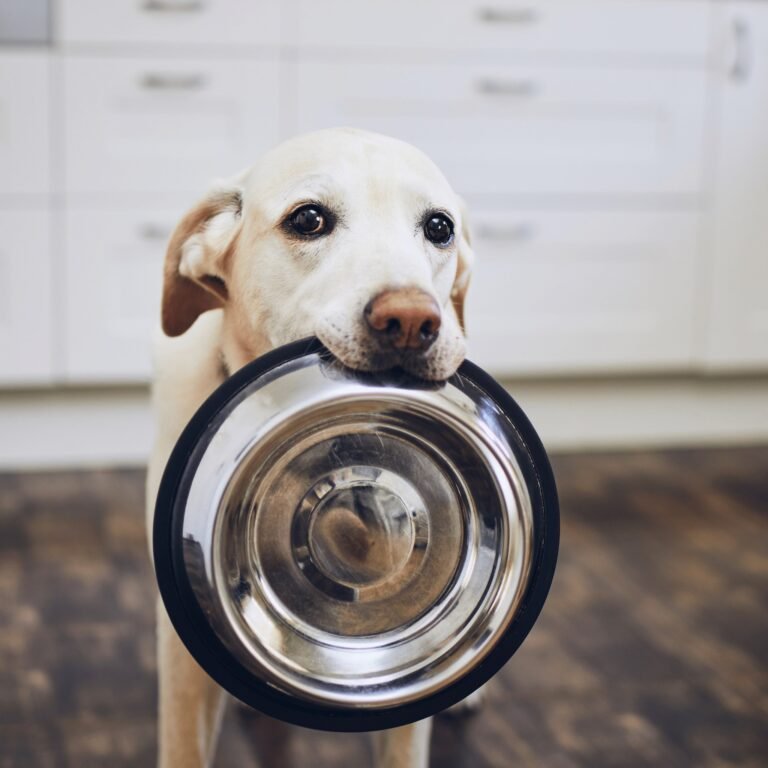
Sometimes a nose push is a shopping list with one item on it. Your dog wants food, water, a walk, a toilet break, or a toy, and it has learned that pushing you is the best way to ask. The clue is in the timing and the direction of the push. A nudge near the food bowl at meal time usually means hunger, and a nudge near the back door usually means the toilet or a walk.
4. “Pet me more”
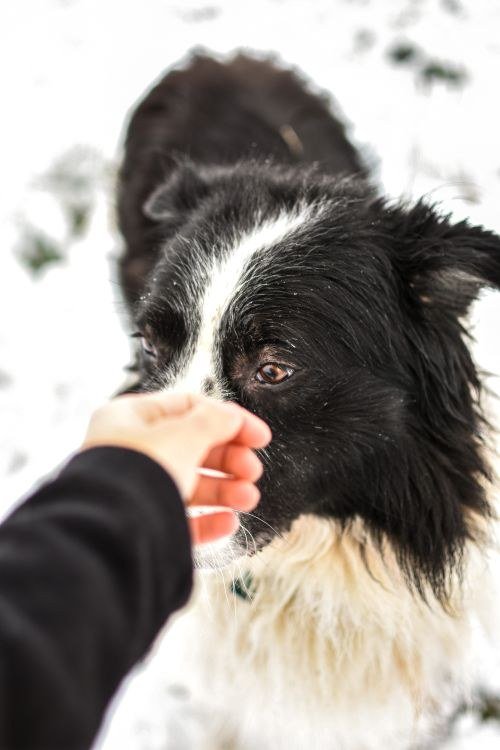
This is the classic nudge, and almost every dog owner knows it. You are petting your dog, you stop for a moment, and a nose slides under your hand and lifts it back into place. Your dog is saying, very politely, that you stopped too soon.
Dogs that do this have learned that your hand is a wonderful thing and that a nose push is the way to keep it working. It is the same behaviour as the yawning dogs in our guide on why dogs yawn when petted. Both are polite requests, and both deserve a kind answer when you have the time.
If you want to stop petting, do it gently. Say a calm word, give a final stroke, and then fold your hands. If your dog keeps pushing, ignore the push for a few seconds rather than scolding it. The dog will learn that a single polite request works, but that repeated pushing does not.
5. Herding instinct
Some dogs push with their noses because they were bred to do it. Herding breeds such as Border Collies, Australian Shepherds, Shetland Sheepdogs, and Corgis were developed to move livestock by pressing, nudging, and guiding with their bodies. When there are no sheep around, you become the flock.
A herding nudge feels different from other nudges. It is often aimed at your legs or heels, and it may come with circling, staring, or a low crouch. The dog may push you in a particular direction, usually towards a room, a door, or the rest of the family. It is trying to gather you, the way it would gather sheep.
This is not dominance or bad behaviour. It is instinct, and it needs an outlet. Herding dogs that do not get enough mental work will herd their owners more. Training games, agility, and scent work all help. A tired herding dog is a much calmer herding dog.
6. Greeting and excitement
Many dogs greet their owners with a nose push. You walk through the door, and before you have put your bag down, a nose is pressed into your leg or hand. This is the dog’s version of a handshake and a hug rolled into one.
Greeting nudges are usually fast, happy, and paired with a wagging tail and a wiggly body. The dog is not asking for anything specific. It is simply thrilled that you are home, and the nose is the first thing that reaches you. Puppies and young dogs do this most, and it usually calms down with age.
7. Comfort and reassurance
Dogs also nudge when they want comfort, or when they think you need it. A dog that nudges you during a thunderstorm or a tense argument is usually asking for reassurance. It wants to be close to its safe person.
Comfort nudges are usually soft and persistent. The dog stays close, leans in, and may rest its head on you after the push. Answering with calm petting and a steady voice helps the dog settle. If your dog nudges for comfort often, it may be dealing with anxiety, and a vet or behaviourist can help. The ASPCA’s guide to separation anxiety explains when clingy behaviour needs professional support.
8. Pain, illness, or anxiety
This is the rarest reason, but it is the one to take seriously. A dog that suddenly starts nudging far more than usual, or nudges in a frantic, restless way, may be trying to tell you that something hurts or feels wrong. The nudge is the dog’s way of asking for help.
Pain nudges often come with other changes. The dog may be restless, panting, licking its lips, hiding, eating less, or sleeping badly. It may nudge a particular part of its own body, or push against you and then look at the painful spot. Senior dogs may nudge more as their senses fade and they rely on touch to find you.
Anxiety can also drive extra nudging. A dog that has just moved house, lost a companion, or had its routine changed may nudge constantly as a way of checking that you are still there. If the nudging is new, constant, or paired with any other change in behaviour, book a vet visit. It is always better to check and find nothing than to miss something real.
The Nudge Decoder: What the Push Really Means
This table is the heart of the guide. Match what you see to a row, and you will know what your dog is asking for in seconds. Always read the whole dog, not just the nose.
| What you see | What it usually means | What to do |
|---|---|---|
| Soft push, loose body, slow wag, during cuddle time | Affection and bonding | Enjoy it; a calm stroke is a fine answer |
| Push while you are on the phone or laptop | Attention request | Finish what you are doing, then give a short petting break |
| Push, then the dog walks to the door and looks back | Toilet break or walk | Let the dog out; check the walk routine |
| Push near the food bowl at meal time | Hunger | Check the feeding schedule and portion size |
| Nose slides under your hand when petting stops | “Pet me more” | Pet a little longer, or end gently with a calm word |
| Push at your heels, circling, low crouch | Herding instinct | Give the dog a job: training games, agility, scent work |
| Fast push the moment you walk in, wiggly body | Happy greeting | Say hello calmly; keep greetings low-key |
| Soft push during a storm, dog stays glued to you | Comfort and reassurance | Stay calm, pet slowly, offer a safe den space |
| Frantic, constant pushing, restless, panting | Anxiety or pain | Book a vet visit; do not wait to see if it passes |
When Nudging Becomes a Problem
Most nudging is harmless and even sweet. It becomes a problem when it is constant, demanding, or impossible to ignore. A dog that pushes your arm every few minutes, barks when you do not respond, or paws and mouths at you has learned that demanding behaviour works. That is not the dog’s fault. It is a habit that was rewarded, one push at a time.
The fix is not punishment. Scolding a dog for nudging usually makes things worse, because even a scolding is attention. The dog learns that pushing gets a reaction, even if the reaction is a loud “no.” The fix is to reward the behaviour you want and to ignore the one you do not.
Start by teaching a polite alternative. When your dog nudges you, wait. The moment it sits or settles down, reward it with attention or a treat. The dog quickly learns that sitting earns a response faster than pushing does. Keep the training sessions short, five minutes at a time, and repeat them through the day.
Also check the basics before you start training. A dog that nudges constantly may simply be bored or under-exercised. A long walk, a puzzle feeder, or a training game can cut nudging in half without any other training at all.
Nudging by Breed: Who Pushes Most?
All dogs nudge, but some breeds do it more than others. Herding breeds top the list, because the nose push is part of their working toolkit. Border Collies, Australian Shepherds, German Shepherds, and Corgis often push at heels and legs. They are not being rude. They are doing the job they were bred for, and they need a real outlet for that drive.
Retrievers are close behind. Labradors and Golden Retrievers were bred to work closely with people, and they often nudge with their noses and then offer a toy. It is their way of starting a game and staying connected to you.
Small companion breeds such as Cavalier King Charles Spaniels, Pugs, and French Bulldogs often nudge for affection and lap time. They were bred to be close to people, and the nose push is their way of asking to be picked up or cuddled. Their nudges are usually soft and frequent.
Breed is only a starting point, though. Every dog is an individual, and the dog in front of you matters more than the breed label. A calm Labrador may barely nudge at all, while a nervous Border Collie may nudge all day. Watch your own dog’s patterns, and you will learn its language faster than any breed guide can teach you.
When to See a Vet About Nudging
Most nudging needs no vet at all. A few patterns do. The most important one is change. If your dog has always been a gentle nudger and suddenly becomes frantic, constant, or pushy, something has shifted. A sudden change in any behaviour deserves a check.
Book a vet visit if the nudging comes with lethargy, loss of appetite, vomiting, diarrhoea, limping, or hiding. These are general signs that a dog does not feel well, and the nudging may be its way of asking for help. Senior dogs deserve extra attention here, because pain and cognitive decline can both show up as extra clinginess and nudging.
Also see a vet if your dog nudges one particular spot on its own body again and again, or pushes against you and then licks or chews at the same place. Dogs often point at pain with their noses before they show any other sign. A dog that nudges its belly, its ear, or a leg may be telling you exactly where it hurts.
Before the visit, take a short video of the nudging and note when it happens and how often. A video is worth more than a description, because the vet can see the body language for itself. The same approach works for other body-language puzzles, such as the floor licking covered in our guide on why dogs lick the floor.
If the vet finds nothing medical, the next step is a behaviourist, who can tell attention-seeking from anxiety and build a plan for your dog. The VCA’s guide to canine communication is a good place to start learning the wider body-language vocabulary, from yawning and lip licking to the full calming-signal set.
Frequently Asked Questions
Why does my dog push me with his nose when I am sleeping?
Dogs nudge sleeping owners for a few reasons, and most are simple. Your dog may need the toilet, be thirsty, or feel cold and want under the covers. Some dogs nudge at night because they heard a sound outside and want you awake. A single gentle nudge is usually a request. If it happens every night, check the evening routine first: a last toilet break, fresh water, and a comfortable bed often fix it. If the night nudging is new and constant, especially in a senior dog, mention it to your vet, because pain and cognitive changes often show up first at night.
Why does my dog nudge me and then walk away?
This usually means the nudge was a check-in, not a request. Your dog wanted to confirm you were there, to get a brief touch, or to invite you to follow. When you do not follow, the dog moves on. Watch where the dog goes after the nudge. If it goes to the door, the food bowl, or a toy, it was probably asking for something and gave up when you did not respond. If it simply goes back to its bed, it was just saying hello in its own way.
Why does my dog push his head into me?
A gentle head press against you is usually the same as a nose nudge: affection, comfort, or a request for attention. It becomes a concern when the dog presses its head hard against a wall, a corner, or a piece of furniture and holds it there. That behaviour is called head pressing, and it is different from nudging. Head pressing can signal a serious brain or liver problem and needs an urgent vet visit. The difference is in the target and the force. A soft head lean into your lap is love. A hard, fixed press into a wall is a medical emergency.
Can dogs sense when something is wrong with you?
Yes, to a surprising degree. Dogs read changes in your scent, breathing, posture, and tone of voice, and they can detect shifts that people miss. There are documented cases of dogs alerting owners to low blood sugar and seizures by smell. Most of the time, though, the sensing is simpler: your dog notices you are sad or tense because your body language and smell have changed, and it comes to comfort you with a nudge.
Why does my dog nudge strangers with his nose?
Dogs nudge strangers for the same reasons they nudge you, but with less history behind it. A friendly dog may nudge a visitor to say hello, to ask for a pet, or to check out the new person’s scent. It is usually a sign of a confident, social dog. Some dogs nudge strangers because they are nervous and want reassurance. If your dog nudges strangers too eagerly, teach it to sit for greetings instead. And always ask before letting a dog nudge a stranger, because not everyone is comfortable with a cold nose on their hand.
A nose push is a small gesture with a big meaning. It can mean love, hunger, boredom, excitement, or a quiet request for help. The nose looks the same either way, so the answer is never in the push alone. It is in the timing, the body, and what happens next. Learn to read the whole dog, answer the polite requests, and take the sudden changes seriously.