Why Is My Gerbil Not Eating? Causes & What to Do
Your gerbil’s food bowl is still full. It was full yesterday too. The little animal that used to rush out for seeds at the sound of the bag is now sitting in its hide, quiet, and not eating. If that is happening right now, you are probably asking: why is my gerbil not eating, and how long do I have before this becomes an emergency?
Direct answer: The most common reason a gerbil stops eating is dental pain — overgrown or misaligned teeth that make chewing hurt. But first, check whether it is actually eating: gerbils hide food in stashes all over the cage, so a full bowl often means nothing.
If your gerbil is truly not eating, do the treat test below. A gerbil that eats treats but not pellets is picky or has sore teeth. A gerbil that refuses everything, including treats, needs a vet the same day — gerbils can go downhill within 24 hours without food.
This guide walks you through the checks in order: the stash check, the treat test, the cause decoder, what to try at home, and the exact point where you stop watching and call the vet.
First, check the stash — is your gerbil actually not eating?
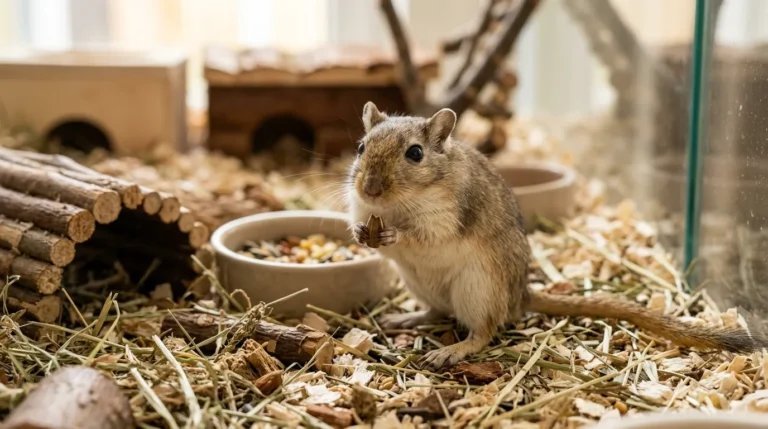
Before anything else, check whether your gerbil is eating at all. Gerbils are hoarders. In the wild, Mongolian gerbils (Meriones unguiculatus) bury seeds in burrows to survive lean times. Pet gerbils do the same thing in a cage. They carry food from the bowl to a corner, a tunnel, a hide, or a pile of bedding, and bury it.
That means a full bowl tells you very little. Your gerbil may have eaten its fill from the stash under the bedding while the bowl sat untouched. Lift the hides, dig gently through the bedding corners, and look for buried seeds and pellets. If you find a stash that is getting smaller, your gerbil is eating — it is just eating in private.
Also check the droppings. A gerbil that is eating produces small, dark, firm droppings, scattered through the cage. Count roughly how many you see. Very few droppings, or none at all, means the gut is empty. That is a much better test than the food bowl.
Check the water bottle too. A gerbil that is not eating and not drinking is in more danger than one that is still drinking. Tap the bottle and watch for a drop of water at the spout. Mark the water level with a small piece of tape and check it again in a few hours. If the level has not moved and the gerbil is not eating either, call the vet today.
Finally, watch the gerbil for ten minutes without touching the cage. Is it moving normally, grooming, digging, and exploring? Or is it hunched, puffed up, and still? A gerbil that moves normally and just seems less interested in one food is a different case from a gerbil that has gone quiet all over. Write down what you see — the time, what it ate last, and how it is behaving. A vet will ask for exactly this.
Why is my gerbil not eating? The causes, in order
If the stash check says your gerbil really is not eating, work through this decoder. Find the row that matches what you see, and follow the action in the last column.
| What you see | Likely cause | How urgent | What to do |
|---|---|---|---|
| Eats treats but drops or ignores pellets and seeds | Dental pain — overgrown or misaligned teeth | Vet within 24 hours | Offer soft food; book an exotic vet; do not trim teeth yourself |
| Not eating, drooling, wet chin, dropping food from mouth | Malocclusion or tooth root abscess | Vet the same day | Soft food only; vet today — teeth may need trimming under anaesthetic |
| Not eating, hunched, puffed up, no droppings | Gut slowdown or blockage | Vet the same day | Keep warm; offer water; do not force-feed; vet now |
| New gerbil, hiding, not eating for a day or two | Stress of a new home | Watch for 48 hours | Leave alone, keep the room quiet, offer food near the hide |
| Not eating after a cage clean, a move, or a new cage-mate | Stress or social disruption | Watch for 48 hours | Restore the old layout, keep handling to a minimum |
| Not eating, shaking, falling over, head tilted | Seizure, ear infection, or neurological problem | Vet the same day | Keep the room dark and quiet; do not handle; vet now |
| Old gerbil (over 2 years), eating slowly, losing weight | Old age, arthritis, or organ decline | Vet within days | Soft foods, easy access to food and water, vet check |
| Not eating, sneezing, clicking breathing, wet nose | Respiratory infection | Vet the same day | Warm, draught-free cage; vet today — infections move fast |
| Not eating in hot weather, lying flat, lethargic | Heat stress | Vet the same day if it does not improve | Move to a cool room, offer cool water, never use ice directly on the gerbil |
| Not eating, but drinking, active, and passing droppings | Picky eating or stale food | Watch for 48 hours | Fresh food, try a different mix, check the food is not stale or damp |
Dental problems sit at the top of the table for a reason. Gerbil teeth grow all through life — about 2–3 mm a week for the incisors. In the wild, tough seeds, roots, and gnawing keep them worn down.
In a cage, a diet of soft pellets and too few things to gnaw lets the teeth overgrow. The teeth meet wrongly, cut the tongue and cheeks, and eating becomes painful. The gerbil stops eating hard food first, then soft food, then everything.
The signs are easy to miss at first. Your gerbil takes longer to eat. It drops food from its mouth. It prefers soft foods and ignores hard seeds. It loses weight. You may see drool on the chin or wet fur around the mouth. By the time a gerbil refuses all food, the dental problem has usually been building for weeks.
Never try to trim a gerbil’s teeth yourself. It is easy to crack a tooth, cut the tongue, or cause an infection. Tooth trimming needs an exotic vet, usually under anaesthetic, and the vet will also check the back teeth, which you cannot see at home. Prevention is the long game: hard foods, wooden chews, cardboard, and a good seed mix every day.
The treat test: a 60-second check that tells you a lot
If your gerbil is not eating its normal food, offer a high-value treat and watch what happens. This one test separates three very different situations.
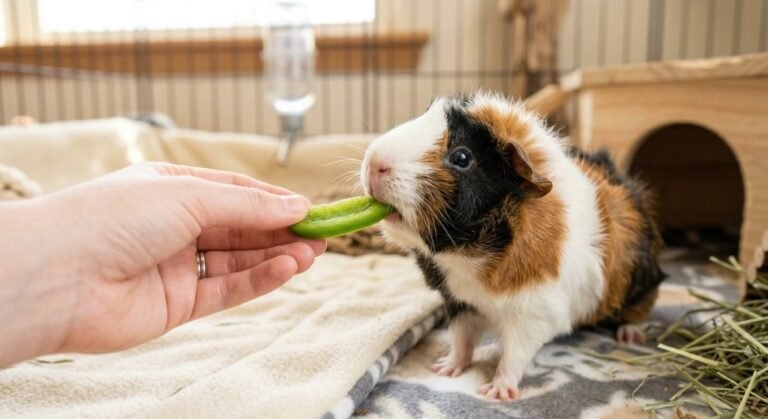
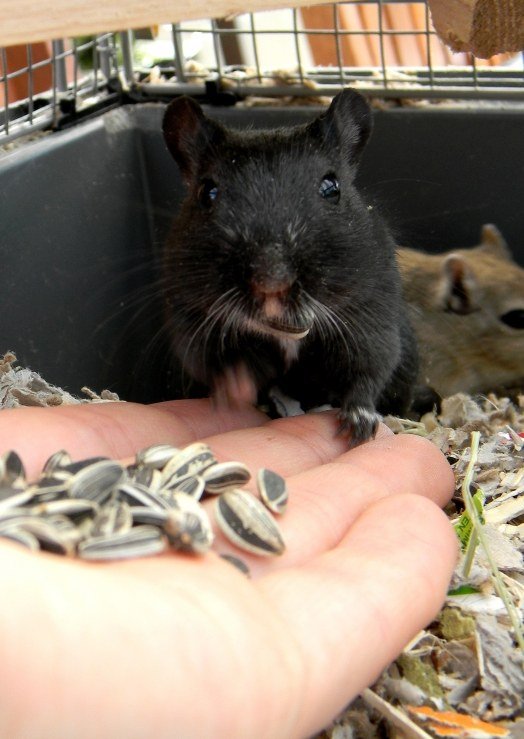
Offer a single sunflower seed, a tiny piece of plain cooked chicken, or a small bit of cucumber. Hold it near the gerbil, or place it just outside the hide. Then watch for one minute.
If the gerbil takes the treat and eats it eagerly, the problem is probably the food, not the gerbil. It may be bored of the mix, the food may have gone stale, or it may be holding out for better things. Try a fresh batch of a different seed mix, and offer a small piece of fresh vegetable alongside the pellets.
If the gerbil takes the treat, tries to chew, and drops it — or chews slowly, on one side, with visible effort — the problem is probably the teeth. The gerbil wants to eat and cannot. Offer soft food (see below) and book an exotic vet within 24 hours.
If the gerbil ignores the treat completely, does not move toward it, or turns away, the problem is probably illness or pain somewhere else in the body. A gerbil that refuses a sunflower seed is a gerbil that feels very unwell. Call the vet the same day. Do not wait to see if it improves tomorrow.
Repeat the test once, a few hours later, if the first result is unclear. But do not keep offering treats all day. A sick gerbil needs a vet, not a buffet. And never offer sugary treats, chocolate, or human snacks as a test — a sunflower seed or a piece of cucumber is enough.
What to try at home while you wait for the vet
There is a lot you can do at home, but all of it is support — none of it replaces a vet when the gerbil is truly not eating. Work through these steps in order.
Check the food. Tip the food bowl out and look at it. Is the mix damp, dusty, or stale? Has it been sitting there for a week? Gerbils notice stale food and will refuse it. Offer a fresh tablespoon of a good-quality gerbil mix, and a small amount of plain oats. Store the mix in a sealed container, not an open bag, so it stays fresh.
Check the water. A blocked bottle is one of the most common hidden causes of a gerbil going off its food. Tap the spout and make sure water comes out. Fill the bottle with fresh water every day, and clean it weekly. Some gerbils also prefer a heavy ceramic bowl of water — offer one alongside the bottle and see which one gets used.
Offer soft foods. A gerbil with sore teeth can often manage soft food when hard pellets are impossible. Try a small amount of plain porridge made with water, a little mashed banana, a tiny piece of plain cooked egg, or a few oats soaked in water. Offer a teaspoon at a time, and remove anything uneaten after a few hours. Soft food is a bridge, not a diet — it keeps the gerbil going until the vet visit.
Warm the cage. Gerbils need a room temperature of about 20–24°C (68–75°F). A cold gerbil eats less, moves less, and gets ill faster. Check for draughts from windows and doors. Add extra bedding so the gerbil can nest. A cold room is a common trigger for a gerbil that suddenly stops eating in winter.
Reduce stress. Leave the gerbil alone as much as possible. No handling, no cage cleaning, no new toys, no loud music or television nearby. Keep dogs and cats out of the room. A stressed gerbil will not eat, and every disturbance adds to the stress. Let it settle in a quiet, dim corner for a day.
Keep a log. Write down what the gerbil ate, how many droppings you saw, whether it drank, and how it behaved — morning and evening. A two-day log turns a vague “it is not eating” into a clear picture your vet can act on. Owners who bring notes get faster, better diagnoses.
When to call the vet — the 24-hour rule
Gerbils are small, fast-burning animals. A healthy gerbil eats several times a day and passes droppings constantly. That means a gerbil that has not eaten for 24 hours is already in trouble, even if it still looks fairly normal.
Call the vet the same day if your gerbil has not eaten anything — not even treats — for 12 hours and also shows any of these signs: hunched posture, puffed-up fur, lethargy, no droppings, drooling, laboured breathing, a swollen belly, or a head tilt. Any one of these, combined with not eating, is enough.
Call the vet within 24 hours if your gerbil is eating treats but not its normal food, is eating slowly and dropping food, or has lost weight. These are the early dental signs. Caught early, a tooth trim and a diet change fix the problem. Caught late, the gerbil may need syringe feeding and a longer recovery.
Watch at home for 48 hours only if your gerbil is new, or if the only change is a cage clean or a move, and the gerbil is otherwise bright, active, drinking, and passing droppings. If it is still not eating normally after 48 hours, call the vet anyway. “Wait and see” should never stretch past two days for a gerbil.
Find an exotic vet before you need one. Not every vet treats gerbils, and a general practice may not have the tools or the experience. Ask your local practice whether they see exotic pets, or search for an exotic animal vet in your area now, while your gerbil is healthy. Keep the number on the fridge. In an emergency at night, call the vet’s out-of-hours number rather than waiting for morning.
Our guide to why is my gerbil shaking covers the other emergency every gerbil owner should know — how to tell a seizure from a shiver. And if you are not sure how old your gerbil is, the gerbil age calculator converts its age into human years, which helps you judge whether slowing down is normal ageing or something more. The hamster age calculator is useful too if you keep both species and want to compare their life stages.
New gerbils, old gerbils, and the cases that are not illness
Not every gerbil that stops eating is ill. Three situations deserve a special mention, because they worry owners who do not need to worry — and because they look identical to illness from the outside.
A new gerbil often does not eat for the first day or two. It has just left everything it knows: its cage-mates, its smells, its routine. It will hide, freeze, and refuse food while it works out whether the new place is safe.
This is normal. Leave food and water close to the hide, keep the room quiet, and do not handle it. Most new gerbils start eating within 48 hours. If it is still not eating after three days, call the vet.
An old gerbil eats more slowly and less enthusiastically. Gerbils live about 2–4 years, and after two years they slow down. Their teeth wear unevenly, their joints ache, and their appetite drops. An old gerbil that eats soft food, drinks, and moves around — just more slowly — is ageing, not dying. Offer food in a shallow dish it can reach easily, keep the cage layout the same, and book a senior check with the vet.
A gerbil that has just lost a cage-mate may stop eating from grief and stress. Gerbils are social animals, and a lone gerbil in a suddenly quiet cage often goes off its food. Keep the routine steady, offer favourite foods, and talk to your vet about whether a new companion is right. Never introduce a new gerbil without a proper split-cage introduction — a rushed meeting can end in a fight.
The Merck Veterinary Manual’s guide to gerbil care covers the basics of diet, housing, and common health problems, and it is the best single authority to check against. For day-to-day care, our guide to how often to clean a gerbil cage explains the cleaning routine that keeps a gerbil’s home — and its appetite — healthy.
Frequently asked questions
How long can a gerbil go without food?
The honest answer is that the sources disagree wildly — one site says two weeks, another says three days, another says seven days — and all of them are talking about survival, not safety. A gerbil’s body can keep it alive for a few days without food by burning fat reserves, but damage starts much sooner.
The gut slows down, the liver strains, and the immune system weakens within 24 hours. That is why vets use a 24-hour rule: a gerbil that has eaten nothing for 24 hours needs a vet, whatever the survival figures say. Do not use “it can survive three days” as a reason to wait.
Is it safe to force-feed a gerbil that is not eating?
Only under a vet’s guidance, and only with the right food. Syringe-feeding a tiny animal is risky: food can go down the wrong way and into the lungs, which can cause pneumonia. Your vet may show you how to syringe-feed a recovery food such as Oxbow Critical Care, a few drops at a time, with the gerbil held upright.
Never force-feed water, never use a kitchen syringe with a needle, and never force-feed a gerbil that is limp, cold, or unconscious — that animal needs emergency vet care, not food. If your vet has not shown you how, do not try it at home.
Why is my gerbil not eating but still drinking?
This pattern points to the mouth, not the gut. A gerbil that drinks normally but will not eat is usually dealing with dental pain — it can swallow water, but chewing hurts. It can also mean a mouth injury, a sore tongue, or a small abscess.
Offer soft food straight away: porridge, mashed banana, soaked oats. If the gerbil eats the soft food eagerly, that confirms the teeth are the problem, and a vet visit within 24 hours is the right move. If it refuses soft food too, call the vet the same day.
Why is my gerbil not eating its pellets but eating treats?
This is selective eating, and it is common. Gerbils are smart enough to hold out for the good stuff. If you keep offering sunflower seeds every time the pellets are refused, you are training the gerbil to refuse pellets. The fix is simple: stop the treats for a few days and offer only the normal mix, plus a little fresh vegetable.
If the gerbil starts eating the mix again, it was pickiness. But check first — a gerbil with sore teeth also picks soft treats over hard pellets, so if the treat test shows dropped food or one-sided chewing, treat it as a dental problem and book a vet visit.
My gerbil is eating but losing weight — why?
Eating without maintaining weight is a different problem from not eating, and it needs a vet. The common causes are dental disease (the gerbil chews but swallows less than it looks like), intestinal parasites, diabetes, kidney disease, or an overactive thyroid. Old age plays a role too.
Weigh your gerbil weekly on kitchen scales — a loss of more than 10% of body weight in a week is serious. Bring the weight log to the vet, along with a note of what the gerbil is eating each day. The vet will usually start with a teeth check and a droppings test.