Why Is My Gerbil Shaking? Causes & What to Do
You glance at your gerbil’s cage and freeze. Your gerbil is shaking — trembling all over, or twitching in short bursts — and you have no idea whether it is cold, scared, excited, or seriously ill. If that is happening right now, you are probably asking: why is my gerbil shaking, and do I need a vet today? The short version is that most shaking is harmless and passes in minutes — but a seizure looks very similar, and knowing the difference is the skill that matters.
Direct answer: Gerbils shake for many reasons — cold, fear, excitement, or a seizure. A short tremble that stops when you warm or calm the gerbil is usually harmless. A gerbil that goes stiff, falls on its side, paddles its legs, or cannot be interrupted is having a seizure. Most gerbil seizures last under two minutes and stop on their own, but any shaking with laboured breathing, a limp body, or no eating or drinking needs a vet the same day.
This guide gives you the 60-second check that separates the harmless shakes from the ones that need help. It is built around one table — the shake decoder — which is the part to read first if your gerbil is shaking right now.
The 60-second check: what to look at first
When a gerbil shakes, do not pick it up straight away. Watch it for one minute and answer four questions. The answers will tell you which kind of shaking you are seeing.
- Is the gerbil awake and aware? A shaking gerbil that is looking around, sniffing, and reacting to you is conscious. A gerbil that stares blankly, does not respond to a sound, or seems “switched off” is not — and that points toward a seizure.
- Can you interrupt it? Offer a treat or tap the cage gently. A cold or frightened gerbil will usually stop shaking and move toward the food or the sound. A seizing gerbil cannot be interrupted at all.
- What is its body doing? Fine trembling all over is usually cold or fear. Rhythmic shaking with the body upright is usually excitement or stress. Going stiff, falling over, or paddling the legs is a seizure.
- What happened just before? A loud noise, a sudden light, being picked up, a cold room, or a new cage-mate all point to stress or cold. Shaking that starts from nowhere, with no trigger at all, needs more attention.
Write down what you saw — the time, how long it lasted, what the gerbil was doing before, and how it behaved afterwards. A vet will ask for exactly this, and owners who have notes get a faster, better diagnosis than owners who say “it shook a bit, I think.”
If the shaking has already stopped and the gerbil is eating, drinking and moving normally, you can breathe. Watch it for the rest of the day, keep the room warm and quiet, and use the decoder table below to work out what it was.
Why is my gerbil shaking? The shake decoder
Here is the centrepiece of this guide. Find the row that matches what you saw:
| What you see | What it usually is | How long it lasts | What to do |
|---|---|---|---|
| Fine trembling all over, gerbil hunched, ears flat | Cold — shivering to make heat | Until warm, then stops | Warm the room to 20–24°C, add bedding, check for draughts |
| Trembling when you approach or reach in, freezes, then bolts | Fear or stress | Seconds to a few minutes | Leave it alone, move slowly, reduce noise and handling |
| Quick shaking or twitching during play, gerbil alert and active | Excitement | A few seconds | Nothing — normal behaviour |
| Shaking after a sand bath, fur fluffed up | Shaking off sand and loose fur | A few seconds | Nothing — normal grooming behaviour |
| Whole body goes stiff, falls on its side, legs paddle, eyes glassy | Seizure (fits) | Usually 30 seconds to 2 minutes | Do not touch it; keep the room dark and quiet; time it; vet if over 5 minutes or repeated |
| Shaking with clicking or laboured breathing, hunched, eyes half closed | Respiratory infection | Ongoing until treated | Vet the same day — do not wait |
| Shaking with wobbling, falling over, head tilted to one side | Inner ear infection or neurological problem | Ongoing | Vet within 24 hours |
| Shaking with weight loss, drinking a lot, wet bedding | Diabetes or kidney disease | Ongoing | Vet within days; ask about blood sugar tests |
| Shaking in a gerbil over 2 years old, gradual, with stiffness | Old age / arthritis | Ongoing, slowly worsening | Vet check; keep the cage warm and easy to move around |
Most owners will find their gerbil in the first four rows. Those are the normal, everyday shakes, and they need no treatment — just a warmer room, a quieter approach, or nothing at all. The last five rows are the ones that need a vet, and the table tells you how fast.
Cold: the most common cause, and the easiest fix
Gerbils come from the dry grasslands and deserts of Mongolia and northern China, where days are hot and nights are cold — but a pet gerbil lives in your house, not in a burrow a metre underground. A wild gerbil’s burrow stays at a steady temperature all year. Your living room does not.
A gerbil that is cold will shiver. Shivering is the body’s way of making heat: tiny, rapid muscle contractions that burn energy and warm the blood. It looks like a fine tremble across the whole body, and the gerbil will usually hunch up, fluff its fur, and tuck itself into a corner or its nest. The ears may look pale or feel cool.
The fix is simple. Gerbils are comfortable at 20–24°C (68–75°F). Below 18°C, most gerbils start to feel cold. Check the room temperature with a cheap thermometer placed next to the cage, not across the room — the temperature by a window or an outside wall can be several degrees lower than the middle of the room.
Move the cage away from windows, outside doors and draughts. Add extra bedding — plain paper-based bedding or aspen shavings, deep enough for the gerbil to burrow in. A deep layer of bedding, 15–20 cm, lets the gerbil build a warm nest and regulate its own temperature, which is what it would do in the wild. Never use cotton wool or fluffy nesting material: the fibres can wrap around tiny legs and cut off circulation.
A ceramic heat pad designed for small animals, placed under one end of the cage, gives the gerbil a warm spot to choose. Never use a hot water bottle inside the cage, and never put a heat lamp over a gerbil cage — both can overheat a small animal fast. The gerbil should always be able to move away from the heat.
One warning: a gerbil that is cold for a long time can become torpid — cold, slow and limp — which some owners mistake for hibernation. Gerbils do not truly hibernate. A cold, limp gerbil is in danger, not asleep. Warm it gradually by holding it gently in your hands or placing it in a warm (not hot) room, and call a vet if it does not perk up within an hour.
Fear and stress: the shake you cause without meaning to
Gerbils are prey animals. In the wild, they are food for owls, foxes, snakes and wild cats, and their brains are wired to treat sudden movement, loud noise and looming shapes as danger. A gerbil that shakes when you reach into its cage is not being difficult. It is being a gerbil.
The most common triggers are easy to list: a hand swooping down from above, a sudden loud noise, a vacuum cleaner, a dog barking at the cage, being woken suddenly, a new cage or a new cage-mate, and rough or frequent handling. The shaking usually starts with freezing — the gerbil goes completely still for a second or two — then a tremble, then a bolt for cover.
Handling technique matters more than owners realise. Always approach from the side, at the gerbil’s own level, and let it come to your hand rather than grabbing it from above. Scoop it up gently with both hands, or let it climb into a tube or a cup and lift that. Never pick a gerbil up by its tail — the tail can slip its skin, a painful injury called tail-slip that can lead to infection and amputation.
New gerbils shake more than settled ones. A gerbil in its first week in a new home is still learning that the sounds, smells and hands around it are safe. Give it space: talk quietly near the cage, offer food from your hand without grabbing, and keep handling to a few short minutes a day until it climbs onto your hand willingly. Most gerbils settle within two to three weeks.
Stress shaking should stop within a few minutes of the trigger going away. If your gerbil shakes every time you approach the cage, even after weeks of gentle handling, something in its environment is wrong — a noisy room, a cage that is too small, a cage-mate it does not get on with, or handling that is too rough. Fix the environment before you blame the gerbil.
Seizures: the shake that looks frightening but is often benign
Here is the fact that surprises most gerbil owners: seizures are common in pet gerbils. Estimates suggest that 20–40% of pet gerbils will have at least one seizure in their life. The tendency runs in families, and it is one of the best-known quirks of the Mongolian gerbil (Meriones unguiculatus) as a pet species.
A gerbil seizure usually starts with a sudden freeze. The gerbil stops whatever it is doing and goes still for a second or two. Then it may twitch, tremble violently, fall onto its side, paddle its legs, or go completely rigid. Some seizures are mild — a brief stillness with a little twitching that you could mistake for a startle. Others are dramatic, with full convulsions. Most last between 30 seconds and two minutes, and the gerbil usually recovers quickly, grooms itself, and carries on as if nothing happened.
Seizures in gerbils are usually triggered by stress or a sudden change: being handled roughly, a loud noise, being woken suddenly, being moved to a new cage, or excitement. They most often start when a gerbil is between two and six months old, and in many gerbils they become less frequent with age. A typical stress-triggered seizure does not cause brain damage, and it does not mean the gerbil is in pain during the episode.
What to do during a seizure: nothing, except keep the gerbil safe. Do not pick it up, do not restrain it, and do not put your fingers near its mouth. Turn off bright lights, keep the room quiet, remove other gerbils from the immediate area if you can do so without disturbing the seizing gerbil, and time the episode with your phone. A seizure that lasts more than five minutes, or several seizures in a row without the gerbil recovering in between, is an emergency — call your vet immediately.
After a seizure, the gerbil may be confused, wobbly or sleepy for a few minutes. This is normal. Let it rest in its nest and offer water once it is moving normally. Note the time, the length, and what happened just before, and tell your vet at the next visit — even if the gerbil seems fine. A vet can check for other causes, such as an inner ear infection or low blood sugar, and can advise on whether the seizures need any treatment at all. Most do not.
To reduce seizures, reduce stress. Handle your gerbil gently and predictably. Avoid waking it suddenly. Keep its routine steady — same feeding time, same cleaning day, same cage layout. Do not house a seizure-prone gerbil with an aggressive cage-mate. And keep the cage in a quiet part of the house, away from televisions, speakers and slamming doors.
Illness: when shaking is a symptom, not a behaviour
Shaking that comes with other symptoms is a different matter from shaking on its own. The combination is what tells you to call the vet. A gerbil that shakes and also breathes with a clicking sound, or breathes with its mouth open, or has discharge around its nose or eyes, probably has a respiratory infection. These infections are common in gerbils kept on dusty bedding, in damp cages, or in rooms with strong smells — air freshener, scented candles, cigarette smoke, or cleaning sprays used near the cage.
Respiratory infections need a vet the same day. Gerbils are small, and a chest infection can become pneumonia fast. The vet will usually prescribe antibiotics and ask you to change the bedding to dust-free paper, improve ventilation, and remove any scented products from the room. Do not try to treat a respiratory infection at home — human cold remedies are dangerous for gerbils, and the wrong antibiotic can kill a small rodent.
Shaking with a head tilt or with circling and falling over points to the inner ear. An inner ear infection affects balance, so the gerbil leans to one side, walks in circles, or falls over when it tries to move. This also needs a vet within 24 hours. The vet will check the ears and usually prescribe antibiotics. Caught early, most ear infections clear up well.
Shaking with heavy drinking, wet bedding, and weight loss can point to diabetes. Gerbils are prone to diabetes, especially as they age, and the signs creep up slowly: drinking more, urinating more, losing weight despite eating, and a coat that looks rough. A vet can test the blood sugar and advise on diet — usually a lower-sugar diet with fewer treats and no fruit. Diabetes in gerbils is manageable, but it needs a diagnosis first.
Shaking with a swollen belly, a lump, or a wound needs a vet too. Gerbils can develop tumours, abscesses and dental problems that cause pain, and pain causes shaking. A gerbil that shakes, stops eating, and sits hunched in a corner is a gerbil in pain, whatever the cause. Pain in a small animal is always worth a vet visit.
Setting up a cage that keeps shaking away
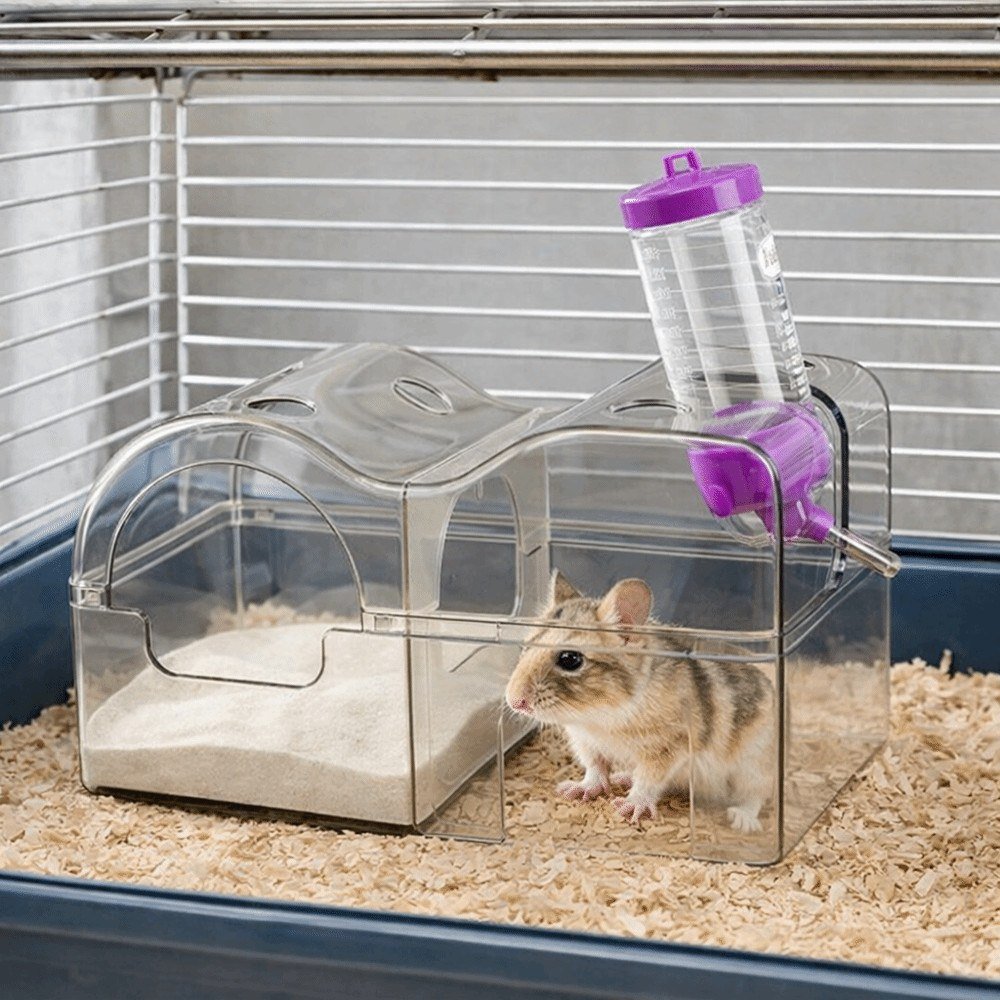
Most shaking has an environmental fix, and the cage is where it starts. A good gerbil cage is a big glass tank or a large plastic bin with a secure mesh lid — not a barred cage, which gerbils chew and climb, and not a small hamster cage. The minimum is around 75 litres, and bigger is always better. Gerbils need floor space, not height.
Bedding should be deep: 15–20 cm of paper-based bedding or aspen shavings, so the gerbil can dig tunnels and build a nest. Deep bedding does three jobs at once. It keeps the gerbil warm, it gives it something to do, and it absorbs the stress that comes from boredom. A gerbil that can burrow is a calmer gerbil.
A sand bath is essential. Gerbils clean their fur by rolling in fine sand, and a gerbil without a sand bath will groom itself more, scratch more, and shake more. Use chinchilla sand — fine, dust-free sand sold for small animals — not chinchilla dust, which is too fine and can damage lungs. Offer the sand bath for 20–30 minutes a day, then remove it so it stays clean.
Temperature and light matter too. Keep the cage in a room that stays between 20 and 24°C, away from radiators, windows and draughts. Gerbils need a normal day-night cycle — about 12 hours of light and 12 of dark — so do not keep the cage in a room with lights on all night, and do not put it somewhere the sun beats down on it during the day. A gerbil woken suddenly by a bright light is a gerbil that may shake or seize.
Cleaning is a stress point owners forget. A full cage clean — new bedding, washed accessories, moved furniture — is a major event for a gerbil. Do it once a week, keep some of the old clean bedding to mix in so the cage still smells familiar, and put everything back in roughly the same place. Our guide on how often to clean a gerbil cage gives the full routine, including the spot-cleaning that keeps a cage fresh without a full rebuild.
Food, water and weight: the quiet contributors
A gerbil that is not eating or drinking well will shake more, because low blood sugar and dehydration both cause trembling. Make sure your gerbil always has fresh water in a bottle that works — check the ball valve daily, because a jammed valve is one of the most common causes of dehydration in small pets. Offer a small ceramic dish of water as well if your gerbil prefers it.
Food should be a good-quality gerbil mix or lab blocks, with a small amount of fresh vegetables a few times a week and the occasional treat — a pumpkin seed, a piece of apple, a mealworm. Avoid sugary treats, chocolate, citrus fruit, and anything salty. A gerbil that eats mostly sunflower seeds will put on weight and may develop diabetes, so keep seeds as treats, not as the main diet.
Weigh your gerbil weekly on a kitchen scale. A healthy adult Mongolian gerbil weighs about 70–120 g, depending on sex and build. A steady weight is a healthy sign. A gerbil that loses 10% of its body weight in a week needs a vet, even if it seems fine otherwise. Small animals hide illness, and weight is the early warning that they cannot hide.
Age matters here too. A gerbil’s average lifespan is two to four years, and a gerbil over two years old is a senior. Senior gerbils shake more: their muscles are weaker, their temperature control is poorer, and arthritis can make them stiff and trembly. A senior gerbil needs a warm cage, easy access to food and water, and ramps instead of steep climbs. The gerbil age calculator converts your gerbil’s age into human years, and the hamster age calculator is a useful comparison if you keep both species.
When to call the vet: the decision ladder
Use this ladder when your gerbil shakes and you are not sure what to do:
- Watch at home: A short tremble that stops when the gerbil warms up or calms down, with normal eating, drinking and droppings afterwards. Keep the room warm and quiet and watch for repeats.
- Vet within a few days: Shaking that keeps happening, even if the gerbil seems well between episodes. Occasional seizures in an otherwise healthy young gerbil. Gradual shaking in an older gerbil. Any weight loss.
- Vet within 24 hours: Shaking with a head tilt, circling, or falling over. Shaking with a clicking sound when breathing. A gerbil that has had more than one seizure in a day. A gerbil that is eating less than usual.
- Vet today, now: A seizure lasting more than five minutes, or seizures one after another. Shaking with laboured or open-mouth breathing. A gerbil that is limp, cold, or unresponsive. A gerbil that has not eaten or drunk for 12 hours. Any shaking with blood, a wound, or a swollen belly.
When you call the vet, have your notes ready: when the shaking started, how long it lasted, what the gerbil was doing before, what it looked like during the episode, and how it behaved afterwards. A video on your phone is even better — vets diagnose shaking far more accurately from a 30-second clip than from a description. If you do not have an exotics vet, ask your regular vet for a referral. Gerbils are exotic pets, and a vet who treats them regularly will spot things a general vet may miss.
For the veterinary background, the Merck Veterinary Manual’s gerbil page covers seizures, respiratory disease and husbandry in the detail a vet would use. Our guide to why hamsters are awake during the day covers a similar sleep-and-stress question for the other small rodent most owners keep.
Frequently asked questions
How long do gerbils live?
Mongolian gerbils live two to four years on average, with three years being typical for a well-kept pet. Females tend to live slightly longer than males. The biggest factors in lifespan are genetics, diet, and how stress-free the cage is. A gerbil that lives past four is doing very well. Senior gerbils need extra warmth, softer food, and a cage that is easy to move around in.
Why is my gerbil sneezing and shaking?
Sneezing plus shaking usually means a respiratory infection, especially if the sneezing is frequent and the gerbil also has a runny nose, wet eyes, or a clicking sound when it breathes. The most common causes are dusty bedding, a damp cage, or scented products near the cage. Switch to dust-free paper bedding, move air fresheners and candles away, and call your vet the same day — respiratory infections in gerbils get worse fast and need antibiotics.
Do gerbils shake in their sleep?
Yes, gerbils twitch and tremble in their sleep, just as dogs and people do. Sleeping gerbils dream, and their paws, whiskers and ears move as they do. Sleep twitching is brief, gentle, and stops if you speak softly or the gerbil wakes. It is not a seizure: a sleeping gerbil that twitches is relaxed, breathing normally, and wakes up normally. If your gerbil twitches violently in its sleep, falls out of its nest, or does not wake properly, that is different — film it and show your vet.
Can a gerbil die from a seizure?
Almost never from a single, typical seizure. The stress-triggered seizures that most pet gerbils have last under two minutes, stop on their own, and leave no lasting damage. Death from a seizure is rare and usually involves a seizure lasting more than five minutes, seizures one after another without recovery, or a seizure caused by a serious underlying problem such as a severe infection or poisoning. That is why timing matters: a two-minute seizure is a note for your vet, while a five-minute seizure is an emergency.
So, why is my gerbil shaking? Usually cold, fear, excitement, or a short seizure — and usually nothing to panic about. Watch for a minute, run the 60-second check, and use the decoder table. If the shaking stops and your gerbil eats, drinks and plays as normal, it was almost certainly a normal shake. If it does not stop, or if it comes with breathing trouble, a head tilt, or no appetite, call your vet. The gerbil cannot tell you what is wrong. The shaking is its way of trying.