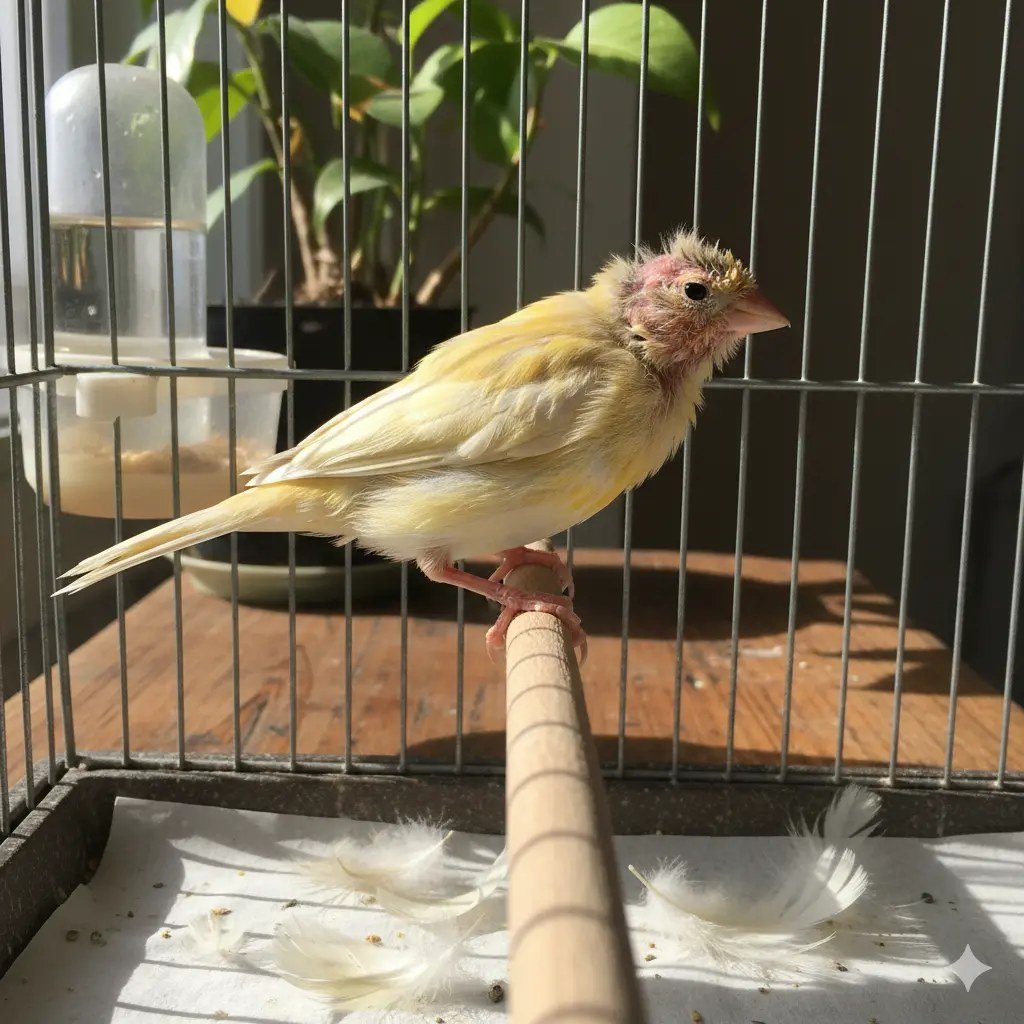
Why Is My Canary Losing Feathers? Molt or Illness
If you have just found a pile of small yellow feathers at the bottom of your canary’s cage, you are probably asking, why is my canary losing feathers, and whether something is wrong. A canary that looks patchy, stops singing, and drops feathers everywhere is a worrying sight, especially if it happened quickly.
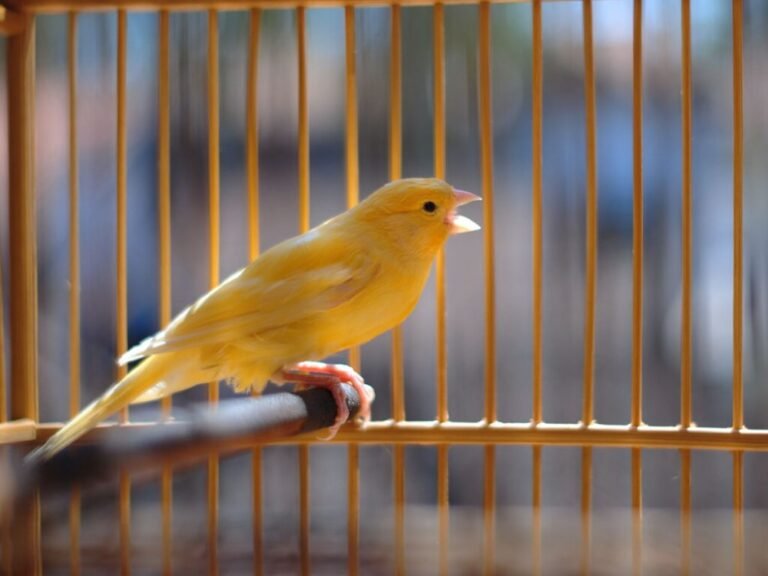
Take a breath. In most cases, a canary losing feathers is moulting, and moulting is one of the most normal things a canary does. Once a year, usually in late summer, a canary sheds its old feathers and grows a whole new set. It looks rough, it stops singing, and it sleeps more than usual. Then it comes back brighter and louder than before.
But not every feather loss is a moult. Mites, a poor diet, stress, and a false moult triggered by too much light or heat can all look the same at first glance. This guide shows you how to tell them apart, what a normal moult looks like week by week, and the warning signs that mean a vet visit.
Direct answer: A canary usually loses feathers because it is moulting, a normal yearly process that lasts 6 to 12 weeks and replaces all its old feathers with new ones.
During a moult, the bird stops singing, looks scruffy, and grows pin feathers, but it keeps eating, stays alert, and loses feathers evenly on both sides of its body. Feather loss outside the summer moult, bald patches, broken skin, itching, or a bird that is fluffed up and quiet is not a normal moult, and it needs a vet check.
Why Is My Canary Losing Feathers? Molt or Something Else
The first question to answer is always the same: is this a moult, or is it something else? The answer is in four details, and you can check all of them without touching the bird. Look at the time of year, the pattern of the feather loss, the bird’s behaviour, and whether new feathers are growing in.
A normal moult happens once a year, usually in late summer, after the breeding season ends. In the wild, canaries moult from July to November, and pet canaries follow a similar rhythm. The feathers fall out evenly, on both sides of the body at the same time, so the bird never has a bare wing on one side and a full wing on the other. That even pattern is the hallmark of a moult.
A moulting canary stops singing. Growing feathers takes a huge amount of energy, and the bird puts that energy into feathers instead of song. A male that sang all spring will go quiet for six to twelve weeks, and that silence is normal. The song comes back, usually within a few weeks of the moult ending.
New feathers are the proof. Look closely at the skin, and you will see pin feathers, which look like small dark spikes or needles. Each pin is a new feather growing inside a waxy tube, and the bird preens the tube away as the feather opens. Pin feathers on both sides of the body, in the same places, mean a moult. Bare skin with no pins, or feathers broken off at the shaft, means something else.
The bird’s behaviour is the final check. A moulting canary eats normally, drinks normally, and stays alert. It may sleep a little more, up to 12 hours a day, and it may be quieter than usual. But it does not sit fluffed up on the cage floor, it does not stop eating, and its droppings stay normal. If any of those change, the feather loss is not just a moult.
The Normal Molt: What It Looks Like Week by Week
A canary moult is not one event. It is a slow, orderly process that takes six to twelve weeks, and it follows a pattern. Knowing the pattern helps you tell a normal moult from a problem, because a problem rarely follows the pattern.
In the first two weeks, the bird starts dropping small body feathers. You will find them on the cage floor and in the water dish. The bird looks a little scruffy, but it still flies and sings, though the singing starts to fade. This is the early moult, and it is easy to miss if you are not looking for it.
By weeks three to six, the moult is in full swing. The bird drops wing and tail feathers, a few at a time, always in pairs, one from each side. It stops singing altogether. It sleeps more, bathes more, and spends a lot of time preening. Pin feathers appear on the head, the neck, and the chest, and the bird may look patchy and thin.
This is the hardest part of the moult. Feathers are almost pure protein, so the bird needs more protein, more rest, and more quiet than usual.
In weeks six to twelve, the new feathers open and the bird starts to look like itself again. The song comes back slowly, first as a quiet warble, then as a full song. The bird becomes more active, bathes less frantically, and the cage floor stops filling with feathers. By the end, the bird looks brighter than before the moult, because the new feathers are fresh and clean.
The Molt Calendar: What to Expect and When
Canaries moult on a calendar set by daylight, temperature, and breeding. The table below shows the usual pattern for a pet canary kept indoors.
| Time of year | What is happening | What you will see |
|---|---|---|
| Spring (March to May) | Breeding season; no moult | Full song, bright feathers, active bird |
| Early summer (June) | Breeding ends; moult may start | Song fading, a few feathers dropping |
| Late summer (July to September) | Main annual moult | Heavy feather loss, no song, pin feathers, more sleep |
| Autumn (October to November) | Moult finishing | New feathers opening, song slowly returning |
| Winter (December to February) | No moult; feathers settled | Full plumage, song back, normal activity |
| Any time of year | False moult from stress or light | Patchy loss outside the season, often with no pins |
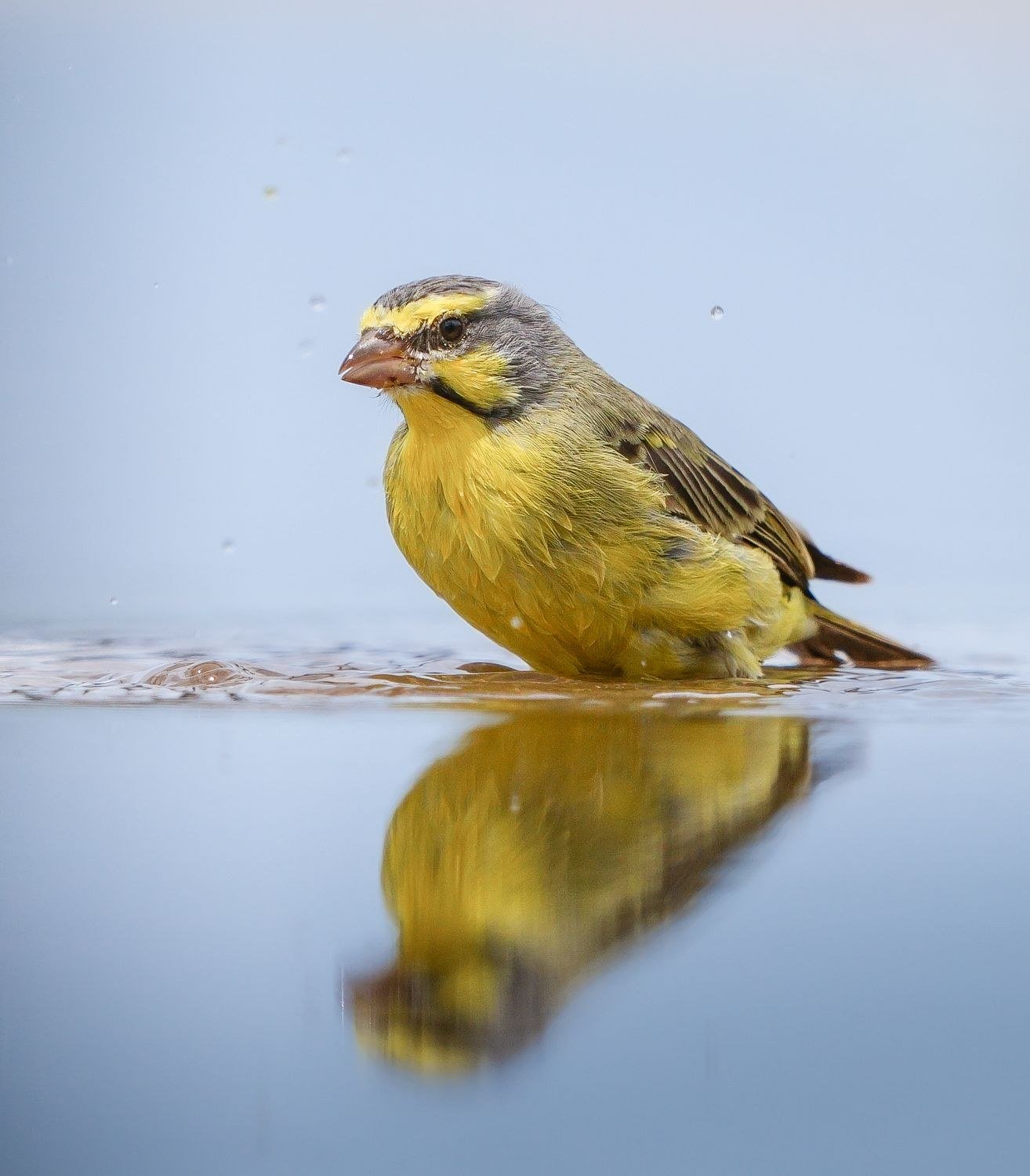
False Molt: When the Wrong Season Triggers Shedding
A false moult is a moult that starts at the wrong time, and it is one of the most common causes of feather loss in pet canaries. It looks like a moult, but it is not driven by the season. It is driven by the bird’s environment, and it is a sign that something in that environment needs to change.
The most common trigger is light. Canaries read the length of the day to decide when to moult, and a bird that gets 14 or 15 hours of light a day thinks it is high summer, even in January. Central heating makes it worse, because the warm room tells the bird it is summer too. The bird starts to moult, then stops, then starts again, and the feathers never settle.
Stress is the second trigger. A move to a new house, a new cage, a new pet in the home, building work next door, or a change in the person who feeds the bird can all start a false moult. The bird’s body reads the stress as a signal to shed feathers, the same way a stressed mammal sheds hair. The moult stops when the stress stops, but only if the stress is found and fixed.
A false moult looks different from a real one once you know what to look for. The feather loss is patchy rather than even. It goes on for months instead of weeks. The bird may grow pin feathers, but they break or fall out before they open. And the bird often keeps singing, or sings in fits and starts, instead of going quiet the way a moulting bird does.
The fix is to give the bird a proper season. Keep the daylight to 10 to 12 hours, and cover the cage at night so the dark is truly dark. Keep the room at a steady temperature, away from radiators and draughts. Keep the routine the same every day. A bird with a steady light cycle and a steady routine will usually settle into a normal moult within a few weeks.
Our guide to why is my canary not singing explains how light, moult, and song are connected, and why a canary that has stopped singing in winter needs a different answer from one that has stopped in August.
Mites, Lice, and Feather Cysts
Parasites are the cause owners fear most, and they are also the cause that is easiest to miss. Feather mites and lice are tiny, and a canary can carry them for weeks before the signs become obvious. By the time the owner notices the feather loss, the parasites have already been at work for a while.
Feather mites live on the feathers themselves, eating the oily coating and the tiny flakes of skin. The bird itches, preens constantly, and breaks its own feathers trying to get relief. The feather loss is patchy, and it is worst where the bird can reach easily: the chest, the belly, and under the wings. The head and neck usually stay feathered, because the bird cannot reach them to scratch.
Scaly face mites, called Knemidokoptes, are a different problem. They burrow into the skin around the beak, the eyes, and the legs, and they cause crusty, scaly patches. A canary with scaly face mites loses feathers around the head first, and the skin looks rough and grey. This is a vet job, not a home remedy, because the mites need medicine that only a vet can prescribe.
Feather cysts are another cause, and they are common in canaries, especially the larger breeds. A feather grows inwards instead of outwards, and it forms a lump under the skin, usually on the wing. The bird picks at the lump, the feathers around it fall out, and the area can become infected. A cyst that is small and not bothering the bird can be left alone, but a large or infected one needs a vet.
The signs that point to parasites are itching, restlessness at night, and feather loss that is worst on the body the bird can reach. A bird with mites often sleeps badly, because the mites are most active at night. It may also be fluffed up and quiet during the day, which is the opposite of a moulting bird, which stays alert even when it is tired.
Diet and Feather Quality
Feathers are made of keratin, a protein, and a canary that does not get enough protein cannot grow good feathers. This is the simplest cause of feather loss, and the one that is easiest to fix. A canary on a seed-only diet is a canary on a poor diet, because seeds are high in fat and low in the amino acids that feathers need.
The moult is the time when diet matters most, because the bird is building thousands of new feathers at once. A canary needs more protein during the moult than at any other time of year. Boiled egg is the classic moult food for canaries, and it is one of the best. A small amount of mashed boiled egg, offered two or three times a week, gives the bird the protein and the sulphur amino acids that feathers are built from.
Our guide to can canaries eat boiled egg explains the amounts and the safety rules, including removing uneaten egg within two to four hours so it does not spoil. The canary food calculator helps you work out the right daily amounts for your bird’s size and life stage.
Stress and Cage Mates
Canaries are sensitive birds, and stress shows in their feathers before it shows anywhere else. A canary that is stressed loses feathers, grows poor feathers, or moults at the wrong time. The stress does not have to be dramatic. A cage in a noisy hallway, a cat that stares at the cage all day, or a child that taps the bars can be enough.
Overcrowding is a common cause. Canaries are not flock birds in the way budgies are, and most canaries do better alone than in a pair. Two male canaries in one cage will fight, and the loser will lose feathers. A male and a female kept together outside the breeding season will often bicker, and the stress shows in both birds. Our guide to do canaries need a companion explains why a single canary is usually the happier bird.
The fix for stress is usually simple. Move the cage to a quiet room, away from the television and the front door. Keep the routine the same every day. Give the bird a bath, a few fresh greens, and 10 to 12 hours of dark sleep. A canary that feels safe grows feathers. A canary that does not feel safe loses them.
Helping Your Canary Through a Molt
A moulting canary needs three things: good food, rest, and a bath. Get those three right, and most moults go smoothly. Get them wrong, and a normal moult can drag on for months.
Food comes first. During the moult, offer a small amount of boiled egg two or three times a week, plus fresh dark greens every day. Keep the seed mix fresh, and add a few pellets if your bird will eat them. A cuttlebone should always be in the cage, because the calcium helps the new feathers grow strong. The bird calorie calculator helps you check that your bird is eating enough for its size and activity.
Rest comes second. A moulting canary needs up to 12 hours of dark, quiet sleep, and it needs a cage cover to make the dark real. Do not move the cage during the moult, do not introduce new birds, and do not handle the bird more than usual. Pin feathers are tender, and a bird that is handled roughly during the moult can end up with broken blood feathers, which bleed heavily.
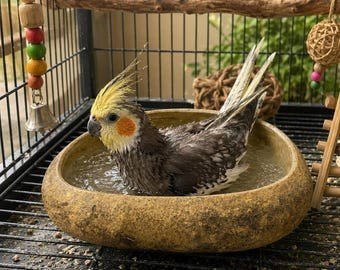
A bath comes third, and it is the one owners most often forget. A moulting canary should have a shallow bath every day. The water softens the waxy sheath around each pin feather, and the bird preens it away as it dries. A bird that cannot bathe grows pin feathers that stay sheathed, and the feathers underneath come out bent or broken. Offer the bath in the morning, so the bird has the whole day to dry.
When Feather Loss Needs a Vet
Most feather loss is a moult, but some of it is not, and the difference is in the signs that come with it. Call an avian vet promptly if you see any of the following, because a canary is a small bird and it can go downhill fast.
Bald patches with no pin feathers are the first warning. A moulting bird always has new feathers growing in. A bird with bare, smooth skin and no pins is not moulting. It is losing feathers faster than it can grow them, and that means illness, parasites, or severe stress.
Broken skin, bleeding, or sores are the second warning. A moulting bird’s skin is healthy, even if it looks pink where the feathers are thin. Skin that is red, scabby, bleeding, or oozing is infected or damaged, and it needs treatment. Do not put cream or oil on it at home. Birds preen anything off their skin and swallow it, and many skin products are poisonous to them.
A bird that is fluffed up, quiet, and sitting on the cage floor is the third warning, and it is the most serious. A moulting canary may be tired, but it stays on its perch, stays alert, and keeps eating. A bird on the cage floor has used up its reserves, and it needs a vet the same day.
Weight loss is the fourth warning. A canary weighs only 15 to 25 grams, and a loss of 2 grams is 10 percent of its body weight. Weigh your bird weekly on a gram scale during the moult, and call the vet if the weight falls and does not come back. The canary age calculator helps you work out whether your bird is a young bird in its first moult or an older bird whose moult is naturally slower.
Feather loss that lasts more than 12 weeks is the fifth warning. A normal moult ends. A moult that drags on for four months is not a moult anymore. It is a sign of a diet problem, a light problem, a hormone problem, or an illness, and it needs a vet to sort out which one.
Frequently Asked Questions
Do female canaries molt differently from males?
Yes, in two small ways. Female canaries often moult a little later than males, because they finish breeding later, and their moult can be slightly longer. Females also tend to lose their song less dramatically, because they sing less in the first place, so owners sometimes miss the start of a female’s moult.
The care is the same for both sexes: more protein, daily baths, 10 to 12 hours of dark sleep, and a quiet room. The one difference is that a female that has just raised chicks needs extra food and rest, because breeding takes a lot out of her. If your female looks thin after breeding and then starts a heavy moult, offer boiled egg three times a week and weigh her weekly until her weight is steady.
Can a canary lose feathers from boredom?
Yes, though it is less common in canaries than in parrots. A canary kept in a bare cage, with no bath, no greens, and nothing to do, can become stressed and start losing feathers, or start picking at its own feathers. The feather loss is usually patchy, and it is worst on the chest and belly, where the bird can reach.
The fix is enrichment, not medicine. Give the bird a bath every day, hang fresh greens from the cage bars, add a swing and a few perches of different widths, and move the cage to a room where the bird can see the family without being in the middle of the noise. A canary that has things to do grows feathers. A canary in an empty cage does not.
Why is my canary losing feathers around its head?
Feather loss around the head is different from feather loss on the body, because a canary cannot reach its own head to pull feathers out. That means the cause is almost always a moult, a parasite, or an illness, not the bird’s own behaviour.
In a moult, the head feathers fall out evenly and pin feathers grow in, just like everywhere else. Around the head, the pins are easy to see, because there are no long feathers to hide them. If the head is bald with no pins, and the skin looks crusty or scaly, think of scaly face mites, which burrow into the skin around the beak and eyes. That needs a vet, because the mites need prescription medicine. If the head feathers are falling out and the bird is also losing feathers in a neat ring around the neck, think of a vitamin A deficiency, and improve the diet with dark leafy greens and carrot.
Is it normal for a baby canary to lose feathers?
Yes, it is completely normal. A young canary has its first moult, called the juvenile moult, at about eight to twelve weeks old, and it lasts six to ten weeks. The chick’s soft baby feathers fall out and are replaced by adult feathers, and the young bird looks patchy and scruffy for a while.
The juvenile moult is often heavier than an adult moult, because the bird is replacing almost all of its feathers at once, and it is growing at the same time. Offer the young bird the same moult care as an adult: boiled egg twice a week, fresh greens daily, a bath every day, and a quiet cage with 10 to 12 hours of dark sleep. The one time to worry is if the young bird also stops eating, sits fluffed up, or loses weight, because young birds have very little reserve and need a vet quickly.
For more on canary care, Lafeber’s canary species profile covers diet, housing, and moult care, and the VCA pet bird care guide explains when feather loss needs a vet visit.