Why Is My Leopard Gecko Licking Its Eyes? 6 Reasons
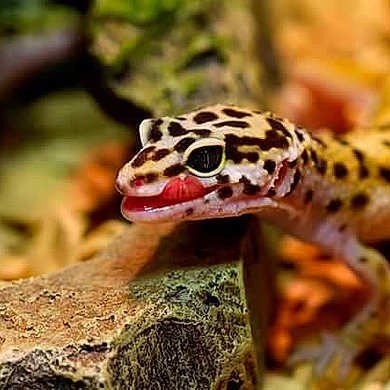
If you have ever watched your leopard gecko flick its tongue across its own eye, you know how strange it looks. One minute your gecko is sitting still, and the next its tongue is sweeping over its eyeball like a tiny windshield wiper. So it is natural to ask: why is my leopard gecko licking its eyes, and is something wrong?
In most cases, a leopard gecko licking its eyes is normal grooming. Leopard geckos use their tongues to wipe dust, shed skin, and moisture from around their eyes, usually after waking up, after eating, or during a shed. It only becomes a worry when the licking is constant, one eye stays shut, or you see swelling, discharge, or cloudiness.
This guide explains the six real reasons behind the behaviour, clears up the eyelid myth that most articles get wrong, and gives you a simple check to tell normal licking from a problem that needs a vet. You will also learn what to fix in the enclosure and what never to do to your gecko’s eyes.
Normal Licking vs. a Problem: The Quick Check
Before you read the causes, use this table. It takes ten seconds and tells you whether to relax or act. Normal licking is brief and occasional. Problem licking is frequent, focused on one eye, and comes with other signs.
| What you see | Usually normal | See a vet soon |
|---|---|---|
| How often | A few quick licks, now and then | Constant licking, many times a day |
| Which eye | Both eyes, or either eye in turn | Always the same one eye |
| Eye appearance | Clear, bright, fully open | Swollen, cloudy, or half shut |
| Discharge | None | Watery, white, or yellow crust |
| Behaviour | Eating, active at night, normal | Not eating, hiding all day, lethargic |
| Skin around the eye | Clean, no stuck shed | Flaky white shed stuck on the eyelid |
If your gecko matches the left column, you can relax and read on to understand the behaviour. If it matches the right column, skip to the vet section at the end. An eye that stays closed for more than 24 to 48 hours needs a reptile vet, not a home remedy.
Why Is My Leopard Gecko Licking Its Eyes? The 6 Reasons
Eye licking in leopard geckos has six main causes, and only the last two are true health problems. The first four are normal care or small husbandry fixes. Work through them in order, and most owners find their answer in the first three.
1. Normal grooming after waking and eating
Leopard geckos are nocturnal, so they wake up at dusk and often lick their eyes as part of waking up. The tongue clears away any dust or dry mucus that gathered while they slept in their hide. This is the same reason you might rub your own eyes first thing in the morning.
Many geckos also lick their eyes right after eating. A cricket leg, a speck of calcium powder, or a drop of moisture can land near the eye during a strike. The tongue sweeps it away in seconds. If the licking happens once after a meal and then stops, it is simply housekeeping.
Normal grooming licks are quick and relaxed. The gecko’s body stays calm, both eyes stay open, and it goes back to exploring or hunting within a moment. There is nothing to fix here, and you should not try to stop it.
2. Shedding around the eyelids
Leopard geckos shed their skin every four to six weeks as adults, and more often as juveniles. The skin around the eyelids is thin and delicate, and a flake of old shed can cling to the eyelid edge. The gecko licks at it to loosen the piece, just as it licks shed from its toes and tail.
Watch for a dull, whitish film around one or both eyes during a shed cycle. This is normal shed behaviour, and the flake usually comes off on its own within a day or two.
The risk is retained shed: a piece that stays stuck and dries into a hard rim. That rim can scratch the eye surface each time the gecko closes its eye. If you see stuck shed on the eyelid after the rest of the shed is finished, raise the humidity in the moist hide and read the vet section below. Never pull shed from an eye yourself.
For a fuller guide to stuck shed on other body parts, see our article on leopard gecko stuck shed on toes, which covers the same humidity fixes in detail.
3. Air that is too dry
Leopard geckos come from the dry, rocky grasslands of Afghanistan, Pakistan, and north-west India. Their enclosure should feel dry: about 30 to 40 percent humidity in the main space. But if the air drops much below 30 percent, the thin skin around the eyes dries out, and the gecko licks more often to add moisture.
Dry air is common in winter, when central heating pulls moisture from the room, or in homes with air conditioning running all day. A digital hygrometer will tell you the real number in seconds. Guesswork is not enough, because the air can feel fine to you while sitting at 20 percent for your gecko.
The fix is simple and cheap. Keep a moist hide in the enclosure at all times, filled with damp paper towel, sphagnum moss, or coco fibre, and check that it stays damp, not wet.
The inside of the hide should sit at roughly 70 to 80 percent humidity. That one hide does more for your gecko’s eyes and sheds than any spray bottle. Our reptile humidity calculator can help you work out the right levels for the enclosure.
4. Dust or a speck of substrate in the eye
Leopard geckos live close to the ground, and they explore with their tongues and faces. A grain of loose substrate, a speck of calcium dust, or a fibre from a new hide can land in the eye. The gecko’s first response is to lick it out, and most of the time that works within a few licks.
Loose, dusty substrates cause this problem most often. Calcium sand, crushed walnut shell, and fine, dry topsoil can all throw up particles when the gecko walks or digs. Paper towel, slate tile, or reptile carpet keep the floor cleaner, and they are the safer choice for young geckos and for any gecko with an eye irritation.
If the licking stops after a few minutes and the eye looks clear, the speck is gone. If the gecko keeps licking the same eye for hours, the particle may be trapped under the lower eyelid. Do not try to flush the eye or pick at it. A vet can remove a trapped particle safely in seconds, while a home attempt can scratch the cornea.
5. Vitamin A deficiency
Vitamin A keeps the moist tissues of the body healthy, including the tear glands and the lining of the eyelids. Leopard geckos cannot turn beta-carotene from plants into usable vitamin A very well. They need preformed vitamin A, also called retinol, in their supplement routine.
A gecko that is low in vitamin A may show swollen eyelids, sticky discharge, and repeated shed problems around the face. It may also miss its prey more often, because the eyes are sore and vision is blurry. The problem builds slowly over weeks or months, so owners often miss the early signs.
Prevention is a dusting schedule. Lightly dust feeder insects with a calcium plus vitamin D3 powder at most feeds, and use a multivitamin that contains preformed vitamin A once a week for adults, or twice a week for juveniles. Gut-load the insects first with fresh vegetables and a commercial gut-load. Our reptile feeding schedule calculator can help you plan a regular feeding and supplement routine.
Be careful with dosing. Vitamin A is fat-soluble, so too much can also cause harm. Follow the product label and your vet’s advice, and do not add extra drops or supplements to the water. If you already see swollen eyelids and stuck shed together, that combination points to a vet visit rather than a supplement change.
6. Infection or injury
The last reason is the serious one. Bacteria can infect the eye after a scratch, a cricket bite, or a piece of retained shed. The signs are hard to miss once you know them: the eye swells, the eyelid looks red or puffy, and discharge appears. The discharge may start clear and turn white or yellow as the infection grows.
Injury is the other trigger. A feeder cricket left overnight can nibble a sleeping gecko’s eyelid. A sharp edge on a new decoration can scratch the eye. A fall from a handler’s hand can bruise the area around the eye. Any of these can start with frequent licking and end with a closed, swollen eye.
An abscess behind the eye is less common but more serious. The eyeball bulges forward, and the gecko cannot close the eye properly. This needs a vet the same day, because the infection can spread and the eye can be lost. Do not wait to see if it improves on its own.
The Eyelid Myth Most Articles Get Wrong
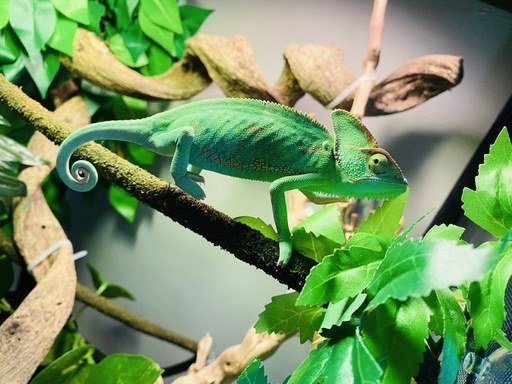
Here is the fact that makes this article different from almost everything else ranking for this question. Most geckos have no movable eyelids at all. They have a clear, fixed scale called a spectacle over each eye, and they must lick the spectacle to clean it. Crested geckos, tokay geckos, and day geckos all work this way.
Leopard geckos are the exception. They belong to the family Eublepharidae, a small group of geckos with true, movable eyelids. A leopard gecko can close its eyes, open them, and blink. Its tongue still helps with grooming, but it is wiping the eyelid margins and the eye surface, not a fixed window.
This matters because most of the articles ranking for this question get it backwards. Some claim leopard geckos have no eyelids. Others describe spectacle care as if it applied to leopard geckos. When an article tells you to treat a leopard gecko’s eye like a crested gecko’s eye, it is giving you the wrong animal’s advice.
It also matters for diagnosis. A crested gecko with a dirty spectacle looks cloudy across the whole eye. A leopard gecko with an eye problem usually shows swelling in the eyelid itself, stuck shed on the lid edge, or discharge from the corner. Knowing which eye you are looking at helps you describe the problem to a vet, and it helps you spot bad advice online.
What to Check in Your Setup
If your gecko is licking its eyes more than usual, check four things before you worry about illness. Most cases trace back to one of these, and all four are quick to fix.
First, measure the humidity with a digital hygrometer. The main enclosure should read 30 to 40 percent. The moist hide should feel damp to the touch and read 70 to 80 percent inside. If the hide has dried out, re-wet it and check it daily for a week.
Second, look at the substrate. If it is loose and dusty, switch to paper towel until the eye settles. Paper towel is not pretty, but it is clean, and you can see droppings and shed clearly. You can return to a solid substrate once the eye is back to normal.
Third, review the supplement routine. Are the insects dusted with calcium and vitamin D3? Is there a weekly multivitamin with preformed vitamin A? Are the insects gut-loaded? A missing supplement is a slow problem, but it is an easy one to correct.
Fourth, check the weight and body condition. A gecko that is losing weight, has a thinning tail, or has stopped eating alongside eye licking is dealing with more than a dusty eye. Weight loss plus eye signs means a vet visit.
Our leopard gecko weight calculator can help you track whether your gecko’s weight is in a healthy range. For more on tail condition, see our article on why a leopard gecko’s tail goes thin.
What NOT to Do
Eye problems invite well-meaning mistakes, and the eye is the worst place to experiment. Do not pull shed skin from around the eye, even if it looks loose. The skin under it is thin, and a tear can scar the eyelid or the eye surface.
Do not put any drops, saline, or ointment in the eye unless a reptile vet tells you to. Human eye drops, contact lens solution, and leftover antibiotic ointment can all irritate a gecko’s eye or mask an infection until it is worse. Plain water is not a safe flush either, because it can push a trapped particle further under the lid.
Do not house your leopard gecko with another gecko while its eye is sore. Leopard geckos are solitary, and a cage mate can step on, bite, or stress an animal that cannot see properly. Keep the gecko alone, keep handling to a minimum, and keep the enclosure quiet and dim while it recovers.
Finally, do not wait a week to see if a closed eye opens on its own. Eye problems in leopard geckos can turn serious fast, and the 24 to 48 hour rule exists for a reason. A vet can look at the eye under magnification and tell in minutes whether it is shed, infection, or injury.
When to See a Reptile Vet
Book a vet visit promptly if any of these apply. An eye that stays closed for more than 24 to 48 hours is the top trigger. Swelling around the eye, discharge of any colour, or a cloudy eye surface are also reasons to go, even if the gecko is still eating.
Go the same day if the eyeball is bulging, there is blood, the gecko cannot open either eye, or it has stopped eating and is losing weight. These signs point to a deeper infection or an abscess, and they do not improve with a humid hide alone.
Take notes before you go. Write down when the licking started, which eye is affected, what the humidity reads, what substrate you use, and what supplements you dust with. Photos of the eye help too. A vet who sees the setup numbers can diagnose faster and with fewer tests.
To find a vet who treats reptiles, the Association of Reptile and Amphibian Veterinarians keeps a directory of member vets at arav.org. A general small-animal vet may not have the tools or the training for a gecko eye exam, so look for a reptile vet where possible. For general reptile health background, the Merck Veterinary Manual’s reptile section at merckvetmanual.com is a reliable reference.
Frequently Asked Questions
Can a leopard gecko go blind from an eye problem?
Yes, it can, but it is rare when the problem is caught early. An untreated infection or a retained shed cap left for weeks can scar the cornea or damage the eye badly enough to cost the gecko its sight in that eye. The risk is highest when the eye stays closed and the owner waits, because the infection grows behind the closed lid where nobody can see it.
A vet visit within a day or two of the first warning signs almost always prevents lasting damage. Geckos that lose sight in one eye can still live well, because they hunt largely by movement and smell, but prevention is far better than coping.
Why is my leopard gecko rubbing its face on the rocks?
Face rubbing is the gecko’s way of scratching an itch it cannot reach with its tongue. It usually means something is irritating the skin around the eye or the snout: a flake of stuck shed, a grain of substrate, or dry skin from low humidity. A few gentle rubs during a shed are normal.
Constant rubbing, especially on the same side and paired with a closed eye, is a warning sign. Check the moist hide first, look for stuck shed on the eyelid, and if the rubbing goes on for more than a day or the eye starts to swell, book a vet visit.
Can a warm soak help my leopard gecko’s eye?
A short, shallow warm soak can help loosen stuck shed around the body and toes, but it is not an eye treatment on its own. Use lukewarm water, about 82 to 86 degrees Fahrenheit, no deeper than the gecko’s belly, for 10 to 15 minutes.
The warm water and steam soften the shed, and the gecko may then lick the loosened flakes away itself. Never hold the gecko’s head under water, never pour water over its face, and never use a soak as a substitute for a vet visit if the eye is swollen or closed. The soak helps shed; it does not cure infection.
Do baby leopard geckos lick their eyes more than adults?
Yes, juveniles usually lick their eyes more often, and it is mostly normal. Young geckos shed every one to two weeks as they grow, so they spend more of their time with shed flakes around their eyes. They are also clumsier hunters, so they get more dust and calcium powder near their faces during feeding.
As long as the eyes are clear and open and the gecko is eating and growing, frequent licking in a baby is expected. The same rule applies though: an eye that stays shut, swells, or shows discharge needs a vet at any age.
Most of the time, a leopard gecko licking its eyes is just a healthy animal doing its own housekeeping. Learn the difference between a quick grooming lick and a warning sign, keep the moist hide damp, dust the insects properly, and you will catch the rare real problem early. Your gecko’s eyes will stay clear, bright, and hunting-ready.