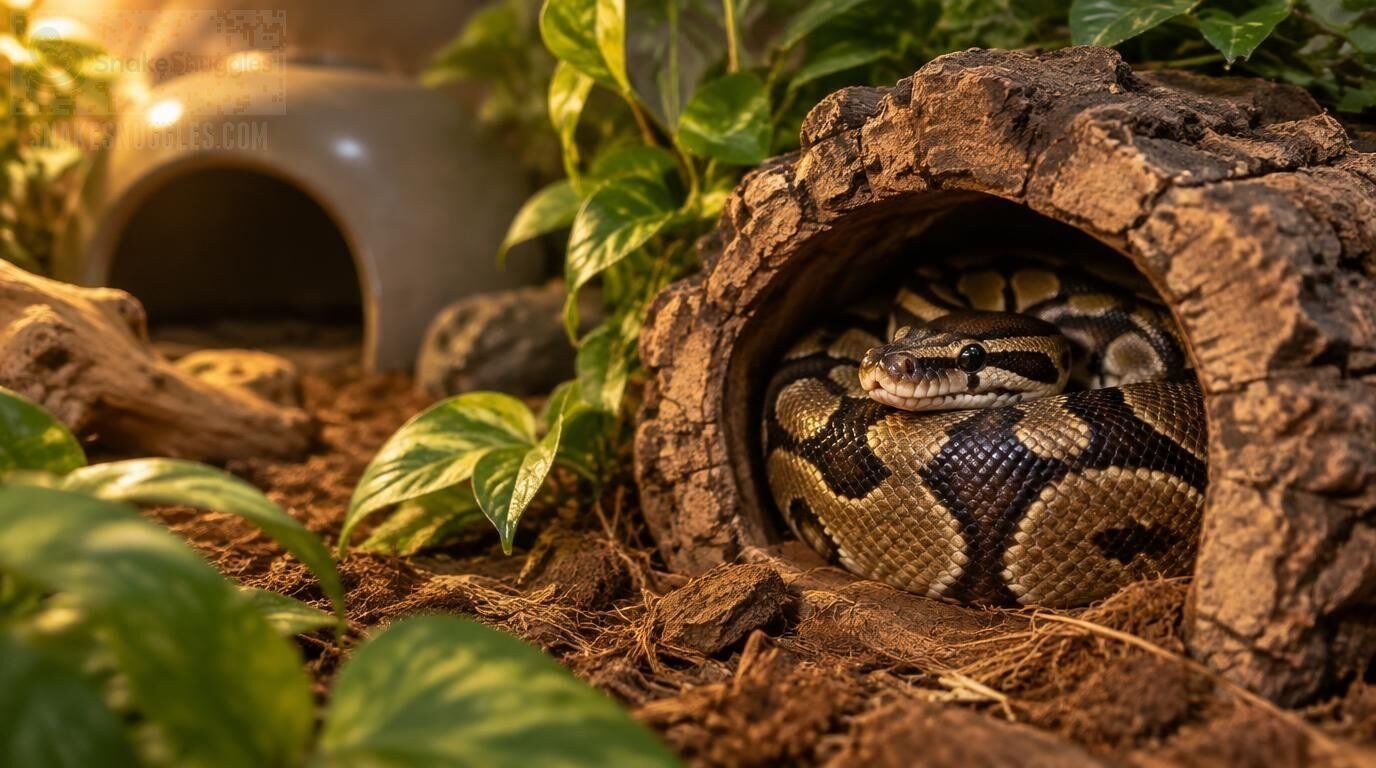
Why Is My Ball Python Hiding All the Time?
If you are asking why is my ball python hiding all the time, you are probably staring at an empty-looking enclosure and wondering whether you bought a pet or a very expensive hide box. Ball pythons (Python regius) are the most popular pet snake in the world, and they are also one of the least visible. A healthy ball python spends most of the day hidden, comes out mainly at night, and can stay in the same hide for days at a time.
For most keepers, that is normal — but not always. The difference between a happy, hiding ball python and a stressed or sick one is in the details: when it comes out, whether it eats, and whether it ever explores at all.
Direct answer: A ball python hiding all the time is usually normal. Ball pythons are nocturnal ambush predators from the grasslands of West and Central Africa, where they spend the day in burrows and termite mounds avoiding predators and heat. In captivity they hide during the day and become active at dusk and overnight, when you are usually asleep.
Hiding is only a concern if the snake never comes out even at night, refuses food for more than 4–6 weeks outside breeding season or shed, loses weight, or hides alongside other warning signs such as wheezing, stargazing, or retained shed. A snake that eats, sheds cleanly, holds its weight, and cruises the enclosure at night is a healthy snake — it is just living on a different schedule from you. That is the short answer to why is my ball python hiding all the time: most of the time, it is simply being a ball python.
The pages that currently answer this question are thin and mostly years old. They say “hiding is normal” and stop there, which leaves the real question unanswered: how do you tell normal hiding from a snake that is hiding because something is wrong? This guide answers that with a night-time check, a hide-and-cover audit, and a clear list of the signs that turn hiding from a habit into a warning. By the end, you will know how to answer why is my ball python hiding all the time for your own snake, instead of guessing.
Why is my ball python hiding all the time?
Start with the animal itself. A ball python is not a dog. It does not patrol, play, or seek company. It is a slow-moving, heavy-bodied ambush hunter that conserves energy between meals, and its main defence against predators is to disappear.
In the wild, ball pythons spend the day in burrows abandoned by other animals, in hollow logs, and in termite mounds, emerging at dusk to hunt rodents. They are crepuscular and nocturnal, which means their active hours are roughly the opposite of yours. Once you understand that, the question of why is my ball python hiding all the time starts to answer itself.
That biology explains the three most common versions of this question. First, “my ball python hides all day” — yes, that is what the species does. Second, “my ball python never comes out” — it probably does, between about 9 p.m. and 3 a.m., when you are asleep. Third, “my ball python has been in the same hide for a week” — also often normal, especially after a meal (digestion takes days and the snake stays still and warm) or before a shed (the snake withdraws while its eyes go cloudy blue and its skin dulls).
The honest test is not whether the snake hides during the day. It is whether the snake does anything at night. A healthy ball python will, on most nights, leave its hide to explore: tongue-flicking, cruising along the enclosure walls, investigating branches and ledges, drinking, and settling in a different hide by morning. If you never see any of that, you need a better way to check than standing in front of the glass during the day. That night-time activity is the real test of why is my ball python hiding all the time — if the snake is out at night, the hiding is normal.
The night check: how to tell if your snake ever comes out
Before changing anything, find out what your snake actually does after dark. Try these for a week: these checks answer why is my ball python hiding all the time far better than watching the hide during the day.
- Check the hide shuffle. Note which hide the snake is in each morning. A snake that moves between the warm hide, the cool hide, and a middle hide is exploring. A snake in the exact same hide, in the exact same coil, every morning for a week is not.
- Look for tracks. Smooth the substrate lightly in the evening. In the morning, look for belly tracks, disturbed substrate, and moved leaves. A snake that cruised overnight leaves evidence.
- Check the water bowl. A drinking snake leaves the water level lower and may leave a shed skin or a small disturbance in the substrate nearby. Refill to a marked line each evening and compare.
- Use a red light or a camera. Ball pythons cannot see red light well, so a dim red torch for a few minutes after dark lets you watch without disturbing the animal. A cheap motion camera aimed at the enclosure for a few nights gives you the definitive answer.
- Offer food at dusk. A healthy ball python’s feeding response is strongest in the evening. A snake that strikes or takes food eagerly at dusk is almost certainly fine, however invisible it is at noon.
If the night check shows the snake is active after dark, eats well, and sheds in one clean piece, you have your answer: the hiding is normal. Stop worrying, and enjoy the brief evening appearances. If the night check shows nothing — no movement, no tracks, no feeding response — then work through the causes below. Either way, you will have a real answer to why is my ball python hiding all the time, based on evidence rather than worry.
7 reasons a ball python hides more than it should
1. It is simply daytime
This is the cause in most cases, and it needs no fix. A ball python that hides from roughly sunrise to sunset and emerges at dusk is behaving exactly as its species should. The enclosure should still offer a proper day-night cycle — 12 hours of light and 12 of dark — because a snake kept under constant light loses its rhythm and hides more, not less.
2. The enclosure is too open
Ball pythons hate being exposed. An enclosure with bare glass on all sides, one hide, and no cover is a stressful place for an animal whose survival strategy is concealment. The fix is more cover, not less hiding: at least two hides (one on the warm side, one on the cool side), each snug enough that the snake touches the sides when curled inside, plus fake plants, branches, and leaf litter to break up sightlines.
A snake that feels safe comes out more, paradoxically, because it knows cover is always a few inches away. Our guide on why corn snakes soak in their water bowl makes the same point for another secretive snake: when the enclosure feels safe, the animal uses more of it, not less. Cover, not a bigger enclosure, is usually the fix when you are asking why is my ball python hiding all the time.
3. Temperatures are wrong
A ball python that is too cold becomes sluggish and hides constantly, because it cannot digest or move properly. A ball python that is too hot hides on the cool side and refuses to move. The targets are a warm side of 88–92°F (31–33°C), a cool side of 75–80°F (24–27°C), and a night-time drop no lower than about 75°F (24°C).
Measure the floor of the warm hide with an infrared temperature gun, not the air, and use a thermostat on every heat source. If the snake is always in the cool hide, the warm side is too hot. If it is always in the warm hide and never moves, the enclosure as a whole is too cold. The reptile temperature gradient calculator helps you check whether your gradient actually gives the snake a real choice. Wrong temperatures are a common reason keepers ask why is my ball python hiding all the time, and the fix is a thermostat and a temperature gun.
4. Humidity is too low
Ball pythons come from humid West African grasslands and need 50–60% humidity, rising to 60–70% during shed. In a dry enclosure the snake hides more, sheds in patches, and may soak in its water bowl. Low humidity is one of the most common reasons a ball python seems to vanish for weeks. Mist lightly, use a moisture-holding substrate such as coconut fibre, cover part of a mesh lid, and measure with a digital hygrometer. The reptile humidity calculator will help you check your readings against the species target.
5. Digestion, shedding, or breeding season
A ball python that has just eaten will stay hidden and still for 2–4 days while it digests — moving around too soon after a meal risks regurgitation, so stillness is protective. Before a shed, the snake withdraws for several days while its eyes go cloudy blue (“in blue”), then clears up and sheds. In the cooler months, adult males in particular may fast and hide more during the breeding season, sometimes for weeks. All three are normal if the snake is otherwise healthy and the pattern ends.
What matters is that the snake returns to normal behaviour — eating, exploring, shedding cleanly — once the phase passes. In all three cases, the question of why is my ball python hiding all the time has a harmless answer — the snake is busy digesting, shedding, or breeding.
6. Stress from a new home, handling, or disturbance
A newly acquired ball python commonly hides for 1–2 weeks while it settles in, and may refuse its first few meals. The same happens after a move, a rehousing, or a period of frequent handling. Ball pythons are also sensitive to vibration, loud noise, and other pets staring into the enclosure. Give a new snake a full week of peace before offering food, keep handling to short, calm sessions a few times a week, and never handle for 48 hours after a meal. A snake that is handled daily and never left alone will hide more, not less.
7. Illness or pain
This is the cause to respect. A snake that hides constantly and also refuses food for months, loses weight, wheezes, breathes with its mouth open, stargazes (holds its head up and stares for long periods), has retained shed, mites, or a swollen belly, is not just being shy. Respiratory infections, mouth rot, parasites, and inclusion body disease (IBD) can all present first as a snake that stops coming out. If hiding comes with any of these signs, the snake needs a reptile vet, not a bigger hide.
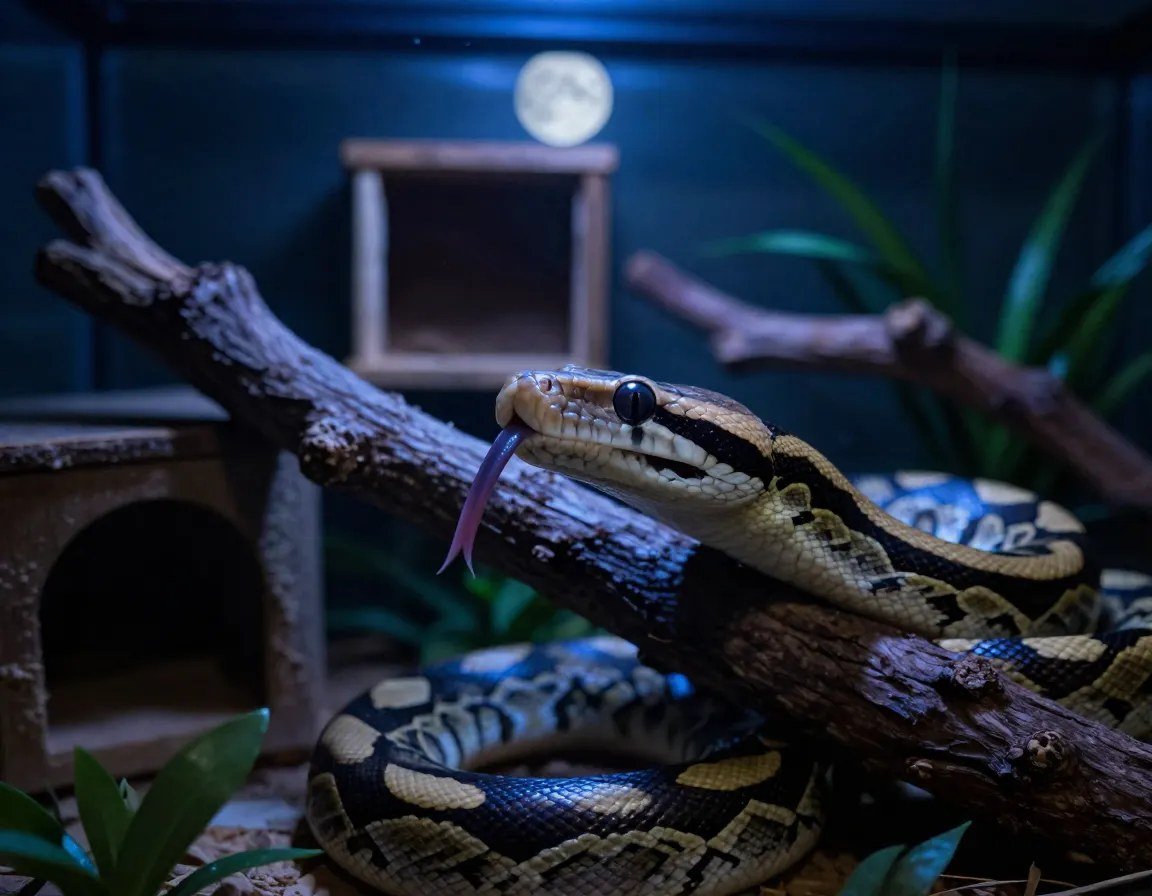
Normal hiding vs. warning-sign hiding
| What you see | Normal hiding | Warning-sign hiding |
|---|---|---|
| When it comes out | Most nights, for at least an hour or two | Never seen out, even at night, for 2+ weeks |
| Feeding | Eats most offerings, especially at dusk | Refuses food for 6+ weeks outside breeding season or shed |
| Weight | Stable; body round, spine not visible | Losing weight, spine and ribs visible, triangular body shape |
| Shedding | Clean shed in one piece, every 4–6 weeks | Retained shed, patchy shed, cloudy eyes that never clear |
| Breathing | Quiet, through the nose | Wheezing, clicking, bubbles at the mouth, open-mouth breathing |
| Posture | Relaxed coil, head tucked or resting normally | Stargazing, head tilted, corkscrewing, or limp when handled |
| Skin and scales | Clean, no black specks, no sores | Black specks (mites), sores, swelling, or discharge |
| Response to handling | Calm, explores your hands, tongue-flicks | Completely limp, or strikes and balls up every time |
Use the table as a whole, not one row at a time. A single missed meal means nothing. A snake that never comes out at night, has refused food for two months, and is losing weight means a vet visit. The pattern, not any single row, is what answers why is my ball python hiding all the time.
How to set up an enclosure a ball python will actually use
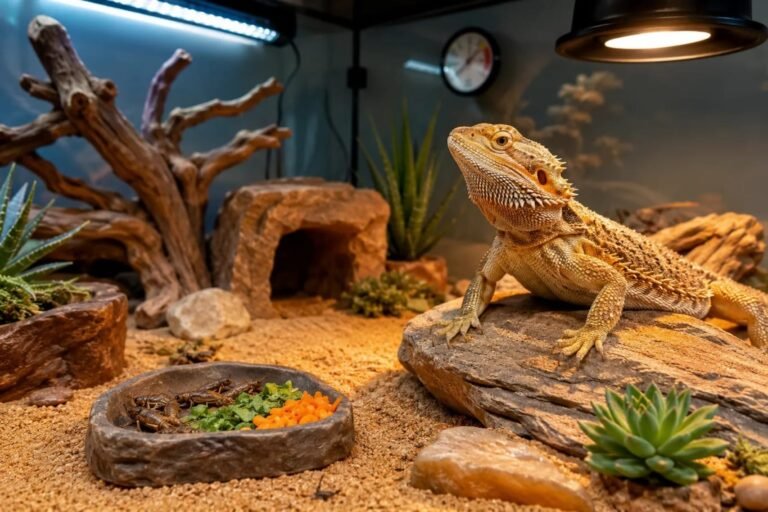
If your snake hides all the time because the enclosure is wrong, the fix is a setup audit, not a new snake. Work through this checklist:
- Two hides minimum, both snug. One on the warm side, one on the cool side, each with a single entrance and just big enough for the coiled snake. A hide the snake can barely fit into feels safer than a spacious cave.
- Cover three sides. Backgrounds or dark card on the back and sides of a glass enclosure cut reflections and make the snake feel less exposed. Leave the front clear for viewing.
- Add clutter. Fake plants, cork bark, branches, and leaf litter break up open space. A ball python will cross an open floor only if it has to; give it cover to travel under and it will travel.
- Fix the temperatures. Warm side floor 88–92°F (31–33°C), cool side 75–80°F (24–27°C), measured with an infrared gun, controlled by a thermostat. No heat source without a thermostat, ever.
- Fix the humidity. 50–60% normally, 60–70% in shed. A large water bowl on the warm side helps, and so does a substrate that holds moisture.
- Keep it dark at night. No coloured “night” bulbs. Ball pythons need true darkness at night, and red or blue night lights disturb their rhythm and keep them hidden.
- Feed at dusk, in the enclosure. Offer appropriately sized prey — about the same width as the snake’s widest point, or 10–15% of body weight — in the evening, when the feeding response is strongest. The snake prey size calculator helps you size prey correctly so a too-large meal is not the reason the snake stays hidden for days.
Give the changes a week before judging them. A ball python that has been hiding for a month will not become a social butterfly overnight, but you should start seeing night-time tracks and a better feeding response within a few days of the enclosure feeling right. If the tracks and feeding response improve, you have answered why is my ball python hiding all the time — the enclosure was the problem.
When to see a reptile vet promptly
Book a reptile vet — ideally an exotics vet listed through the Association of Reptile and Amphibian Veterinarians — the same day if hiding comes with any of the following: these are the signs that the question of why is my ball python hiding all the time has stopped being a waiting game.
- Never seen out of the hide, even at night, for more than 2 weeks, with no tracks or feeding response
- Refusing food for more than 6 weeks outside breeding season or shed, especially with weight loss
- Weight loss of more than 10% of body weight, or a visibly triangular body with a prominent spine
- Wheezing, clicking, bubbles at the nose or mouth, or open-mouth breathing — possible respiratory infection
- Stargazing, head tilting, corkscrewing, or loss of coordination — possible neurological disease, including inclusion body disease
- Retained shed, especially over the eyes, or shed that never completes
- Black specks on the snake or in the water bowl (snake mites, Ophionyssus natricis), sores, swelling, or discharge
- Regurgitation of a meal, or a swollen belly with no droppings for weeks
The Merck Veterinary Manual’s reptile section is a sound owner-level reference for separating normal snake behaviour from disease signs, and it makes the same point this guide does: in captive snakes, persistent abnormal behaviour is very often secondary to husbandry, so the vet will ask about your temperatures, humidity, and feeding. Take those numbers with you, plus the snake’s weight trend and a note of when it last ate and shed. The Merck Veterinary Manual’s table of husbandry requirements for selected reptiles is another solid authority, giving the temperature and humidity targets for ball pythons alongside other common species.
Vet note: This article is general husbandry information, not a diagnosis. A ball python that hides all day and explores at night is a normal ball python. A ball python that never comes out at all, stops eating for months, or hides alongside breathing or posture changes deserves a reptile vet rather than another week of watching an empty hide.
Frequently asked questions
Why is my ball python hiding all the time?
Usually because it is a nocturnal ambush predator doing what the species does: hiding during the day and becoming active at dusk and overnight. Check what it does at night — tracks, hide changes, feeding response — before worrying. Hiding becomes a concern only if the snake never comes out even at night, refuses food for 6+ weeks, or loses weight. So, in plain terms, why is my ball python hiding all the time? Because it is a nocturnal ambush predator, and daytime hiding is its normal routine.
Is it normal for a ball python to stay in its hide for days?
Yes. Ball pythons commonly stay in one hide for several days after a meal while digesting, and for several days before a shed while their eyes are cloudy. A healthy snake that does this, then comes out, eats, and sheds cleanly, is behaving normally.
How do I get my ball python to come out more?
Do not try to force it out — instead, make the enclosure feel safer. Add a second snug hide, cover three sides of the glass, add plants and clutter, fix temperatures (warm side 88–92°F / 31–33°C) and humidity (50–60%), and keep nights truly dark. A snake that feels safe explores more. Handling should be short and calm, never daily, and never within 48 hours of a meal. Once the enclosure feels safe, the question of why is my ball python hiding all the time usually answers itself.
Should I be worried if my ball python never leaves its hide?
If it truly never leaves — no night-time tracks, no hide changes, no feeding response for weeks — yes, that is worth investigating. First check temperatures and humidity, add cover and a second hide, and offer food at dusk. If nothing changes in a week, or the snake is also losing weight or showing breathing or posture changes, book a reptile vet. If nothing changes in a week, the question of why is my ball python hiding all the time deserves a vet’s answer rather than more waiting.
Do ball pythons hide more in winter?
Many do. Cooler room temperatures, shorter days, and the breeding season all reduce activity in winter, and adult males in particular may fast and hide more for weeks. This is normal if the snake holds its weight and resumes eating in spring, but a snake that is also losing weight or showing other signs still needs a vet, whatever the season.
How many hides does a ball python need?
At least two — one on the warm side and one on the cool side — so the snake can thermoregulate without giving up cover. Both should be snug, with a single entrance, and just big enough for the coiled snake. A third hide or humid hide in the middle is a useful bonus, especially during shed.