Bearded Dragon Black Beard: 7 Causes & Warnings
A bearded dragon black beard is usually the first behaviour that truly alarms a new keeper. If you are searching for bearded dragon black beard causes, your dragon probably looked fine yesterday and today the spiny skin under its chin has gone dark grey or jet black, sometimes puffed out like a pirate’s beard. In most cases nothing is seriously wrong. The beard is a display organ, and darkening it is how a dragon talks. The skill is telling a short, normal display from a beard that stays black because the dragon is cold, in pain, or ill.
Direct answer: A bearded dragon black beard most often means stress, a territorial or courtship display, or that the dragon is cold and darkening to absorb heat. A normal display fades within minutes to about 2 hours once the trigger is gone, and a cold morning beard lightens within 30–60 minutes of basking at 100–110°F (38–43°C). A beard that stays black for more than 24 hours, or stays black alongside not eating, lethargy, gaping, or weight loss, is not a display — check temperatures and humidity (30–40%) first, then book a reptile vet if it has not cleared within 48 hours.
That time limit is the part most short guides leave vague. Some say worry after a day, others say wait three days, and neither tells you what else to look at. Duration plus context is the real test, and this guide works through both.
What a bearded dragon black beard actually means
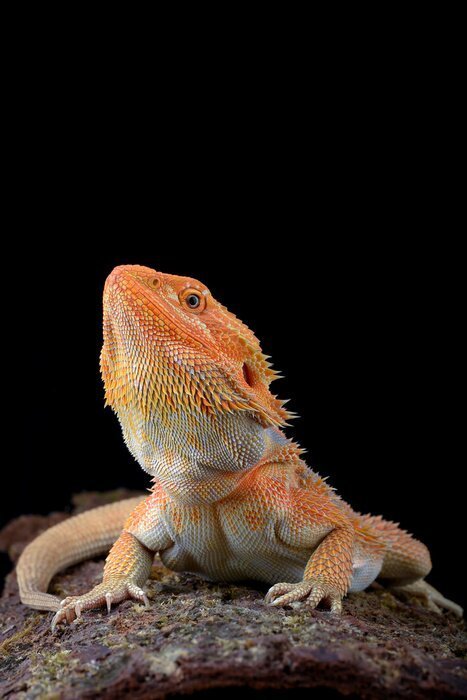
The beard is a pouch of spiny, scaled skin under the throat of Pogona vitticeps, the central or inland bearded dragon from arid Australia. Under that skin sit pigment cells called melanophores. When the dragon is aroused — threatened, excited, cold, or hormonal — those cells spread dark melanin pigment through the skin and the beard turns grey, then black. Relax the signal and the pigment pulls back, and the beard returns to its normal tan, cream, or orange.
Two different things can look similar, and separating them answers half of all cases before you do anything else.
Beard-only darkening is communication. The throat goes black while the back, belly, and tail keep their normal colour. The dragon is saying something: back off, this is mine, or I am interested in you. It is often paired with puffing the beard out, flattening the body, head bobbing, or opening the mouth.
Whole-body darkening is usually temperature. The beard, back, and sides all darken together, most often first thing in the morning. Dark skin absorbs heat faster than pale skin, so a cold dragon darkens on purpose to reach its working body temperature sooner. Once it has basked properly, the whole animal lightens again.
If you remember only that split — beard alone equals message, whole body equals thermometer — you will read most episodes correctly.
The 7 causes, ranked from normal to serious
1. Morning cold and thermoregulation
This is the most overlooked normal cause. Overnight, the enclosure cools to room temperature, often 65–75°F (18–24°C). In the morning the dragon climbs to its basking spot dark all over, sits with its mouth slightly open once warm — called gaping, a normal way to hold temperature without leaving the spot — and lightens over the next half hour to hour.
That pattern is healthy if it repeats the same way each day and clears reliably. It becomes a husbandry problem only if the dragon never fully lightens, which usually means the basking spot never actually reaches temperature. Measure the basking surface itself with an infrared temperature gun, not the air beside it. Adults need a basking surface of about 100–110°F (38–43°C), falling to 75–85°F (24–29°C) on the cool side. Check your own gradient with the reptile temperature gradient calculator rather than trusting a dial thermometer stuck to the glass.
2. Stress or fear
A new enclosure, a house move, a dog or cat staring through the glass, loud handling, being picked up from above like a predator, or a car journey can all trigger a stress beard. Stress marks — dark, oval patterns on the pale belly — often appear at the same time.
A stress beard should fade within minutes to a couple of hours once the trigger stops. Covering the side of the enclosure facing a pet or a busy hallway, handling low and slow from the front, and leaving a newly arrived dragon mostly alone for the first 7–14 days all help. A dragon that is black-bearded every single day in the same spot is telling you something in that spot keeps scaring it. Find that thing before you assume illness.
3. Territory and reflection
Male dragons in particular will black-beard at a rival. In a glass enclosure, the rival is often their own reflection. The display is unmistakable: beard fully black and puffed, body flattened, and fast, hard head bobbing aimed at the glass.
Dragons are solitary in the wild and must be housed alone in captivity. Cohabitation is a common, avoidable cause of constant black beards, bitten toes and tails, and one animal quietly starving beside a dominant tank-mate. If two dragons can see each other through glass in separate enclosures, block the shared sightline with a background or divider.
4. Courtship and breeding season
In spring and early summer, and under long indoor photoperiods of 12–14 hours, mature males darken their beards as part of courtship. Fast head bobbing toward a female — or toward you — paired with a black beard and an otherwise bright, active, eating dragon is hormonal, not medical.
Females respond with slow head bobbing and arm waving, a submissive signal. A female who is black-bearding, digging repeatedly, restless, and off her food may instead be gravid, carrying eggs, and looking for a laying site. She needs a lay box of damp sand and soil about 8–12 inches deep, and a vet if she strains, becomes lethargic, or stops eating for more than a few days, because egg binding (dystocia) is a genuine emergency.
5. Shedding discomfort
A dragon coming into shed is often irritable for a few days, and a brief dark beard while rubbing its face on bark or stone is common. The skin around the beard and head goes dull and grey first, then lifts in patches. This is a minor, temporary trigger, and it should follow the normal shedding timeline. Our guide on how often do bearded dragons shed covers the age-by-age pattern and what stuck shed, called dysecdysis, looks like when it needs help instead of patience.
6. Wrong temperatures, UVB, or humidity every day
A beard that darkens at the same time every afternoon, or one that never quite returns to normal, often points at the enclosure rather than an event. The three checks that matter most are:
- Basking temperature too low or too high. Below about 95°F (35°C) a dragon cannot digest properly and stays dark and sluggish. Far above 115°F (46°C) it will avoid the spot, gape constantly, and stay stressed.
- UVB that has quietly expired. A linear tube UVB should give a UV Index of about 3–5 at the basking spot, Ferguson Zone 3 for this species. Tubes lose UVB output long before they stop glowing and typically need replacing every 6–12 months. Without UVB, vitamin D3 synthesis fails, calcium cannot be used properly, and the dragon feels unwell long before the tremors and soft jaw of metabolic bone disease (MBD) appear. The reptile UVB lighting calculator helps match lamp type and distance to the enclosure.
- Humidity stuck at an extreme. Around 30–40% suits this arid species. Very low humidity under 20% dries skin and irritates airways; sustained humidity above 60% raises the risk of respiratory infection. If you are guessing, measure it — the reptile humidity calculator will help you sanity-check your setup and readings.
Fix the numbers first. A surprising number of “mystery” black beards clear within a day of the basking spot actually reaching temperature.
7. Pain and illness
This is the cause to respect. A beard that stays black for hours into days, with no display behaviour at all — no bobbing, no puffing at anything, just a quiet dragon with a dark throat — is a general sign of pain or feeling unwell, in the same way a person goes pale and quiet.
Conditions that can sit behind a lasting dark beard include intestinal parasites such as coccidia (Isospora amphiboluri) and pinworms, impaction from a large meal or loose substrate, respiratory infection, adenovirus infection (particularly serious in young dragons), gout, egg binding in females, and metabolic bone disease linked to calcium and vitamin D3 failure. None of these can be diagnosed from the beard alone. The beard is the alarm bell, not the diagnosis.
Triage table: how long, what else, what to do
Use duration and the signs travelling with it, not colour alone.
| Pattern | Likely meaning | Other signs | What to do |
|---|---|---|---|
| Black for minutes, puffed, head bobbing | Territorial or courtship display | Bright eyes, active, normal body colour | Nothing. Remove the rival or reflection if it repeats |
| Dark all over on waking, clears in 30–60 min | Thermoregulation | Sits on basking spot, then lightens and eats | Nothing, if the basking surface is 100–110°F (38–43°C) |
| Black for 1–2 hours after handling, a move, or a scare | Stress or fear | Stress marks on belly, hiding, then normal | Remove the trigger, leave alone, re-check in 2 hours |
| Black on and off all day, every day | Enclosure problem | Avoids basking spot, or never lightens fully | Measure basking surface, cool side, humidity and UVB age today |
| Black for 24+ hours, quiet, still eating | Early warning | Slightly reduced appetite or activity | Fix husbandry, weigh the dragon, re-check in 24 hours |
| Black for 48+ hours, or black with any red-flag sign below | Pain or illness until proven otherwise | Not eating, lethargy, gaping, wheeze, sunken eyes, weight loss | Book a reptile vet now, do not wait for it to pass |
Weighing matters because appetite reports are unreliable. A kitchen scale in grams, once a week, gives you a trend. An adult losing more than about 10% of its body weight, or any baby losing weight at all, needs a vet regardless of beard colour.
What to do in the first 24 hours: a calm checklist
When you find a black beard and you are not sure why, work through this order. It rules out the common causes before you worry about the rare ones.
- Look, do not grab. Note whether only the beard is dark or the whole body is dark, whether it is puffed, and whether the dragon is bobbing, gaping, hiding, or basking. Handling a stressed dragon to inspect it usually makes the beard darker and tells you less.
- Measure the basking surface. Infrared gun on the exact spot the dragon sits. You want 100–110°F (38–43°C) for an adult. Then check the cool side: 75–85°F (24–29°C).
- Check the obvious triggers. Another dragon in view, a reflection, a cat on top of the enclosure, a recent move, new decor, or a shed starting on the head.
- Check the UVB age. Write the install date on the tube with a marker when you fit it. If you do not know how old it is, treat it as expired.
- Offer water and food as normal. Drip water on the snout or offer wet leafy greens such as collard and mustard greens. Note whether the dragon eats. A displaying male who then eats lunch was never ill.
- Set a re-check time. Two hours for a display or stress beard, the next morning for a morning-cold beard, and 24 hours as the outer limit for a beard with no other signs. Put it in your phone. “Keeping an eye on it” without a time is how two days slip past.
Do not try to treat a lasting black beard at home with extra baths, force-feeding, or supplements beyond normal calcium dusting. A lukewarm soak is fine for a dragon that enjoys one, but it does not treat parasites, impaction, or infection, and repeated stressful handling can hide the very behaviour you need to observe.
When to see a vet promptly
Book a reptile vet — ideally an exotics vet listed through the Association of Reptilian and Amphibian Veterinarians — the same day if a black beard comes with any of the following:
- Beard still black after 48 hours, or black for more than 24 hours with reduced appetite
- Refusing food for more than a week in an adult, or more than 2–3 days in a baby or juvenile
- Open-mouth breathing at rest, clicking or wheezing, mucus at the nostrils or mouth — possible respiratory infection
- Sunken eyes, wrinkled skin, or a tail that looks thin at the base — possible dehydration or weight loss
- A swollen or firm belly, straining, or no faeces for over a week — possible impaction
- Tremors, twitching toes, a soft or swollen jaw, or bent limbs — possible metabolic bone disease
- A female digging, restless, then suddenly quiet and lethargic — possible egg binding
- Any black beard in a baby under 4 months old that lasts beyond a brief display. Babies have almost no reserves, and adenovirus and parasites hit them fast.
The Merck Veterinary Manual’s overview of reptiles and amphibians is a sound owner-level reference for separating normal reptile behaviour from disease signs, and it makes the same point this guide does: in captive lizards, persistent abnormal signs are very often secondary to husbandry, so the vet will ask about your temperatures, UVB, and diet. Take those numbers with you, along with the dragon’s weight trend and a fresh faecal sample if you can get one. That turns a vague visit into a useful one.
Vet note: This article is general husbandry information, not a diagnosis. A black beard on its own is communication. A black beard that will not fade, especially with appetite or breathing changes, deserves a reptile vet rather than another day of watching.
Frequently asked questions
How long should a black beard last?
A display or stress beard should fade within minutes to about 2 hours once the trigger is gone. A cold morning beard should clear within 30–60 minutes of basking. Anything still black after 24 hours needs a husbandry check that day, and anything still black after 48 hours — or black at any point alongside not eating or lethargy — needs a reptile vet.
Do female bearded dragons get black beards too?
Yes, but usually less intensely and less often than males. Females darken their beards when stressed, threatened, cold, or unwell, and a gravid female may show a dark beard while digging for a laying site. Because females display less, a strong, lasting black beard in a female is worth taking slightly more seriously, not less.
Why is my bearded dragon’s beard black but he is acting normal?
That combination is almost always a display or thermoregulation, not illness. A dragon that is black-bearded but bright-eyed, active, holding a normal body colour elsewhere, and eating normally is communicating — at a reflection, at you, at another animal — or warming up. Sick dragons go quiet. Watch the behaviour, not just the colour, and re-check in two hours.
Can a black beard mean my dragon is angry at me?
Not exactly angry, but it can mean your dragon feels threatened or over-handled in that moment: reached for from above, woken up, handled for too long, or handled by a stranger. Put the dragon back, let the beard fade fully, and try again later with slower, lower handling from the front. A dragon that black-beards every time it is handled may be in pain, so if the pattern is new, treat it as a health sign first.
Should I turn the heat up if the beard is black?
Only if you have measured the basking surface and it is genuinely below 100°F (38°C). Never raise temperatures on a guess: an enclosure that is already too hot produces its own stress beard, constant gaping, and avoidance of the basking spot. Measure first with an infrared gun, adjust the lamp distance or wattage in small steps, and measure again after an hour.