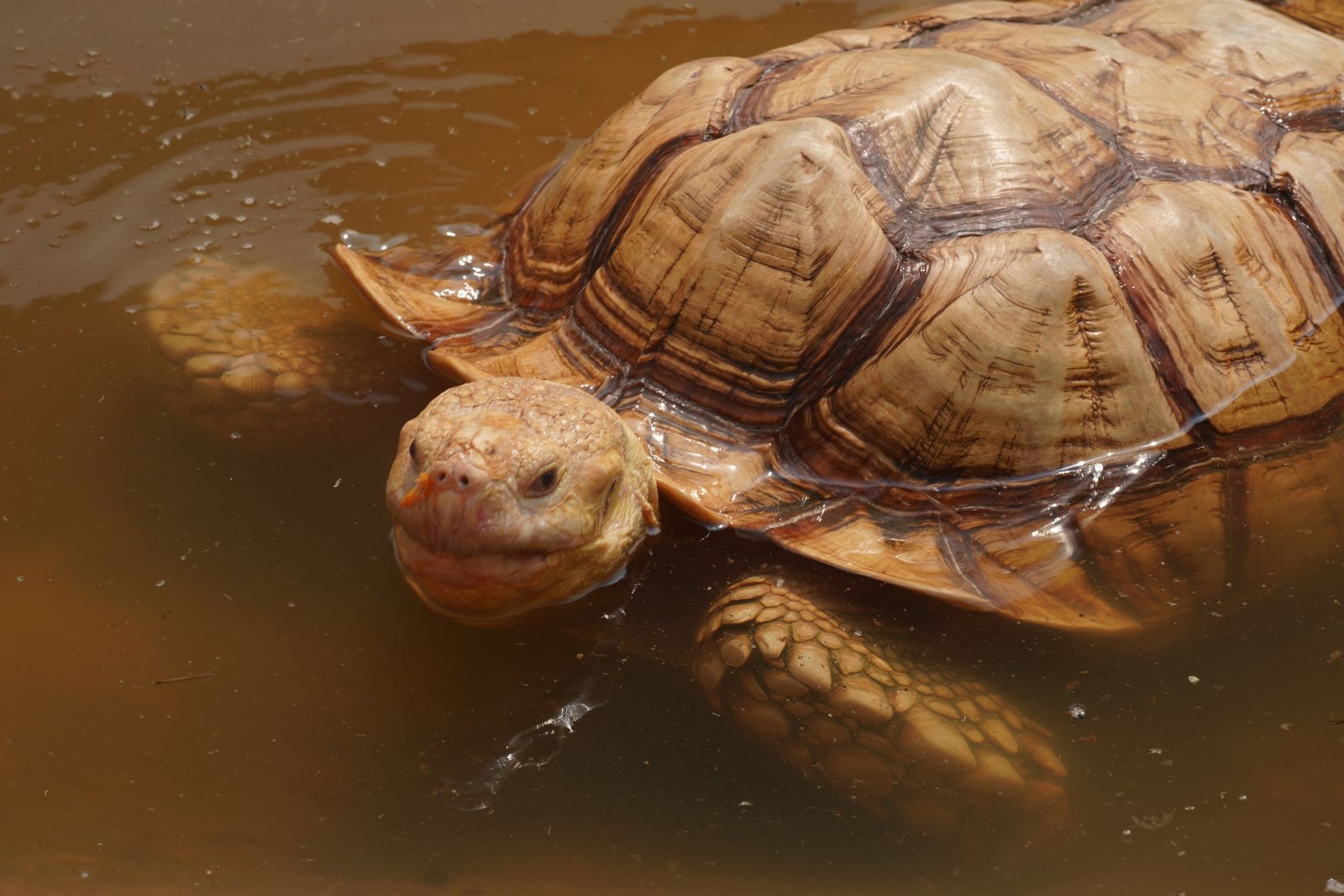
How Often Should You Soak a Tortoise? By Age
If you are asking how often should you soak a tortoise, you have probably noticed how contradictory the advice sounds: one care sheet says daily, another says weekly, and both claim to be right. They usually are — for different animals. A two-month-old sulcata hatchling losing water through a tiny body in a dry indoor enclosure and a ten-year-old Russian tortoise grazing outdoors in summer do not share a soaking schedule, and forcing one schedule onto both is how babies end up dehydrated and adults end up stressed by pointless daily handling.
Direct answer: Soak hatchling tortoises daily for 15–20 minutes, juveniles 2–3 times a week, and healthy adults of dry-country species (sulcata, Russian, Hermann’s) about once a week — tropical red-footed tortoises need 2–3 soaks a week at every age. Use warm water at 85–95°F (29–35°C), no deeper than the tortoise’s chin or the junction of its upper and lower shell, and always supervise.
That schedule is the skeleton. The rest of this guide puts the biology on it — why tortoises drink and absorb water the way they do, how species and enclosure humidity move the numbers, and how to tell from urates, eyes, and shell growth whether your current routine is actually enough.
Why soaking matters: how a tortoise actually takes in water
A tortoise in a soak does three things, and watching for them tells you the soak is working. It drinks, often with its head submerged for surprisingly long stretches, pumping water with visible throat movements. It voids — most tortoises urinate and defecate in the water, which is normal, expected, and the reason soak water often needs changing partway through. And it rehydrates systemically: tortoises can take up water across the thin skin of the neck and around the cloaca, which is one reason a dehydrated tortoise often perks up visibly after a bath even if you never saw it drink.
Hydration in tortoises is managed through the bladder, which stores dilute urine and resorbs water from it in dry periods. The waste product of that system is uric acid, passed as urates — the white or off-white material in tortoise droppings. Urates are a free hydration gauge at every soak: soft, creamy, toothpaste-like urates suggest hydration is adequate; hard, gritty, chalky, or yellow-orange urates say the tortoise is conserving water hard and needs more frequent soaking, better drinking access, or both.
Chronic low-level dehydration is the quiet problem soaking prevents. In growing tortoises it is closely associated with pyramiding — the raised, lumpy, pyramid-shaped scutes that develop when shell grows under dry conditions, low enclosure humidity, and excess dietary protein in combination. In adults, persistent dehydration contributes to bladder stones formed from concentrated urates, sluggish gut movement and constipation, sunken eyes, and dry, flaky skin. None of these announce themselves early, which is exactly why a routine matters more than a rescue.
How often should you soak a tortoise at each age and species?
Age sets the baseline, because surface-area-to-volume ratio decides how fast a tortoise dries out. Species then adjusts it, because a forest tortoise and a desert-edge tortoise evolved with very different rainfall.
| Animal | How often | How long |
|---|---|---|
| Any hatchling (0–12 months) | Daily | 15–20 minutes |
| Juvenile (1–3 years) | 2–3 times a week | 15–20 minutes |
| Adult sulcata (Centrochelys sulcata) or leopard tortoise (Stigmochelys pardalis) | About once a week | 20–30 minutes |
| Adult Russian (Testudo horsfieldii) or Hermann’s (Testudo hermanni) | About once a week | 15–20 minutes |
| Red-footed tortoise (Chelonoidis carbonarius), any age past hatchling | 2–3 times a week | 15–30 minutes |
| Sick, dehydrated, or post-brumation tortoise | Daily, or as your vet advises | 15–20 minutes |
Two qualifications keep this table honest. First, enclosure conditions move the schedule. A hatchling kept correctly at high humidity — many modern keepers raise baby sulcatas and leopard tortoises with a humid hide and ambient humidity around 70–80% in a closed chamber, mimicking the burrow microclimate hatchlings use in the wild — drinks from its environment constantly and is less dependent on the soak itself, though daily soaking in the first months remains the safe default. A tortoise of any age kept indoors under hot, drying basking lamps in a heated house in winter needs the upper end of its range. Check your setup numbers with the reptile humidity calculator and the reptile temperature gradient calculator — a typical tortoise table setup runs a basking spot of 95–100°F (35–38°C) falling to a cool end around 75–80°F (24–27°C).
Second, a walk-in water dish changes the maths. A large, shallow, stable soaking dish the tortoise can climb into and out of by itself — standard for red-footed tortoises and outdoor enclosures — lets the animal self-soak daily, and many keepers then reduce separate baths to a weekly supervised session plus daily dish changes. A dish only counts if the tortoise actually uses it; many indoor tortoises, especially young ones, do not, which is why scheduled soaking exists in the first place.
How to soak a tortoise correctly: depth, temperature and duration
Technique is simple, but the three numbers are worth getting right, because two of the common mistakes — water too deep and water too hot — turn a health routine into a risk.
Container. An opaque washing-up bowl or storage tub with low, stable sides. Clear containers unsettle some tortoises, which can see through the walls and try to walk through them for the entire soak. Outdoors, a large plant saucer or a dedicated shallow tub works for big adults — an adult sulcata is soaked, in practice, with a shallow tub, a hose-down, and a walk-in wallow rather than by lifting it into a bowl.
Depth. Fill to no higher than the junction where the carapace (upper shell) meets the plastron (lower shell) — roughly chin height when the tortoise is standing relaxed, and “elbow deep” is the traditional keeper shorthand. For hatchlings, go shallower: a quarter to half an inch (about 1 cm) is plenty. A tortoise should be able to rest with its head comfortably above water; a healthy tortoise can hold its head under voluntarily to drink, which is different from being unable to keep it up.
Temperature. 85–95°F (29–35°C) — warm to your hand, never hot. Water scalds more easily than keepers expect, and a tortoise cannot quickly leave an unsuitable bath it has been placed in. Expect the water to cool during the soak; topping up with warm water or accepting a shorter session once the water feels cool to the touch is better than starting dangerously hot to compensate.
Duration and supervision. 15–30 minutes covers almost every case — long enough to drink, void, and rehydrate; short enough that the water has not gone cold. Never leave a soaking tortoise unattended, and treat that as absolute for hatchlings: a tipped-over baby in even shallow water can drown. If the tortoise defecates, change the water and continue — drinking from fouled water defeats the purpose. Afterwards, pat the tortoise dry if it is going back onto loose substrate, and return it to the warm end of its enclosure. Enclosure sizing for growing animals can be checked with the reptile terrarium size calculator — a minimum of about 8 × 4 feet is a common adult target for Mediterranean species, with sulcatas needing substantially more, ideally outdoors.
Signs your tortoise needs more — or fewer — soaks
Let the animal audit your schedule. Increase soaking frequency, check drinking-water access, and review enclosure humidity if you see:
- Gritty, hard, or orange-tinged urates instead of soft white or cream ones
- Sunken or dull eyes, or skin that looks dry and stays tented briefly when very gently pinched on a leg
- Constipation — straining, or no droppings for an unusually long period for that individual
- A hatchling that is inactive and not gaining weight, or early pyramiding bumps forming on the carapace scutes of a growing tortoise
Conversely, a tortoise with soft creamy urates, bright eyes, regular droppings, and smooth shell growth, which has free access to a soaking dish it uses, does not benefit from being hauled out for extra forced baths. Soaking is a hydration tool, not a ritual, and handling stress is a real cost — particularly for shy species and for tortoises that consistently struggle to escape the soak tub for the full session rather than settling to drink.
Two situations temporarily override the normal schedule. After brumation (the reptile dormancy period also called hibernation in tortoises), a warm soak on waking, and daily soaks for the first several days, help restore hydration before the gut restarts on food — a tortoise should drink before it eats after a long fast. When a vet is treating dehydration, illness, or a bladder-stone risk, soak as often as that vet directs, which may be daily for a period regardless of age or species.

When soaking problems need a reptile vet
See a reptile vet promptly — soaking is supportive care, not treatment — if your tortoise shows:
- Sunken eyes with lethargy and refusal of food lasting more than a few days, or no response to a week of daily soaks
- Repeatedly passing only hard, gritty urates, straining to pass anything, or a hard swelling consistent with a bladder stone
- Discharge from the nose, wheezing or open-mouth breathing (possible respiratory infection, which humidity and hydration problems can accompany)
- A hatchling that is soft-shelled beyond the normal slight flexibility of the first weeks, losing weight, or failing to grow
University and veterinary references on tortoise husbandry, such as the tortoise care resources from the Royal Veterinary College, consistently place hydration, correct temperature, and appropriate diet together as the foundation of preventive tortoise health — soaking supports the first of those three, but it cannot compensate for failures in the other two, and persistent signs belong in a clinic, not in a deeper bath.
Vet note: This article is general husbandry information, not a diagnosis. A tortoise that stays sunken-eyed, lethargic, or off its food despite regular warm soaks needs examination by a reptile vet rather than simply more soaking.
Frequently asked questions
How long should you soak a tortoise for?
Fifteen to twenty minutes is right for hatchlings and most adults, extending to 20–30 minutes for large adults, red-footed tortoises, and dehydrated animals under advice. The soak has done its job once the tortoise has had the chance to drink and void; if the water cools to room temperature before the time is up, end the session or refresh the water rather than leaving the tortoise sitting in a cold bath.
Can you soak a tortoise too often?
For hatchlings, daily soaking is appropriate and hard to overdo. For a healthy adult with a self-soaking dish, daily forced baths are usually unnecessary handling rather than a health benefit. The realistic risks of over-soaking are stress and chilled water, not waterlogging — a tortoise will not absorb “too much” water in a normal supervised session. Follow the age-and-species schedule and the urate check instead of a more-is-better approach.
What temperature should tortoise bath water be?
Warm, at 85–95°F (29–35°C) — it should feel comfortably warm on the inside of your wrist, similar to a baby’s bath. Never use hot water. If you would hesitate to keep your hand in it, it is too hot for an animal that cannot climb out quickly.
Why does my tortoise poop in the soak every time?
Because soaking works. Warm water stimulates gut movement, and most tortoises reliably urinate and defecate in the bath — wild tortoises void when they find water too, conserving fluid the rest of the time. Change the water if it fouls and continue the soak. A tortoise that only passes droppings in the soak is common and not, by itself, a concern.
Do tortoises still need a water dish if they are soaked regularly?
Yes. Soaking supplements drinking access; it does not replace it. Every tortoise enclosure should have a clean, shallow, stable water dish available at all times, changed daily, sized so the tortoise can climb in or at least reach in to drink. Scheduled soaks guarantee hydration for animals that rarely drink on their own — the dish guarantees the opportunity between soaks.