Why Is My Tortoise Not Pooping? Causes & Fixes
If you are asking why is my tortoise not pooping, you have probably been checking the enclosure for days, finding nothing, and wondering whether to worry. Tortoises are slow in every way, and that includes their digestion. A healthy tortoise may poop every 2–3 days, or it may go a week between droppings and still be perfectly fine. That slow pace is exactly what makes this question hard — and it is also why so many owners panic too early, or wait too long.
Direct answer: Most tortoises that are not pooping are dehydrated, too cold, or eating too little fibre. A healthy adult that has not pooped for 4–5 days, is still eating, and looks alert usually just needs a warm soak and a husbandry check. A tortoise that has not pooped for a week, has stopped eating, is straining, or looks bloated and lethargic needs a reptile vet. Babies are different: a hatchling that has not pooped for more than 2 days needs attention fast.
The first step is to learn what is normal for your tortoise. A sulcata (Centrochelys sulcata) the size of a dinner plate does not poop on the same schedule as a baby Hermann's tortoise (Testudo hermanni). This guide gives you the normal ranges by age and species, the causes in check order, a soak routine that fixes most cases, and the red flags that mean a vet visit.
Why is my tortoise not pooping?
The honest answer starts with the clock. Tortoises have very slow digestion, and their gut transit time — the time from eating to pooping — is measured in days, not hours. That means "not pooping for 2 days" is usually normal, while "not pooping for 2 weeks" almost never is. The table below gives you the normal range, so you can tell which side of the line your tortoise is on.
| Tortoise | Normal poop frequency | Worry if |
|---|---|---|
| Hatchling (under 1 year) | Every day, or every other day | No poop for 2 days |
| Juvenile (1–5 years) | Every 2–3 days | No poop for 4–5 days |
| Healthy adult (5+ years) | Every 2–3 days, some once a week | No poop for 7 days, or straining |
| Adult in brumation or cool season | Rarely or not at all | Weight loss, or poop problems after waking |
| Any tortoise, not eating either | — | No poop for 3–4 days plus no appetite — vet |
Notice the disagreement in the sources. Some vet-reviewed guides say healthy adults poop only once a week or once every other week. Others say every 2–3 days. Both can be right, because frequency depends on species, size, diet, temperature, and how much the tortoise eats. A big grazing sulcata eating hay all day poops far more often than a small Russian tortoise (Testudo horsfieldii) eating a modest salad. That is why the single most useful thing you can do is keep a simple poop log: date, whether it pooped, what it ate. After a few weeks you will know your tortoise's own normal, and a change from that normal is the real warning sign.
One more thing to check before you worry: tortoises sometimes eat their own droppings, and they often poop in their water dish or during a soak, where you may not notice it. Check the water dish and the soak tub before concluding that nothing has happened for days.
What healthy tortoise poop looks like
Healthy tortoise poop is firm, well formed, and brown or greenish-brown. It often comes out together with a white, chalky substance called urate — the solid form of urine in tortoises. That white part is normal, as long as it is soft and creamy. Gritty, hard, or dry urate is a sign of dehydration, and it often shows up in the same tortoises that stop pooping.
Unhealthy poop looks different. Runny or watery droppings can mean too much fruit, a sudden diet change, or parasites. Dry, crumbly, pellet-like droppings point to dehydration. Undigested food in the droppings suggests the tortoise is too cold to digest properly. Blood, mucus, or a very foul smell are all vet signs. If you are unsure, take a photo of the droppings and a fresh sample to the vet — a faecal test is cheap and it rules out parasites fast.
7 causes of a tortoise not pooping, in check order
Work through these in order. Most cases are fixed by the first three.
1. Dehydration
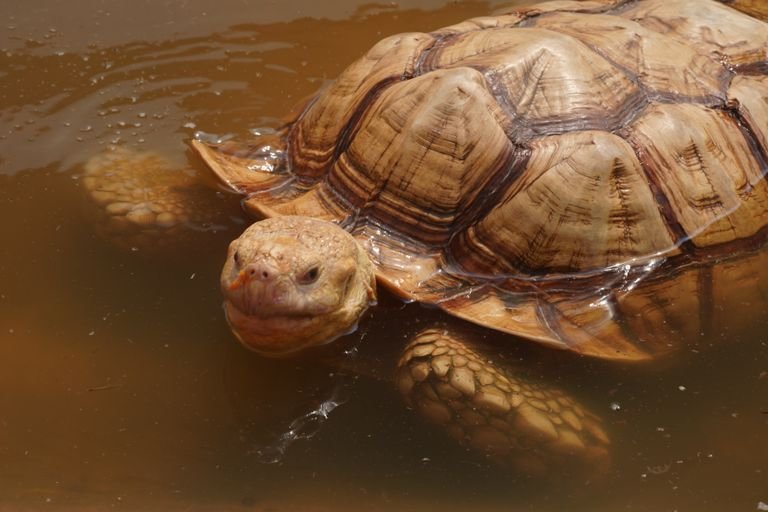
This is the number one cause. Tortoises famously ignore their water bowls, and a tortoise that does not drink enough cannot pass waste. The gut pulls water out of the droppings, they dry out, and they get stuck. Look for sunken eyes, dry and flaky skin, and hard or gritty white urate. The fix is soaking, covered in detail below, plus fresh water available at all times in a shallow dish the tortoise can climb into. Our guide on how often should you soak a tortoise gives the full soaking schedule by age and species.
2. Temperatures too low
Tortoises are cold-blooded, so their digestion runs on heat. If the basking spot is too cool, food moves through the gut very slowly or not at all. Most pet tortoises need a basking spot of 90–100°F (32–38°C) and a cool side of 70–80°F (21–27°C), with night temperatures not dropping below about 65°F (18°C). Measure with a digital thermometer, not a stick-on dial. If the tank is the problem, fix the heat first and give it 48 hours. The reptile temperature gradient calculator helps you check whether your setup actually gives the tortoise a usable warm-to-cool range.
3. Too little fibre in the diet
Tortoises need a high-fibre diet to keep their gut moving. The best foods are grasses, hay, weeds such as dandelion leaves and plantain, and dark leafy greens. A diet of mostly supermarket lettuce, cucumber, and fruit is low in fibre and high in water and sugar, and it often leads to constipation. Fruit should be a rare treat, not a staple — and for grazing species like sulcatas, grass and hay should make up most of the diet. Offer a varied mix, and dust food with calcium a few times a week. The reptile feeding schedule calculator helps you plan a feeding routine that matches your tortoise's species and age.
4. Not enough exercise or space
A tortoise that sits in a small enclosure all day has a slow gut. Tortoises are walkers by nature, and movement helps food move through the digestive tract. An indoor table that is too small, or an outdoor pen with nowhere to explore, can both contribute. Give the tortoise as much space as you can, with different surfaces to walk on, and let it roam in a safe outdoor pen or a tortoise-proofed room for part of the day when the weather allows.
5. Stress or a recent change
A new home, a new enclosure, a move to a different room, or a new tortoise in the next pen can all put a tortoise off its food — and a tortoise that is not eating is not pooping. This is usually short-lived. Keep the routine steady, offer the usual foods, make sure there are hides to retreat to, and give it a few days to settle. If the fast lasts more than a week, look for other causes.
6. Substrate or foreign object impaction
Tortoises sometimes swallow substrate while eating — sand, small gravel, bark chips, or even dog hair and bits of plastic. The material can block the gut, and the tortoise stops pooping. This is more common on loose sand or fine gravel. Feed on a flat slate or tile rather than directly on loose substrate, and remove small objects from the enclosure. A tortoise that is straining, bloated, or passing no droppings at all for a week needs a vet, who can feel for a blockage and take an X-ray.
7. Illness — parasites, bladder stones, or egg binding
If husbandry is right and the tortoise still is not pooping, illness moves up the list. Intestinal parasites can slow the gut and change the droppings. Bladder stones are a solid mass of urate in the bladder that can block the cloaca — the single opening for urine and faeces — and stop droppings entirely. In females, egg binding (dystocia) can press on the gut and stop bowel movements.
A female that is digging, restless, and not pooping may be trying to lay. All three need a reptile vet. The Merck Veterinary Manual's reptile care pages explain these conditions in plain terms, and the Association of Reptilian and Amphibian Veterinarians runs a find-a-vet directory if you need a reptile specialist near you.
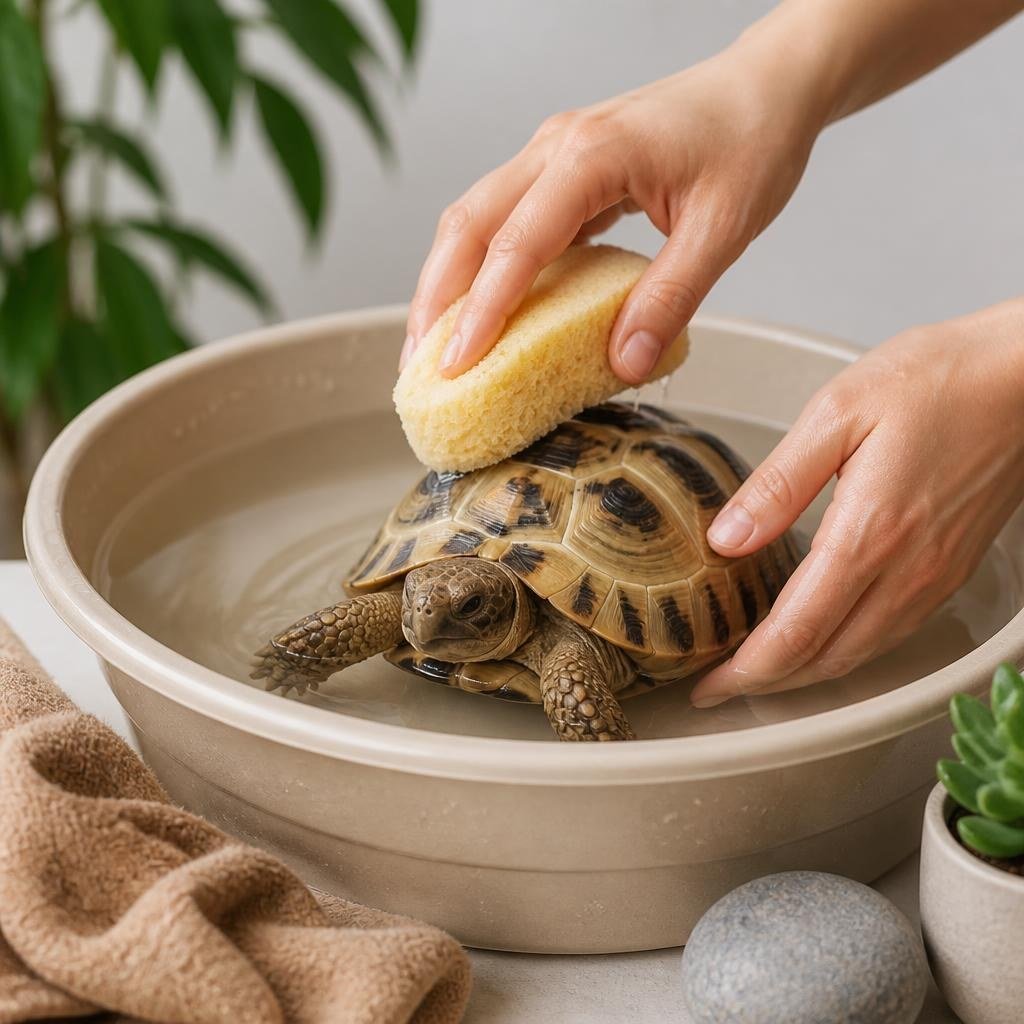
The warm soak: the fix that works most often
A warm soak is the first treatment to try, and it fixes most mild cases. It hydrates the tortoise, warms its body, and often triggers a bowel movement within the soak itself. Do it like this.
- Fill a tub with lukewarm water. The water should be 85–95°F (29–35°C) — warm to your wrist, never hot. Fill it to chin level, so the tortoise can hold its head above the water easily.
- Soak for 15–30 minutes. Put the tortoise in gently and stay with it. Most tortoises poop during a soak, sometimes within the first few minutes. That is normal and a good sign.
- Keep the water warm. If the water cools, top it up with a little warm water. A cold soak does not help and can chill a small tortoise.
- Repeat daily until it poops. For a constipated tortoise, soak once a day. Once it is pooping normally again, go back to the normal schedule: daily for hatchlings, 2–3 times a week for juveniles, and about once a week for adults.
- Offer food after the soak. A warm, hydrated tortoise is more likely to eat, and eating is what restarts the gut. Offer fresh greens and a little hay straight after the soak.
Never use oil, laxatives, or enemas at home. Mineral oil and human laxatives can be dangerous for tortoises, and enemas can injure the gut. If soaking and husbandry fixes do not work within a few days, the next step is a vet, not a home remedy.
Other home fixes that help
Soaking is the main fix, but these help too. First, check the heat and fix it if it is off — a warm tortoise digests, a cold one does not. Second, improve the diet: more grass, hay, and weeds, less fruit and lettuce. A little grated pumpkin or squash can add fibre and water, and many keepers find it helps. Third, give the tortoise more space and time to walk, including supervised outdoor time on warm days.
Fourth, mist the food lightly or soak dried hay before offering it, so the tortoise takes in more water with its meals. Fifth, check the humidity. Dry-country species such as sulcatas and Russians need a humid hide — a box with damp substrate — even though their enclosure should be dry overall. The reptile humidity calculator helps you check the levels for your species.
When to see a vet
Book a reptile vet if any of these apply. Do not wait and hope. If you are still asking why is my tortoise not pooping after a week of daily soaks and correct temperatures, the answer is almost certainly something a home fix cannot reach.
- No poop for more than 7 days in an adult, or 2 days in a hatchling.
- Straining to poop with nothing coming out, or a swollen, bloated belly.
- Not eating as well as not pooping, especially for more than a few days.
- Lethargy, sunken eyes, or weakness — the tortoise barely moves when picked up.
- Blood, mucus, or a very foul smell in the droppings, or runny droppings that do not clear up.
- A female that is digging, restless, and not pooping, which may mean egg binding.
- A hard lump you can feel in the belly, or a tortoise that cries out or pulls away when its belly is touched.
Take a fresh faecal sample if you can, and note the tortoise's weight, temperatures, diet, and how long it has been since the last dropping. The vet will ask for all of these, and they will often run a faecal test for parasites and take an X-ray to check for impaction, bladder stones, or eggs.
Preventing constipation: a weekly routine
Constipation is much easier to prevent than to treat. A simple weekly routine covers most of it. Soak on schedule for the tortoise's age. Feed a high-fibre diet of grasses, hay, weeds, and leafy greens, with fruit only as a rare treat. Keep the basking spot at the right temperature and check it with a digital thermometer once a week. Follow that routine and you will rarely need to ask why is my tortoise not pooping at all.
Keep fresh water available in a shallow dish, and clean it daily. Give the tortoise space to walk every day. And keep a poop log — a notebook or a phone note with the date of each dropping. After a month you will know your tortoise's normal pattern, and you will spot a problem days earlier than you would by memory alone.
Frequently asked questions
What does white stuff in tortoise poop mean?
The white, chalky part is urate, the solid form of urine. Soft, creamy urate is normal. Hard, gritty, or dry urate means the tortoise is dehydrated and needs more soaking and more water in its food. If the urate is very hard or the tortoise seems to struggle to pass it, book a vet — hard urate can form bladder stones, which can block the gut.
Why does my tortoise eat its own poop?
Tortoises sometimes eat their own droppings, a habit called coprophagy. It is usually harmless and may help young tortoises pick up gut bacteria that aid digestion. It is also the reason you should not rely on "no poop in the enclosure" as proof of constipation — the tortoise may have eaten it before you looked. Clean the enclosure daily, and if the habit is constant, check the diet: a tortoise short on fibre or nutrients is more likely to recycle its droppings.
Can I give my tortoise a laxative or oil to help it poop?
No. Human laxatives, mineral oil, and olive oil are not safe home treatments for tortoises, and they can cause aspiration, diarrhoea, or gut damage. Enemas are also a vet-only procedure. The safe home treatments are warm soaks, correct temperatures, more fibre, and more exercise. If those do not work within a few days, the tortoise needs a vet, who can give safe medication or fluids.
My tortoise poops, but it is runny. What does that mean?
Runny droppings usually mean too much fruit or watery vegetables, a sudden diet change, or stress. Cut back on fruit, offer more grass and hay, and keep the diet steady for a week. If the droppings stay runny, or they smell very bad, or the tortoise is losing weight, take a fresh faecal sample to the vet — parasites are a common cause of persistent diarrhoea in tortoises, and they need proper treatment.