Why Is My Leopard Gecko’s Tail So Thin? Causes & Fixes
If you are asking why is my leopard gecko’s tail so thin, you are looking at the right place for answers. A leopard gecko’s tail is its health gauge. The tail stores fat and water, and it is usually the first thing to shrink when something is wrong.
A thin tail is a message, and this guide will help you read it.
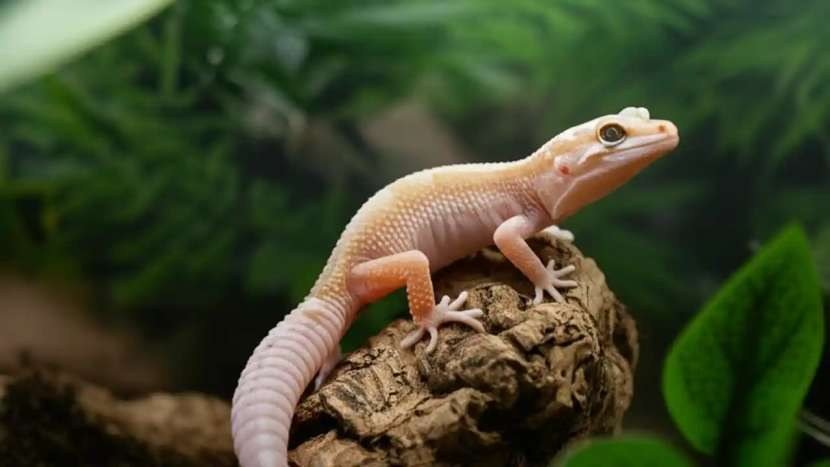
Direct answer: A thin leopard gecko tail means the fat store is gone. The usual causes are underfeeding, temperatures too cool to digest, stress, or parasites — most seriously cryptosporidiosis, known as stick tail disease. A healthy adult tail should be plump, about as wide as the gecko’s neck.
If the tail is thinner than the neck, weigh the gecko weekly and check the setup. If the tail is bony, the gecko is losing weight fast, or it is regurgitating food, see a reptile vet.
Leopard geckos (Eublepharis macularius) come from the dry rocky regions of Pakistan, Afghanistan, and north-west India. In the wild, they store fat in their tails to survive lean times, just as a camel stores fat in its hump. A pet gecko with a fat tail is a gecko with reserves.
A pet gecko with a thin tail has used those reserves up — and you need to find out why.
Why is my leopard gecko’s tail so thin?
The tail tells the story of the whole gecko. Fat is stored in the tail first and used up first, so the tail shrinks before the body looks thin. That makes the tail the earliest warning sign you have. The table below shows what a healthy tail looks like at each age, so you can judge your own gecko honestly.
| Gecko’s age | Healthy tail | Healthy weight | Worry if |
|---|---|---|---|
| Hatchling (0–3 months) | Slim, slightly flat — still growing | 3–15 g | Tail thinner than the neck, or not growing |
| Juvenile (3–12 months) | Filling out, wider than the neck | 15–40 g | Tail shrinking, or weight stalled for a month |
| Adult (12 months and older) | Plump, about as wide as the neck or wider | 40–80 g (females smaller) | Tail thinner than the neck, or weight loss over 10% |
| Adult after dropping its tail | Short, stubby regrowth | Lower at first, then recovering | Regrowth not starting after a month |
Two notes on that table. First, babies naturally have slim tails, so a thin tail in a hatchling is less alarming than the same tail on an adult — but a hatchling that is not gaining weight is still a problem.
Second, females are usually lighter than males, and a gravid female (one carrying eggs) may look thinner because her energy is going into the eggs. Judge your gecko against its own history, not against another gecko’s photo.
Weigh your gecko once a week on a kitchen scale, in grams, and write the number down. A photo of the tail from above, taken weekly in the same light, is also useful.
Together, the weight log and the photos turn a vague worry into a clear trend — and a vet will find them very helpful if you need a visit.
Cause 1: Not eating enough, or eating the wrong insects
The most common reason for a thin tail is simply too little food. Leopard geckos are insectivores, and they need regular meals matched to their age. Juveniles should eat every day or every other day. Adults should eat two to three times a week.
A gecko fed only once a week, or fed a single insect at a time, will slowly burn through its tail fat.
Variety matters as much as quantity. A diet of only mealworms is low in variety and high in chitin, which is hard to digest. A better staple is a rotation of crickets, dubia roaches, and mealworms, all gut-loaded — fed nutritious food for 24 hours before being offered — and dusted with calcium plus vitamin D3.
Waxworms and butterworms are fatty treats, not staples: they fatten a tail fast, but they are so rich that a gecko can become addicted to them and refuse everything else.
Check how much your gecko actually eats, not how much you offer. Count the insects it takes in one sitting. A healthy adult usually eats 5–10 appropriately sized insects per feeding. If it is taking one or two and stopping, the problem may be stress, temperature, or illness rather than the food itself.
You can plan the right feeding routine with our reptile feeding schedule calculator.
Cause 2: Temperatures too cool to digest
Leopard geckos digest with belly heat. They need a warm surface of 88–92°F (31–33°C) to process food, and a warm-side air temperature of about 85–90°F (29–32°C). The cool side should sit at 70–77°F (21–25°C).
If the warm side is too cool, the gecko eats but cannot digest properly, so it gets little energy from its food and its tail slowly shrinks.
Measure the floor temperature on the warm side with a digital thermometer or infrared gun. Stick-on dials on the glass are not accurate enough.
A heat mat under the warm hide is the usual heat source, but it must be on a thermostat — an unregulated mat can overheat, and a mat that has failed can go cold without any visible sign. Check the mat is actually warm to the touch.
Also check the night temperature. Leopard geckos are nocturnal hunters, and they do much of their digesting at night. If the room drops below 65°F (18°C) at night, digestion slows and appetite drops with it. You can work out the right gradient with our reptile temperature gradient calculator.
Cause 3: Stress — the hidden appetite killer
Stress makes leopard geckos stop eating, and a gecko that stops eating loses tail fat. The common stress triggers are a new home, too much handling, a tank in a busy room, bright lights at night, or another gecko in the same enclosure. Leopard geckos are solitary by nature.
Two geckos housed together will compete, and the weaker one often ends up thin-tailed and hiding.
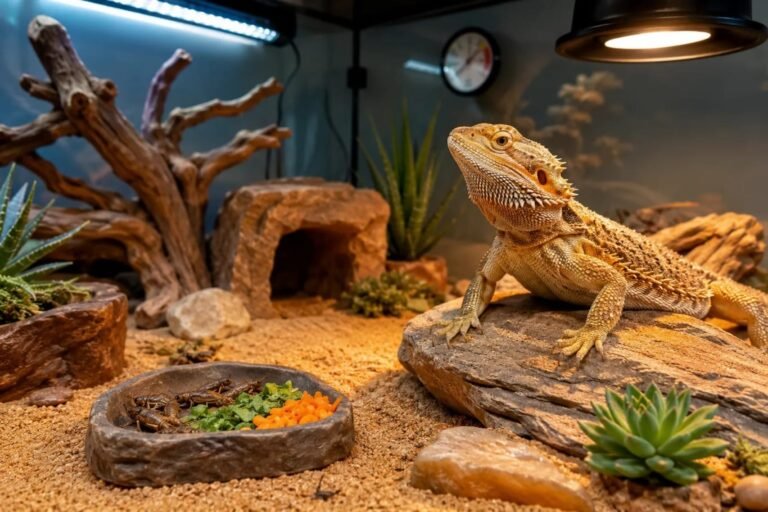
Look at the enclosure with fresh eyes. Does the gecko have at least three hides — a warm hide, a cool hide, and a humid hide lined with damp moss or paper towel? A gecko with nowhere to hide feels exposed all day and will not come out to hunt at night.
Is the tank near a television, a speaker, or a door that slams? Is it handled every day, or grabbed from above like a predator would? Small changes — a quieter spot, fewer handling sessions, an extra hide — often restart the appetite within a week.
Shedding and breeding also cost energy. A gecko that is shedding may eat less for a day or two, which is normal. A female laying eggs will lose weight and tail fat, which is also normal — but she needs extra food and calcium afterwards to rebuild.
If your gecko is a female that has just laid eggs and her tail is thin, feed her well, offer calcium, and weigh her weekly to confirm she is recovering.
Cause 4: Parasites and stick tail disease
The most serious cause of a thin tail is parasites, and the one every leopard gecko owner should know is cryptosporidiosis — usually called crypto, and nicknamed stick tail disease. Crypto is a microscopic parasite that lives in the gecko’s gut.
It stops the gecko absorbing nutrients, so the tail wastes away to skin over bone even though the gecko may still be eating.
The warning signs of crypto are a tail that keeps getting thinner despite good feeding, regurgitation of food or shed skin, weight loss, lethargy, and runny or very smelly droppings. It is highly contagious between geckos and spreads through droppings, so a gecko with suspected crypto must be kept alone, and its enclosure must be cleaned with care.
Crypto is very hard to treat and often fatal, which is why early vet attention matters so much.
Other parasites — pinworms, coccidia, flagellates — can also cause a thin tail, and these are much easier to treat. A faecal test at a reptile vet will identify which parasite is present. Collect a fresh dropping in a sealed bag, keep it cool, and take it to the vet within 24 hours.
Never buy worming medicine online and dose a gecko yourself — the wrong drug or dose can kill it.
Cause 5: Metabolic bone disease
Metabolic bone disease, or MBD, is a calcium and vitamin D3 deficiency that weakens the bones. It is usually caused by missing supplements or weak UVB lighting. A gecko with MBD may have a thin tail, but the clearer signs are a soft or rubbery jaw, trembling legs, difficulty gripping, and a curved spine.
It may also eat less because its jaw hurts.
Prevention is simple: dust feeder insects with calcium plus D3 at most feedings, keep a small dish of plain calcium in the enclosure, and provide a low-level UVB light or a vitamin D3 supplement as your vet advises. MBD caught early can be stopped, but bone damage that has already happened cannot always be reversed.
If you see trembling, a soft jaw, or a gecko that cannot climb, see a vet at once.
Cause 6: A dropped or regrowing tail
Sometimes a thin tail has a simple explanation: the gecko dropped its tail. Leopard geckos can shed their tails to escape a predator — or a grabby hand, a tankmate’s bite, or a tail caught in decor. The dropped tail keeps wiggling for a while, which distracts the threat, but the gecko loses its entire fat store in one moment.
A dropped tail will regrow, but the new tail is shorter, stumpier, and smoother than the original, and it takes weeks to months to fill out. During regrowth the gecko needs extra food, extra calcium, and a clean, simple enclosure to prevent infection at the wound.
Never grab a leopard gecko by its tail, and never house two geckos together if one is bullying the other. Tail loss is stressful and costly for the gecko, even though it survives it.
Cause 7: Old age and illness
Old leopard geckos — those over 15 years — may slowly lose tail fat as their metabolism and appetite decline. This is a gradual change, not a sudden one. A sudden thin tail in an old gecko still deserves a vet check, because kidney disease and tumours are more common in older animals and can cause rapid weight loss.
Other illnesses can also show up as a thin tail: respiratory infections, mouth rot, and gut infections all reduce appetite. Watch for the companions of a thin tail — wheezing, discharge, swollen eyes, a mouth that will not close, or droppings that are runny and foul.
A thin tail plus any of these signs means a vet visit, not a feeding change.
How to fatten a leopard gecko’s tail safely
A thin tail can be rebuilt, but it must be done slowly and healthily. Crash-feeding a gecko on fatty insects will fatten the tail, but it can also cause liver problems and food refusal. The goal is a steady weight gain of a few grams a week, on a varied diet, with the setup fixed first.
Follow these steps in order.
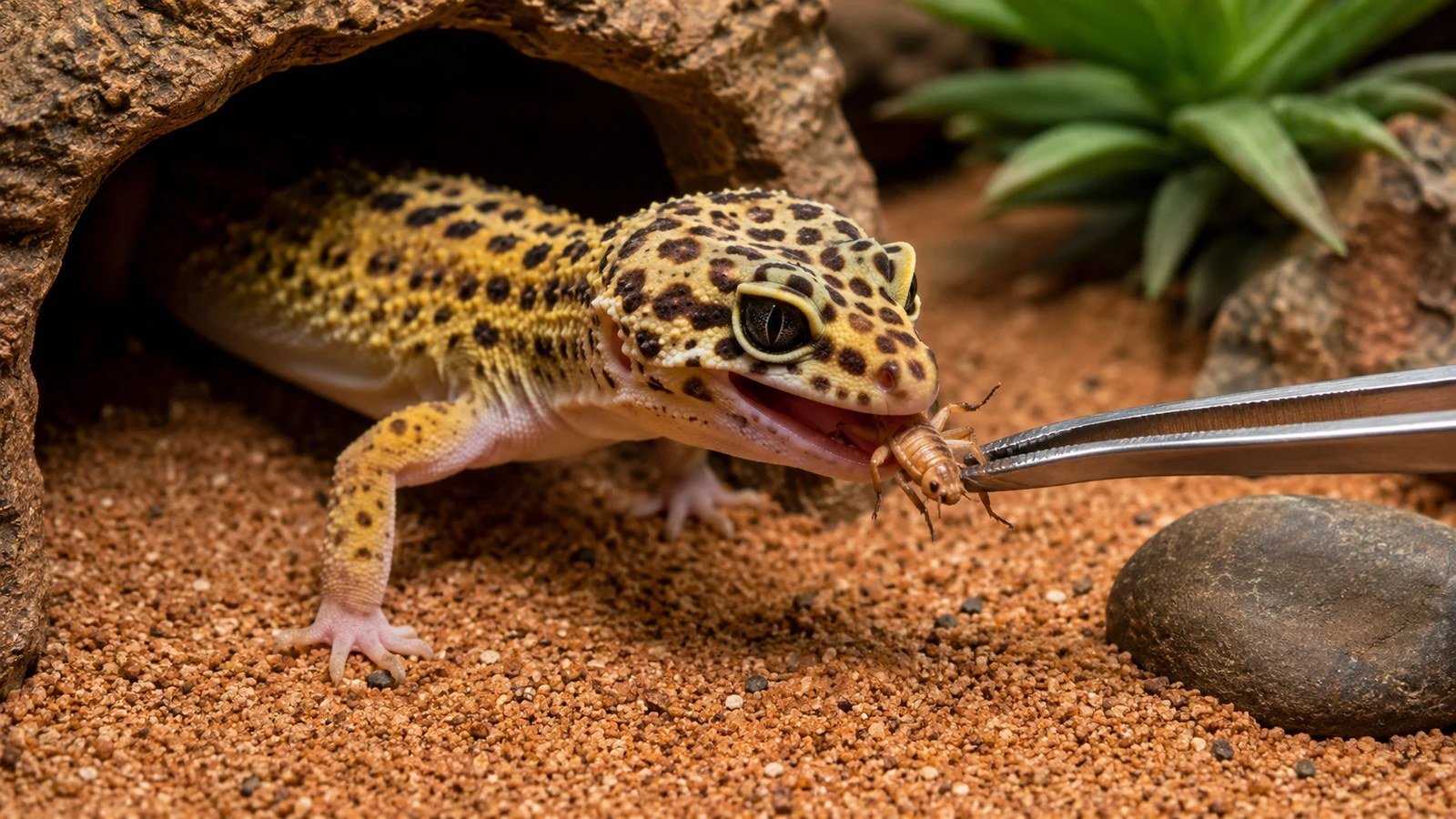
The 6-step re-feeding plan
Step 1 — Fix the temperatures first. Measure the warm-side floor temperature and confirm it is 88–92°F. A gecko cannot use extra food if it cannot digest it. Wait 24 hours after any heating fix before changing the feeding routine.
Step 2 — Offer food every day. While the tail is rebuilding, offer a small meal daily instead of two or three times a week. Offer 5–8 appropriately sized insects per sitting, and remove any uneaten insects after 15 minutes. Loose crickets left overnight can bite a sleeping gecko.
Step 3 — Vary the insects. Rotate crickets, dubia roaches, and mealworms through the week. Gut-load all of them for 24 hours before feeding, and dust with calcium plus D3. Variety gives the gecko a wider range of nutrients than any single insect can.
Step 4 — Use fatty insects as a treat, not a staple. Offer two or three waxworms once or twice a week to add calories. Do not offer them daily, and stop if the gecko starts refusing other insects. A gecko that will only eat waxworms is a gecko with a new problem.
Step 5 — Add a humid hide and fresh water. A gecko that is dehydrated will not eat well. Keep a humid hide lined with damp moss on the warm side, and a shallow dish of fresh water available at all times.
Check the humidity with our reptile humidity calculator — leopard geckos need 30–40% ambient humidity, with 70–80% inside the humid hide.
Step 6 — Weigh weekly and be patient. Weigh the gecko on the same day each week, at the same time, and write it down. A healthy gain is a few grams a week. It can take six to eight weeks for a thin tail to look plump again.
If the weight is not moving after two weeks of good feeding, or it is still falling, see a vet — a parasite or illness is likely blocking the recovery.
What NOT to do
Do not feed only waxworms, and do not feed pinky mice to fatten a gecko. Mice are too rich, too large, and unnecessary for a leopard gecko, and they can cause digestive problems. Do not force-feed, and do not try to syringe-feed a gecko at home without a vet’s instruction.
Do not over-supplement either — calcium with D3 is needed, but too much D3 can be toxic. Follow the dusting schedule on the supplement pack, and ask your vet if you are unsure.
When to see a vet: the red-flag checklist
A thin tail is a warning, not an emergency by itself. But some thin tails are emergencies. Use this checklist — if your gecko ticks any box, call a reptile vet.
| Sign | How urgent |
|---|---|
| Tail bony, skin over bone (stick tail) | Vet within 24 hours — possible crypto |
| Regurgitating food or shed skin | Vet within 24 hours |
| Weight loss over 10% in a month | Vet within 24 hours |
| Not eating for 2+ weeks (adult) or 1 week (juvenile) | Vet within 24 hours |
| Trembling, soft jaw, cannot grip or climb | Vet today — possible MBD |
| Runny, very smelly droppings plus weight loss | Vet within 24 hours — faecal test |
| Tail dropped and the wound looks infected | Vet within 24 hours |
| Tail thinner than neck, but gecko eating and gaining slowly | Home care first, vet if no gain in 2 weeks |
Not every vet treats geckos, so look for an exotics vet with leopard gecko experience. The Association of Reptile and Amphibian Veterinarians keeps a find-a-vet directory that lists reptile vets by area. Bring your weight log, your tail photos, and a fresh faecal sample if you can collect one.
The vet can run a faecal test for parasites, check the gecko’s bones and mouth, and give you a feeding plan matched to the cause.
For more on leopard gecko health, our guide on leopard gecko stuck shed on toes covers another common problem where humidity and temperature are the key. The Merck Veterinary Manual’s reptiles section is also a reliable, vet-written reference for gecko care.
How to keep your leopard gecko’s tail fat and healthy
Prevention is routine. Feed a varied, gut-loaded insect diet on a steady schedule, dust with calcium plus D3, and keep the warm side at 88–92°F. Give the gecko three hides — warm, cool, and humid — and keep the tank in a quiet spot. Handle gently, from the side rather than from above, and never by the tail.
Quarantine every new gecko. A new leopard gecko should live alone for at least 30 days, with its own equipment, before it meets any other reptile. Crypto and other parasites spread through droppings and shared decor, and a quarantine with a faecal test is the cheapest insurance you can buy. Wash your hands between handling different reptiles.
Finally, keep the weight log going even when the tail looks great. A monthly weigh-in takes a minute and catches problems early. The tail is your gecko’s fuel gauge — check it the way you would check a car’s fuel gauge, before it runs empty rather than after.
Frequently Asked Questions
Will a leopard gecko’s tail grow back after it drops it?
Yes. Leopard geckos can regrow a dropped tail, but the new tail is never quite the same. It grows back shorter, stumpier, and smoother, often with a slightly different colour and pattern. Regrowth takes several weeks to a few months, depending on the gecko’s age and health.
During that time the gecko needs extra food and calcium, a clean enclosure, and no handling of the tail area. If the wound looks red, swollen, or smells bad, see a vet — infections at the tail stump need treatment.
Why is my leopard gecko’s tail turning white?
A tail turning pale or white is usually a sign that the gecko is about to shed. The old skin goes dull and whitish a day or two before it peels off, and the tail often shows it first. This is normal, and the colour returns once the shed is complete.
But a tail that stays pale, looks dry and shrivelled, or turns dark blue or black is different — dark discolouration can mean the blood supply is cut off, which is a vet emergency. If the tail stays pale for more than a few days without shedding, check the humidity in the humid hide.
Is a thin tail always stick tail disease?
No. Stick tail disease — the crypto infection — is the most serious cause of a thin tail, but it is not the most common one. Most thin tails are caused by underfeeding, cool temperatures, or stress, and those are fixable at home. The difference is the pattern.
A gecko with simple underfeeding will gain weight once you feed it properly. A gecko with crypto keeps losing weight and often regurgitates, even when it is eating. Only a faecal test at a reptile vet can confirm crypto, so if your gecko is not gaining weight after two weeks of good feeding, get it tested rather than guessing.
Can a leopard gecko live with a thin tail?
A gecko can live with a thin tail for a while, because the tail is a reserve, not a vital organ. But a thin tail means the reserves are gone, and the gecko has nothing left if it gets sick, stops eating, or goes through a stressful shed.
A gecko with a bony tail is one illness away from a crisis. The goal is not just survival — it is rebuilding the reserve, so the gecko has a buffer again. With the right food, temperatures, and a vet check to rule out parasites, most thin tails fill out again within six to eight weeks.