Should You Clip a Budgie’s Wings? Pros and Cons
If you are asking, should you clip a budgie’s wings, you are standing in the middle of the oldest argument in pet bird keeping. Ask five owners and you will get five firm opinions, and every one of them will sound certain.
One side says clipping keeps your bird safe. The other says it takes away the one thing a bird was made to do. Both sides care about the bird, and both sides are describing real risks.
This guide gives you the honest picture. It explains what clipping actually does, the real pros and cons, the taming myth, the dangers of doing it wrong, and the alternatives that make clipping unnecessary for most owners.
Direct answer: No, most budgie owners should not clip their budgie’s wings.
Flight is a budgie’s main exercise, its main source of confidence, and its way of escaping danger. A flighted budgie in a bird-safe room is usually safer and happier than a clipped one. Clipping makes sense only in a few specific situations, and only when an avian vet does it.
Should You Clip a Budgie’s Wings? The Honest Pros and Cons
Wing clipping means trimming the long primary flight feathers at the tip of each wing. The feathers are cut, not pulled out, and the bird feels no more than a haircut when it is done properly. The trim stops the bird from gaining lift, so it can glide down to the floor but cannot fly up or across a room.
It is not permanent. The clipped feathers fall out at the next moult, usually within a few months, and new flight feathers grow in. A budgie that was clipped in spring can be fully flighted again by autumn, and the owner has to decide all over again.
It is also not a single thing. A light clip trims only a few feathers and leaves the bird able to glide a fair distance. A heavy clip trims many feathers and leaves the bird dropping like a stone. The heavy clip is the dangerous one, and it is the one most vets warn against.
Before you decide, you need to understand both sides properly. The rest of this guide lays them out without taking a side for you.
What Wing Clipping Actually Involves
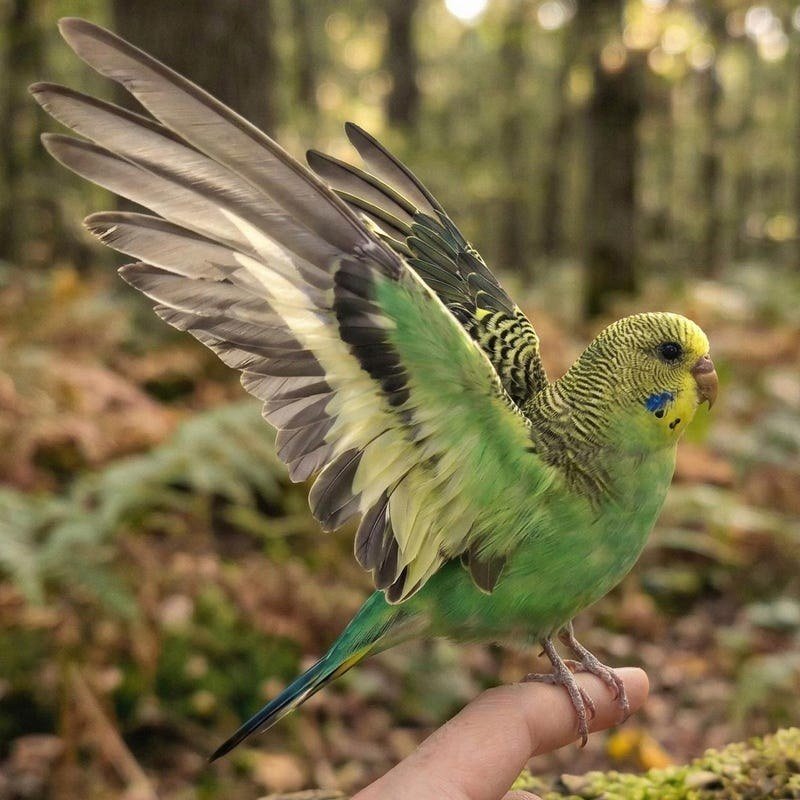
A budgie’s wing has two sets of feathers that matter for flight. The primary feathers are the long, strong feathers at the tip of the wing, usually ten on each side. They provide the lift and thrust that keep the bird in the air. The secondary feathers sit closer to the body and give the wing its shape.
A proper clip trims only the primary feathers, on both wings equally. Trimming one wing only is an old practice that leaves the bird lopsided, and a lopsided bird is more likely to crash than a bird with both wings clipped. Modern avian vets clip both wings the same way.
The cut must stop short of the blood feathers. A blood feather is a new feather that is still growing, with a live blood supply running up its shaft. Cut one and it bleeds heavily, and a small bird can lose a dangerous amount of blood in minutes. This is the main reason clipping should be done by a vet, or by someone a vet has taught in person.
Clipping does not hurt when it is done right, because a grown feather has no nerves. But a frightened bird that is grabbed and held badly can be injured, stressed, or even killed by the handling itself. The risk is not the scissors. It is the restraint, the blood feathers, and the hands doing the job.
The Case for Clipping: Safety First
The strongest argument for clipping is safety, and it is not a silly argument. A budgie is a tiny, fast, curious bird in a house full of hazards. An open door, an open window, a ceiling fan, a hot stove, a toilet bowl, a mirror, and a cat are all dangers a flighted budgie can reach in seconds.
Clipping reduces the chance of escape. A budgie that slips out of an open door is almost always lost. Pet budgies cannot survive long outdoors, and most are never found. A clipped bird that gets out still has a better chance of being caught nearby, because it cannot fly far.
Clipping also reduces the chance of a crash. New budgies, young budgies, and untamed budgies often panic and fly into windows and walls. A clipped bird cannot build up the same speed, and its crashes are softer. Our guide to why does my budgie fly into walls explains how common those crashes are in a new bird’s first weeks.
For a new owner with an untamed bird, clipping can also make handling easier. A bird that cannot fly away can be picked up, moved, and returned to its cage without a chase around the room. A chase frightens the bird and slows down taming, so some breeders and vets clip a new bird for its first few weeks and then let the feathers grow back.
These are real benefits, and it is worth saying so plainly. Clipping is not done by careless owners. It is usually done by owners who are worried about losing their bird, and that worry is reasonable.
The Case Against Clipping: Flight Is Not Optional
The strongest argument against clipping is that flight is not a luxury for a budgie. It is how the bird exercises, how it explores, how it plays, and how it escapes things that scare it. Take it away and you change the bird.
Budgies are prone to obesity. A flighted budgie burns calories every time it flies across a room, and that exercise keeps its weight and its liver healthy. A clipped budgie sits more, eats the same amount, and slowly gains weight. Over months and years, that extra weight turns into fatty liver disease, which is one of the most common killers of pet budgies.
Flight also builds confidence. A budgie that can fly chooses where to go, and that choice matters to a prey animal. A clipped bird cannot get away from a hand it does not like, a loud noise, or another bird, and that helplessness shows up as stress. Stressed budgies pluck their feathers, scream, bite, and sit fluffed up for hours.
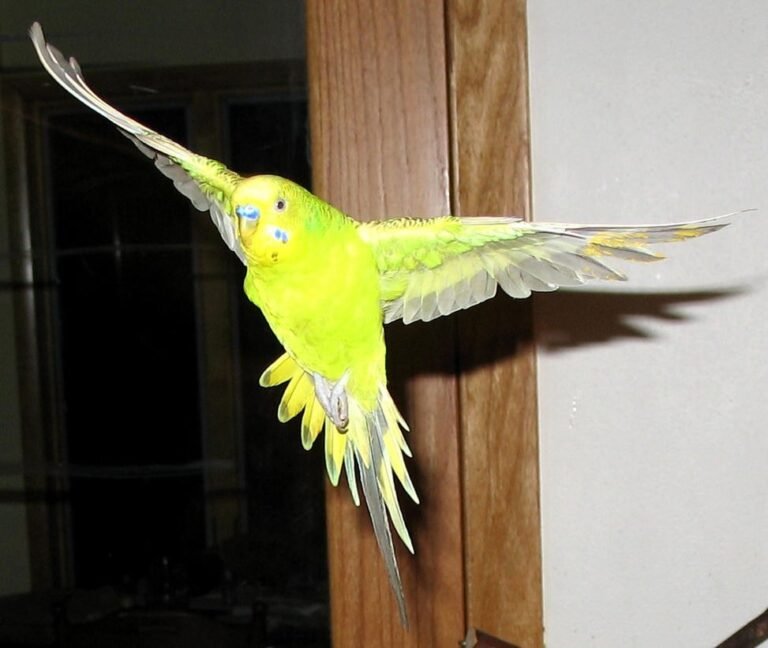
Clipping does not even make a bird safe, and this is the point most pro-clipping advice skips. A clipped budgie can still be startled, flutter up, and fall hard onto a floor or a table edge. A heavy clip is the worst case of all: the bird drops like a stone, can split the skin over its chest bone, and can break a wing or a leg on landing.
Clipped birds also escape more often than owners expect. A gust of wind, a startled flutter, or a few grown-back feathers can give a clipped bird enough lift to get out of a door and over a fence. Clipping gives a false sense of security, and that false security is dangerous.
Flighted vs Clipped: The Honest Comparison
The table below compares a flighted budgie and a clipped budgie across the things that matter most. Read it as a whole, not as a scorecard, because the right choice depends on your home.
| Flighted budgie | Clipped budgie | |
|---|---|---|
| Exercise | Flies daily, burns calories, stays lean | Sits more, gains weight, higher obesity risk |
| Confidence | Chooses where to go, escapes scares on its own | Cannot escape, more stress and fear |
| Crash risk | Can hit windows at speed, especially when new | Softer crashes, but hard falls from height |
| Escape risk | Can fly out of an open door and be lost | Less likely to fly far, but wind can still carry it |
| Taming | Slower at first, needs patience and treats | Easier to handle, but the bird may resent it |
| Mental health | Explores, plays, and forages naturally | More boredom, more feather plucking |
| Cost and effort | Needs a bird-safe room, free | Needs a vet visit every few months |
The pattern is clear. Clipping trades one set of risks for another. It reduces the risk of flying into a window, but it raises the risk of obesity, stress, and hard falls. A flighted bird in a safe room has the best of both worlds, and that is why most avian vets now recommend keeping budgies flighted.
The Taming Myth
The most common reason owners clip is taming. The idea is simple: a bird that cannot fly away must spend time with you, and time with you builds trust. It sounds logical, and it is mostly wrong.
Clipping does not make a budgie tame. It makes a budgie unable to leave. A bird that sits on your hand because it has no choice is not a tame bird. It is a trapped bird, and many owners find that their clipped budgie is no friendlier than it was before — just less able to escape.
Real taming is slower and kinder. A young budgie, six to eight weeks old, is easy to tame without clipping at all. Sit near the cage, talk softly, offer millet spray from your hand, and let the bird come to you. Most young budgies step onto a hand within a couple of weeks.
An older or untamed budgie takes longer, but the method is the same. Short sessions, treats, and patience beat clipping every time. The Budgerigar Breeders Club puts it plainly: “You may have heard that it is impossible to tame a flighted budgie, and this is not true.” Baby budgies are incredibly easy to tame, and adult birds can be tamed too, with time.
Clipping can help as a short-term tool, not a solution. Some vets clip a new, terrified bird for a few weeks so the owner can handle it safely, then let the feathers grow back once the bird trusts its owner. That is a reasonable use of clipping. Keeping a bird clipped for its whole life because taming feels hard is not.
Blood Feathers: The Danger Nobody Mentions First
If there is one reason to take clipping to a vet, it is the blood feather. A blood feather is a new feather growing in, and its shaft carries a live blood supply. It looks like a normal feather from the outside, but the base of the shaft is dark and full of blood.
Cut a blood feather and it bleeds freely. A budgie weighs about 30 to 40 grams, and it does not take much blood loss to put such a small bird in danger. A cut blood feather needs pressure and, often, the feather pulled out by a vet to stop the bleeding. An owner who does not know what they are looking at can make it worse.
This is why every good guide says the same thing: let a professional show you how to clip before you ever try it yourself. An avian vet will show you where the primaries end, how to spot a blood feather, and how to hold the bird safely. Without that lesson, you are guessing, and a guess with scissors near a 35-gram bird is a bad idea.
Even a vet clip is not risk-free. The bird is stressed by the handling, and a bird with a heart condition or a respiratory problem can be harmed by the restraint itself. Tell your vet if your bird has ever had breathing trouble, and ask whether clipping is worth it for your bird in particular.
When Clipping Can Make Sense
There are a few situations where clipping is the right call, and honest advice should name them. The first is a medical reason. A vet may recommend a light clip for a bird that keeps injuring itself in flight, or for a bird recovering from an injury that needs rest.
The second is a new, terrified bird in a home with real hazards. If your home has small children who leave doors open, or a cat that roams free, a short-term clip while you tame the bird and bird-proof the house can be the safer choice. The key word is short-term: let the feathers grow back once the bird is tame and the house is safe.
The third is a bird that has never learned to fly properly. Some hand-reared budgies, and some birds kept in tiny cages, never develop good flight skills. They crash constantly, and each crash risks a broken blood feather or a broken bone. A light clip while they learn to land safely, with training, can help.
Notice what these cases have in common. They are all temporary, they all involve a vet, and they all have a plan to return the bird to flight. Clipping as a permanent lifestyle, with no plan and no vet, is a different thing entirely.
Safer Alternatives That Work Better Than Clipping
Most of the problems clipping is meant to solve have better answers. If your worry is crashes, bird-proof the room. Cover windows with sheer curtains or decals, close mirrors or cover them, turn off ceiling fans, and close doors before you let the bird out. A budgie that can see a window will not fly into it.
If your worry is escape, build a habit, not a clip. Keep the bird’s room door closed when it is out, put a note on the door, and check windows before you open the cage. A double-door system — an outer door and an inner door — stops almost every escape.
If your worry is taming, use millet. A budgie will do almost anything for a spray of millet, and a few minutes of millet training a day tames most birds within weeks. Our guide to how much millet can a budgie eat per day explains how much to offer without overfeeding.
Recall training is the best long-term answer of all. Teach your budgie to fly to your hand on a whistle or a word, with a millet reward every time. A bird that comes when called is safer than a clipped bird, because you can call it back when it gets out, and it can fly to you when it is scared.
Give the bird a safe place to land. A play stand, a rope perch, or a favourite spot near the cage gives a flighted budgie somewhere to go, and a bird with a destination crashes less than a bird with nowhere to land.
How to Decide for Your Bird
Ask yourself four questions before you book a vet visit. If you answer honestly, the right choice usually becomes clear.
First, is your room bird-safe? If you can close the doors, cover the windows, turn off the fans, and keep other pets out, you do not need to clip. If you cannot, fix the room first.
Second, is your bird young and untamed? A young bird tames easily without clipping. An older bird takes longer, but clipping will not make it trust you faster.
Third, what does your vet say? An avian vet who has seen your bird can judge its weight, its health, and its flight skills. If your vet says your bird is overweight, clipping is the last thing it needs.
Fourth, are you willing to repeat the clip? Feathers grow back in a few months, so clipping is not a one-time decision. It is a commitment to a vet visit every few months for the bird’s whole life. If that sounds like too much, a flighted bird and a safe room is the simpler path.
For most owners, the answer is to keep the bird flighted, bird-proof the room, and spend the money on toys and millet instead of vet clips. Your budgie was built to fly, and a bird that flies is a bird that is healthy, confident, and fun to watch.
Food and weight matter even more for a clipped bird, because it burns fewer calories. The budgie food calculator and the bird calorie calculator help you get the portions right.
The budgie age calculator puts your bird’s age and life stage into context. For more on your budgie’s daily needs, see how much water does a budgie drink per day and how many hours of sleep does a budgie need.
Frequently Asked Questions
Is wing clipping illegal anywhere?
In most countries, including the United States and the United Kingdom, wing clipping is not illegal. It is a legal procedure, and many vets and breeders still offer it.
That said, attitudes are changing. Several European animal welfare organisations oppose routine clipping, and some countries restrict or discourage it. The trend in avian veterinary medicine is firmly towards keeping birds flighted, and a growing number of vets will only clip for a medical reason or a clear safety need.
How much does a vet charge to clip a budgie’s wings?
Prices vary by clinic and country, but a wing clip at an avian vet usually costs about the same as a short consultation, often in the range of $15 to $40 in the United States. Some vets include it in a routine check-up.
Call your vet’s office and ask before you book. A cheap clip from a groomer or a pet store is not a bargain if it is done badly, and a cut blood feather will cost far more in emergency care than a proper vet clip ever would.
At what age can a budgie’s wings first be clipped?
Most vets will not clip a budgie before it has fledged and learned to fly, which is usually around 8 to 12 weeks old. A bird that has never flown does not develop proper flight muscles or landing skills, and clipping it early can leave it clumsy for life.
Many breeders clip young birds before sale, but avian vets increasingly advise against this. Letting a young budgie fly and learn to land builds the coordination it needs, and a bird that has learned to fly can always be clipped later if there is a good reason.
Can I take my budgie outside without clipping its wings?
Yes, but only in a travel cage or a proper bird harness, never free. A budgie that flies free outdoors is lost in seconds, clipped or not, because a gust of wind can carry even a clipped bird over a fence.
Clipping is not a safe way to take a bird outside. A harness or a secure carrier keeps the bird safe without taking away its flight, and it lets the bird enjoy fresh air and sunshine with you. Never take a budgie outside on your shoulder or your hand.
Do clipped feathers all fall out at once when the bird moults?
No, and that is part of the problem with clipping. A budgie moults gradually, replacing a few feathers at a time over several weeks. That means a clipped bird regains flight slowly and unevenly, with one wing sometimes stronger than the other.
During regrowth, a bird can be lopsided and clumsy, and it may crash more than it did when fully clipped or fully flighted. Watch your bird closely during a moult, keep the room safe, and expect its flight ability to change week by week until the moult is done.
For more on budgie care, Lafeber’s budgie species profile covers housing and diet, and Lafeber’s wing clipping guide explains the procedure and the alternatives from a veterinary point of view.