Does My Horse Need a Salt Lick? Yes — Here’s Why
Walk into any stable and you will probably find a salt block hanging by the door or sitting in the corner of the manger. It is so common that most owners never stop to ask whether it is doing anything. Yet salt is the one mineral every horse needs every single day, and the block on the wall is often not giving the horse enough of it. So does my horse need a salt lick? Yes, it does — but the lick alone is rarely the whole answer, and the difference between a horse that gets enough salt and one that does not is usually a handful of loose salt in the feed bucket.
This guide explains why horses need salt, how much they actually need, which kind of lick suits which horse, and the simple weighing test that tells you whether your horse is getting enough. It also covers the horses that need more, the ones that need less, and the mistakes that turn a simple mineral into a problem.
Direct answer: Yes, every horse needs a salt lick or another daily source of salt, because hay and pasture contain almost no sodium and horses cannot store it. A horse at rest needs about 25 grams of salt a day — roughly two tablespoons — and a horse in hard work can need up to 200 grams. A plain white salt block is fine to offer, but many horses do not lick enough from a block to meet their needs, so the reliable method is to mix measured loose salt into the feed and keep the block as a backup.
Does My Horse Need a Salt Lick? The Short Answer
Yes. Salt is not a treat and it is not optional. It is sodium chloride, and sodium is one of the few minerals a horse has a true appetite for, because the body cannot make it and cannot store it in any useful amount. Every day, the horse loses sodium in sweat and urine, and every day it must be replaced through feed or a lick.
Hay and grass are very poor sources. Pasture and hay contain less than 0.1 per cent sodium, so a horse eating nothing but forage gets only a few grams a day, while even a horse at rest needs about 10 grams of sodium, which is roughly 25 grams of plain salt. That gap is the whole reason salt licks exist.
The table below gives the usual daily amounts for a 500 kg (1,100 lb) horse. They are planning figures, not a prescription, and they rise sharply with work, heat, and sweating. A horse in heavy work on a hot day can need eight times as much salt as the same horse standing in a field in winter.
| Workload and conditions | Salt per day | About the same as |
|---|---|---|
| At rest, cool weather | 25 grams | 2 level tablespoons |
| Light work | 35 to 50 grams | 3 to 4 tablespoons |
| Moderate work | 55 to 65 grams | 4 to 5 tablespoons |
| Heavy work or hot, humid weather | Up to 200 grams | About 13 tablespoons, split across feeds |
| Lactating mare | 50 to 75 grams | 4 to 6 tablespoons |
Two things in that table catch most owners out. The first is how fast the need rises with work: a horse that sweats heavily can lose a whole day’s salt in a single hard session. The second is that the amounts are for salt, not sodium. Salt is about 40 per cent sodium, so 25 grams of salt gives about 10 grams of sodium, which is the resting need.
Why Horses Need Salt Every Day
Sodium does more jobs in a horse’s body than almost any other mineral. It helps nerves fire, so muscles can contract in the right order. It holds water in the right places, keeping blood volume steady and the gut contents moist. And it drives the thirst response: a horse that is short on sodium drinks less, even when it needs water, which is why salt and hydration are really the same subject.
That last point is the one that matters most. A horse low on salt often drinks less, and a horse that drinks less is at greater risk of impaction colic, especially in winter when the water is cold and the feed is dry hay. Vets who ask about colic will often ask about salt in the same breath, because the two are linked.
Salt also helps the stomach make acid, which is part of normal digestion, and it supports normal muscle function, so a horse short on salt can seem tired, stiff, or slow to recover after work before anything else looks wrong. The signs are vague, which is why salt deficiency is so often missed. A rough coat, a poor appetite, and a horse that seems flat in work are all early signs, and they are all easy to blame on something else.
Chloride, the other half of salt, matters too. It helps balance the acid and alkali levels in the blood, and it is lost in sweat alongside sodium. When a horse sweats heavily, it loses both, which is why plain salt is the right replacement for most horses.
White, Red, Himalayan or Loose: Which Lick?
Walk into a feed store and you will find four main options, and they are not the same thing. A plain white salt block is pure sodium chloride, pressed into a block. It is the cheapest option, and it gives the horse exactly what it needs most, with nothing extra. For most horses, it is the right starting point.
A red trace mineral block is a white block with small amounts of copper, zinc, manganese, cobalt, iron, and iodine added. The minerals sound useful, and they are, but the amounts are small, and a horse would have to eat a great deal of the block to get a meaningful dose. The bigger problem is taste and texture: the blocks are rough, and many horses dislike them and lick them less than a smooth white block.
A Himalayan salt lick is a lump of pink rock salt, often sold on a rope. It is unrefined and contains trace minerals in tiny amounts, and many horses like the taste and the texture. It is also denser than a pressed block, so it lasts longer. It costs more, and the mineral content is too small to replace a proper mineral supplement, but as a salt source it works well.
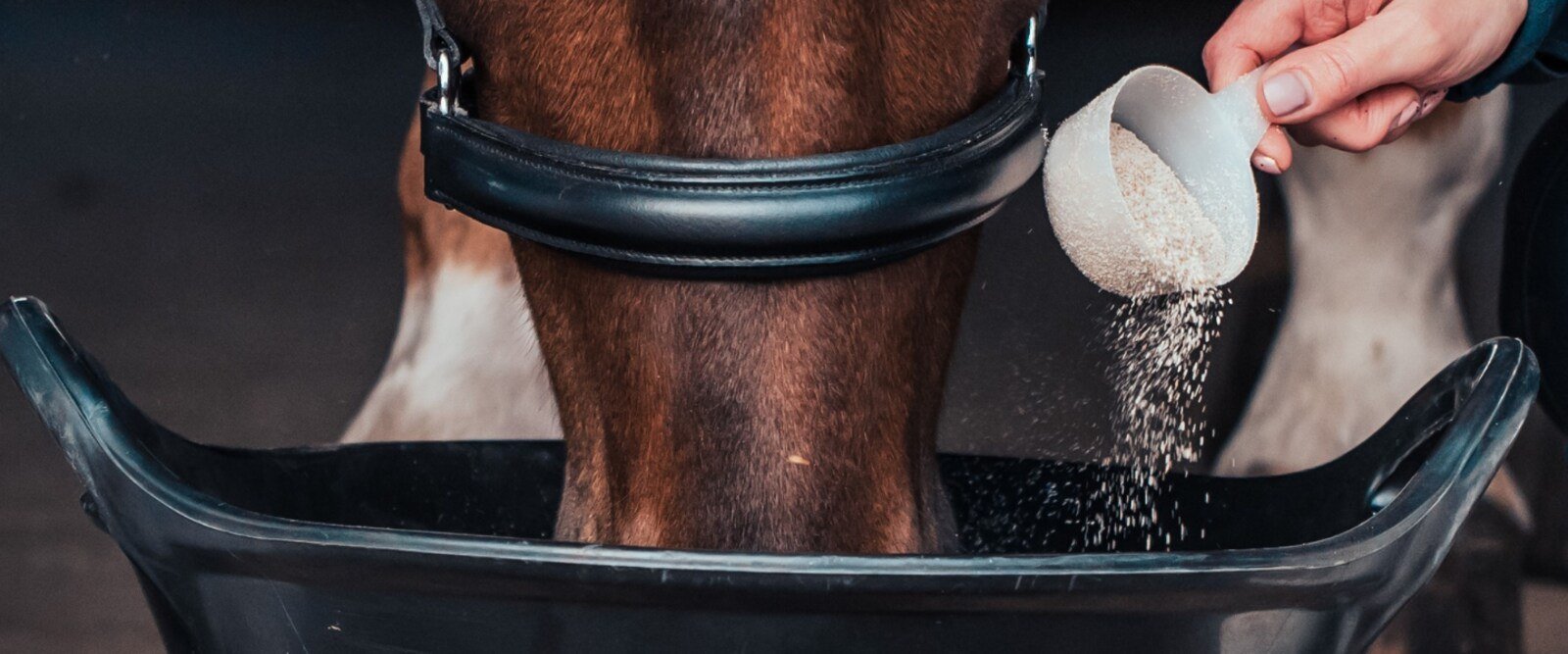
Loose salt is the same plain salt in granulated form, and it is the most reliable way to make sure the horse actually gets its daily amount. You measure it into the feed, so you know exactly how much the horse ate. The downside is that it needs measuring every day, and it must be animal-grade salt from a feed store, not de-icing salt and not a mineral blend meant for cattle.
The honest summary, given by Oklahoma State University’s equine team and by most equine nutritionists, is simple. Use loose salt in the feed for the measured daily amount, and keep a plain white block available free choice as a backup. Do not rely on a block alone.
The Lick Test: Is Your Horse Actually Getting Enough?
Here is the problem with a salt block: it cannot tell you how much the horse ate. Some horses lick a block every day and get plenty. Others barely touch it for weeks, and their owners assume all is well because the block is there. The only way to know is to measure.
Weigh the block when you put it up, and weigh it again a month later. A small 4 lb (about 2 kg) block should last one horse roughly one to two months if the horse is getting its daily need from it. If the same block is still nearly whole after two months, your horse is not getting enough salt from it, however good the block looks on the wall.
Work it out in grams. A horse at rest needs about 25 grams of salt a day, which is about 750 grams a month. If your block has lost far less than that in a month, the horse is short, and you should start adding loose salt to the feed. If the block is disappearing much faster than that, check whether more than one horse is using it, whether it is getting wet and dissolving in the rain, or whether the horse is licking it out of boredom.
The test is even more useful for horses in work. A horse in moderate work needs 55 to 65 grams a day, which is about 2 kg a month. No horse will lick that much from a block in a month, because it would mean licking the block for 30 to 60 minutes every day. That is why working horses almost always need loose salt in the feed as well as the block.
While you are testing, watch the horse’s drinking. The Horse Water Intake Calculator gives a daily water target for your horse’s size and workload, and a horse that starts drinking more after you add salt to the feed was probably short on salt. It is one of the clearest signs the change worked.
Signs Your Horse Is Short on Salt
A horse short on salt rarely looks dramatic. The signs creep in slowly, and they are easy to miss or to blame on the weather, the work, or the horse’s mood. The most common is drinking less than usual. If the trough level barely drops and the horse seems uninterested in water, salt is one of the first things to check.
A rough, dull coat is another early sign, and so is a poor appetite. A horse that picks at its feed, leaves hay, or seems less keen on its bucket may be short on salt, because sodium helps drive appetite as well as thirst. Tiredness and slow recovery after work are also typical: the horse feels flat, takes longer to cool down, and seems to lack its usual spark.
Some horses show it more obviously. They lick sweat off themselves or other horses, chew wood, lick soil, or lick metal objects around the yard. These are salt-seeking behaviours, and while they can have other causes, a horse that suddenly starts licking strange things is worth a salt check.
In hot weather, the signs get sharper. A horse that sweats heavily and is not replaced can become dehydrated, and its performance falls off a cliff. Muscle tremors, stiffness, and tying up can all be linked to electrolyte losses, and salt is the foundation of the electrolyte picture.
Can a Horse Get Too Much Salt?
With free access to clean water, it is very hard for a healthy horse to eat too much salt. Horses self-regulate well, and a horse that has had enough will usually stop licking. The danger is not the salt itself, but salt without water. A horse that eats a lot of salt and cannot drink can become dehydrated, which is why a salt lick must always sit next to a reliable water supply.
Too much salt at once can cause diarrhoea, loose droppings, and very high water intake. If you are starting loose salt for the first time, introduce it slowly over a week, starting with a tablespoon a day and building up, so the gut and the thirst response adjust. A horse that has been short on salt may overeat it at first, then settle down once its levels are back to normal.
Foals are the exception to the rule that horses self-regulate. A suckling foal cannot judge its own salt need, and it may eat too much out of boredom or play, which can cause diarrhoea. Keep salt licks out of reach of foals, and do not offer free-choice salt until the foal is weaned and eating solid feed, at around six months old.
Horses with kidney disease or certain metabolic problems may also need their salt controlled, and that is a conversation for your vet, not a decision to make alone. For a healthy horse with water available, the risk of too much salt is far smaller than the risk of too little, and too little is the common problem.
Foals, Broodmares and Horses in Hard Work
Not every horse has the same salt need, and the ones that need the most are the ones most likely to be short. A broodmare in late pregnancy and a lactating mare need more salt than a horse at rest, because they are producing milk and feeding a foal as well as themselves. Offer a block and add loose salt to the feed, and watch their drinking, because a mare that stops drinking is a mare heading for trouble.
Horses in hard work are the biggest concern. A horse that sweats heavily can lose 10 to 15 litres of sweat in a hard session, and each litre carries about 8 to 9 grams of salt with it. That is why a horse in heavy work can need up to 200 grams of salt a day, and why no block alone can supply it. Measure loose salt into the feed, split it across meals, and use a proper electrolyte supplement after very hard work or on hot days, on your vet’s advice.
Older horses deserve a mention too. Senior horses often drink less, eat less, and sweat less efficiently, and their thirst response can fade with age. A salt lick they have to work at may be ignored entirely, while a spoonful of loose salt in a wet mash is eaten without a thought. Our guide to senior horses not drinking enough water in winter covers the water side of the same problem, and salt is part of the fix.
Where to Put the Lick and How to Keep It Clean
Place the lick where the horse can reach it easily, at head height or lower, in a dry spot. A block hung in the rain dissolves, and a block sitting in a wet corner gets dirty and is ignored. In the stable, hang it near the water bucket or the feed manger, where the horse passes it often. At pasture, put it under a shelter or on a fence post where it stays dry.
Keep it clean. A block covered in dust, bedding, or manure is a block the horse will not use. Wipe it down when you muck out, and rinse it if it gets dirty. A clean block encourages licking, and it also lets you see how fast it is wearing down, which is the whole point of the lick test.
Replace a block when it is eaten down to less than half, or when it gets so small that the horse cannot lick it properly. A tiny stub left in the holder is not a salt supply, it is a decoration. The same goes for a block that has been hanging untouched for months: if it is not wearing down, the horse is not using it, and you need loose salt in the feed instead.
If you have more than one horse, give each one its own block, or at least make sure the shy ones can reach it. A dominant horse can guard a single block just as it guards a water trough, and the horse at the bottom of the pecking order can go short for months without anyone noticing. The Horse Weight Calculator and the Horse Hay Calculator help you work out each horse’s ration and salt need individually, rather than guessing one amount for the whole yard.
Salt, Water and Winter
Salt and water belong together, and winter is when the link matters most. In cold weather, horses drink less, eat dry hay, and lose water they cannot easily replace. A horse that is short on salt drinks even less, because sodium is what switches the thirst response on. That is why vets and extension services recommend salt as a way to encourage winter drinking.
Penn State Extension notes that water consumption can be encouraged by increasing salt intake, and that horses prefer water at 45 to 65°F (7 to 18°C) over near-freezing water. Put the two together — salt in the feed, warm water in the bucket — and you have the simplest winter hydration plan there is.
Do not put the salt in the water, though. Adding salt to a bucket can change the taste enough to put the horse off drinking, which defeats the purpose entirely. Salt goes in the feed, where the horse eats it without thinking, and the water stays clean and fresh. Our guide to how long a horse can go without water explains what happens when drinking stops, and it is a short read that is worth your time before winter sets in.
The bottom line is simple, and it is the same one every equine nutritionist gives. Every horse needs salt every day. A block on the wall is a good start, but it is not a guarantee, and for most horses the reliable method is a measured amount of loose salt in the feed plus a block for free choice. Weigh the block, watch the drinking, and adjust the amount with the work and the weather. Your horse will tell you it is working by drinking well, eating well, and holding its condition through the season.
Penn State Extension’s equine winter wellness tips cover the salt and water link in the context of winter care, and the RSPCA’s winter care guide for horses gives the same core advice on water and feeding through the cold months. Both are worth reading alongside this guide.
Frequently Asked Questions
Can I give my horse table salt instead of a salt lick?
Yes, in small amounts, plain table salt is the same sodium chloride as the salt in a lick, and many owners use it as their loose salt. The difference is that table salt is often iodized, which adds iodine the horse may not need, and it is ground very fine, so it can clump in damp feed. Animal-grade loose salt from a feed store is cheaper, comes in the right grain size, and has no added iodine. Either will do the job, but feed-store salt is the better buy, and de-icing salt should never be used, because it can contain chemicals that are not safe to eat.
My horse licks the block all day — is that normal?
A horse that licks its block for a few minutes a day is normal. A horse that works at the block constantly, for hours, or that has eaten a whole block down in days, is worth a closer look.
Constant licking can mean the horse is genuinely short on salt, especially if it is in hard work or the weather is hot. But it can also be boredom, stress, or a habit, and some horses lick compulsively when they are confined or anxious. Check the amount first: weigh the block and work out the daily intake.
If the horse is eating far more salt than its workload explains, and it has clean water and a balanced diet, mention it to your vet, because obsessive licking can also be a sign of a mineral imbalance beyond sodium.
Does a horse on hard feed still need a salt lick?
Usually, yes, but it may need less loose salt added on top. Many commercial hard feeds contain added salt, typically 0.5 to 1 per cent, which covers part of the daily need. The problem is that the amount varies by brand and by how much feed the horse eats, and a horse on a small ration of hard feed may still fall short.
Can horses use a cattle mineral block?
No, not as their salt supply. Cattle mineral blocks are made for cattle, and they are rough, hard, and often contain minerals at levels meant for a cow’s diet, not a horse’s. Horses find them hard to lick, so they often get very little salt from them, and some cattle blocks contain added urea or other ingredients that are not safe for horses. Use a block made for horses — a plain white salt block or a horse mineral block — and keep cattle blocks out of the stable and the field.