Can a Betta Fish Live in a Bowl?
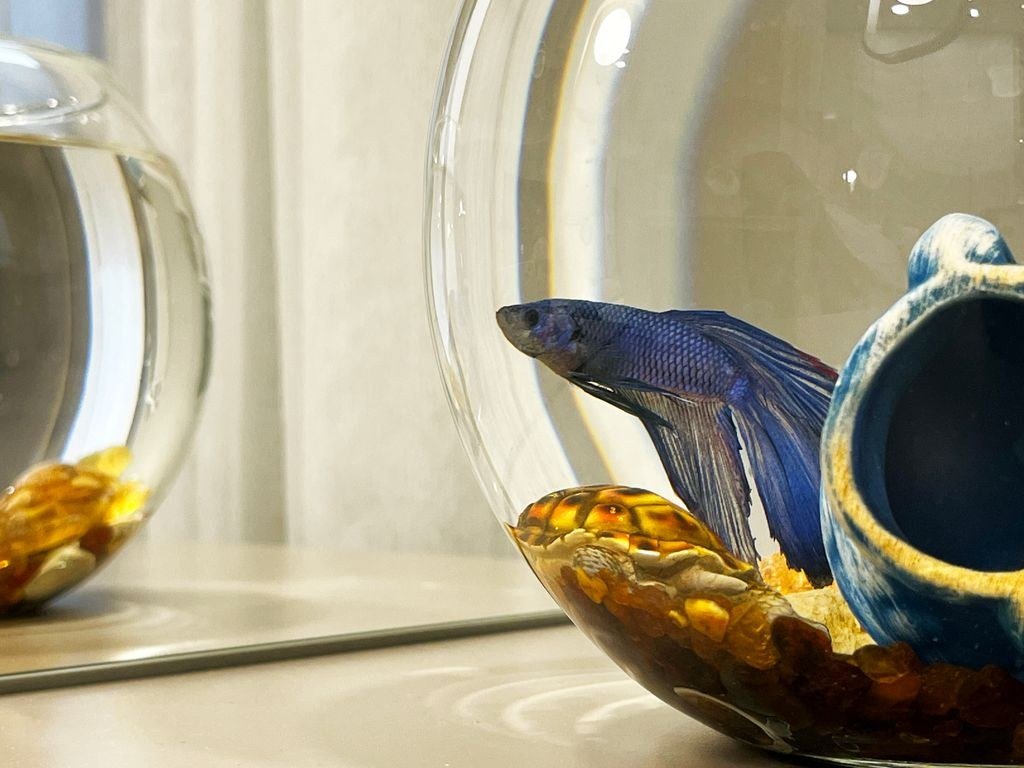
If you are asking can a betta fish live in a bowl, you probably already have one in a bowl, or you are thinking about buying one. Bowls are cheap, they look nice on a desk, and every pet shop sells bettas in little cups that make a bowl look like an upgrade.
A betta can survive in a bowl for a while. That is the honest answer, and it is also the trap. Surviving is not the same as living well. A betta in a bowl is cold, stressed, and swimming in water that turns toxic fast. Most bowl bettas die within months. The same fish in a proper tank can live three to five years.
The bowl problem is not one thing. It is five problems at once: water that goes bad quickly, temperature that swings with the room, no filter, no room to swim, and no hiding place. Fix one of them, and the other four are still there. The only real fix is a proper tank.
Direct answer: A betta fish can survive in a bowl for a short time, but a bowl is not a suitable long-term home. Bettas need at least a 5-gallon tank with a heater holding the water at 76 to 81 degrees Fahrenheit, a gentle filter, and room to swim and hide. A bowl cannot hold a heater or a filter properly, its small volume of water turns toxic within days, and its temperature swings with the room. If your betta is in a bowl now, plan a move to a proper tank this week.
This guide explains why bowls fail, busts the two myths that keep bettas in bowls, and gives you a simple seven-day plan to move your fish into a tank it can thrive in. It also covers what to do if you cannot upgrade this week, so your fish stays as safe as possible until the move.
Can a Betta Fish Live in a Bowl?
Bettas are the most popular pet fish in the world, and they are also the most misunderstood. They are sold in tiny cups, displayed in bowls, and marketed as fish that need almost nothing. None of that is true. A betta is a tropical fish with the same basic needs as any other tropical fish: warm water, clean water, space, and cover.
The betta, or Betta splendens, comes from the warm, shallow rice paddies and slow streams of Southeast Asia. In the wild, those waters stretch for acres, even though they are shallow. A wild betta has room to swim, plants to hide in, and warm, stable water. A bowl gives it none of those things.
People often say bettas are hardy, and in one sense they are. A betta can survive poor conditions longer than many other fish. Its labyrinth organ lets it breathe air from the surface, so it can live in water with very little oxygen. But that survival trick is exactly what gets bettas into trouble. Owners see a fish still alive in a bowl and assume it is fine, while the water is slowly poisoning it.
Why Bowls Fail: Five Problems
The first problem is ammonia. Fish produce waste, and waste breaks down into ammonia, which burns gills and damages organs. In a five-gallon tank with a filter, helpful bacteria turn ammonia into nitrite and then into nitrate. In a one-gallon bowl with no filter, there are almost no helpful bacteria, and ammonia climbs fast.
A single uneaten pellet in a bowl can spike ammonia to a harmful level within hours. In a bigger tank, the same pellet is diluted by five or ten times as much water, and the filter bacteria deal with it. Bowl water goes bad so fast that even daily water changes struggle to keep up, and most bowl owners do not change the water daily.
The second problem is temperature. Bettas are tropical fish, and they need water of 76 to 81 degrees Fahrenheit (24 to 27 degrees Celsius). A bowl has no heater, so its water temperature follows the room. Most homes sit at 68 to 72 degrees, well below what a betta needs. At night, the room cools further, and the bowl cools with it.
A cold betta is a slow betta. It stops eating, stops swimming, and sits on the bottom. Owners often think it is resting or lazy. In fact, its metabolism has slowed down because the water is too cold, and its immune system is weakening by the day. A betta kept cold for weeks is a betta waiting to get sick.
The third problem is the missing filter. A filter does three jobs: it moves the water, it traps waste, and it gives helpful bacteria a home. A bowl has none of that. Without a filter, there is no bacterial colony to process waste, no water movement to bring oxygen in, and no mechanical cleaning at all.
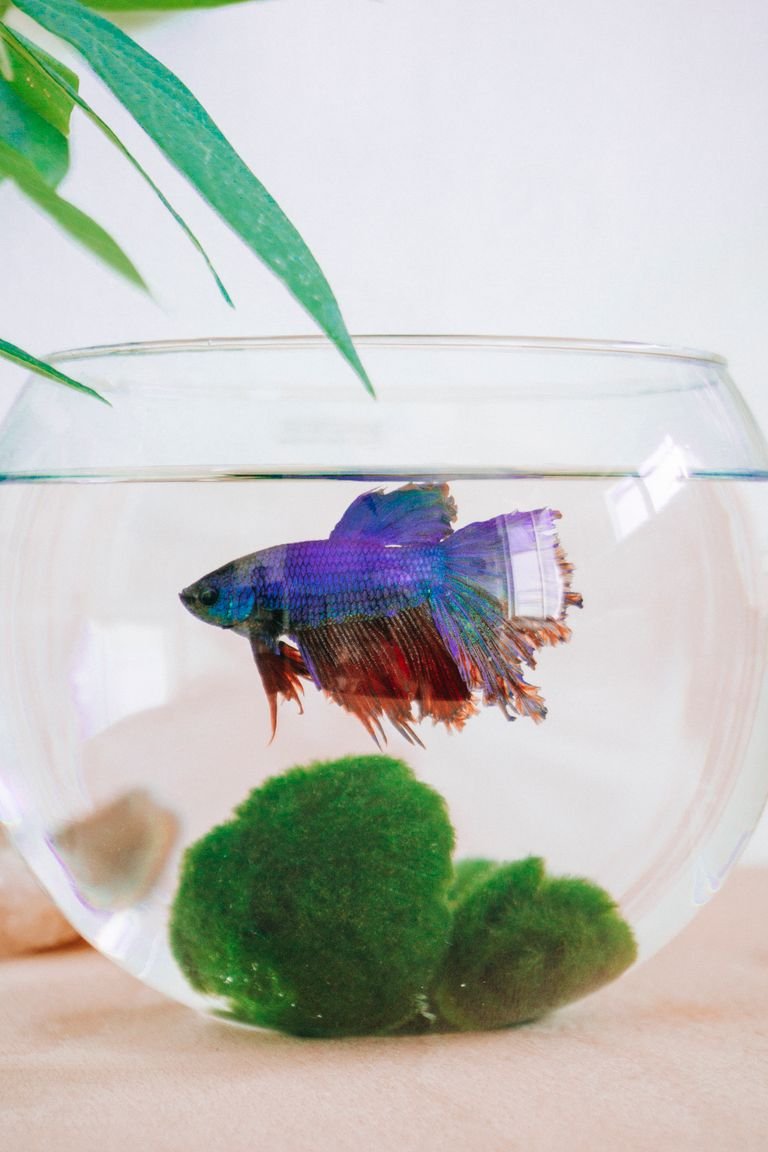
The fourth problem is space. A betta in a bowl cannot swim properly. Long-finned bettas need room to turn, flare, and patrol. A bowl barely wider than the fish is long gives it nowhere to go. The fish swims in circles, or it stops swimming at all. Over time, the lack of movement weakens its muscles and dulls its behaviour.
The fifth problem is stress. A round glass bowl leaves a betta exposed on every side, with nowhere to hide. Bettas need plants, caves, and shaded spots to feel safe. A bare bowl is a spotlight. A stressed betta clamps its fins, loses colour, and stops eating, and chronic stress is the doorway to fin rot and other diseases.
The Puddle Myth and the Vase Myth
Two myths keep bettas in bowls, and both sound convincing until you look closely. The first is the puddle myth. People say wild bettas live in tiny puddles, so a bowl is natural for them. It is not true.
Wild bettas do live in shallow water, but shallow is not the same as small. Rice paddies and floodplains are shallow, often only a few inches deep, but they stretch for acres. A wild betta has an enormous area to swim in, full of plants, insects, and hiding places. The water is warm, stable, and constantly refreshed by rain and flow.
A bowl is the opposite of a rice paddy. It is small in every direction, it has no plants, no flow, and no stable temperature. The only thing it shares with a paddy is shallow water. That is like saying a goldfish bowl is natural because the sea is also made of water.
The second myth is the vase myth. Some shops sell bettas in vases with a plant growing out of the top, and claim the fish eats the plant roots and the plant cleans the water. Both halves of that claim are wrong.
Bettas are carnivores. In the wild, they eat insects, larvae, and small crustaceans. Plant roots give them no nutrition at all. A betta in a vase is slowly starving, even while it looks like it is living in a clever, natural setup. It needs proper betta food, not roots.
The plant does not clean the water either. A plant takes up a little nitrate, but it cannot remove ammonia or nitrite fast enough to matter in a vase. Worse, the plant roots often block the water surface, and a betta needs clear access to the surface to breathe air through its labyrinth organ. A betta in a vase with blocked surface access can suffocate.
If you have a betta in a vase, move it to a proper tank as soon as you can. The vase is not a clever low-maintenance setup. It is a bowl with extra problems, and the fish inside it is both hungry and short of air.
What a Betta Actually Needs
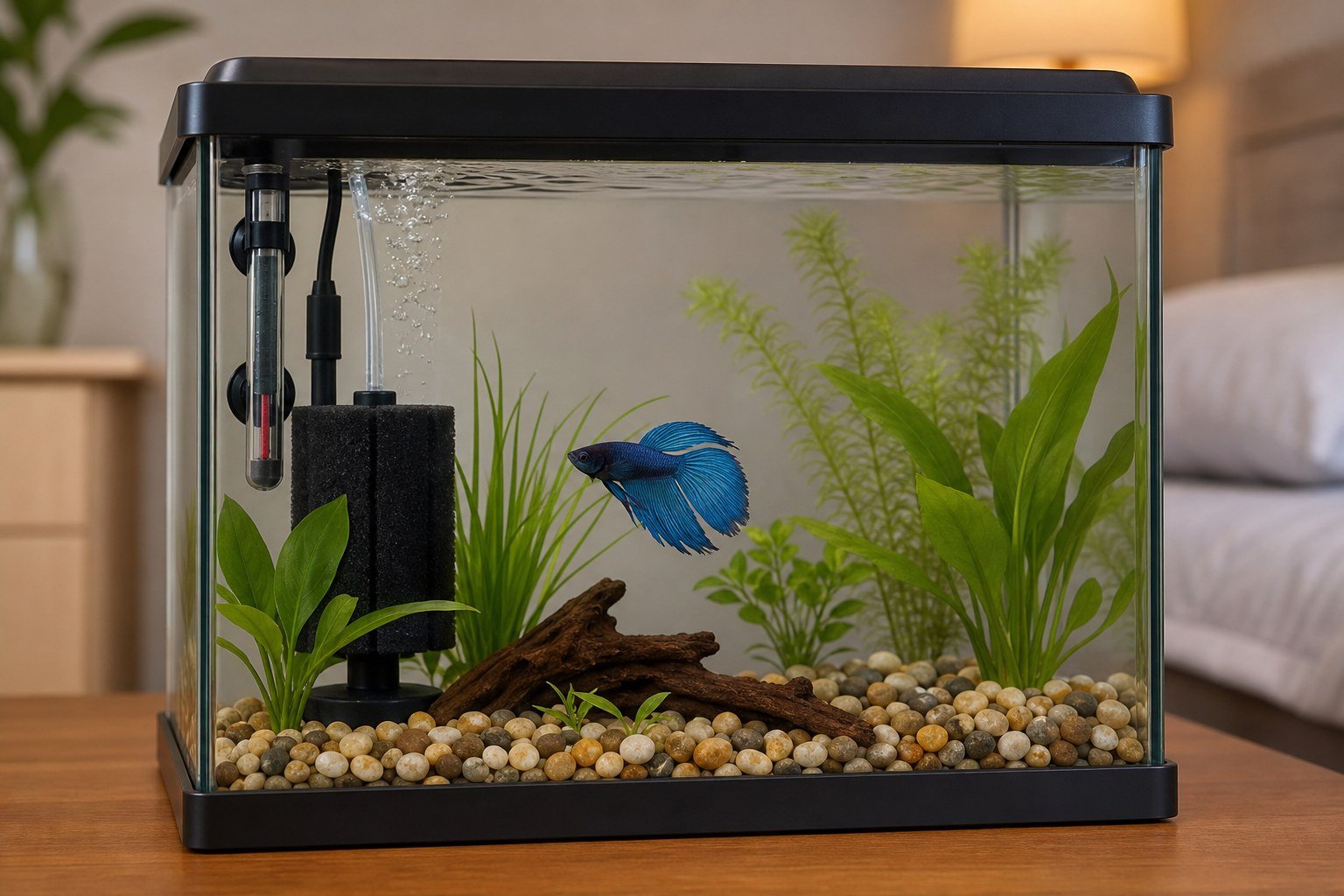
The good news is that a proper betta setup is simple and cheap. You do not need a huge tank or expensive equipment. A five-gallon tank, a small heater, a gentle sponge filter, and a few plants will give your betta a life that a bowl never can. The table below shows the difference.
| Need | A bowl | A 5-gallon tank |
|---|---|---|
| Water volume | 0.5 to 1 gallon, goes toxic in days | 5 gallons, stable for a week |
| Temperature | Follows the room, 68 to 72°F | Heater holds 76 to 81°F steady |
| Filter | None, no bacteria colony | Sponge filter, full nitrogen cycle |
| Water changes | Daily, 50% or more, to stay safe | Weekly, 25 to 30% |
| Swimming room | Circles only, fins drag on glass | Room to patrol, flare, and rest |
| Hiding places | None, exposed on all sides | Plants, cave, shaded corners |
| Expected lifespan | Months, often under a year | Three to five years |
The lifespan row is the one that matters most. A betta in a bowl often dies in three to six months. The same fish in a five-gallon heated tank commonly lives three to five years. That is not a small difference. It is the difference between a pet and a decoration.
Five gallons is the minimum, not the target. A ten-gallon tank is even better, and it is barely more expensive. Bigger tanks are more stable, because a larger volume of water changes temperature and chemistry more slowly. If you have the space and the budget, go bigger. Your betta will use every inch of it.
Use the fish tank size calculator to check what fits your space, and the fish tank heater calculator to pick a heater that suits the tank size. A 25-watt adjustable heater is right for most five-gallon tanks, and a 50-watt heater suits a ten-gallon tank.
Choose a sponge filter for a betta tank. It is cheap, gentle, and safe for long fins. It runs on an air pump, it creates almost no current, and its sponge gives helpful bacteria a huge surface to live on. Hang-on-back filters can work too, but only if the flow is adjustable and the intake is covered with a sponge so fins cannot get sucked in.
The 7-Day Upgrade Plan
Moving a betta out of a bowl is a weekend job, not a major project. Here is a day-by-day plan that takes about a week and costs less than a takeaway dinner for two.
Day one: buy the tank. A five-gallon glass tank, a small adjustable heater, a sponge filter with an air pump, a thermometer, a bottle of water conditioner, and a liquid test kit. Pick up a small bag of gravel, a silk or live plant, and a cave or mug for hiding. Rinse the gravel and decorations in plain water, never with soap.
Day two: set the tank up. Add the gravel, fill with treated tap water, and put in the heater, filter, and thermometer. Add the plants and the hiding place. Turn everything on, set the heater to 78 degrees, and let it run. Do not add the fish yet. The tank needs time to warm up and settle.
Days three to five: start the cycle. A brand-new tank has no helpful bacteria, so you need to grow them before the fish moves in. The fastest safe way is to use a bottled bacteria starter and add a tiny pinch of fish food each day. Test ammonia and nitrite daily. You are waiting for both to read zero.
If you cannot wait for a full cycle, you can move the fish in sooner and finish the cycle with the fish in the tank. This is called a fish-in cycle, and it works if you test the water every day and change 25 to 30% of it whenever ammonia or nitrite reads above zero. It is more work, but it is still far better than leaving the fish in a bowl.
Day six: check the numbers. The tank water should be 76 to 80 degrees, ammonia zero, nitrite zero, and pH between 6.5 and 7.5. If the numbers are good, the tank is ready. If ammonia or nitrite is still above zero, wait another day or two and keep testing.
Day seven: move day. Float the bowl, or a bag with the betta and some of its bowl water, in the new tank for fifteen minutes so the temperatures match. Then add a little tank water to the bag every five minutes, three times, so the chemistry matches too. Finally, gently tip the betta into its new home. Do not pour the bowl water into the tank.
Watch your betta for the first few days. A healthy betta will explore, flare at its reflection, and eat within a day. If it hides for a day or two, that is normal. New tanks are strange, and bettas need time to learn where the hiding places are. Keep the lights low for the first day, and do not tap the glass.
If You Cannot Upgrade This Week
Sometimes a new tank has to wait. Money is tight, or the shop is closed, or you are waiting for a delivery. If your betta must stay in the bowl for a few more days, here is how to keep it as safe as possible until the move.
Change 25 to 50% of the bowl water every single day. Use tap water treated with a dechlorinator, matched to the bowl temperature. Never change all the water at once, and never wash the bowl with soap. Soap kills fish, even in tiny amounts left on the glass.
Keep the bowl somewhere warm and stable, away from windows, doors, and heaters. A bowl near a window swings in temperature all day, cold at night and warm in the sun. A spot on a desk in the middle of the room is better than a spot on a windowsill.
Feed very lightly. Two or three small pellets once a day is enough. Uneaten food is the fastest way to poison a bowl, because there is no filter to deal with it. If food is still floating after two minutes, you fed too much. Net it out.
Give the betta a place to rest near the surface. A broad silk leaf, a small piece of floating plant, or even a clean mug tipped on its side gives the fish somewhere to hide and rest. Bettas rest a lot, and a bowl with no cover is stressful.
Read our guide to how often to change water in a betta tank without a filter for the full unfiltered schedule, and our guide to using tap water in a fish tank before you change the bowl water. Both apply directly to a bowl, and both will keep your fish safer until the upgrade.
Do not buy a bigger bowl as a halfway step. A two-gallon bowl has the same problems as a one-gallon bowl, just slightly slower. The money is better spent on a proper five-gallon tank. A bowl is not a stepping stone. It is a dead end, and the only direction that helps is out of it.
How to Tell If Your Betta Is Suffering
A betta in a bowl rarely looks sick all at once. The decline is slow, and it is easy to miss if you do not know what to look for. These are the signs that the bowl is already hurting your fish.
Clamped fins are the first sign. A healthy betta holds its fins open, like a fan. A stressed betta presses its fins tight against its body. If your betta’s fins look folded or stuck together, the water is the first thing to check.
Faded colour is the second sign. A healthy betta is bright and vivid. A stressed betta looks washed out, pale, or grey. Colour can fade for other reasons, including age, but a betta that fades in a bowl is usually a betta in bad water.
Lying on the bottom is the third sign. Bettas do rest on the bottom sometimes, especially at night or after eating. But a betta that lies on the bottom all day, barely moving, is not resting. It is cold, or poisoned, or both. Check the temperature and test the water.
Not eating is the fourth sign. A healthy betta eats eagerly. A betta that ignores food for more than a day or two has a problem. In a bowl, that problem is usually ammonia or cold water. Test first, and do not assume the fish is just fussy.
Fin rot is the late sign. The fins look ragged, torn, or black at the edges, and they get shorter over days. Fin rot is a bacterial infection that takes hold when the immune system is weak. Clean, warm water is the real treatment. Medicine helps, but it will not work in a dirty bowl.
If you see any of these signs, do a water change today, test the water, and bring the upgrade plan forward. A betta showing stress signs in a bowl is a fish on a countdown. The University of Illinois veterinary guide to betta care explains the five-gallon minimum in a vet’s own words, and the Merck Veterinary Manual page on fish diseases covers the illnesses that follow poor water, including fin rot.
For the weekly routine once your betta is in a proper tank, read our guide to whether you can turn a fish tank filter off at night. Short answer: no, the filter stays on, and the guide explains why the bacteria need it running around the clock.
Frequently Asked Questions
Is a 2.5-gallon tank enough for a betta fish? A 2.5-gallon tank is better than a bowl, but it is still below the five-gallon minimum most vets and welfare groups recommend. The water in a 2.5-gallon tank swings in temperature and chemistry much faster than in a five-gallon tank, and it still cannot hold a heater and filter comfortably. If a 2.5-gallon tank is all you have, use it as a temporary home while you save for a five-gallon tank, and change 25 to 30% of the water every two to three days.
Can I use tap water in a betta bowl? Yes, but only after treating it with a water conditioner that removes chlorine and chloramine. Untreated tap water will burn a betta’s gills and can kill it within hours. Letting tap water sit overnight removes chlorine, but it does not remove chloramine, and most water companies now use chloramine. Always use a conditioner, and match the new water to the bowl temperature before adding it.
Can a betta live in a bowl with a snail? A snail does not fix a bowl. It adds waste of its own, which makes the water go bad even faster, and it needs the same clean, warm water the betta needs. Mystery snails also need calcium-rich water for their shells, which bowl water rarely provides. If you want a snail, add it to the betta’s proper tank, not to the bowl, and choose a nerite snail, which is small, hardy, and cannot breed in fresh water.
What should I feed a betta that lives in a bowl? Feed the same food you would feed a betta in a tank: two or three small betta pellets once or twice a day, with frozen bloodworms or daphnia once or twice a week as a treat. The difference in a bowl is the amount. Feed less, not more, because every uneaten pellet rots and poisons the small volume of water. Never feed flakes meant for goldfish or tropical community fish, which are too low in protein for a betta.
Why is my betta in a bowl not eating? The most common reasons are cold water and ammonia. A betta in water below 74 degrees slows down and loses its appetite, and a betta in water with ammonia above zero will stop eating entirely. Test the water and check the temperature first. If the water is cold, the bowl needs to move somewhere warmer until the upgrade. If ammonia is above zero, change half the water today with treated, temperature-matched water, and keep changing it daily until the fish eats again.