Can Goldfish Live With Betta Fish?
If you are asking can goldfish live with betta fish, you are probably looking at two beautiful fish and hoping they can share a tank. It is an easy hope to have. Both are popular, both are sold in the same shops, and both look calm in their little cups and tanks.
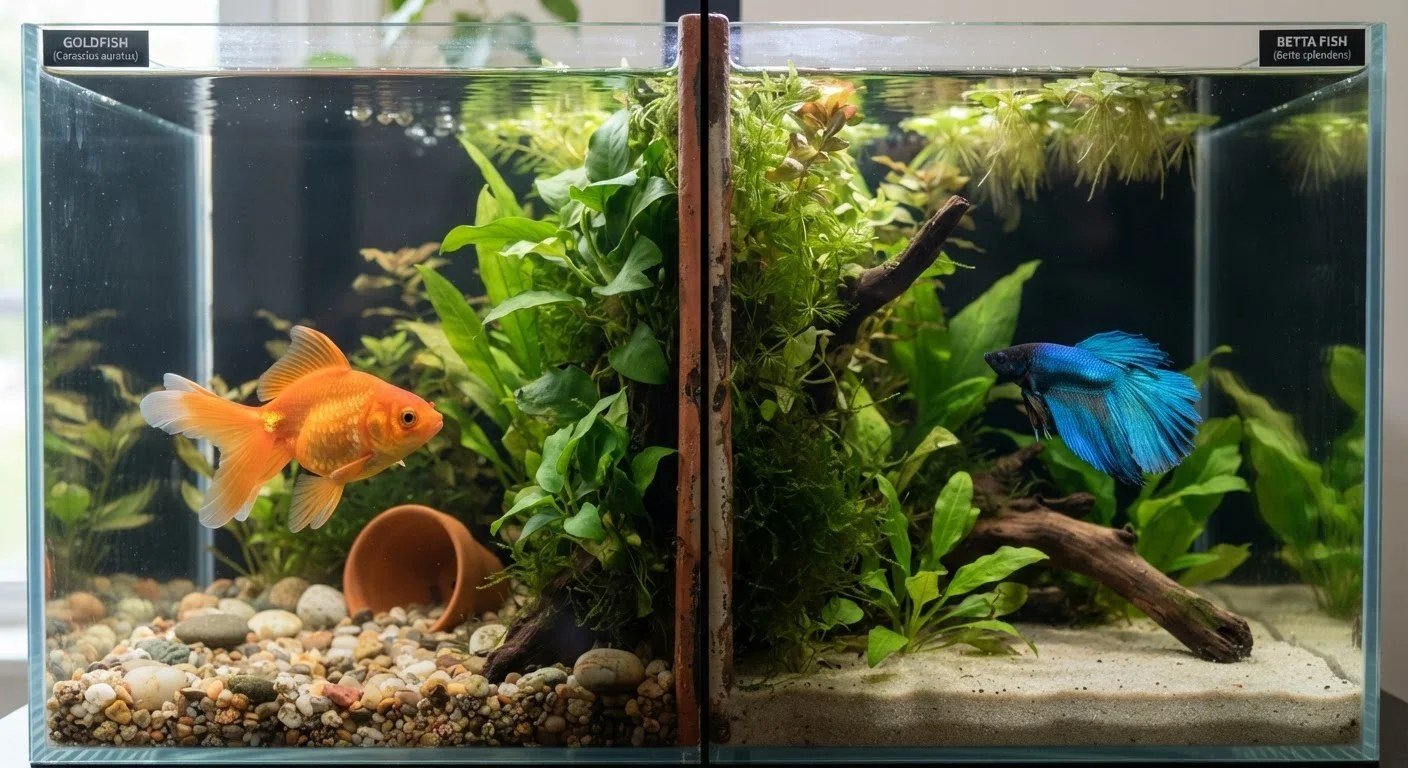
The short answer is no. Bettas and goldfish should not live in the same tank. They need different water temperatures, different tank sizes, different food, and different water flow. Put them together, and one of them is always living in water that is wrong for it.
This is not just about temper. Many guides stop at “bettas are aggressive,” and that is only a small part of the story. Even a calm betta and a peaceful goldfish cannot share a tank, because their basic needs pull in opposite directions. The temperature alone is enough to rule it out.
Direct answer: No, goldfish and betta fish cannot live together in the same tank. Bettas are tropical fish that need warm water of 76 to 81 degrees Fahrenheit, while goldfish are cold-water fish that do best at 65 to 75 degrees. There is no temperature that suits both. Goldfish also grow much bigger, produce far more waste, and need stronger filtration and faster water flow than a long-finned betta can handle. Keep them in separate tanks, each set up for that species.
If you already have them together, do not panic. Separate them as soon as you can, even if that means a temporary container for one of them while you set up a second tank. The rest of this guide explains why they clash, what the “compromise temperature” myth gets wrong, and which fish each of them can live with instead.
Can Goldfish Live With Betta Fish?
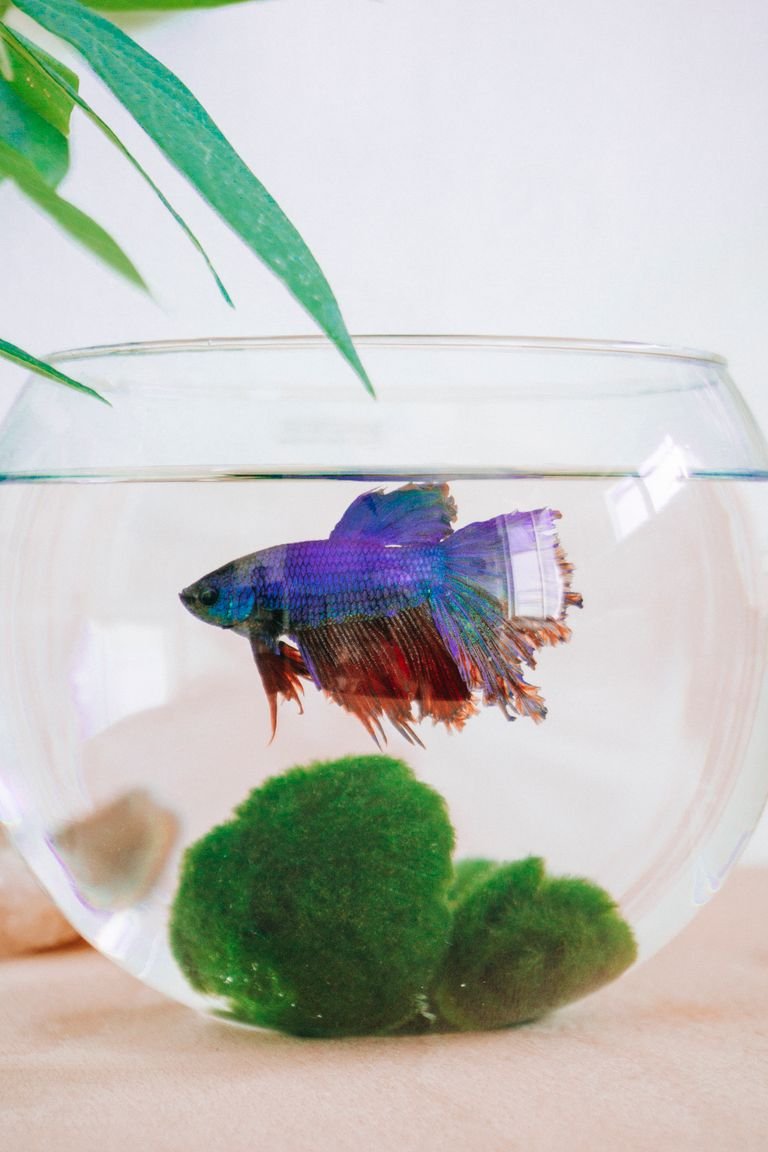
Bettas and goldfish are the two most popular pet fish in the world, and they could hardly be more different. The betta, or Betta splendens, is a tropical fish from the warm, shallow rice paddies and slow streams of Southeast Asia. The goldfish, or Carassius auratus, is a carp bred over a thousand years in China, and it is a cold-water fish that thrives in cool, well-oxygenated water.
Both are sold as beginner fish. Both are sold in small tanks and bowls. That similarity is a trap. The fact that two fish are sold the same way does not mean they need the same care. In the wild, a betta and a goldfish would never meet, and their bodies are built for completely different water.
The mismatch is not one problem. It is six problems at once, and fixing one of them makes another one worse. A warmer tank helps the betta and hurts the goldfish. A bigger filter helps the goldfish and stresses the betta. There is no middle setting where both fish do well.
The Six Mismatches
The table below shows the two fish side by side. Every row is a place where their needs pull apart. Read it once, and the answer to the question becomes obvious.
| Need | Betta fish | Goldfish |
|---|---|---|
| Water temperature | 76 to 81°F (24 to 27°C), tropical | 65 to 75°F (18 to 24°C), cold water |
| Adult size | 2.5 to 3 inches | 6 to 12 inches, depending on type |
| Tank size for one fish | 5 gallons or more | 20 gallons or more |
| Waste produced | Very little | A lot, heavy waste for its size |
| Water flow | Gentle, almost still water | Strong filtration, good flow |
| Diet | Carnivore, insects and larvae | Omnivore, eats almost anything |
| Temperament | Territorial, attacks lookalikes | Peaceful, but nips long fins |
No single row on its own is a deal-breaker. Together, they are. A tank that is warm enough for a betta is too warm for a goldfish. A filter strong enough for a goldfish blows a betta around the tank. A tank big enough for a goldfish is far bigger than a betta needs, and it still does not fix the temperature or the flow.
The Temperature Myth
The most common argument for keeping them together is the “compromise temperature.” The idea is simple. Bettas like 76 to 81 degrees. Goldfish like 65 to 75 degrees. So keep the tank at 75 or 76 degrees, and both fish will be fine. It sounds reasonable. It is wrong.
A tank at 75 degrees sits at the very bottom of the betta’s range and the very top of the goldfish’s range. Neither fish is in its comfort zone. The betta is cold, slow, and more likely to get sick. The goldfish is warm, its metabolism is running too fast, and it needs more oxygen than warm water can hold.
Warm water holds less oxygen than cold water. That matters a lot here. A goldfish in warm water breathes faster, eats more, and produces more waste, all while the water carries less oxygen. The betta, meanwhile, is cold enough to slow down and stop eating properly. Both fish are stressed at the same time, in opposite directions.
Temperature swings make it worse. A tank held at the edge of two ranges has no margin for error. A hot day, a heater that sticks on, or a cold night can push the water out of one fish’s range entirely. A betta tank kept at 78 degrees can survive a two-degree swing. A compromise tank at 75 degrees cannot, because one fish is already at its limit.
Some keepers point out that goldfish can survive warm water, and bettas can survive cool water. That is true, and it misses the point. Surviving is not thriving. A goldfish can survive at 78 degrees for a while, just as a betta can survive at 70 degrees for a while. Both will live shorter, sicker lives than they should. The goal is not to keep a fish alive for a few months. It is to give it the years it should have.
Size, Waste, and Water Flow
Goldfish get big. The small goldfish in the shop is a juvenile, usually two or three inches long. A common goldfish can grow past a foot. A fancy goldfish, like a fantail or an oranda, can reach six to eight inches. A betta, by contrast, is fully grown at two and a half to three inches.
That size gap matters for tank size. A single betta does well in five gallons. A single young goldfish needs at least twenty gallons, and it will need more as it grows. Put them in a five-gallon betta tank, and the goldfish is cramped within months. Put them in a twenty-gallon goldfish tank, and the betta is living in a space it does not need, with a tank mate that produces far more waste than the filter was sized for.
Goldfish are famously messy. They eat a lot, and they produce a lot of waste. A goldfish tank needs strong filtration to keep ammonia and nitrite at zero. That strong filtration creates current, and current is the enemy of a long-finned betta. Bettas come from still water. Their heavy fins make them poor swimmers, and a strong flow pushes them around, stops them resting, and stresses them constantly.
A betta in a strong current shows it clearly. It hides behind plants and decorations, it stops patrolling the tank, and it may clamp its fins. Over weeks, the stress weakens its immune system, and fin rot or other infections follow. The goldfish, meanwhile, is fine with the flow. The tank suits one fish and punishes the other.
Use the fish tank size calculator before you buy any tank, and the aquarium stocking density calculator to check how many fish a tank can really hold. Goldfish are the fish most often kept in tanks far too small for them, and the calculator makes the real number hard to ignore.
Fins, Temper, and the Feeding Race
Bettas are called Siamese fighting fish for a reason. Male bettas are territorial, and they attack anything that looks like a rival male. A fancy goldfish, with its long flowing fins and bright colours, looks very much like a rival. Many bettas will flare at a goldfish, chase it, and nip at its fins.
Goldfish are peaceful by nature, but they are not harmless to a betta. Many goldfish, especially commons and comets, are fin nippers. They chase slow-moving fish and nibble at long fins. A betta’s fins are its most delicate feature, and a goldfish can shred them in days. Torn fins lead to fin rot, and fin rot in dirty water can kill.
So the aggression runs both ways. The betta attacks the goldfish because it looks like a rival. The goldfish nips the betta because it is slow and has tempting fins. Neither fish is being cruel. Both are behaving exactly as their species does. The tank is simply the wrong place for both behaviours at once.
Feeding makes the mismatch worse. Bettas are carnivores that eat slowly and carefully. They take a pellet, chew it, and come back for another. Goldfish are greedy omnivores that eat fast and eat everything. Put food in a shared tank, and the goldfish will eat the betta’s share before the betta has finished its first pellet.
A betta that cannot get enough food grows thin, loses colour, and stops being active. Owners often blame disease, when the real problem is that the goldfish is eating twice. Feeding them separately does not work well either, because goldfish will hoover up any food that reaches the bottom, including the betta’s sinking pellets.
The food itself is different too. Bettas need high-protein food, mostly insects and larvae. Goldfish need a mixed diet with plenty of plant matter. A food that suits one fish is wrong for the other. A goldfish eating betta pellets gets too much protein and too little fibre. A betta eating goldfish flakes gets too little protein. Both end up malnourished in their own way.
They Are Already Together: What to Do Now
If your betta and goldfish are already sharing a tank, do not feel guilty. Pet shops sell them side by side, and the advice to keep them together is everywhere. The important thing is what you do next, and the answer is to separate them as soon as you can.
Start by deciding which fish keeps the current tank. The goldfish needs the bigger tank, so if your tank is twenty gallons or more, the goldfish stays and the betta moves. If your tank is five to ten gallons, the betta stays and the goldfish needs a bigger home, either a new tank or a rehoming through your local fish shop.
Set up the second tank properly. That means a heater for the betta, set to 78 degrees, and a gentle filter. For the goldfish, it means a tank of at least twenty gallons, strong filtration, and no heater unless your room is very cold. Use the fish tank heater calculator to size the betta’s heater correctly.
While the second tank cycles, keep the fish apart if you possibly can. A clean bucket or storage tub with treated water, a heater for the betta, and daily water changes is a better temporary home than a shared tank where both fish are stressed. It is not pretty, but it is safer, and it only needs to last a week or two.
Test the water in the shared tank every day until they are separated. Goldfish waste builds up fast, and ammonia can spike without warning. If ammonia or nitrite reads above zero, change 50% of the water with treated water at the same temperature. Do not wait for the fish to look sick. By the time a fish looks sick from ammonia, the damage is already done.
Watch both fishes’ fins while they are together. Torn fins, clamped fins, or a betta that hides all day are signs that the pairing is already hurting them. Separate the fish even sooner if you see these signs. A few days of fin damage can take weeks to heal, and torn fins in dirty water often lead to fin rot.
Better Tank Mates for Your Betta
A betta does not need tank mates at all. Many bettas are happiest alone in a five-gallon tank, and that is a perfectly good life for them. But if you want company in the tank, choose fish that share the betta’s warm, gentle water and stay out of its way.
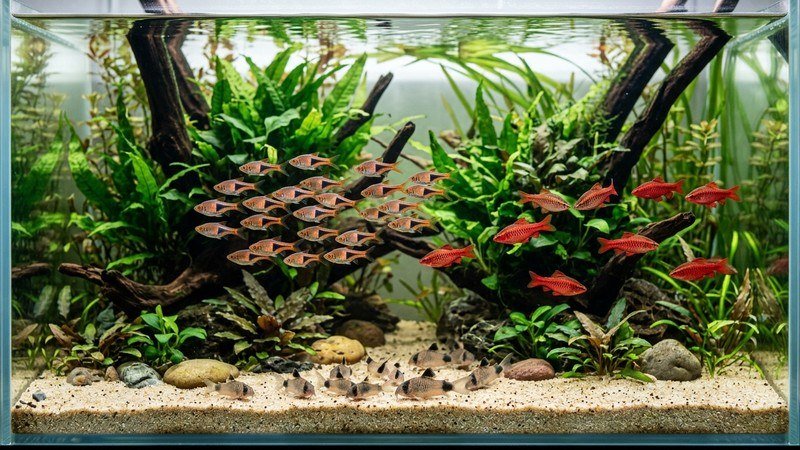
Corydoras catfish are the safest choice. They live on the bottom, they are peaceful, and they ignore the betta completely. Keep them in a group of six or more, in a tank of at least ten gallons, with a soft sandy bottom so they can dig without hurting themselves.
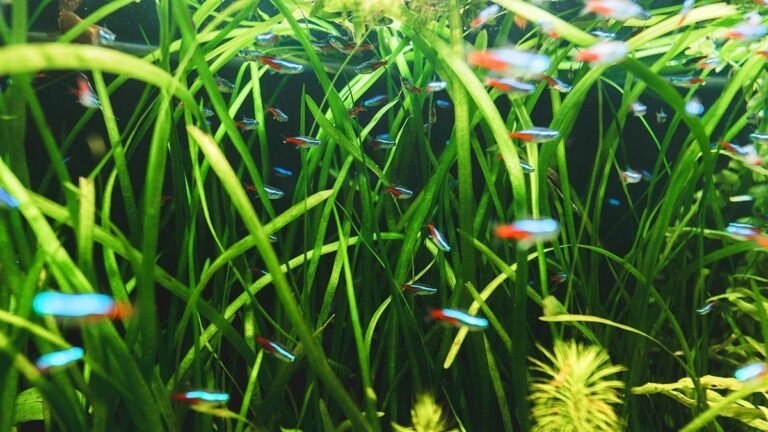
Harlequin rasboras and ember tetras are good mid-water choices. They are small, fast, peaceful, and they swim in a school, which makes them hard for a betta to single out. Keep at least six of them, and give them plants to hide in. A heavily planted tank makes every tank mate pairing safer.
Snails are the easiest companions of all. Nerite snails eat algae, cannot breed in fresh water, and are usually ignored by bettas. Mystery snails are bigger and bolder, though some bettas nip at their antennae. Shrimp are riskier. Amano shrimp are big enough to survive, but cherry shrimp are small enough for many bettas to hunt.
Avoid anything with long flowing fins or bright red and blue colours. Your betta will read those fish as rivals. Avoid fin nippers like tiger barbs, and avoid anything aggressive or much bigger than the betta. And never, ever put two male bettas in the same tank. That fight ends with one dead fish.
Before adding any tank mate, read our guide to why bettas flare at their reflection. It explains how bettas read other fish, and it will help you spot a bad pairing before it turns into torn fins.
Better Tank Mates for Your Goldfish
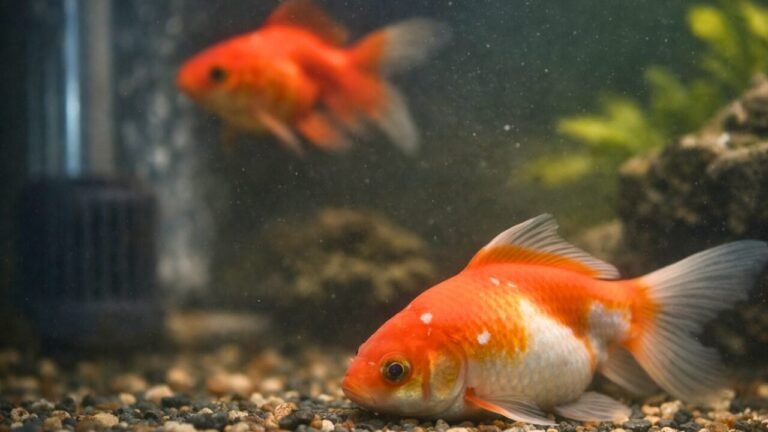
Goldfish do best with other goldfish. That is the simple truth, and it is the pairing most keepers end up with. Two or three fancy goldfish in a forty-gallon tank, with strong filtration and regular water changes, is a setup that works for years.
Mixing goldfish types needs care. Commons and comets are fast, strong swimmers that outcompete fancy goldfish for food. Fancies, with their round bodies and long fins, cannot keep up. Keep commons with commons, and fancies with fancies, and both groups will do better.
Some keepers add white cloud mountain minnows to a goldfish tank. They are cold-water fish, they are fast enough to avoid trouble, and they share the goldfish’s temperature range. They work in a large tank, but they are small, and a big goldfish may still eat them. Zebra danios are another cold-water option, for the same reasons.
Do not add tropical fish to a goldfish tank. Tetras, guppies, mollies, and platies all need warm water, and a goldfish tank is too cold for them. Do not add plecos either. Common plecos grow huge, produce enormous amounts of waste, and can latch onto a slow goldfish and damage its slime coat.
Goldfish also need more space than most people expect. A single fancy goldfish needs twenty gallons, and each extra goldfish needs ten more. A tank that looks roomy with one small goldfish will be crowded within a year. Plan for the adult size, not the shop size, and your goldfish will live the ten to fifteen years they are capable of.
For more on goldfish behaviour, read our guide to why goldfish sit at the bottom of the tank. It covers the water problems that affect goldfish most, and it will help you tell a resting goldfish from a sick one.
Where to Get Good Advice
Fish shops give conflicting advice on this pairing, and much of it is wrong. The shops that sell bettas in cups and goldfish in bowls are the same shops that say the two fish can share a tank. Trust vet-written and welfare sources instead, and trust the numbers in the table above.
The RSPCA fish care guide covers the basics of tank size, temperature, and water quality for both species in plain language. For bettas specifically, the University of Illinois veterinary guide to betta care explains why bettas need a heated, filtered tank of at least five gallons, and why bowls fall short. Both sources agree on the core point: each species needs its own setup.
If you are unsure about your own tank, take a water sample to a good local fish shop and ask them to test it. Ask for the actual numbers, not just “fine.” Ammonia and nitrite should be zero, nitrate under 20 parts per million, and the temperature steady. Those four numbers tell you more about your fish than any shop assistant’s opinion.
The kindest thing you can do for a betta and a goldfish is to give each of them a home built for that fish. A betta in a warm, planted five-gallon tank with a gentle filter will show you colours and behaviour you never see in a shared tank. A goldfish in a cool, roomy tank with strong filtration will grow, live long, and stay healthy. Neither fish needs the other. Each one just needs you to meet its own needs.
Frequently Asked Questions
Can goldfish live with other tropical fish? No, goldfish should not live with tropical fish. The temperature gap is the same problem as with bettas. Tropical fish like tetras, guppies, and mollies need water of 74 to 80 degrees, while goldfish do best at 65 to 75 degrees. A tank warm enough for tropical fish is too warm for a goldfish, and a tank cool enough for a goldfish is too cold for tropical fish. Goldfish also produce far more waste than tropical community fish, which overwhelms the filtration in a normal community tank.
Can a betta live with a goldfish in a pond? No, a pond is worse than a tank for this pairing. Outdoor ponds swing in temperature far more than indoor tanks, and a betta in a pond faces cold nights, predators like birds and cats, and strong currents from pond pumps. Bettas are tropical fish that need stable warm water, and a pond cannot give them that. Goldfish belong in ponds. Bettas belong in heated indoor tanks.
Can I keep a betta and a goldfish in a divided tank? A divider solves the fighting, but it does not solve the temperature, waste, or flow problems. Both sides of a divided tank share the same water, so the temperature is still wrong for one of the fish, and the goldfish side still produces far more waste than a betta setup is built to handle. A divider is a useful temporary fix while you set up a second tank, but it is not a long-term home for both fish.
How long do goldfish live? A well-kept goldfish lives ten to fifteen years, and some commons live past twenty. Fancy goldfish usually live a little less, around ten to twelve years. That long life is exactly why tank size matters so much. A goldfish kept in a small tank may only live two or three years, not because goldfish are short-lived, but because the tank stunted it and the water slowly damaged its health.
Can two female bettas live with a goldfish? No, female bettas have the same temperature, waste, and flow needs as males, so the same six mismatches apply. Female bettas are less aggressive than males, but they still need warm tropical water, gentle flow, and a high-protein diet, and a goldfish still needs cool water, strong filtration, and a big tank. A group of female bettas, called a sorority, is already a difficult setup on its own, and adding a goldfish makes it worse.