Why Does My Budgie Bite Me? Reasons & Fixes
A budgie bite can sting far more than you expect from a bird the size of a thumb. One moment your budgie is sitting sweetly on your finger, and the next it clamps down hard enough to draw blood. If you are asking why does my budgie bite me, you are not alone, and the answer is almost never that your bird hates you.
Budgies bite to send a message. Their beak is their hand, their tool, and their only real weapon. When a budgie bites, it is usually saying that it is scared, it wants space, it is in pain, or it has learned that biting works. The good news is that once you can read the message, the biting almost always stops.
Most budgies bite because they feel scared, cornered, or overwhelmed — not because they are mean. The fix is to learn the warning signs, stop doing the thing that triggered the bite, and rebuild trust slowly with short, calm sessions and treats. Punishment never works and makes biting worse.
First, Is It a Bite or Just Beaking?
Before you try to fix the biting, check what kind of mouth contact you are actually getting. Many owners call everything a bite, but budgies use their beaks in several different ways. Only one of them is a real bite, and each type needs a different response.
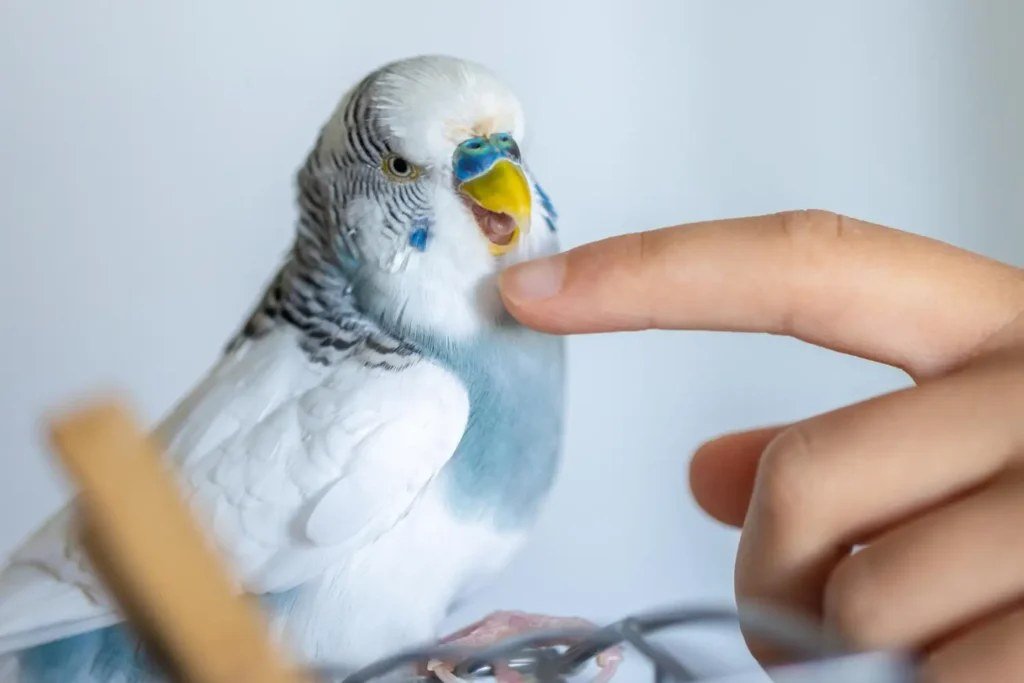
Beaking is gentle, curious mouthing. Your budgie touches your finger with its beak, tests the texture of your ring, or nibbles your nail softly. This is how a budgie explores the world, the way a toddler explores with its hands. Beaking is a sign of trust, not aggression, and you should let it happen.
Nipping is a quick, light pinch. It is fast, it does not break the skin, and it is usually a warning. Your budgie is saying “stop that” or “I do not like this.” A nip is your early warning system. If you respect it, you will rarely get a full bite.
A warning bite is a firm, deliberate clamp that lasts a second or two. It hurts, and it may leave a red mark. Your budgie is setting a clear boundary because earlier, softer signals were missed. Warning bites are the most common type owners complain about.
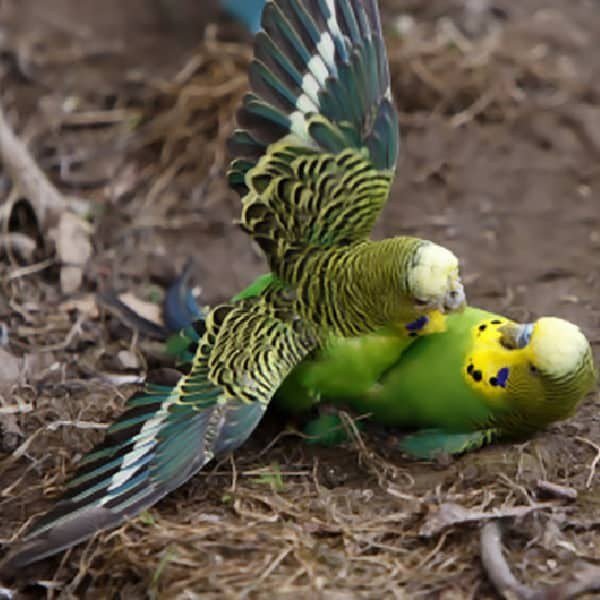
An aggressive bite is hard, sustained, and meant to cause pain. Your budgie locks on, may twist its head, and can break the skin and draw blood. These bites are almost always rooted in deep fear, pain, or strong hormonal drive. If you are getting aggressive bites every day, something in your bird’s life needs to change.
Young budgies also go through a beaky phase. A fledgling budgie explores everything with its mouth, including your fingers, and it has not yet learned how hard is too hard. This is normal baby behaviour, not bad temper, and it fades as the bird learns boundaries through gentle, consistent feedback.
Why Does My Budgie Bite Me? The 7 Real Reasons
Every bite has a reason, even when the reason is not obvious to you. Work through this list like a detective. The cause is usually one of these seven, and finding it is the whole fix.
1. Fear — the most common reason by far
Fear causes most budgie bites, especially in new birds. Budgies are prey animals, and in the wild they are hunted by hawks, snakes, and cats. A human hand reaching into a cage from above looks exactly like a predator swooping down. Your budgie is not being rude. It is defending its life.
Common fear triggers are sudden hand movements, loud noises like a vacuum cleaner, unfamiliar people leaning over the cage, and being grabbed or cornered. A new budgie that has only been home for a week is still deciding whether you are safe. Biting is its way of keeping you at a distance until it knows.
Fear bites often happen without much warning the first time, because the bird is already in full alarm mode. Once the fear passes, the same bird may be calm and sweet again. That pattern — calm, then a sudden hard bite, then calm again — is the classic sign of a fear bite.
2. Your hand came from above
This one deserves its own spot, because it is so easy to fix. Budgies watch the sky for danger. A hand that drops down onto a budgie from above triggers a survival reflex, even in a tame bird that loves you. The bird does not think. It bites.
Always approach your budgie from below or from the side, at the bird’s own eye level. Offer your finger like a perch, held still and slightly below its feet. Let the bird step onto you instead of reaching over it. This one change alone stops a large share of finger bites.
3. Territory — the cage is theirs, not yours
Budgies can be fiercely protective of their cage, their food bowl, or a favourite toy. Female budgies are often more territorial, especially in spring, but males do it too. If your bird only bites when your hand goes inside the cage, you are probably dealing with territory, not a trust problem.
The fix is simple. Let your budgie come out of the cage first, then handle it outside. Change food and water when the bird is out playing, or use a treat to lure it to the far side of the cage. Never chase a budgie around inside its own home to grab it.
4. Hormones — the spring grump
Budgies go through hormonal cycles in spring and early summer, triggered by longer daylight hours. A bird that has been sweet and tame for months can suddenly turn nippy, territorial, and quick to bite. Hens may guard a dark corner or a nest-like spot and bite anyone who comes near.
Hormonal biting is seasonal and it passes. During a hormonal phase, cut back on handling, keep daylight to about 10 to 12 hours by covering the cage at night, and remove anything nest-like such as cosy huts, coconut shells, or dark corners. Do not stroke your budgie’s back or belly, because that feels like mating behaviour and raises hormones further.
5. Pain or illness — the reason most owners miss
A budgie in pain bites. It is a defensive response from a bird that feels weak and vulnerable. If your normally gentle budgie suddenly starts biting when you touch a certain spot, or if the biting started at the same time as other changes, treat it as a medical signal first and a behaviour problem second.
Watch for the other signs that come with pain. Sleeping more than usual, sitting fluffed up for long periods, eating less, watery or changed droppings, tail bobbing, or discharge from the eyes or nostrils are all red flags. A budgie that hides illness well can still bite to protect a sore wing, foot, or crop. An avian vet should check any sudden behaviour change.
6. Overstimulation — too much of a good thing
Even a happy budgie has a limit. Long handling sessions, too much petting, or being passed from person to person can push a bird past its comfort point. The bite is the bird saying “enough.” Many owners miss this because the bird was enjoying the attention a minute earlier.
Keep handling sessions short, around 10 to 15 minutes, and end them while your budgie is still happy. Watch for the small signs that the bird is getting tired: restless feet, quick head turns, or a sudden stillness. If you see them, put the bird back on its perch with a treat and try again later.
7. Boredom and learned biting
A bored budgie is a nippy budgie. Budgies are smart, social birds that need several hours of out-of-cage time, fresh toys, and things to chew and shred every day. A bird that sits in a bare cage with nothing to do can start biting hands just to make something happen.
Biting can also become a learned habit. If a bite always makes you pull your hand away, the bird learns that biting works. It is not being clever or spiteful. It is using the only tool that gets results. The cure is to stop rewarding the bite with a big reaction, and to give the bird better things to chew on, like balsa wood, paper, and safe shredding toys.
The Warning Signs Before a Bite
Budgies almost never bite without warning. The warning may last only a second, but it is there. Learning to spot it is the single most useful skill a budgie owner can build, because it lets you back off before the bite happens.
The most common warning is eye pinning. Your budgie’s pupils shrink to tiny dots and then widen again, fast, while it stares at your hand. Pinned eyes mean the bird is excited, stressed, or about to act. Freeze your hand and wait.
Flattened feathers are another clear sign. A budgie that slicks its feathers tight against its body, crouches low, and leans away from you is afraid or defensive. A relaxed budgie looks soft and slightly fluffy. A slick, flat bird is a bird that may bite.
Other warnings include a sudden hiss, a lunge without contact, an open beak held toward your hand, and a quick nip that you brushed off. If your budgie nips you lightly and you keep going, the next bite will be harder. Respect the nip and you will rarely see the bite.
| Warning sign | What it means | What to do |
|---|---|---|
| Eye pinning (pupils shrinking fast) | Excited, stressed, or about to bite | Freeze your hand, wait, then move slowly |
| Feathers flattened tight to the body | Afraid or defensive | Back off and give space |
| Crouching low and leaning away | Feels cornered | Move your hand away, offer a perch instead |
| Hissing or an open beak | Clear warning to stop | Stop what you are doing at once |
| A light nip | “I do not like this” | End the session calmly, do not push on |
| Lunging without contact | Last warning before a real bite | Leave the bird alone for a while |
What to Do the Second Your Budgie Bites
Your reaction in the five seconds after a bite decides whether the biting gets better or worse. Most owners react the wrong way, because a bite hurts and the instinct is to shout or yank the hand away. Both reactions teach the bird that biting works.
Stay calm and do not shout. A loud yell scares a fearful bird even more, and an attention-seeking bird learns that biting brings a big, exciting reaction. Keep your voice low and your body still. Do not jerk your hand away, because a sudden pull can hurt the bird and scare it badly.
Gently tip your hand so the bird loses its balance a little, or slowly move your hand toward the bird instead of away from it. Budgies usually let go when they feel unsteady. Then place the bird calmly back on its perch. Do not chase it, do not grab it, and do not put it back in the cage as a punishment.
End the session quietly. Put your budgie somewhere safe with a treat and walk away for a few minutes. This is not a punishment. It is a reset. The bird learns that biting ends the fun, and you get a moment to think about what triggered the bite. Ask yourself what happened just before it: was your hand above the bird, was the session too long, was the bird already warning you?
Never punish a budgie for biting. Do not spray it with water, flick its beak, shout at it, or lock it away. Punishment breaks trust, and a budgie that does not trust you will bite more, not less. Budgies do not understand punishment. They only understand that you became scary, which confirms that biting was the right choice.
How to Stop the Biting: A 4-Week Trust Plan
Stopping biting is really about building trust, and trust takes weeks, not days. This plan works for most pet budgies, including new birds and birds that have been biting for months. Go slowly. If a step causes biting, stay on that step for another week.
Week one is about being boring and safe. Sit near the cage and read or talk softly for 15 minutes a day. Do not put your hand in the cage. Let your budgie get used to your voice and your presence. Drop a small treat, like a piece of millet, into the food dish so the bird starts to link you with good things.
Week two is about the hand outside the cage. Rest your hand flat against the outside of the cage bars for a few minutes at a time. Let your budgie come over to look at it. Do not move your fingers. If the bird approaches without fear, offer a millet spray through the bars so it can eat while your hand stays still.
Week three is about the hand inside the cage. Place your hand inside the cage, low and still, holding a millet spray. Do not reach toward the bird. Wait for the bird to come to you. The first time it eats from your hand, stay calm and do not move. End the session after a few minutes, while the bird is still comfortable.
Week four is about stepping up. Offer your finger as a perch, held below the bird’s feet, with a treat just out of reach. When the bird steps on, hold still and praise it softly. Keep sessions to 10 minutes. If the bird nips, end the session calmly and try again tomorrow. Biting fades when the bird learns that your hand brings treats and never grabs.
- Do: approach from below, move slowly, end sessions while your budgie is still happy, and reward calm behaviour with millet.
- Do: give your budgie several hours of out-of-cage time, fresh shredding toys, and a regular sleep routine of 10 to 12 hours.
- Do: watch for warning signs and back off the moment you see them.
- Do not: shout, spray, flick, or grab your budgie after a bite.
- Do not: chase your budgie around the cage or force it onto your hand.
- Do not: handle your budgie for long sessions when it is hormonal, molting, or tired.
One more thing matters more than any trick: routine. Budgies feel safe when each day looks the same. Feed at the same times, cover the cage at the same hour each night, and train at the same time each day. A bird that knows what comes next is a bird that does not need to bite. Our guide to how many hours of sleep a budgie needs explains why a tired budgie is a nippy budgie.
When Biting Means a Vet Visit
Most biting is behaviour, not illness. But some biting is a vet matter, and knowing the difference protects your bird. Book an avian vet visit if the biting started suddenly in a bird that was previously tame, especially if it came with other changes.
The warning list is short and worth memorising. Biting plus sleeping much more than usual, biting plus fluffed-up feathers for hours, biting plus eating or drinking less, biting plus changed droppings, biting plus tail bobbing or noisy breathing, or biting plus a sore-looking foot or wing all mean a vet visit within a day or two. Budgies hide illness well, so a behaviour change is often the first sign an owner sees.
A new budgie that bites is normal and needs patience, not a vet. An old friend that suddenly bites is a different story. Trust your gut. If the biting feels out of character and the bird looks even slightly unwell, a check-up is the safest move. The Merck Veterinary Manual’s pet bird guide is a good reference for the signs of illness in small parrots.
Food and weight also play a part in mood. A budgie on an all-seed diet can be low on nutrients, and a bird that is overweight or underweight is more likely to be grumpy. Use our budgie food calculator to check daily portions, and our bird calorie calculator to see whether your bird’s diet matches its size and activity. A well-fed budgie is a calmer budgie.
Frequently Asked Questions
Are budgie bites dangerous?
Most budgie bites are not dangerous, but any bite that breaks the skin needs care. Wash the wound at once with soap and warm water, then use an antiseptic and cover it with a clean bandage.
Watch the bite for a day or two for redness, swelling, or warmth, which can mean infection. Budgie beaks carry bacteria, so a deep bite on a finger joint or a bite on a small child should be checked by a doctor.
In rare cases, bird bites and scratches can pass on a germ called Chlamydia psittaci, which causes a flu-like illness called psittacosis. It is uncommon, but it is one more reason to clean every bite well and to see a doctor if you develop a fever or a cough after being bitten.
Why does my budgie bite me but not my partner?
Budgies often pick a favourite person, and they bond most strongly with whoever feeds them, trains them, and spends the most calm time with them.
Your partner may get gentle treatment because the bird sees them as a safe flock mate, while you get bitten because you are the one who does the stressful jobs, like catching the bird, trimming nails, or giving medicine. It can also be the other way round: the bird may bite you because it is bonded to you and is jealous when you give attention to someone else.
The fix is to share the good jobs. Let the bitten person be the one who offers treats and millet for a few weeks, while the other person steps back from handling for a while.
Why does my budgie bite its cage bars?
Bar biting usually means boredom, not anger. A budgie with too few toys, too little out-of-cage time, or a cage that is too small will chew the bars to make something happen.
It can also be a way to trim the beak, or a learned trick to get your attention if you always come running when the bars rattle. Add shredding toys, rotate them every few days, and give your budgie at least a few hours outside the cage each day.
If the biting is constant and the bird also paces or screams, check the cage size and the daily routine first. A bigger cage and more play time fix most bar biting within a week or two.
Why is my budgie biting its own feet?
A budgie that bites or chews its own feet is usually uncomfortable, not aggressive. The most common cause is scaly face mites, tiny parasites that crust the beak, cere, legs, and feet and make them itch badly.
Another cause is bumblefoot, a sore or swollen foot pad that comes from perches that are all the same size or from a dirty cage floor. Dry skin, a small cut, or a broken toenail can also make a bird chew at its feet.
Check the feet closely: look for crusty white patches, swelling, redness, or a nail that looks wrong. Any of these needs an avian vet, because mites and foot infections do not clear up on their own. Do not try to treat them at home.
A budgie that bites is a budgie that is talking to you. Learn its language, respect its warnings, and give it time, and the biting will fade.
If you want to understand your bird’s moods better, read our guide to why budgies fly into walls for more on fear in new birds, and our budgie regurgitation guide to tell affection apart from illness. Lafeber’s budgie behaviour guide is also a useful reference for body language.
With patience and a steady routine, most budgies stop biting within a month, and many become the gentle, trusting companions their owners hoped for.