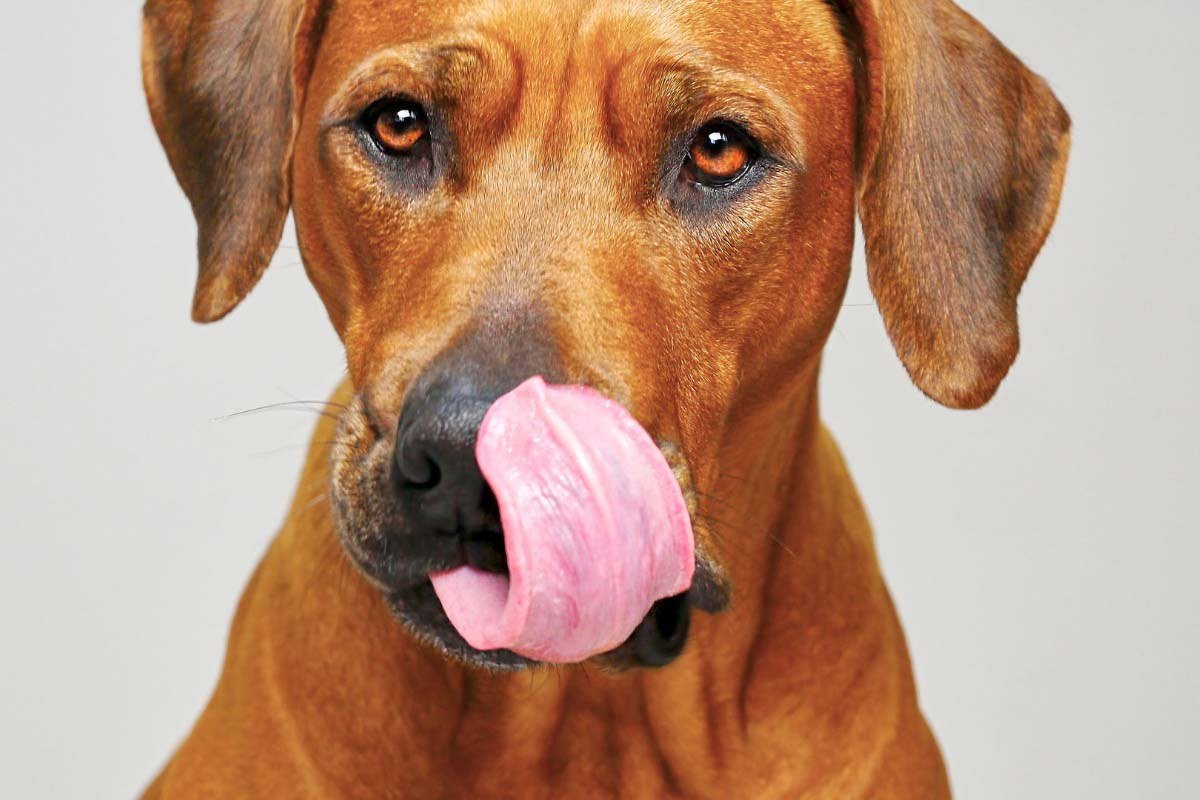
Why Does My Dog Lick His Lips? Explained
You are sitting on the sofa, and your dog keeps flicking its tongue across its lips. There is no food around, no treat in your hand, and nothing to lick. Just that quick, repeated tongue flick, over and over. If you have ever wondered why does my dog lick his lips, you are looking at one of the most useful signals a dog can give you.
Lip licking is a small movement with a big range of meanings. Sometimes it means “I smell food”. Sometimes it means “I am worried”. And sometimes it means “my stomach hurts” or “my tooth hurts”. The trick is to work out which one it is, and you can usually do that in less than a minute by looking at what else is happening around the dog.
This guide covers the eight main reasons dogs lick their lips, a 60-second check that sorts them out, and the warning signs that mean a vet visit. It also explains why some dogs lick their lips at night, and what to do when the licking never seems to stop.
Direct answer: Dogs lick their lips because the tongue flick is a multi-purpose tool. It clears food and saliva from the mouth, it spreads scent so the dog can smell better, and it is a calming signal that dogs use to say they feel uneasy. When the licking is frequent, sudden, or paired with drooling, swallowing, or restlessness, it usually means nausea, mouth pain, or stress. A quick check of the timing, the company, and the other body signs will tell you which one it is.
One thing to remember: a single lip lick is almost never a problem. It is the pattern that matters. A dog that licks its lips once after a meal is normal. A dog that licks its lips constantly for an hour is telling you something, and it deserves your attention.
Why Does My Dog Lick His Lips? The 8 Main Reasons
Dogs lick their lips for more reasons than most owners realise. Here are the eight, from the most harmless to the most serious. Most dogs have one main reason at a time, and the context usually makes it obvious which one it is.
1. Food: the simplest reason
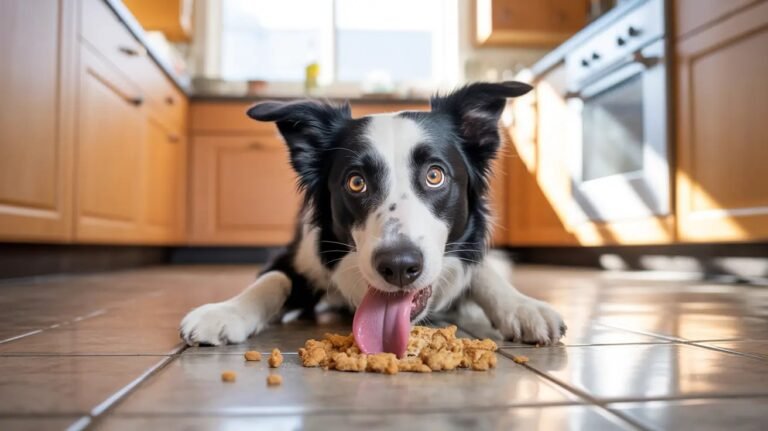
The most common reason is also the most obvious. A dog licks its lips when it smells food, sees food, or has just finished eating. The tongue clears the last bits of food from the lips and spreads saliva, which helps the dog taste and smell what is coming next.
You will see this at mealtimes, when you open a packet, or when you sit down with a snack. The licking stops once the food is gone. If your dog licks its lips only around food, there is nothing to worry about. It is just a hungry dog being a dog.
2. Calming signal: “I am uneasy, please give me space”
Lip licking is one of the calming signals that Norwegian dog trainer Turid Rugaas described in her work on dog communication. Dogs use these small signals to defuse tension and to tell other dogs, and people, that they mean no harm. A quick tongue flick is the dog equivalent of a nervous smile.
You will see this when a stranger reaches out to pat your dog, when a child hugs it too tightly, or when you scold it in a raised voice. The dog is not being guilty or sneaky. It is asking for the pressure to stop. The best response is to give it space and let it come to you.
Other calming signals often appear with lip licking. Watch for yawning, turning the head away, avoiding eye contact, and a slow, curved approach instead of a straight one. Our guide on why dogs yawn when petted explains how these signals work together.
3. Nausea: “my stomach feels bad”
Nausea is the most important medical reason for lip licking, and it is the one owners miss most. A nauseous dog licks its lips, swallows repeatedly, drools, and looks restless. It may pace, refuse food, or eat grass. The licking is the dog trying to manage the extra saliva that nausea produces.
Nausea can come from eating something wrong, from motion sickness, or from a stomach upset. It can also come from more serious causes, such as kidney disease, liver problems, or a swallowed object. The key clue is the company it keeps: lip licking plus drooling plus repeated swallowing is nausea until proven otherwise.
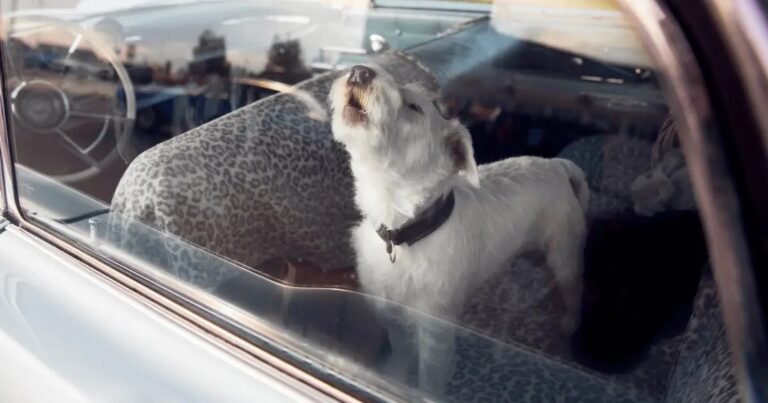
If your dog licks its lips and drools in the car, motion sickness is the likely cause. Our guide on why dogs whine in the car covers the signs and the fixes. If the nausea comes with vomiting, see the Merck Vet Manual’s guide to vomiting in dogs for the warning signs that need a vet.
4. Mouth pain: a sore tooth or something stuck
Dental disease is the most common cause of mouth pain in dogs, and lip licking is often the first sign owners notice. A cracked tooth, a loose tooth, gum disease, or a piece of stick wedged between the teeth will all make a dog lick its lips and paw at its mouth.
Watch for the extra clues. A dog with mouth pain may drop food, chew on one side only, or flinch when you touch its face. It may also drool more than usual, and the drool may be tinged with blood. Bad breath that suddenly gets worse is another sign worth checking.
Dental pain is easy to miss because dogs hide it well. Most dogs over three years old have some degree of dental disease, and many of them keep eating normally. A vet can check the teeth in a few minutes, and a dental cleaning can transform a dog that has been quietly uncomfortable for months.
5. Allergies: itchy skin, licked lips
Allergies can make a dog lick its lips, though the link is less direct than the others. A dog with allergies often has an itchy mouth and face, and it licks its lips as part of a bigger pattern of licking: paws, belly, and ears as well. The lips are just one part of the itch.
Food allergies and environmental allergies, such as pollen and dust mites, are the two main types. A dog with allergies may also have red paws, ear infections that keep coming back, and a rash on the belly. If the lip licking comes with any of those signs, allergies are worth discussing with your vet.
Never give your dog human allergy medicine without a vet’s advice. Some antihistamines are safe for dogs, and some are not, and the dose depends on the dog’s weight. Our dog Benadryl calculator can help you check a vet-prescribed dose, but the vet should always decide what your dog takes.
6. Seizures and neurological causes: rare, but important
In rare cases, lip licking can be a sign of a neurological problem. Some dogs have focal seizures that show up as lip licking, fly biting, or staring into space. Fly biting is when a dog snaps at imaginary flies that are not there. It looks strange, and it is often mistaken for a behaviour problem.
The key difference is awareness. A dog having a focal seizure may seem distant or confused, and it may not respond to its name. The episode usually lasts seconds to a minute, and the dog may seem tired or confused afterwards. If you see lip licking with staring, snapping at nothing, or sudden confusion, film it on your phone and show your vet.
Do not try to diagnose this yourself. Neurological causes are uncommon, but they need a vet’s tests to confirm or rule out. A video of the episode is the single most useful thing you can bring to the appointment.
7. Settling down: a self-soothing habit
Some dogs lick their lips as they settle down to sleep, almost like a person sighing before bed. It is a self-soothing habit, and it is most common in puppies that were weaned early. The licking is slow, relaxed, and paired with a soft body and half-closed eyes.
This kind of licking is normal and needs no fix. It is the dog’s way of winding down, and it usually stops once the dog is asleep. If the licking is relaxed and the dog is comfortable, let it be.
8. Toxins and irritants: something tasted bad
A dog that has licked something bitter or irritating will lick its lips to clear the taste. Cleaning products, bitter sprays, certain plants, and some medicines can all cause a burst of lip licking. The dog may also drool, paw at its mouth, or rub its face on the floor.
This usually passes in a few minutes. If the licking continues, or if the dog vomits, trembles, or seems unwell, call your vet or an animal poison helpline at once. Keep the product packaging if you can, because the vet will want to know exactly what the dog tasted.
The 60-Second Check: Which Reason Is It?
You do not need to be a vet to narrow this down. Run this check the next time your dog starts licking its lips. Look at the timing, the company, and the other signs, and match what you see to a row.
| What you see | Most likely reason | What to do first |
|---|---|---|
| Licking only around food, stops when food is gone | Normal food anticipation | Nothing — this is normal |
| Quick tongue flicks when a stranger approaches or you raise your voice | Calming signal / stress | Give space; remove the pressure |
| Licking with drooling, repeated swallowing, restlessness | Nausea | Withhold food for a few hours; see a vet if it lasts more than a day |
| Licking with pawing at the mouth, dropping food, bad breath | Mouth pain or dental disease | Book a vet dental check |
| Licking with itchy paws, red belly, recurring ear infections | Allergies | Ask your vet about an allergy work-up |
| Licking with staring, fly biting, or confusion | Possible neurological cause | Film it and see a vet promptly |
| Slow licking while settling down to sleep, relaxed body | Self-soothing habit | Nothing — this is normal |
| Sudden licking after tasting something, with drooling | Irritant or toxin | Rinse the mouth if safe; call your vet if it continues |
One row will usually fit far better than the others. If two rows fit, start with the medical one, because nausea and mouth pain are the two that get worse if you wait. If you are ever unsure, a vet visit is cheaper than a missed diagnosis.
What to Do When the Licking Will Not Stop
If the 60-second check points to stress, the fix is to change the situation, not the dog. Work out what triggers the licking: visitors, loud noises, being hugged, or a particular dog at the park. Then give your dog more space in those moments. A dog that can walk away from pressure will lick its lips far less than a dog that feels trapped.
Build your dog’s confidence with short, positive experiences. A five-minute training session with treats, a sniffy walk in a quiet place, and a safe resting spot at home all help a nervous dog feel more secure. Exercise helps too: a tired dog is a calmer dog. Our dog exercise calculator can help you work out the right amount for your dog’s age and breed.
If the check points to nausea, keep it simple. Withhold food for a few hours, offer small amounts of water, and then try a bland meal of boiled chicken and rice. If the dog keeps the meal down and the licking stops, the stomach has probably settled. If the vomiting or licking continues for more than a day, or if the dog will not drink, see a vet.
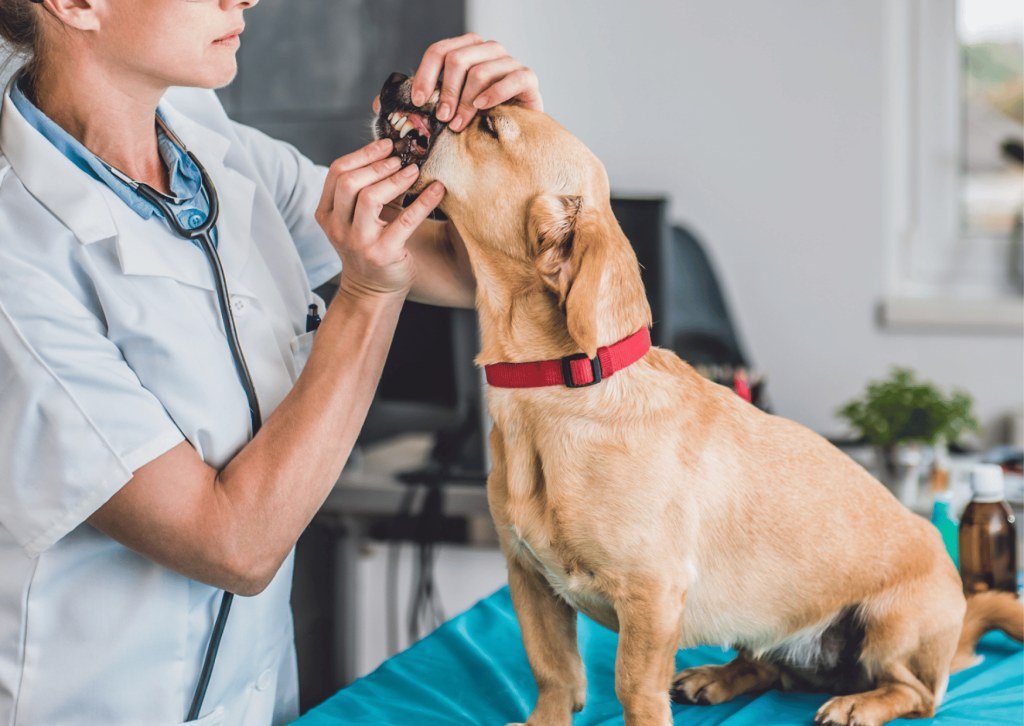
If the check points to mouth pain, do not wait. Dental pain does not get better on its own, and a dog that is quietly in pain will eat less, play less, and lick its lips more. A vet dental check is quick, and it can find a cracked tooth or an infection that has been hurting for weeks.
Keep a simple lick log for a week if the cause is not clear. Note the time, what was happening, and what else you saw. Patterns show up fast in a log: always at night, always after meals, always when visitors come. Bring the log to your vet, because it turns a vague worry into useful information.
When Lip Licking Means See a Vet
Most lip licking is harmless, but some patterns need a vet. See a vet the same day if the licking comes with vomiting, diarrhoea, a swollen belly, or signs of pain. See a vet promptly if the licking is sudden, constant, and new, especially if your dog is also off its food.
Book a routine check if the licking has been going on for more than a week, even if your dog seems fine otherwise. A slow build-up of dental disease, a low-grade stomach problem, or an allergy can all hide behind a small habit for months. Early checks are always easier than late ones.
Call your vet at once if you think your dog has eaten something toxic. Do not wait for symptoms to appear, and do not try to make your dog vomit unless the vet tells you to. Some substances cause more harm coming back up than they do going down.
If your dog also licks the floor, that is a related habit worth understanding. Our guide on why dogs lick the floor explains the link between floor licking and stomach problems, and when it means a vet visit.
Medication can also play a part. Some drugs cause nausea or a dry mouth, and both can trigger lip licking. If the licking started soon after a new medicine, tell your vet. Our dog medication calculator can help you double-check a prescribed dose by weight, but only the vet should change a prescription.
Frequently Asked Questions
Why does my dog keep licking his lips and swallowing at night?
Night-time lip licking with swallowing often points to acid reflux, the same heartburn that wakes people up at night. When a dog lies flat, stomach acid can creep up into the throat, and the dog licks and swallows to clear it. You may also hear gulping, or see the dog lick the air or the bedding.
A late evening snack can help, because a small amount of food in the stomach reduces acid, but do not feed a full meal right before bed. If it happens most nights, ask your vet about it, because reflux that goes on for weeks can irritate the throat and needs treatment, not just a snack.
Why does my dog lick his lips after drinking water?
This is usually normal. A dog that has just drunk a lot of water licks its lips to clear the water and to swallow the last drops. It is the same as a person licking their lips after a drink. It becomes worth checking only if the licking is excessive, if the dog drinks far more water than usual, or if the water dribbles out of the mouth.
A dog that drinks a lot and licks its lips constantly may be very thirsty because of an underlying problem, such as kidney disease or diabetes, and that is worth a vet check and a look at its daily water needs.
Do puppies lick their lips more than adult dogs?
Yes, puppies often do, for two reasons. First, puppies explore the world with their mouths, and lip licking is part of that exploring. They lick new tastes, new smells, and new people, and they lick their lips when they are unsure. Second, a puppy’s calming signals are less refined, so the tongue flick shows up more often.
Most puppies grow out of the extra licking as they gain confidence. The exception is a puppy that licks its lips constantly and also has loose stools or poor growth, which needs a vet check rather than patience.
Can anxiety medication stop lip licking?
It can help, but only when anxiety is the proven cause and only as part of a bigger plan. Anti-anxiety medication lowers the dog’s overall stress level, which can reduce stress-based lip licking, but it does not teach the dog to cope with the things that scare it. The medication works best alongside behaviour work: gradual exposure to the trigger, a safe resting place, and a predictable routine.
Never start anxiety medication without a vet, and never stop it suddenly, because some of these drugs need to be reduced slowly. A vet can also check that the licking is really anxiety, and not nausea or mouth pain wearing an anxiety disguise.
Why does my dog lick his lips after licking something bitter?
A bitter or unpleasant taste triggers an automatic lip-licking reflex. The tongue flicks to clear the taste from the mouth, and the dog may also drool, smack its lips, or rub its face on the floor. Bitter apple sprays, cleaning products, some plants, and certain medicines all cause this. It usually passes in a few minutes once the taste is gone.
Offer a small drink of fresh water to help clear it, but do not force water into the mouth. If the licking lasts more than an hour, or if the dog vomits or seems unwell, call your vet, because some household products are toxic even in small amounts.
Lip licking is one of the smallest signals your dog gives you, and one of the most useful. Learn the 60-second check, watch the company the licking keeps, and you will know within a minute whether your dog is hungry, worried, nauseous, or in pain. That minute of attention is worth more than a hundred guesses.