Can Mice Eat Cheese? The Myth, the Truth, the Risks
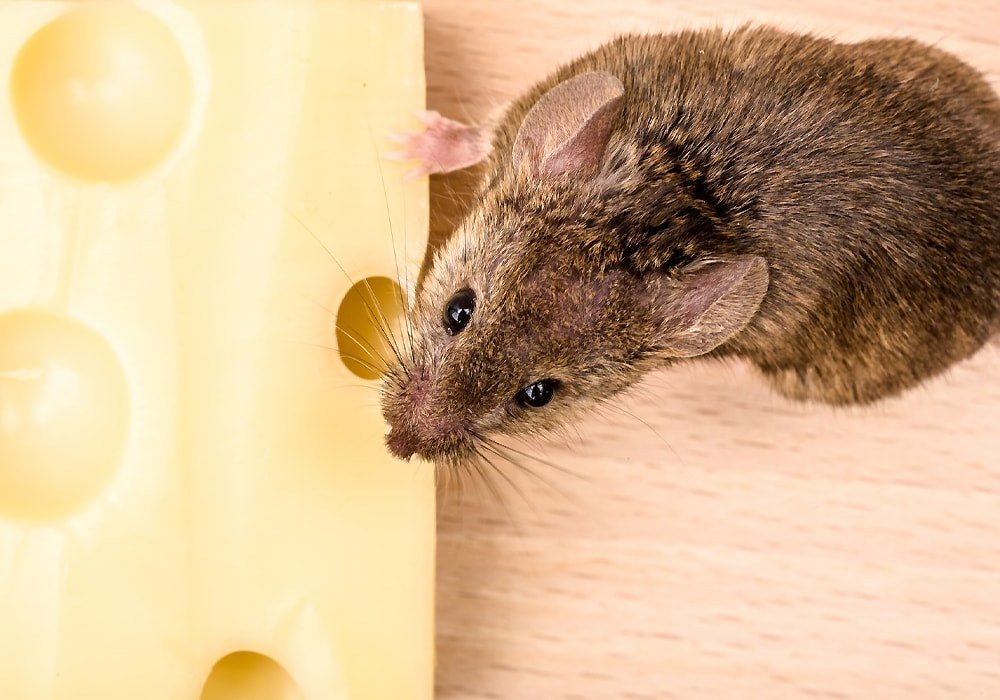
Every cartoon says the same thing. A mouse sees a wedge of cheese, its eyes go wide, and it rushes over for a feast. So when you are eating lunch and your pet mouse is watching from its cage, the question feels obvious: can mice eat cheese, and would they even want it?
Direct answer: Yes, mice can eat cheese, but they should not eat it often — and most mice do not even like it. A tiny nibble of mild cheese, about the size of a pea, once a week at most, is safe for a healthy adult mouse. Cheese is high in fat and salt, and many adult mice cannot digest lactose well. It should never be a regular food, and strong-smelling cheeses should be avoided altogether.
The real story is more interesting than the cartoon. Mice are not cheese lovers. Given a choice, they pick grains, seeds, and sweet foods over cheese almost every time. The cheese myth comes from history, not from biology. And the mice in your home are not the mice in the cartoons.
This guide sorts out the myth from the facts. It explains why mice do not crave cheese, which cheeses are safest if you do offer a nibble, how much is too much, and what treats your mouse will actually love instead. It also covers the foods that are genuinely dangerous for mice, so you can keep your pet safe.
Can mice eat cheese?
Yes, in the narrow sense. Cheese is not poisonous to mice. A mouse that eats a small piece of cheese will not be poisoned by it, the way a mouse would be poisoned by chocolate. The cheese will be digested, and the mouse will most likely be fine. That is the whole of the yes.
But “can eat” is the wrong question. The right question is “should mice eat cheese?” And the answer to that is: almost never. Cheese is a poor food for a mouse in three ways. It is high in fat, which leads to weight gain in a tiny animal that only weighs 20 to 40 grams. It is often high in salt, which mice do not need. And it contains lactose, the sugar in milk, which many adult mice cannot digest properly.
Most adult mammals, mice included, produce less of the enzyme lactase after they are weaned. Lactase is what breaks down lactose. Without enough of it, cheese can cause soft droppings, diarrhoea, and a sore stomach. A small nibble is unlikely to cause trouble. A regular helping of cheese can cause real digestive problems, and in a tiny animal, diarrhoea can lead to dehydration fast.
There is also the question of what cheese replaces. A mouse has a tiny stomach and a small daily appetite. Every crumb of cheese it eats is a crumb of proper food it did not eat. The base of a pet mouse’s diet should be a good-quality rodent block or pellet, with fresh vegetables and the occasional fruit. Treats should be less than 5 percent of the diet, given two or three times a week at most. Cheese does not earn its place in that small treat allowance, because it gives your mouse fat and salt and very little it actually needs.
So the honest verdict is this: cheese is safe as a rare, tiny treat, and a bad idea as a regular food. If your mouse steals a crumb, do not panic. If you are offering cheese every day, stop, and offer something better instead.
Where the cheese myth comes from
The idea that mice love cheese is one of the oldest food myths in the world. It is so old that nobody knows exactly where it started, but historians have a good guess. For most of human history, cheese was stored at room temperature, on shelves and in larders, often uncovered or wrapped only in cloth. Grains and flour were stored in sealed jars and bins, because they were valuable and easy to protect.
Mice are opportunistic feeders. They eat what they can reach. In a medieval kitchen, the cheese on the shelf was often the easiest food to reach, so mice ate it — not because they loved it, but because it was there. People saw mice eating cheese again and again, and the association stuck. Cheese became the mouse food in stories, songs, and later cartoons.
The cartoon sealed the myth. From Tom and Jerry onwards, the mouse and the wedge of cheese became a visual shorthand. A child who has never seen a real mouse still knows that mice eat cheese, because the cartoons say so. The image is so strong that even mousetrap makers used it: for decades, traps were sold with a picture of a cheese wedge on the box, even though pest controllers knew peanut butter worked far better as bait.
Science caught up in 2006, when Dr David Holmes of Manchester Metropolitan University reviewed the research on mouse feeding behaviour. His conclusion made the news at the time: mice are not attracted to cheese, and they actively avoid strongly scented foods when better options are available. House mice are granivores by evolution — seed eaters, adapted to grasslands and farms. Their senses are tuned to grains, seeds, and sweet foods, not to dairy.
The strong smell of aged cheese, which humans find appetising, is a warning signal to a mouse. Mice rely on their sense of smell to judge whether food is safe. Fermented, pungent smells can signal food that has gone off, or food that may be toxic. So the very smell that makes a cheese exciting to us can put a mouse off entirely.
Why mice do not actually prefer cheese
Wild mice eat mostly seeds, grains, and fruits. The house mouse, Mus musculus, evolved in grasslands and farm fields, where seeds are the main food. A wild mouse’s diet is high in carbohydrate, with some protein from insects and the occasional scrap of meat. Cheese does not appear in it at all, because cheese is a human food, and wild mice rarely meet it.
When mice move indoors, they stay opportunistic. They will eat almost anything they find, from crumbs under the toaster to pet food left in a bowl. But given a choice, they still pick the same things: grains, seeds, sweet foods, and fatty foods like nuts and peanut butter. In bait tests, peanut butter beats cheese by a wide margin, and chocolate beats cheese too. Cheese sits near the bottom of the preference list, not the top.
The biology explains why. A mouse’s metabolism is fast, and it needs energy-dense food. Seeds and grains give a lot of energy for their size, and they store well — which matters, because mice hoard food. Cheese is energy-dense too, but it brings fat and salt with it, and the lactose problem on top. A mouse’s body simply is not built to get much from dairy.
There is also a texture problem. Soft, sticky cheeses can be hard for a mouse to chew and swallow. Mice have small mouths and small teeth, and a gooey piece of fresh cheese can stick to the roof of the mouth. That is not just uncomfortable. In a very small animal, a sticky mouthful can be a choking risk. Hard cheeses are easier to gnaw, but they are also the saltiest.
None of this means your pet mouse will refuse cheese. Some mice will eat it happily, especially if they are hungry or if it is the only treat on offer. But a mouse that eats cheese is not a mouse that loves cheese. It is a mouse that eats what is in front of it. Offer the same mouse a sunflower seed and a piece of cheese side by side, and the seed will win almost every time.
Which cheeses are safest, and which to avoid
If you do want to offer your mouse a tiny taste of cheese, the type matters. Mild, plain cheeses are the safest. Strong, aged, and flavoured cheeses are the ones to skip. The table below ranks the common cheeses by how suitable they are for a mouse.
| Cheese | Safe for a tiny nibble? | Why |
|---|---|---|
| Mild mozzarella | Yes — the safest choice | Low salt, mild smell, soft but not sticky |
| Mild cheddar (small piece) | Yes, in tiny amounts | Familiar and palatable, but higher in fat and salt than mozzarella |
| Colby or Monterey Jack | Yes, in tiny amounts | Mild smell, low lactose for a cheese, easy to gnaw |
| Cottage cheese (plain, low fat) | Yes, a crumb only | Low fat, but soft and wet, so offer very little |
| Sharp cheddar, Parmesan | Best avoided | Strong smell puts mice off, and very high in salt |
| Blue cheese, Stilton, Gorgonzola | No — do not feed | Strong smell, mould cultures, and high salt; mice avoid these |
| Processed cheese slices | No — do not feed | Full of salt, additives, and oils; no nutritional value |
| Vegan cheese | No — do not feed | Often made with walnuts, rhubarb, or other ingredients that are toxic to mice |
The portion rule is simple. A piece about the size of a pea, once a week at most, is the absolute maximum. For a mouse, that is already a large treat. A pea-sized piece is roughly 1 to 2 percent of a mouse’s body weight, which is like a human eating a whole block of cheese in one sitting.
Watch your mouse after the first taste. If its droppings go soft, or it seems uncomfortable, do not offer cheese again. Every mouse is different, and some are more sensitive to lactose than others. If your mouse has a health problem, is very young, or is overweight, skip cheese entirely. There is no benefit that is worth the risk.
One more warning: never leave cheese in the cage. A piece of cheese left uneaten will go soft, attract flies, and grow mould within a day. Remove any uneaten treat after a couple of hours, and clean the cage area. Fresh food is a treat. Old food is a health hazard.
What treats mice actually love instead
The good news is that mice have excellent taste in treats, and the foods they love are also the foods that are good for them. You do not need cheese to make your mouse happy. You need a small handful of seeds, a piece of fruit, and a little variety.
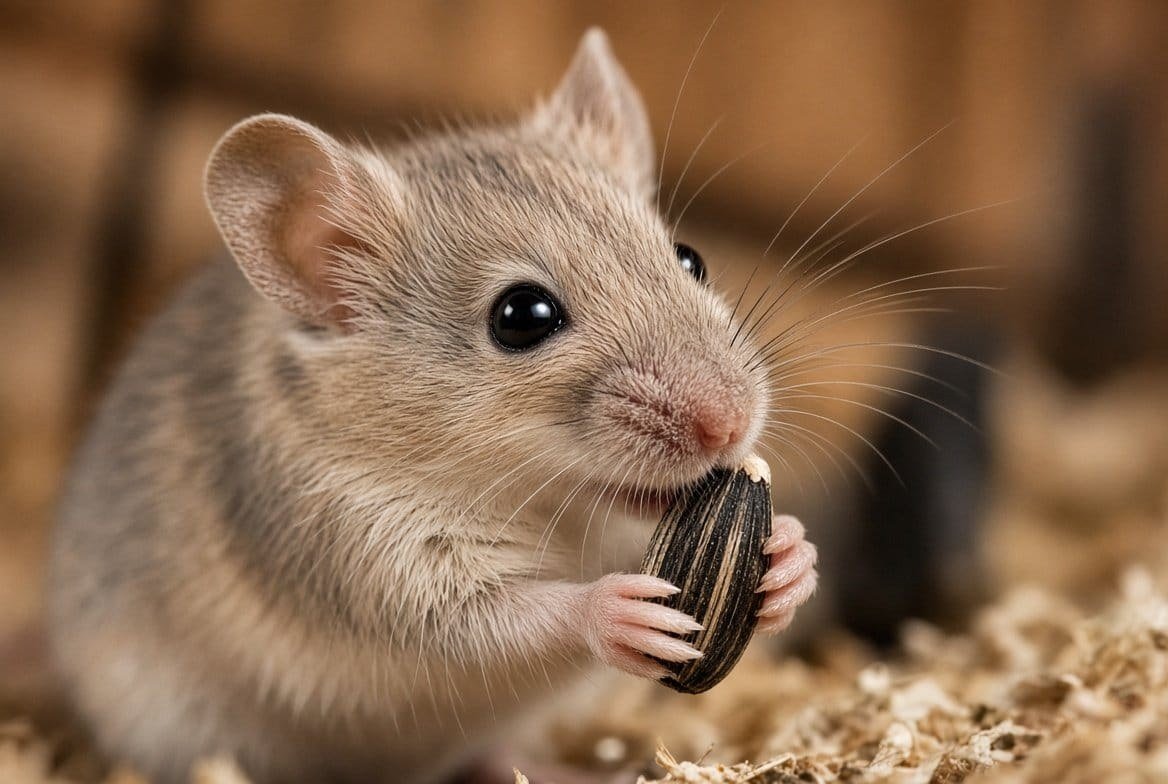
Seeds are the top choice. A single sunflower seed, a pumpkin seed, or a few millet seeds will excite most mice far more than any cheese. Seeds are also natural for them: wild mice spend their lives collecting and storing seeds. Offer one or two seeds at a time, two or three times a week, as a training reward or an enrichment treat. Do not offer a whole bowl of seeds, because mice will pick out the tastiest pieces and leave the rest, which leads to an unbalanced diet.
Fresh vegetables are the everyday treat. Small pieces of broccoli, carrot, cucumber, bell pepper, or dark leafy greens like romaine can be offered daily in small amounts. Avoid iceberg lettuce, which is mostly water and has little nutrition. Wash everything first, and cut it small enough for a mouse to hold in its paws.
Fruit is a sweet treat for once or twice a week. A tiny piece of apple, banana, blueberry, or melon is a good choice. Fruit is high in sugar, so keep the piece small — about the size of a pea. Dried fruit is more concentrated, so offer even less, or skip it altogether.
Protein treats are a good option too. A tiny piece of boiled egg, a mealworm, or a small piece of cooked plain chicken can be offered once a week. These are closer to what a wild mouse eats, and they give your mouse nutrients that seeds alone do not provide.
If you want a rough guide to how much food a small rodent needs, the site’s hamster food calculator and guinea pig food calculator show portion sizes for other small pets. There is no mouse food calculator on the site yet, so these are the closest guides we have — use them as a rough sense of scale, not as a mouse-specific prescription, and always check with your exotic vet if you are unsure.
Foods mice must never eat
Cheese is a poor choice, but it is not dangerous. Some foods are genuinely dangerous for mice, and every mouse owner should know them. The list is short, and it is worth learning by heart.
Chocolate is toxic to mice and must never be fed. Even a small amount can cause serious illness. The same goes for cocoa products and anything containing chocolate. Keep chocolate out of the room where your mice live, not just out of their cage, because mice are excellent at finding dropped crumbs.
Onion and garlic are also toxic. They damage red blood cells in mice, just as they do in dogs and cats. Do not feed onion, garlic, leeks, or chives in any form — raw, cooked, or powdered. The same warning applies to rhubarb, which is poisonous to mice, and to raw beans, which contain toxins that cooking does not always remove.
Human junk food is not toxic, but it is still harmful. Cookies, chips, ice cream, and anything high in sugar, salt, or fat will make your mouse gain weight and can lead to tooth problems, heart problems, and a shorter life. A vet quoted by Chewy put it plainly: ten sunflower seeds to a mouse is like a child eating cupcakes for lunch. The volumes look small to us. To a mouse, they are huge.
Alcohol is obviously off limits, and so is caffeine. Do not let your mouse near coffee, tea, energy drinks, or alcohol of any kind. Even a tiny amount can be dangerous for an animal that weighs less than a small egg.
When in doubt, the rule is simple: if it is not a rodent pellet, a fresh vegetable, a small piece of fruit, a seed, or a plain protein treat, do not feed it. And if your mouse eats something you are unsure about, watch it closely for a day, and call your exotic vet if it stops eating, has soft droppings, or seems unwell.
The American Fancy Rat and Mouse Association’s mouse questions page gives clear, old-school advice on what mice can and cannot eat, and the Merck Veterinary Manual’s rodents section covers mouse health and nutrition in depth. For a related food question in a different rodent, see our guides to whether rats can eat grapes and whether chinchillas can eat raisins.
Frequently asked questions
Can I use cheese as bait in a mouse trap?
You can, but it is a poor choice. Pest controllers have known for years that peanut butter beats cheese as trap bait by a wide margin. Mice prefer foods that are high in fat, sugar, and strong smell — peanut butter, chocolate, and dried fruit all work better than a cube of cheddar. If you are using a humane catch-and-release trap, a small dab of peanut butter or a piece of chocolate will catch a mouse far faster than cheese. Just remember to check a live trap at least twice a day, and release the mouse well away from your home.
Can baby mice eat cheese?
No, baby mice should not eat cheese. Baby mice need their mother’s milk, or a proper milk replacer if they are orphaned. Their guts are even more sensitive to lactose than an adult’s, and solid food of any kind is too much for them until they are about three weeks old. If you find an orphaned baby mouse, do not feed it cheese, cow’s milk, or bread. Keep it warm, and contact a wildlife rescue or an exotic vet the same day. Orphaned mice need specialist care, and the first 24 hours matter most.
Can mice eat vegan cheese?
No, vegan cheese is not a safe swap. Many vegan cheeses are made from nuts, soy, or root vegetables, and some contain walnuts or rhubarb, both of which are toxic to mice. Others are full of salt, oil, and flavourings that a mouse does not need. The fact that a food is plant-based does not make it safe for a mouse. If you want a dairy-free treat for your mouse, offer a piece of fruit or a seed instead. They are safer, cheaper, and your mouse will like them more.
Can rats eat cheese too?
Rats can eat a tiny bit of cheese in the same way mice can, and the same warnings apply: high fat, high salt, and lactose. Rats are bigger than mice, so a pea-sized piece is a smaller share of their diet, but cheese is still a poor treat for them. Rats, like mice, prefer seeds, grains, and fruit. If you keep both rats and mice, do not assume a food that is fine for one is automatically fine for the other — rats and mice have different nutritional needs, and rats are more prone to certain health problems from fatty foods.
Can mice eat cheese rind?
No, do not feed your mouse the rind of a cheese. The rind is the hardest, saltiest part, and on soft cheeses it often carries mould cultures that are not safe for a small animal. Hard cheese rinds are also tough to chew and can be a choking risk for a mouse. If you are offering a tiny piece of mild cheese at all, cut it from the middle of the cheese, not the edge, and throw the rind away.