Why Does My Dog Not Eat When I Am Not Home?
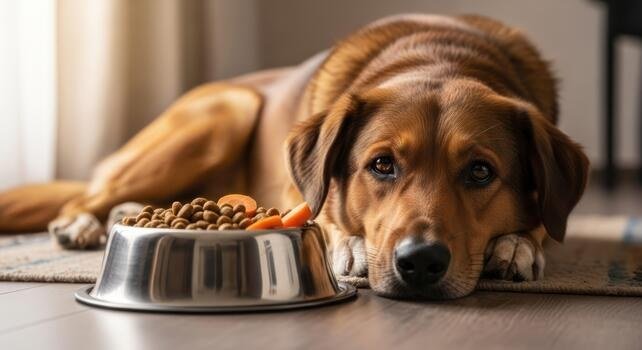
You fill the bowl, put it down, and leave for work. Eight hours later you come home and the bowl is exactly as you left it. Your dog has not touched a single piece of kibble. If you have ever asked why does my dog not eat when I am not home, you are not alone, and the answer is usually simpler than it looks.
Most dogs that skip meals when alone are not being picky. They are stressed, distracted, or waiting for you. Food drops down their list of priorities when their person disappears. Once you understand which of those it is, the fix is usually straightforward.
This guide covers the five main reasons dogs refuse food when alone, a simple test that tells you which reason fits your dog, and a two-week plan that teaches most dogs to eat happily on their own. It also covers the warning signs that mean a vet visit instead of a training plan.
Direct answer: Dogs usually do not eat when their owner is not home because the absence itself puts them off food. Separation anxiety is the most common cause, followed by a learned habit of only eating while you watch, and a dog that is too busy guarding the house to settle down and eat. Medical causes are less common but must be ruled out first, because a dog that will not eat even when you are home needs a vet, not a training plan.
The one rule that matters most: never punish a dog for not eating. Refusing food is communication, not defiance. Pressure at mealtimes makes the anxiety worse, and the bowl will stay fuller for longer.
Why Does My Dog Not Eat When I Am Not Home? The 5 Main Reasons
A dog that eats happily when you are in the room but ignores the same food when you leave is telling you something about how it feels, not about the food. Here are the five reasons, from most common to least common. Most dogs have one main reason, and a few have two working together.
1. Separation anxiety: too stressed to eat
Separation anxiety is the most common reason a dog skips meals when alone. The dog is not choosing to fast. Its body is in a stress state, and a stressed body shuts down appetite. The same thing happens to people who cannot eat before a big exam.
The signs go beyond the full bowl. An anxious dog may pace, pant, drool, whine, or bark in the minutes after you leave. Some dogs scratch at doors or windows, and some have accidents in the house even though they are fully house trained. The food refusal is one symptom in a bigger pattern.
Separation anxiety is not a puppy problem only. It can start at any age, and it often starts after a change: a house move, a new work schedule, a family member leaving, or a stay in kennels. A dog that ate fine alone for years can stop eating alone after one stressful event.
The key clue is timing. If your dog eats normally when you are home, eats when a family member is home, but leaves food untouched only when the house is empty, anxiety is the likely cause. The ASPCA’s guide to separation anxiety in dogs explains the full range of signs and the slow desensitisation approach that works best.
2. Learned supervised eating: food only counts when you watch
Some dogs have simply learned that meals happen with their person nearby. This often starts in puppyhood, when owners sit with the puppy, praise it for eating, and hand-feed treats. The dog links eating with your presence, and without you there, the meal never quite starts.
These dogs are not anxious. They wait calmly by the door, or they sleep through your absence, and they eat the moment you walk back in. The bowl is still full at 6 p.m., and it is empty by 6.15 p.m. That pattern is the giveaway.
This is the easiest cause to fix, because nothing is wrong with the dog. It just needs to relearn that the bowl is the cue to eat, not you. The two-week plan later in this guide is built for exactly this dog.
3. Guard mode: too busy watching the house to eat
Some dogs switch into guard duty the moment you leave. They sit by the front door, watch the window, and listen for every sound outside. A dog in guard mode is alert, not relaxed, and alert dogs do not eat. Food can wait, because in the dog’s mind, the house needs watching first.
This is common in breeds bred to guard, such as German Shepherds, Rottweilers, and Dobermans, but any dog can do it. The clue is where your dog spends the time. If it camps by the door or window and only relaxes when you return, it is guarding, not starving.
Guard-mode dogs often eat late at night, once the house is quiet and the day’s noises have stopped. They may also eat better from a bowl placed away from the front door, in a quiet back room where there is nothing to watch.
4. Routine disruption: the schedule broke
Dogs are creatures of habit, and mealtimes sit at the centre of their daily routine. If you change when you feed them, where you feed them, or who feeds them, some dogs stop eating until the routine feels normal again. The food is the same, but the pattern around it has changed.
This often happens after a house move, a new job with different hours, or a holiday. It also happens when a dog is fed at a different time on weekdays and weekends. The dog waits for the familiar pattern, and when it does not come, it skips the meal.
Routine dogs usually settle within a week or two once the new schedule is consistent. The fix is boring but effective: same time, same place, same bowl, every single day, including weekends.
5. A medical problem: the least common, but the one to check first
Illness can kill appetite, and it is the one cause you must rule out before you start training. Dental pain, nausea, stomach pain, kidney disease, and medication side effects can all make a dog refuse food. The difference is that a sick dog usually eats poorly even when you are home.
Watch for the extra signs. A dog that is sick may drink less, sleep more, vomit, have loose stools, or lose weight. It may take food into its mouth and drop it, or chew on one side only, which points to a sore tooth. Any of these signs means a vet visit, not a new feeding plan.
If your dog eats well when you are home and only skips meals when alone, illness is unlikely. But if the appetite is dropping at home too, or the dog has gone more than a day without eating anything, call your vet. A dog that will not eat at all for 24 hours needs to be seen.
The 5-Minute Test: Which Reason Fits Your Dog?
You do not need to guess which reason fits your dog. Run this test over two or three days. Watch what your dog does in the minutes after you leave, and match it to a row in the table. One row will fit far better than the others.
| What you see | Most likely reason | First step |
|---|---|---|
| Dog paces, pants, whines, or scratches at the door after you leave | Separation anxiety | Start the gradual-absence plan below; ask your vet about calming support |
| Dog sleeps calmly, then eats the whole bowl the moment you return | Learned supervised eating | Use the two-week plan; feed in a quiet spot and leave the room |
| Dog camps by the front door or window and ignores the bowl | Guard mode | Move the bowl to a quiet back room; block the view of the street |
| Dog stopped eating after a move, new job, or schedule change | Routine disruption | Fix one feeding time and place and keep it identical every day |
| Dog picks at food or drops it even when you are home | Possible medical cause | See a vet before any training |
| Dog eats treats and chews but leaves its regular meals | Food value or pickiness | Raise the value of the meal; stop topping up with treats |
| Dog eats alone at a sitter’s house but not at home | Home-specific stress or habit | Change the feeding spot at home; check for noises that startle it |
If two rows fit, start with the one that matches the strongest sign. Anxiety and learned habits often travel together, and the two-week plan helps both. If the medical row fits at all, see the vet first.
The 2-Week Plan That Teaches Your Dog to Eat Alone
This plan works for most dogs, because it changes the dog’s feelings about eating alone, one small step at a time. It does not use force, and it does not starve the dog into eating. Go at your dog’s pace. If a step causes stress, stay on the previous step for a few more days.
Week one is about breaking the link between your presence and the meal. Put the bowl down, then step into the next room for two minutes while your dog eats. Come back calmly, without fuss. Do this at every meal. The dog learns that the food is there whether you are watching or not.
Gradually stretch the time away. Five minutes, then ten, then twenty. Stay in the house, but out of sight. Do not sneak back to check, because the sound of your footsteps teaches the dog to listen for you instead of eating. If the dog stops eating when you leave the room, go back to the last distance that worked.
By the end of week one, most dogs will eat with you in another room. That is the hardest part done. Week two is about real absences. Leave the house for five minutes, then ten, then thirty. Put the food down five minutes before you leave, so the dog starts eating while you are still there and continues after you go.
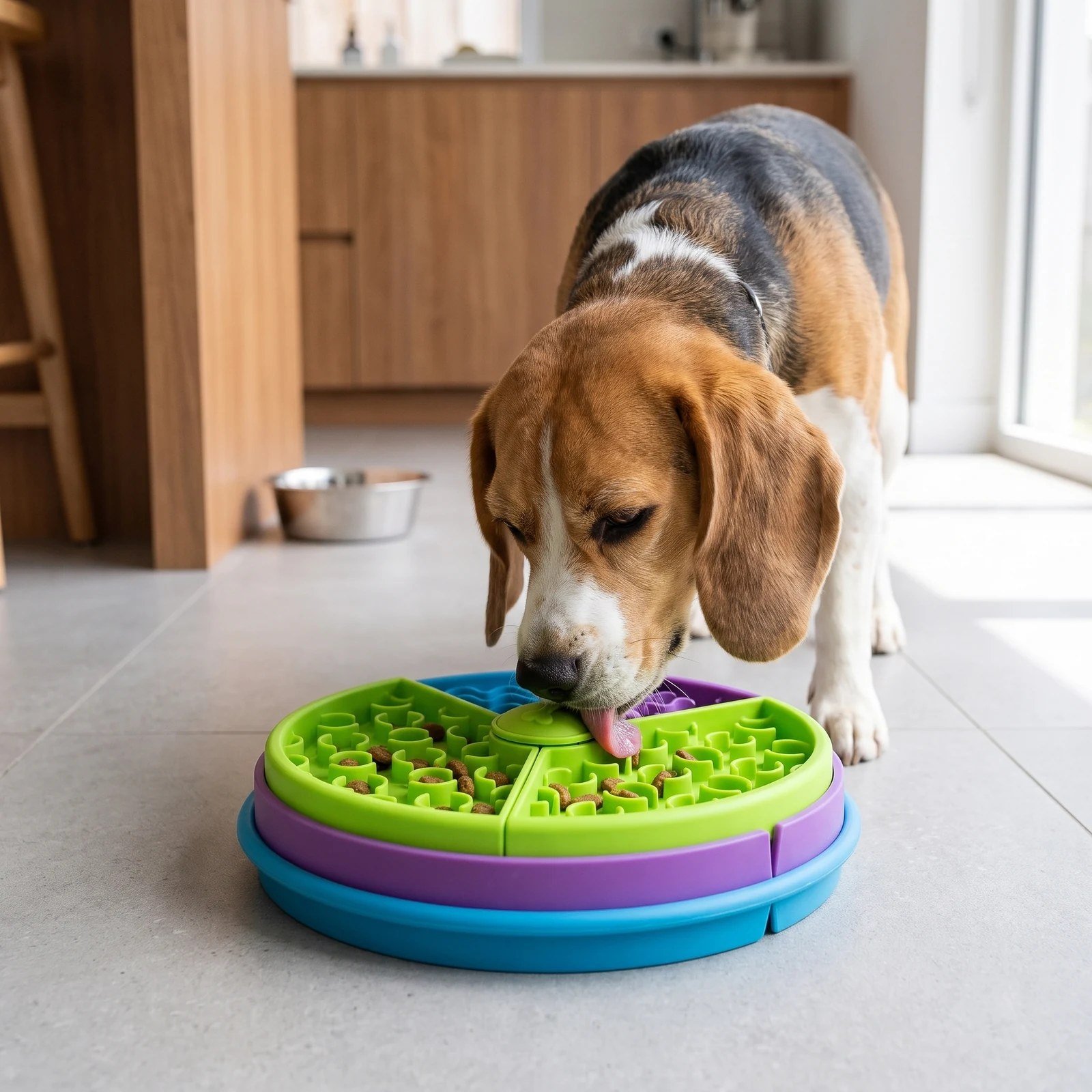
Use a puzzle feeder or a food-dispensing toy for at least one meal a day. A Kong stuffed with kibble and a smear of peanut butter turns a meal into a game, and a dog that is playing with its food is not thinking about your absence. It also slows down fast eaters and keeps the dog busy for the hardest part of the day, the first half hour after you leave.
Keep departure cues boring. Pick up your keys, put on your coat, and leave without a long goodbye. A big farewell tells the dog that something important is happening, and that raises stress. A calm, dull departure tells the dog that leaving is normal and you will be back.
For dogs with real separation anxiety, this plan alone may not be enough. They may need a vet’s help with calming medication while they learn, and a certified behaviourist to design a proper desensitisation programme. That is not a failure. Anxiety is a medical problem, and it deserves medical help.
Feeding Routines That Make Eating Alone Easier
A few simple changes to how you feed can make a big difference. Start with timing. Feed your dog at the same times every day, including weekends. Dogs that can predict their meals relax, and relaxed dogs eat. The AKC’s guide to how often dogs should eat covers the right number of meals by age, and the dog food calculator can work out the right portion for your dog’s weight and activity level.
Feed two meals a day, not one. A dog that skips one meal still has a second chance to eat, and two smaller meals are easier on the stomach than one large one. If your dog skips breakfast, do not leave the bowl out all day. Pick it up after twenty minutes and offer it again at the next meal. Food that sits out all day loses its value, and it can attract pests.
Make the meal worth eating. Warm the kibble slightly with a splash of warm water, or mix in a spoonful of wet food. A warm, smelly meal is far more appealing than cold, dry kibble. Check the portion too: our dog calorie calculator shows whether your dog is getting the right amount for its size, because an overfed dog has no reason to eat promptly.
Choose the feeding spot carefully. A quiet corner away from the front door and away from noisy appliances is best. Some dogs eat better in a crate with the door open, because the enclosed space feels safe. Others eat better in the room where they sleep. Watch where your dog chooses to settle, and put the bowl there.
Do not add new foods every day to tempt the dog. A dog that learns that refusing kibble brings chicken will keep refusing kibble. If you do add a topper, keep it the same every day, so it becomes part of the routine rather than a reward for holding out.
Keep exercise in the routine too. A dog that has had a good walk before you leave is calmer, more tired, and more likely to eat. A short morning walk plus a puzzle feeder is one of the most reliable combinations for a dog that will not eat alone. Our dog exercise calculator can help you work out how much activity your dog needs each day.
When Not Eating Alone Means See a Vet
Most dogs that skip meals when alone are healthy, but some are not. See a vet promptly if your dog has eaten nothing at all for more than 24 hours, or if it is drinking much less than usual. Puppies, small breeds, and dogs with diabetes should be seen even sooner, because they can become dangerously low in blood sugar.
See a vet the same day if the food refusal comes with vomiting, diarrhoea, a swollen belly, or signs of pain. A dog that cries when you touch its belly, or that stands hunched and will not lie down, needs urgent care. The same applies if your dog is drooling heavily, pawing at its mouth, or choking.
Book a routine vet check if the appetite has been fading for weeks, even when you are home. Slow weight loss, a dull coat, and less energy can all point to a problem that has been building quietly. A blood test and a dental check will rule out the most common causes quickly.
If your dog eats treats, chews, and drinks normally but leaves its meals, the problem is probably behavioural rather than medical. That is good news, because it means the two-week plan above should work. If the dog refuses treats too, that is a stronger sign of illness, and the vet should see it first.
A dog that brings you its bowl, like the one in our guide on why dogs bring their food bowl, is asking for something. A dog that will not eat when you are gone is asking for something too. Both are worth listening to.
What About Dogs That Only Eat at Night?
Some dogs that skip meals all day will eat a full bowl at 10 p.m., once the house is dark and quiet. This is normal for guard-mode dogs and for routine dogs that have learned to wait for the calm part of the day. It is not a problem on its own, as long as the dog is eating enough over 24 hours and keeping a healthy weight.
Do not move the whole meal to the evening to match this habit. Instead, keep the two-meal routine and let the dog catch up at the second meal. If the dog is eating its full daily amount by bedtime, it is getting what it needs. The dog food calculator can confirm the daily amount is right.
Night eating becomes a concern only when it comes with other changes. A dog that starts eating only at night after years of normal meals, or a dog that paces and pants through the day, may be anxious rather than habitual. Our guide on why dogs pant at night covers the signs that separate a restless night from a medical problem.
Frequently Asked Questions
Should I leave food out for my dog when I am not home?
No, it is better not to. Food left out all day goes stale, attracts flies and other pests, and can spoil in warm weather. It also teaches your dog that food is always available, which makes it less appealing.
Put the bowl down for twenty minutes, then pick it up and try again at the next meal. A fresh meal at a set time is far more motivating than a bowl that has been sitting there since morning.
Should I change my dog’s food if he will not eat when I am gone?
Usually not. If your dog eats the same food happily when you are home, the food is not the problem, and changing it will not fix the cause. A new food can also upset the stomach and make the dog even less keen to eat.
Change the routine first, and only consider a different food if your dog is also picky when you are home. If you do switch, do it slowly over a week, mixing the old and new food together.
Why does my dog eat treats but not his meals when I am alone?
Treats are high value and easy to eat, while a bowl of plain kibble is low value and boring. A dog that is mildly stressed will still take a treat, because the reward is worth the effort, but it will not settle down to a full meal. This is also why puzzle feeders work so well: they turn an ordinary meal into a high-value game.
If your dog eats treats but no meals at all for more than a day, see a vet, because a healthy appetite for treats with no interest in meals can also point to dental pain.
My dog eats fine at the kennel but not at home alone — why?
At a kennel or a sitter’s house, your dog is surrounded by people, other dogs, and activity. The social setting keeps it busy and relaxed, and meals happen as part of a group routine. At home alone, the same dog is on its own in a quiet house, and the absence feels bigger.
It is the same reason some people eat fine at a restaurant but skip meals when they eat alone. The fix is the same two-week plan: make home mealtimes social and rewarding, even when you are not there, with puzzle feeders and a calm, predictable routine.
Is it better to feed my dog before I leave or after I get back?
Feed before you leave, but not right at the door. Put the food down 30 to 60 minutes before you go, so your dog has time to eat while you are still home and can finish after you leave.
Feeding only after you get home trains the dog to wait for you, which makes the problem worse. A small morning meal before work and a main meal when you return is the best pattern for most working owners.
A dog that will not eat when you are gone is not trying to upset you. It is coping with your absence the only way it knows how. Find the reason, follow the plan, and most dogs are eating alone happily within two weeks. If the plan does not work, or the signs point to anxiety or illness, your vet is the next step, not a new brand of kibble.