How Often Should I Clean My Fish Tank Gravel?
If you are asking how often should I clean my fish tank gravel, you have found the chore that most keepers either do too rarely or do too aggressively — and both mistakes cause real problems. Leave gravel uncleaned for months and trapped waste rots, releasing ammonia, feeding algae, and turning the water yellow. Clean all of it at once, or scrub it under the tap, and you wipe out the beneficial bacteria that keep the tank safe, which can trigger an ammonia spike worse than the dirt you removed.
The right answer is not a single number. It depends on your tank size, your fish, and what kind of substrate you have. This guide gives you the schedule for your setup, the technique that protects your biofilter, and the warning signs that say the gravel is overdue.
Direct answer: Clean your fish tank gravel with a siphon during your regular water change — once a week for most tanks, vacuuming about one-third to one-half of the gravel bed each time and rotating sections so the whole bed gets cleaned over two to three weeks.
Small tanks under 10 gallons and messy fish such as goldfish need a light pass every three to five days, while large lightly stocked tanks can go two weeks between cleans. Never clean 100% of the gravel in one session, and never rinse gravel or filter media under tap water, because the beneficial bacteria living on them run your nitrogen cycle.
Why Gravel Gets Dirty — and Why It Matters
Gravel is not just decoration. It is a trap, and it traps everything. Uneaten food sinks into the gaps between the stones. Fish waste settles there. Dead plant leaves drift down and lodge between the grains. Over days and weeks this material — aquarists call it detritus — breaks down, and as it breaks down it releases ammonia, then nitrite, then nitrate into the water. A gravel bed that has not been vacuumed in months is a slow-release fertiliser for algae and a slow poison for fish.
The second problem is what lives in the gravel. Beneficial nitrifying bacteria colonise every surface in the tank, and the gravel bed holds a large share of them — in many tanks, more than the filter. These bacteria convert toxic ammonia into nitrite and then into relatively harmless nitrate, and they are the reason a cycled tank stays safe.
That is why the cleaning rule has two halves: clean the gravel, but never sterilise it. Vacuuming removes the trapped waste; it leaves the bacteria living on the stones. Scrubbing gravel under hot tap water removes both, and the tank pays for it with an ammonia spike.
Gravel also hides the evidence. A tank can look clean from the front while the gravel underneath is black with waste, because the top layer of stones stays bright while the detritus collects underneath. The only honest way to know is to push a siphon into the bed and watch what comes up. If the water in the siphon tube runs brown and cloudy, the gravel was overdue. If it runs clear after a few seconds, your schedule is working.
Knowing how often should i clean my fish tank gravel starts with understanding what the gravel traps.
How Often Should I Clean My Fish Tank Gravel? The Schedule
There is no single number, because a 5-gallon betta tank and a 75-gallon community tank produce waste at wildly different rates. Use this schedule as your starting point, then adjust by what the siphon shows you.
The table below answers how often should i clean my fish tank gravel for the most common tank sizes and fish types.
| Tank or setup | How often | How much each time |
|---|---|---|
| Nano tank, under 10 gallons | Every 5–7 days, light pass | One-third of the bed |
| Standard community tank, 10–30 gallons | Weekly, with the water change | One-third to one-half, rotating sections |
| Large tank, 55 gallons and up | Every 1–2 weeks | One-half, rotating sections |
| Goldfish or other messy fish | Every 3–5 days | One-third, plus spot-clean visible waste |
| Heavily stocked tank | Weekly, sometimes twice weekly | One-half, rotating sections |
| Heavily planted tank | Every 2 weeks, surface skim only | Open areas only — do not disturb roots |
| Sand substrate | Every 1–2 weeks, hover above the surface | Skim debris; do not plunge the tube in |
| New tank, first month | Weekly, very light | One-quarter — the cycle is still establishing |
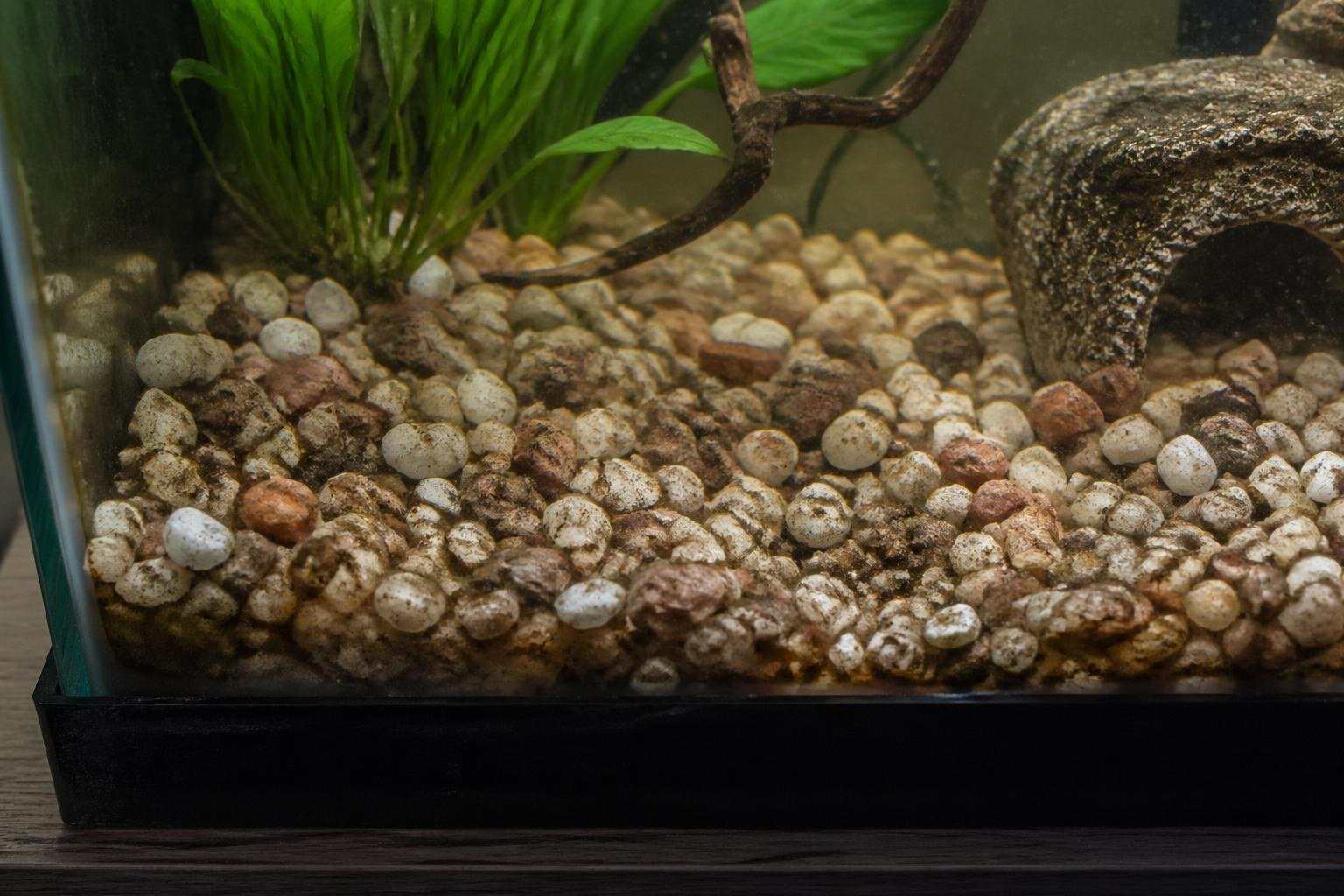
Three rules sit behind the table. First, small tanks need cleaning more often, not less: five gallons of water dilutes almost nothing, so waste concentrates fast. Second, the fish matter more than the tank: a single goldfish produces more waste than a dozen neon tetras, and goldfish, oscars, and large cichlids are famous for it.
Third, planted tanks are the exception — deep vacuuming tears up roots and releases nutrients from the soil, so you skim the surface of open areas and leave the planted zones alone. The plants themselves are doing part of the cleaning, taking up nitrate as they grow.
If you are unsure where your tank falls, start weekly and watch the siphon. If the water runs clear within a few seconds every week, you can stretch to ten days or two weeks. If it runs brown for a full minute, clean more often or feed less. The siphon is a better guide than any calendar, because it measures your actual tank rather than an average one.
How to Vacuum Gravel Without Harming Your Filter Bacteria
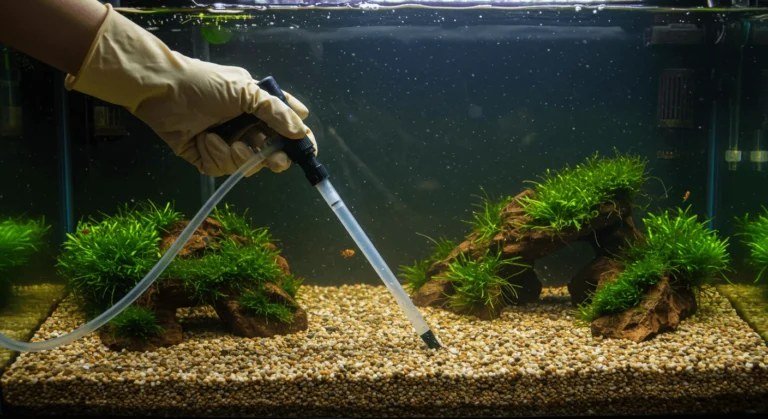
The tool is a gravel vacuum — a wide plastic tube attached to a siphon hose — and the technique matters more than the tool. Done right, it takes ten minutes and removes waste while leaving the bacteria in place.
This section shows how often should i clean my fish tank gravel in practice, and the siphon method that protects the bacteria.
Start the siphon. Put the bucket below the tank, push the wide tube into the gravel, and start the flow — most vacuums have a priming bulb or a pump, or you can start it with a quick up-and-down motion of the tube. Water should flow steadily into the bucket, carrying debris with it.
Plunge, lift, move on. Push the tube straight down into the gravel until it reaches the bottom glass, hold it there for a few seconds while the gravel churns inside the tube and the waste is sucked away, then lift it and let the clean gravel fall back. Move to the next spot in a grid pattern. The gravel should tumble and fall back into the bed; if stones are being sucked up the hose, the flow is too strong — pinch the hose to slow it.
Clean one-third to one-half, then stop. This is the rule that protects your biofilter. The bacteria live throughout the bed, and cleaning only part of it leaves enough of the colony intact to keep the cycle running. Rotate sections each week: the front third this week, the middle next week, the back the week after. Over three weeks the whole bed gets cleaned without ever being stripped at once.
Stop when you have removed 10–25% of the water. A gravel vacuum removes water as it cleans, so the cleaning and the water change happen together. If you reach 25% before you have finished the section, stop — you can finish the rest next week.
Replace the removed water with dechlorinated water matched within 1–2°F (about 1°C) of the tank. Our aquarium water change calculator converts the percentage into exact gallons and litres, and the fish tank volume calculator confirms your true water volume once gravel and décor have displaced their share.
Never rinse gravel under the tap. Tap water contains chlorine or chloramine, and both kill nitrifying bacteria on contact. The Merck Veterinary Manual’s chapter on disorders and diseases of fish identifies poor water quality as the most common environmental cause of disease in aquarium fish — and a wiped-out biofilter is one of the fastest ways to create poor water quality. If gravel ever needs a deep clean, rinse it in removed tank water, in a bucket, and put it straight back.
Sand needs a different touch. Sand traps waste on its surface rather than between grains, so you hover the vacuum an inch or two above the sand and let the suction lift the debris without pulling the sand itself. Plunging the tube into sand clogs the siphon and clouds the tank. Keep sand beds shallow — one to two inches — because deep sand develops oxygen-free pockets where hydrogen sulphide can build up, and those pockets release a rotten-egg smell when disturbed.
Five Signs Your Gravel Is Overdue
The calendar is a starting point. These five signs are the real schedule — if you see any of them, clean the gravel this week whatever the calendar says.
If you are asking how often should i clean my fish tank gravel, these signs matter more than the calendar.
1. The siphon water runs brown. Push the vacuum in and watch the tube. A few seconds of cloudiness is normal. A full minute of brown water means the bed is loaded with waste and your schedule is too loose.
2. The tank smells earthy or sour. A healthy tank smells like almost nothing. An earthy, musty, or sour smell from the water — or a rotten-egg smell when you disturb the gravel — means detritus is rotting in the bed and anaerobic pockets are forming. Clean the gravel and check the filter flow the same day.
3. Nitrate keeps climbing between water changes. If nitrate rises above 40 ppm within a week of a water change, the gravel is releasing nutrients faster than your routine removes them. Test weekly for a month and you will see the pattern clearly. The University of Florida IFAS Extension publication on ammonia in aquatic systems explains why invisible waste is the dangerous kind: ammonia from rotting detritus is colourless, so a tank can look clean while the gravel underneath is poisoning it.
4. The water is turning yellow or hazy. Dissolved organics from rotting gravel waste stain the water yellow and feed bacterial blooms. If your water has gone yellow or hazy for no obvious reason, the gravel is the first place to look — and our guide to why a fish tank goes cloudy after a water change covers the haze that often follows a disturbed gravel bed.
5. Fish are hiding, gasping, or sitting on the bottom. Waste in the gravel irritates gills and lowers oxygen, and fish respond by hiding, breathing fast, or resting on the bottom. If several fish change behaviour at once, test the water and vacuum the gravel before you reach for any medication. For a goldfish that has taken to the bottom, the steps in our guide to why a goldfish sits at the bottom of the tank start with the same test-first approach.
Mistakes That Make Gravel Cleaning Worse
Cleaning all the gravel at once. The most common serious mistake. It strips the bacterial colony and can crash the cycle, producing an ammonia spike days later that looks like a mysterious illness. Always leave at least half the bed untouched in any one session.
Rinsing gravel or filter media under the tap. Chlorine kills the bacteria you are trying to protect. Always rinse in removed tank water. The same rule applies to filter sponges — never under the tap, always in the bucket.
Vacuuming a planted tank like a bare one. Deep vacuuming around plant roots tears them up, releases soil nutrients into the water column, and can trigger an algae bloom. In planted tanks, skim the open areas and leave the rooted zones alone; the plants and their root bacteria are handling the waste there.
Stirring the gravel without a siphon. Poking at the bed with a stick or your hand releases trapped waste and hydrogen sulphide into the water without removing any of it. If you need to disturb the bed, do it with the siphon running so the waste leaves the tank instead of spreading through it.
Skipping cleaning because the tank “looks clean”. Gravel hides waste underneath a bright top layer. The only test is the siphon. Tanks that go months without a vacuum often have a black layer under the top stones, and the first deep clean releases a cloud of waste that can spike ammonia — which is why neglected tanks should be cleaned gradually, a third at a time over several weeks, rather than all at once.
Keeping Gravel Clean Between Vacuums
A weekly vacuum is the backbone, but four small habits stretch the interval and keep the bed healthier between cleans.
Once you know how often should i clean my fish tank gravel, these habits stretch the interval between cleans.
Feed less, and feed precisely. Only what the fish finish in two minutes, once or twice a day. Uneaten food is the largest single source of gravel waste, and a weekly fasting day — one day a week with no food — gives the filter a chance to catch up. For the full picture on how long fish can safely go without food, see our guide to how long aquarium fish can go without food.
Keep the stocking honest. A tank that needs vacuuming twice a week to stay clean is usually overstocked, and no cleaning schedule fixes that permanently. Our aquarium stocking density calculator checks whether your fish load fits your tank volume, and the fish tank size calculator confirms whether the tank is big enough for the species you keep.
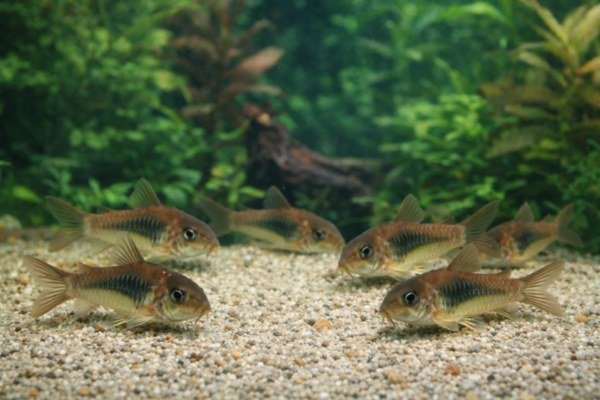
Add a cleanup crew that fits. Malaysian trumpet snails turn the top layer of gravel as they burrow, preventing the compacted, oxygen-free pockets that cause trouble — and unlike some snails they stay mostly hidden and do not eat healthy plants. Corydoras catfish stir the surface as they forage. Neither replaces vacuuming, but both slow the build-up between cleans.
Remove visible waste daily. A quick pass with a small net or a turkey baster to lift uneaten food and dead leaves takes thirty seconds and keeps the worst of the waste out of the gravel entirely. It is the highest-return habit in fishkeeping: thirty seconds a day saves ten minutes a week and keeps the water clearer in between.
Frequently Asked Questions
How often should the gravel be cleaned?
For most tanks, vacuum the gravel once a week during your regular water change, cleaning about one-third to one-half of the bed each time and rotating sections. Small tanks under 10 gallons and messy fish such as goldfish need a light pass every three to five days. Large, lightly stocked tanks can go up to two weeks. Planted tanks need only a surface skim every two weeks so you do not disturb the roots. That weekly rhythm is the short answer to how often should i clean my fish tank gravel for most keepers.
Should I clean all the gravel at once?
No. Never clean 100% of the gravel in one session. The gravel bed holds a large share of the beneficial bacteria that convert ammonia to nitrate, and stripping it all at once can crash the nitrogen cycle and cause an ammonia spike. Clean one-third to one-half per session and rotate sections so the whole bed is cleaned over two to three weeks.
Can I clean aquarium gravel without a siphon?
You can remove surface debris with a net or a turkey baster, but only a siphon pulls waste out from between the stones. A basic gravel vacuum costs little and is the single most useful maintenance tool in fishkeeping. If you do not have one, a length of hose started as a siphon works — but a proper vacuum with a wide tube cleans far more effectively and disturbs the gravel less.
Does cleaning gravel remove good bacteria?
Vacuuming removes trapped waste and leaves the bacteria living on the stones largely intact, which is why the one-third-to-one-half rule works. Rinsing gravel under tap water is different: chlorine kills the bacteria outright. Always rinse gravel and filter media in removed tank water, never under the tap, and never replace all the gravel or all the filter media at the same time.
Why does my gravel get dirty so fast?
The usual causes are overfeeding, overstocking, and a tank that is too small for its fish. Food that is not eaten within two minutes sinks into the gravel and rots, and every extra fish adds waste the bed has to absorb.
Check your feeding portions first, then your stocking, then your cleaning frequency — in that order. If the siphon water still runs brown after a minute of vacuuming every week, the tank needs less food or fewer fish, not just more cleaning.