Why Does My Horse Sneeze a Lot? Causes & Red Flags
A horse sneezes, and a spray of mucus lands on your jacket. It happens to every owner sooner or later, and it is usually nothing to worry about. Horses sneeze for many of the same reasons people do: dust, pollen, a tickle in the nose, or a mild cold. But when the sneezing goes on all day, or comes with a runny nose, a cough, or a fever, it stops being a funny story and starts being a symptom. So why does my horse sneeze a lot? The answer is in the pattern: how often, when, what comes out of the nose, and what else is going on.
This guide explains the difference between a normal sneeze and a worrying one, walks through the main causes — dust, pollen, infection, headshaking, and sinus or dental trouble — and gives you a simple way to read the nasal discharge like a vet does. It ends with clear lines for when to call the vet and when to change the bedding, and with a set of questions owners often ask that the main sections do not already answer. It answers the question every owner asks: why does my horse sneeze a lot — and when to worry about it.
Direct answer: Horses sneeze a lot most often because of dust or pollen irritating the nose, a mild viral cold, or allergies. An occasional sneeze with clear discharge in a bright, eating horse is normal. Sneezing becomes a concern when it is frequent or constant, when the discharge is thick, yellow, green, or bloody, when it comes from one nostril only, or when it comes with a cough, fever, swollen glands, or a horse that is dull or off its feed. Those signs need a vet — a one-sided discharge in particular can mean a sinus or tooth problem.
Why Does My Horse Sneeze a Lot? The Main Causes
A sneeze is a reflex: something irritates the lining of the nose, and the body blasts it out with a burst of air. In horses, the nose is large and sensitive, and it is the first line of defence for the whole respiratory system. The tiny hairs and mucus in the nasal passages trap dust, pollen, and germs before they can reach the lungs, and a sneeze is the system’s way of clearing the trap.
The table below is the fastest way to sort the causes. Find the row that matches your horse, then read the section that follows for the detail.
| What you see | Most likely cause | What to do first |
|---|---|---|
| Occasional sneeze, clear discharge, bright and eating well | Dust, pollen, or a tickle in the nose | Nothing — normal; reduce dust if it is frequent |
| Sneezing in bouts, worse in the stable or on dusty hay | Dust or mould in hay and bedding | Soak hay, change to low-dust bedding, ventilate |
| Sneezing with a cough, fever, dullness, thick discharge | Viral or bacterial respiratory infection | Isolate the horse, take its temperature, call the vet |
| Sneezing and head tossing, worse in sunlight or when ridden | Headshaking, possibly trigeminal nerve irritation | Vet examination; try a nose net, check tack and teeth |
| Thick discharge from one nostril only, bad smell, or blood | Sinus infection or dental disease | Call the vet — this needs diagnosis, not home treatment |
| Sneezing in spring and summer only, itchy eyes, rubbing the face | Seasonal allergy (pollen) | Reduce pollen exposure, nose net, vet advice on treatment |
Keep the table in mind as you read on. The rest of the article explains each row, so you can watch your horse and know which one you are looking at.
Normal Sneezing: How Much Is Too Much?
Horses sneeze less often than people, but they do sneeze, and a certain amount is completely normal. A healthy horse may sneeze a few times a day: when it puts its nose into dusty hay, when it shakes out its coat, when pollen counts are high, or when it is settling after exercise. These sneezes are short, the horse shakes its head once or twice, and then it goes back to what it was doing. The discharge, if there is any, is clear and watery, and it comes from both nostrils.
Horses also blow and snort, and owners often confuse the two with sneezing. A blow is a short, sharp exhalation through the nose, and horses do it when they are excited, alert, or pleased — it is a normal part of horse body language, and a horse that blows when you arrive at the field is usually saying hello, not telling you it is ill. A snort is longer and noisier, and it often follows a blow. A true sneeze is a sudden, forceful blast, usually with the head lowered, and it often comes in a burst of two or three.
There is no exact number that separates normal from too much, but there are useful rules. A few sneezes a day, spread out, with clear discharge and a bright horse, is normal. Sneezing every few minutes, sneezing in long bouts that last more than half an hour, or sneezing that goes on for days without a break, is not normal and deserves a closer look. The key question is not how many sneezes, but whether the sneezing is changing: a horse that never sneezed and suddenly sneezes all day has a new problem, whatever the count.
Age matters too. Young horses catch more respiratory infections, because their immune systems are still learning, and they sneeze more when they do. Older horses are more prone to sinus and dental problems, and their sneezing often comes with a one-sided discharge. And some horses are simply sneezier than others, just as some people are — if your horse has always sneezed a few times a day and is otherwise perfectly well, that is its normal.
Dust and Pollen: The Everyday Irritants
Dust is the most common reason a horse sneezes a lot, and it is also the most fixable. The stable is full of it: hay dust, bedding dust, dust from sweeping, and ammonia from urine. A horse standing in a stable breathes that air for hours, and its nose works overtime to trap the particles. When the trap fills, the horse sneezes to clear it. Horses fed from high hay nets breathe in even more dust, because the dust falls straight down into the nostrils as the horse pulls at the hay.
The test is simple: does the sneezing get better outside and worse inside? A horse that sneezes in the stable and stops in the field is almost certainly reacting to the stable air. Does it get worse with a new batch of hay, or with straw bedding? Then the feed or the bedding is the likely culprit. The fixes are the same ones that help a coughing horse: soak the hay for 10 to 30 minutes, feed from the ground or a low net, switch to low-dust bedding such as paper or dust-extracted shavings, and improve ventilation. Muck out while the horse is outside, not while it is standing in the dust cloud you are creating.
Pollen is the outdoor version of the same problem. Grass pollen peaks from late spring to midsummer, and tree pollen earlier in the year, and some horses react to it just as some people get hay fever. A horse with a pollen allergy sneezes more on high-pollen days, may have watery eyes and a clear runny nose, and may rub its face on its legs or the fence.
It is usually seasonal — the horse is fine in winter and sneezy in summer — and that pattern is the giveaway. A nose net, which is a fine mesh that fits over the nostrils, can help by filtering pollen, and turning the horse out at night, when pollen counts are lower, can help too. If the sneezing is severe, your vet can discuss medication, but do not use human allergy medicines on a horse without veterinary advice.
One warning about dust: do not assume it is only dust. A horse that sneezes in the stable may have a respiratory infection that the dust is making worse, or it may have equine asthma, where the airways are inflamed and overreact to dust that a healthy horse would ignore. If the sneezing does not improve within two to three weeks of cleaning up the air, or if it comes with a cough or laboured breathing, get the vet involved. Our guide to why a horse coughs when eating covers the asthma side of this story in detail, because the two problems often travel together.
Colds and Respiratory Infections
Horses do catch colds, in the sense that they catch viral respiratory infections that look very much like a human cold. The most common are equine influenza, equine herpesvirus types 1 and 4, and equine rhinitis virus. These spread easily between horses, through coughs, sneezes, and shared buckets, and they are most common where horses mix: at competitions, in large yards, and in young horses that have not yet built up immunity.
The signs of an infection are different from a dust irritation. The discharge starts clear and watery, then becomes thicker and yellow or green over a few days. The horse sneezes and coughs, and it usually has a fever — a temperature above 101.5°F (38.6°C) — and it is dull, off its feed, or both. The glands under the jaw may be swollen, and the horse may have watery or goopy eyes. These signs together mean infection, and they mean the horse should be isolated from other horses straight away.
Strangles is the infection owners fear most, and it is worth knowing its signs. It is caused by the bacterium Streptococcus equi, and it starts like a cold — fever, dullness, nasal discharge, and sneezing — and then the lymph nodes under the jaw swell and form abscesses. A horse with strangles needs strict isolation, veterinary treatment, and a yard-wide plan, because it spreads fast and can close a yard for weeks. If your horse has a fever plus swollen glands under the jaw, do not wait: call your vet and keep the horse away from others.
What to do when you suspect an infection is simple, and it matters. Take the horse’s temperature, and write it down with the date and time. Move the horse away from other horses, and use separate buckets, grooming kit, and handling — infections travel on hands and equipment as easily as through the air.
Offer water and soft, tempting feed, and let the horse rest: no riding, no travelling, and no mixing until the vet says it is clear. Call your vet the same day, because early treatment and early isolation protect the whole yard, not just the one horse. Vaccination helps too: flu and herpesvirus vaccines do not stop every infection, but they make them milder and shorter, and they are worth keeping up to date. The Horse Vaccination Schedule page lists the routine vaccinations and when they are due.
Most viral colds clear up in one to two weeks with rest and good nursing. But a cough or a nasal discharge that drags on for more than two weeks, or a horse that gets worse instead of better, needs a second look. Secondary bacterial infections can follow a viral cold, and a horse that was improving and then gets worse — a new fever, thicker discharge, or laboured breathing — may have developed pneumonia, which is serious and needs prompt treatment.
Headshaking: When Sneezing Comes With Head Tossing
Some horses sneeze as part of headshaking, a condition in which the horse tosses its head up and down or from side to side, rubs its nose, and sneezes repeatedly, usually when ridden. It is different from ordinary sneezing: the horse is not just clearing its nose, it is reacting to an unpleasant tingling or burning sensation inside the nose, and it cannot stop. Headshaking is most common in geldings, often starts in spring, and is often worse in bright sunlight.
The leading explanation is that the trigeminal nerve, which carries sensation from the face and nose to the brain, becomes over-sensitive. In some horses the cause is clear — a dental problem, an ear infection, a sinus problem, or an allergy — and treating the cause stops the headshaking. In others, no cause is ever found, and the condition is managed rather than cured. This is why headshaking needs a vet: the vet’s job is to rule out the treatable causes, one by one, before concluding that it is the nerve itself.
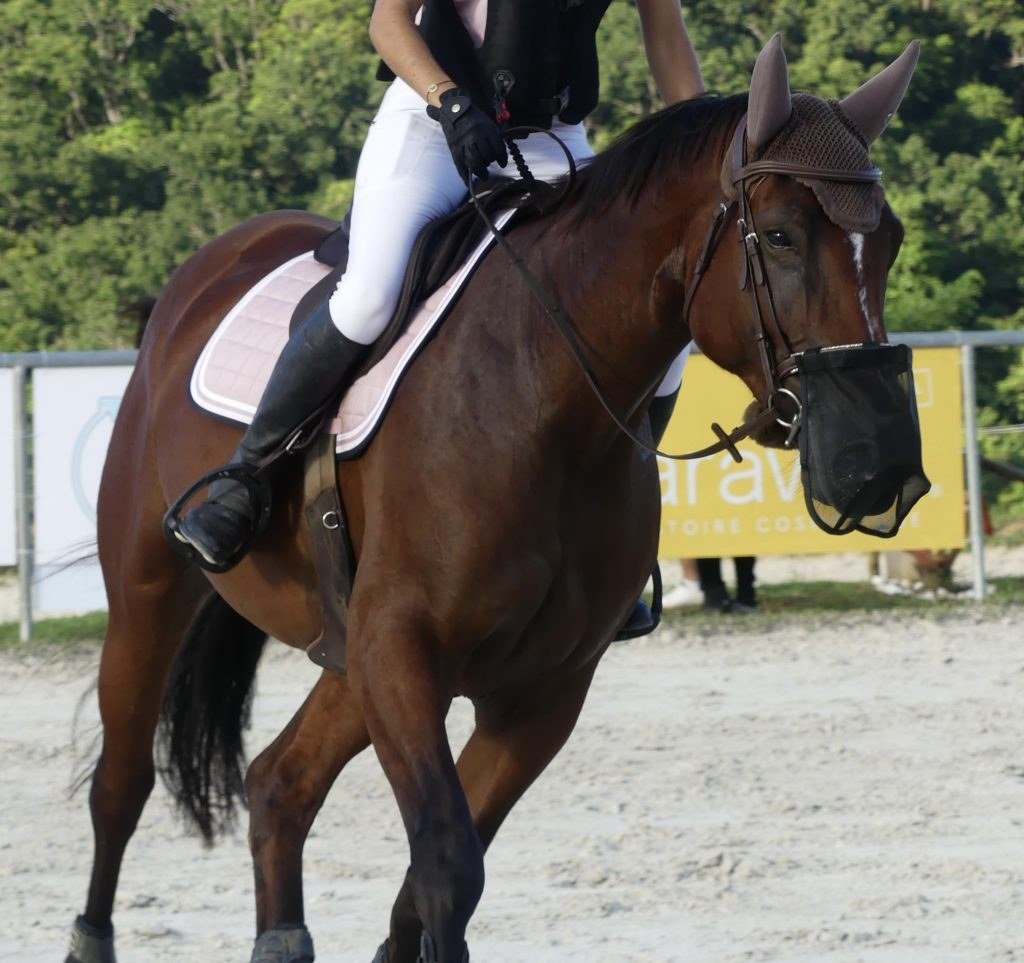
There are things that help many headshakers, and they are worth trying while the vet investigates. A nose net is the simplest: it changes the airflow over the nostrils and seems to dampen the sensation, and many horses improve dramatically with one. Riding in shade or on cloudy days helps the ones that are worse in sunlight — some horses are photic headshakers, meaning bright light triggers the nerve.
Checking the tack and the teeth matters too: a bit that does not suit the horse, or a sharp tooth edge pressing on the cheek, can make the whole face more sensitive. And some horses improve with a change of feed or with magnesium supplementation, although the evidence for supplements is mixed and you should discuss it with your vet rather than trying it alone.
Headshaking can be dangerous, because a horse that throws its head violently while being ridden can unseat its rider. If your horse starts headshaking suddenly, or the headshaking is getting worse, stop riding it until the vet has seen it. A horse that is in pain or discomfort in its face is not a safe ride, and it is not fair to the horse to work through it.
Reading the Discharge: What Colour and Side Tell You
Vets pay close attention to nasal discharge, because it is one of the most useful clues a horse gives you. You can learn to read it too. The three things that matter are colour, thickness, and side — one nostril or both.
Clear and watery, from both nostrils. This is the least worrying kind. It usually means irritation — dust, pollen, or the early stage of a viral infection. If the horse is bright, eating, and has no fever, watch and wait, and clean up the air. If it turns thick or coloured over the next few days, or a fever appears, call the vet.
Thick, yellow or green, from both nostrils. This usually means infection, viral or bacterial. Yellow or green colour comes from white blood cells fighting infection, and it means the horse’s immune system is at work. A horse with thick coloured discharge from both nostrils, plus a fever or a cough, needs a vet and isolation from other horses.
Thick discharge from one nostril only. This is the one to take most seriously. A one-sided discharge often means the problem is on that side of the head: a sinus infection, a diseased tooth root pressing into the sinus, a growth, or a foreign body in the nostril. Horses have large sinuses above the upper cheek teeth, and a tooth root infection can drain into the sinus and out of one nostril, sometimes with a bad smell. A one-sided discharge that lasts more than a few days, or that smells bad, needs a vet examination, usually including an endoscopy or an X-ray of the head.
Blood in the discharge. A small amount of blood after a hard sneeze can come from a burst blood vessel in the nose, and it usually stops quickly. But blood that keeps coming, blood from one nostril only, or blood with exercise, needs a vet. Exercise-induced pulmonary haemorrhage — bleeding in the lungs during hard work — shows as blood from both nostrils after exercise, and it needs veterinary assessment. So does a nosebleed that will not stop, which can be a sign of a fungal infection of the guttural pouch, a serious condition that needs urgent treatment.
Discharge with a bad smell. A foul smell, especially from one nostril, is a classic sign of a sinus infection or a rotten tooth. It is not something to treat at home. Your vet will need to look inside the nose and the mouth, and may need to X-ray the head to find the source. The longer it is left, the harder it is to treat, so do not wait for it to clear on its own.
The Horse Side Vet Guide’s guide to blowing, snorting and sneezing in horses, written by an equine vet, gives the same framework — what to observe, when to worry, and what your vet may check — and it is a useful page to bookmark alongside this one.
When to Call the Vet
Why does my horse sneeze a lot? Most of the time the answer is dust or pollen, and most sneezing gets better when you clean up the air. But some sneezing needs a vet, and knowing the line saves time and trouble. Call your vet if any of these apply.
Call the same day if: the horse has a fever above 101.5°F (38.6°C); the discharge is thick, yellow, or green; the discharge comes from one nostril only; the discharge smells bad or contains blood; the horse is dull, off its feed, or not drinking; the glands under the jaw are swollen; or the horse is coughing as well as sneezing and breathing harder than normal.
Call within a few days if: the sneezing has gone on for more than two weeks without improving, even though the horse seems well; the sneezing is seasonal and severe, and you want a plan for managing it; or the horse is headshaking, especially if it started suddenly or is getting worse.
Watch and wait if: the horse sneezes a few times a day, the discharge is clear and from both nostrils, the horse is bright, eating, drinking, and working normally, and there is no fever. Clean up the dust, soak the hay, and see whether it settles over a week or two. If it does not, move to the category above.
While you wait, keep a simple record. Note the date the sneezing started, how often it happens, which nostril the discharge comes from, what it looks like, and whether the horse has a temperature. A vet who can see a week of notes makes a faster and better diagnosis than a vet who hears “it has been sneezing a lot.” And keep the horse’s routine steady: good hay, clean water, regular turnout, and a clean, ventilated stable.
The Horse Water Intake Calculator gives a daily water target, and our guide to how often to clean a horse water trough covers the water hygiene half of the problem, because horses drink less from dirty water and drink less when they are unwell.
A horse’s nose is its early warning system, and a sneeze is the system’s way of asking for attention. Most of the time the answer is simple: cleaner air, soaked hay, and a bit of patience. Sometimes the answer is a vet visit, and the sooner you make that call, the simpler the treatment. Learn your horse’s normal, watch for changes, and trust the discharge — it is telling you more than the sneeze alone ever will. So, why does my horse sneeze a lot? Usually dust or pollen — and now you know which sneezes need the vet.
Frequently Asked Questions
Can horses sneeze from bright sunlight?
Yes. Some horses are photic sneezers, meaning bright sunlight triggers sneezing and head tossing. It is the same effect some people get — sneezing when they step out into bright sun — and in horses it is linked to the trigeminal nerve, which carries sensation from the nose and face. A horse that sneezes mainly on sunny days, and settles in shade or on cloudy days, is likely a photic sneezer. A nose net often helps, and your vet can advise on further steps if it becomes a riding problem.
Why does my horse sneeze when I groom him?
Grooming stirs up dust from the coat, the mane, and the bedding, and the horse breathes it in at close range. Curry combs and body brushes lift a cloud of dust, skin flakes, and dried sweat, and the horse’s nose is right in the middle of it. It is usually harmless, but you can reduce it by grooming outside or in a well-ventilated area, by brushing gently at first, and by keeping the horse’s coat clean with regular grooming rather than one big dusty session. If the horse also sneezes a lot at other times, look at the hay and bedding as well.
Can a horse sneeze spread disease to other horses?
Yes. A sneeze from a horse with a viral or bacterial respiratory infection throws droplets into the air, and nearby horses can breathe them in. That is how flu, herpesvirus, and strangles spread on a yard. A horse that is sneezing with a fever or a thick discharge should be isolated, with its own buckets and grooming kit, until the vet clears it. A horse that is sneezing only from dust or pollen is not contagious — the cause is in the air, not in a germ.
Should I wipe my horse’s nose after it sneezes?
You can, and it is good practice to keep the nostrils clean, especially if the discharge is thick. Use a clean, damp cloth or a disposable wipe, and wipe gently — the skin inside the nostrils is delicate. But wiping is only cosmetic: it does not treat the cause. More useful is to look at what you wipe off. Clear and watery is reassuring; thick, coloured, one-sided, or smelly discharge is information your vet needs. Note what you see and mention it when you call.