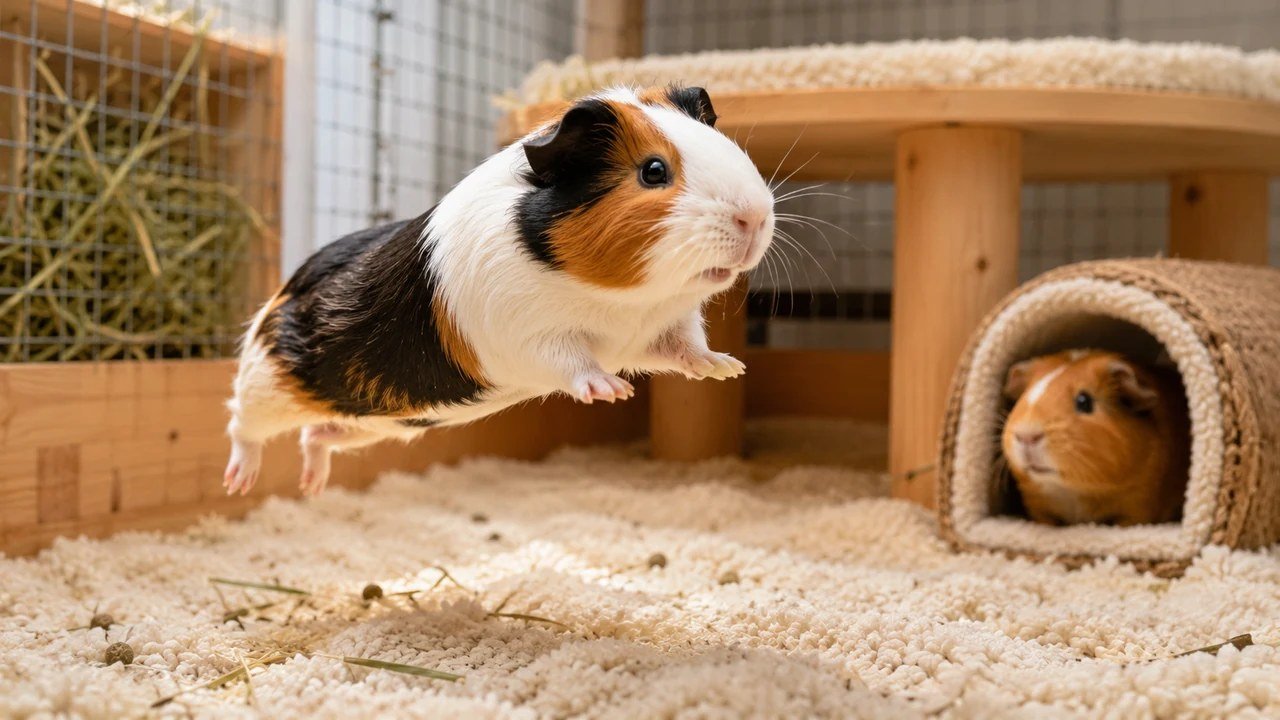
Why Does My Guinea Pig Popcorn? Happy Jumps Explained
Your guinea pig was calmly eating hay. Then, for no reason at all, it shot straight up into the air, twisted sideways, landed on all four feet, and did it again. It looked like a tiny explosion of joy. It also looked, for one scary second, like something was wrong.
Direct answer: Your guinea pig popcorns because it is happy and excited. Popcorning is a sudden jump into the air, often with a twist or a kick of the back legs, followed by a happy sprint. It is normal, safe, and one of the clearest signs that your guinea pig feels good. It is not a seizure, and it is not a sign of pain.
The name comes from the way the movement looks. A guinea pig jumps up suddenly, the way a kernel of corn pops in a hot pan. Some pigs pop once and go back to eating. Others pop five or six times in a row, darting around the cage between jumps. Owners call that happy running the zoomies, and popcorning and zoomies often come together.
Most new owners see popcorning for the first time and feel two things at once: delight and worry. The delight is easy to understand. The worry comes because the jump is so sudden and so wild. This guide explains exactly what popcorning is, why it happens, how to tell a happy jump from a scared one, and what to do if your pig never popcorns at all.
Why does my guinea pig popcorn?
Your guinea pig popcorns because something made it feel excited, safe, and full of energy. The most common triggers are simple. Fresh food appears. The fridge door opens. A favourite vegetable rustles in a bag. A clean cage with fresh bedding smells new. Floor time starts, and suddenly there is open space to run in.
Excitement is the main driver, but popcorning is also exercise. Guinea pigs are short-legged, heavy-bodied animals. They do not climb well, and they cannot jump over much. Yet they can launch themselves straight up with surprising power. Young pigs do it most, because they have the most energy and everything is still new to them.
There is also a social side to it. Guinea pigs live in groups in the wild, and they play together. One pig starts popping, and a cage mate often joins in. The jumps can be a way of saying, “I feel good, come and play.” It is part of how bonded pigs spend time together, along with running laps, chasing each other gently, and sharing a pile of hay.
Some experts think popcorning has an older purpose too. In the wild, a sudden jump might startle a predator just long enough for the guinea pig to escape. Young lambs do something similar when they leap and twist in a field. Whether that is the real origin or not, the modern meaning is clear: a relaxed pig in a safe home pops when it is happy.
It is worth knowing that popcorning is voluntary. Your pig chooses to do it, controls the jump, and lands on its feet. That matters, because it is the key difference between popcorning and a medical problem. A pig that is popcorning is in charge of its own body. A pig having a seizure is not.
What popcorning actually looks like
A popcorn can take several forms. The classic version is a straight vertical jump from a standing start, all four feet leaving the ground at once. Some pigs add a twist in mid-air, turning to face a new direction before they land. Others kick out with their back legs, like a tiny bucking horse.
Sometimes the jump happens while the pig is already moving. It runs a few steps, pops up, lands, and keeps running. This is the popcorning-plus-zoomies combination that owners love to watch. The pig may squeak as it jumps, or make a soft purring sound called chutting. Both sounds are happy sounds.
Not every pig popcorns the same way. A young pig might launch itself several centimetres into the air, twist, and land with a bounce. An older pig might do a smaller hop, or just a quick flick of the head and a shimmy of the back end. Both are the same behaviour, just at different energy levels. A pig that popcorns less as it ages is not necessarily unhappy. It is just older, heavier, and calmer.
Popcorning is most common in the morning and evening. Guinea pigs are most active at dawn and dusk, which matches their wild ancestors. That is when feeding usually happens, and when owners come home and open the cage. If you want to see popcorning, watch your pig just after you put down fresh vegetables or fresh hay.
Happy popcorn or scared jump: how to tell
Most popcorning means happiness. But guinea pigs sometimes jump when they are scared, too. A sudden loud noise, a dog walking into the room, or a hand reaching in too fast can make a pig leap. The jump looks similar, but everything around it is different. Learning the difference matters, because a scared pig needs you to fix something, while a happy pig just needs you to enjoy the show.
The table below is the quickest way to read what your pig is telling you. Look at the whole picture — the jump, the sounds, the body, and what happens next — not just the jump alone.
| What to watch | Happy popcorning | Scared jump | Seizure | Pain or illness |
|---|---|---|---|---|
| The jump | Controlled, lands on feet, repeats happily | Single frantic leap, then runs for cover | No jump — falls on its side, legs wave and twitch | No jumping at all; pig is still and quiet |
| Sounds | Wheeking, chutting, soft purring | High-pitched shriek, teeth chattering | Usually silent, or strange gasping | Quiet, or low unhappy grumbling |
| Body language | Relaxed, ears up, bright eyes | Stiff, frozen, wide eyes, puffed fur | Limp or rigid, eyes unfocused, may lose bladder control | Hunched, fluffed up, half-closed eyes |
| What happens next | Goes back to eating or playing | Hides, freezes, or keeps running | Does not get up at once; seems confused after | Stays withdrawn, eats less, moves less |
| What you should do | Enjoy it — your pig is happy | Remove the scare, give it a hide to retreat to | Call a vet at once if it lasts more than a few seconds | Book a vet visit the same day |
The most important row is the last one: what happens next. A happy pig bounces, lands, and carries on as if nothing happened. It may go straight back to its hay, or start another round of pops. A scared pig does not carry on. It runs to a hide, freezes in place, or keeps dashing around the cage looking for an exit.
Sound is the second-best clue. Happy pigs wheek, chut, or purr while they popcorn. These are the same sounds they make when they hear food coming. A scared pig makes very different noises: a sharp shriek, or rapid teeth chattering. If you hear a shriek, look for what scared your pig. A dog in the room, a dropped pan, or a sudden shadow over the cage are common causes.
Is popcorning a seizure? How to tell the difference
This is the question that worries new owners most, and the answer is reassuring. Popcorning and a seizure look nothing alike once you know what to watch for. A popcorning pig jumps up, lands on its feet, and stays awake and alert the whole time. It is in control from start to finish.
A guinea pig having a seizure falls onto its side. Its legs paddle or twitch without control, and its head may jerk. It does not land on its feet, and it does not bounce back up and carry on. After a seizure, the pig often lies still for a while, seems confused, or is slow to respond. The whole event lasts several seconds, not a split second like a popcorn.
Seizures in guinea pigs are rare, and they are usually linked to a serious problem, such as a head injury, a severe infection, or a toxin. If you ever see your pig fall on its side and twitch, do not wait and watch. Keep the room calm and quiet, do not pick the pig up during the seizure, and call your exotic vet as soon as the episode ends. Note how long it lasted, because your vet will ask.
Pain can also be confused with popcorning by a worried owner, but it looks very different. A pig in pain does not jump around. It does the opposite. It sits hunched, its fur looks puffed up, its eyes are half closed, and it eats less. Guinea pigs hide pain well, because in the wild a sick animal is easy prey. So a pig that has gone quiet and still is more worrying than a pig that is bouncing around the cage.
If your pig popcorns and then eats, drinks, and behaves normally, there is nothing to worry about. That is a healthy pig enjoying itself. If your pig stops popcorning suddenly and also stops eating or moving much, that change is worth a vet check. The change matters more than any single behaviour.
Why young guinea pigs popcorn most
Age is the biggest factor in how much a pig popcorns. Baby and young guinea pigs popcorn the most. They have energy to burn, and everything in their world is still new. A fresh pile of hay, a new tunnel, or a favourite food can set off a whole round of pops. Their jumps are also the highest, because young pigs are light and springy.
Adult pigs popcorn less often, and their jumps are smaller. A healthy adult may do a quick hop or a little head flick instead of a full launch. This is normal. An adult pig has a heavier body, and it has seen its favourite foods a hundred times before. The excitement is still there, it just shows up in a quieter way.
Senior pigs over five years old rarely do a full popcorn, especially if they have stiff joints or extra weight. That is normal ageing, not sadness. What matters is the trend, not the single day. A pig that popcorned every day and suddenly stops altogether, especially if it also eats less or moves less, should be checked by a vet. A slow, gradual fade over months is just getting older.
Weight plays a part too. A pig that is overweight finds jumping harder, and may stop trying. This is one more reason to keep portions sensible. A guinea pig’s main food should be unlimited timothy hay, with a small measured portion of pellets and a cup of fresh vegetables a day. Treats, including fruit, should stay small. If you want to check whether your pig’s food amounts are right, the guinea pig food calculator gives a portion based on your pig’s weight, and the guinea pig calorie calculator shows the daily energy it needs.
Knowing your pig’s age also helps you read its behaviour. The guinea pig age calculator converts your pig’s age into human years, which makes it easier to know whether it is a bouncy youngster or a calm senior. A two-year-old pig that never popcorns is not a worry. A five-year-old that used to popcorn daily and now sits still all day is worth a closer look.
My guinea pig never popcorns — is it unhappy?
Not necessarily. This is one of the most common worries among guinea pig owners, and the answer is reassuring. Not every happy guinea pig popcorns. Some pigs show happiness in other ways: they wheek when they hear the fridge, they purr when you pet them, they stretch out flat when they relax, or they run laps around the cage instead of jumping.
Personality matters a lot. Some pigs are natural performers. Others are quieter and more cautious. A shy pig may be perfectly content and never leave the ground. That does not mean it is unhappy. It means it expresses itself differently. Judging a pig by popcorning alone is like judging a person’s happiness by whether they dance at parties.
There are real reasons a pig might popcorn less, and they are worth checking. The most common is space. A cage that is too small leaves no room to run and jump. The minimum for a pair of guinea pigs is about 7.5 square feet, but bigger is always better. A pig in a small cage may be calm and healthy, but it has nowhere to express the behaviour.
Diet is the second reason. A pig that eats mostly pellets and gets few fresh vegetables may lack energy, or may be carrying extra weight that makes jumping hard. Unlimited hay should be available at all times, because hay keeps the gut moving and the teeth worn down. If your pig goes without hay, that is a serious problem on its own — see our guide to how long a guinea pig can go without hay.
The third reason is time. A new pig may take days or weeks to settle in before it feels safe enough to popcorn. It needs to learn that your home is safe, that food comes regularly, and that nobody will grab it from above. Give it a hide to retreat to, a routine it can trust, and gentle handling. Many owners see the first popcorn a week or two after bringing a pig home, often right after a cage clean or a fresh pile of hay.
If your pig eats well, drinks, moves around, and makes happy sounds, it is almost certainly fine — even if it never leaves the ground. If it is also quiet, hunched, and eating less, that combination needs a vet, not a popcorn. Watch the whole pig, not one behaviour.
How to encourage popcorning
You cannot teach a guinea pig to popcorn. It is not a trick. But you can build a home where popcorning happens naturally, and most of it is simple care done well. The formula is space, food, safety, and fun.
Space comes first. Give your pigs the biggest cage you can fit, with a clear run of floor for sprints. Add a daily floor-time session in a safe, pig-proofed room. Many owners see popcorning within minutes of floor time starting, because the open space itself is exciting. Just make sure the room is safe: no wires to chew, no gaps to squeeze into, and no other pets in the room.
Fresh food is the most reliable trigger. The sound of the fridge, the rustle of a bag of greens, or the sight of a favourite vegetable will set many pigs off. Offer a small piece of bell pepper, a leaf of romaine, or a sprig of coriander, and watch. You can also hide food around the cage so your pig has to forage for it. Foraging is natural behaviour, and it often ends in a happy pop. For more on your pig’s sounds and moods, see our guide to why your guinea pig vibrates when you pet it.
A clean cage helps too. Guinea pigs love novelty, and a freshly cleaned cage with new bedding is one of the most reliable popcorn triggers. Many owners report that their pigs start bouncing the moment they are put back into a clean cage. Rearranging a tunnel or adding a new hide has the same effect.
Toys and tunnels add to the fun. A paper bag stuffed with hay, a cardboard tunnel, or a fleece forest to run through can all spark a round of pops. Rotate the toys every week or two so they stay interesting. You do not need to buy much. Guinea pigs are often happiest with simple things: a pile of hay to burrow in, a tunnel to run through, and a friend to share it with.
Finally, keep the routine calm and predictable. Guinea pigs are prey animals, and they popcorn when they feel safe. Loud music, sudden movements, and dogs or cats staring into the cage all kill the mood. A quiet room, a regular feeding time, and gentle handling build the confidence that lets a pig relax enough to jump for joy.
When popcorning means a vet visit
Popcorning itself never needs a vet. It is a normal behaviour. What needs a vet is everything around it when something changes. The warning signs are the same ones that matter for any guinea pig health problem, and they are worth knowing by heart.
Call your exotic vet the same day if popcorning is paired with any of these: not eating or eating much less, no droppings or very few droppings, sitting hunched and puffed up, laboured breathing, a wet or dirty rear end, or a sudden loss of weight. Guinea pigs can go downhill fast, and a day of waiting can matter. A pig that has not eaten for 12 hours needs urgent care, because its gut can slow down dangerously.
Also call the vet if your pig falls over, twitches, or lies on its side and cannot get up. That is not popcorning, and it is not a joke. It may be a seizure, a head injury, or a severe illness. Keep the pig warm and quiet, do not try to feed it, and get help straight away.
A sudden stop in popcorning, on its own, is not an emergency. But if it comes with any of the signs above, treat it as one. You know your pig’s normal behaviour better than anyone. If something feels wrong, trust that feeling and call the vet. A check-up that finds nothing is always better than waiting and wishing you had called sooner.
For a good overview of normal guinea pig behaviour, the RSPCA Worcester branch’s guinea pig care guide explains popcorning and zoomies as signs of a happy pig, and the Merck Veterinary Manual’s rodents section covers guinea pig health in depth.
Frequently asked questions
Do chinchillas popcorn too?
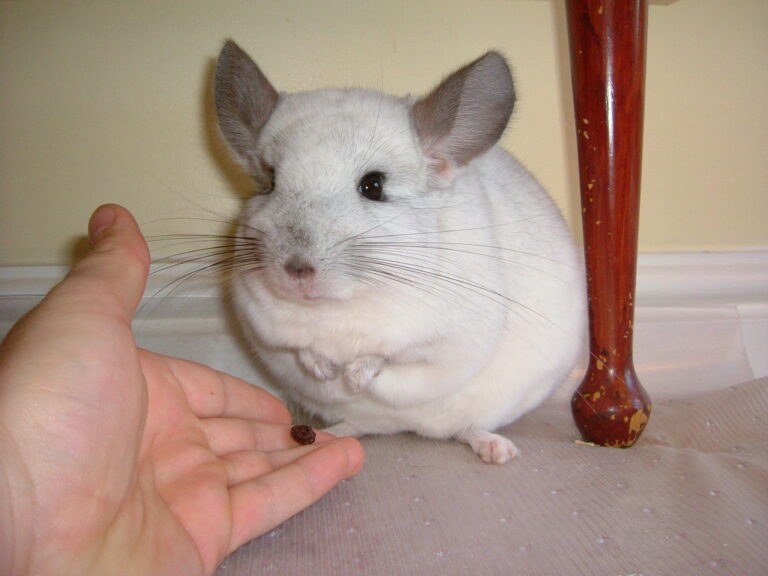
Yes, chinchillas popcorn as well, and for the same reason: happiness and excitement. PetMD covers both species on one page because the behaviour looks so similar. Chinchillas are nocturnal, so they often popcorn at night, when they are most active. They may also run along the walls of their cage, which owners call wall-surfing. A chinchilla that popcorns is a happy chinchilla, just like a guinea pig.
Can a guinea pig hurt itself popcorning?
It is very rare. Guinea pigs are built to land on their feet, and popcorning happens at low height in a familiar space. The main risk is the cage itself: a low roof, a sharp edge, or a wire shelf your pig could hit. Keep the cage free of sharp edges, avoid wire shelves, and give your pig a clear landing area. If your pig ever lands badly and then limps, holds a leg up, or refuses to move, see a vet the same day.
Why does my guinea pig popcorn at night?
Guinea pigs do not sleep in one long stretch the way we do. They nap for short periods through the day and night, and they are often active at dawn and dusk. A pig that popcorns at night is usually just having an active spell. It may have woken up, found fresh hay, and felt a burst of energy. Night popcorning is normal, as long as the pig settles back down and eats and drinks normally.
Do guinea pigs popcorn when they are alone?
Yes, a single guinea pig can popcorn on its own, especially when food arrives or during floor time. But guinea pigs are social animals, and they do best in pairs or small groups. A lone pig may popcorn less simply because it has less to be excited about, and less company to play with. If you keep one pig, give it extra attention, floor time, and enrichment — and think about whether a companion would make it happier.
How high can a guinea pig jump when it popcorns?
Most pops lift the pig only a few centimetres off the ground. Young, light pigs can jump higher, and one owner measured a jump of about 20 centimetres. Even so, guinea pigs are not good jumpers in general. They cannot clear a low barrier the way a rabbit can, so a standard cage wall is enough to keep them in. The height does not matter much. A small hop from a happy pig means just as much as a big leap.