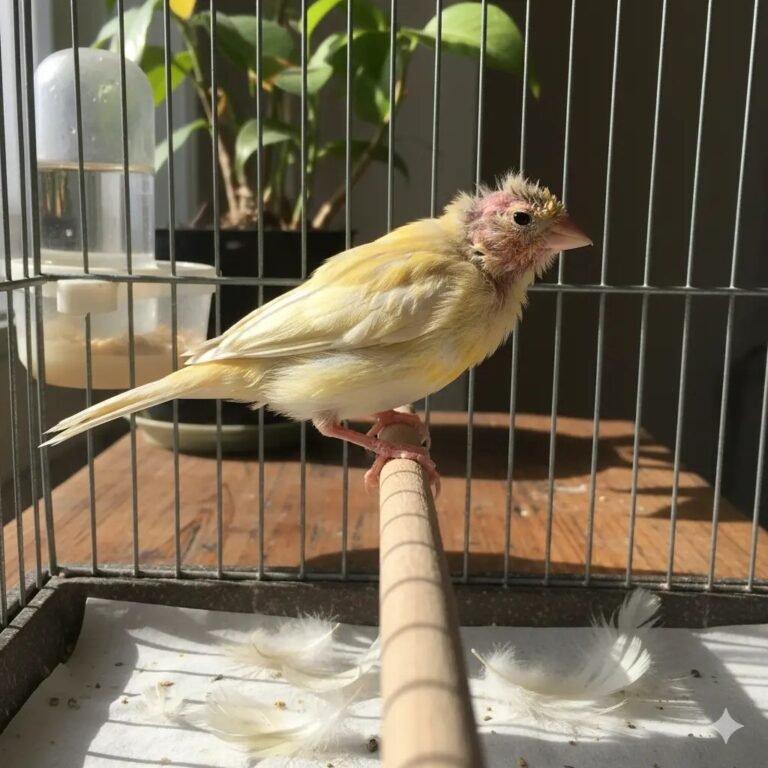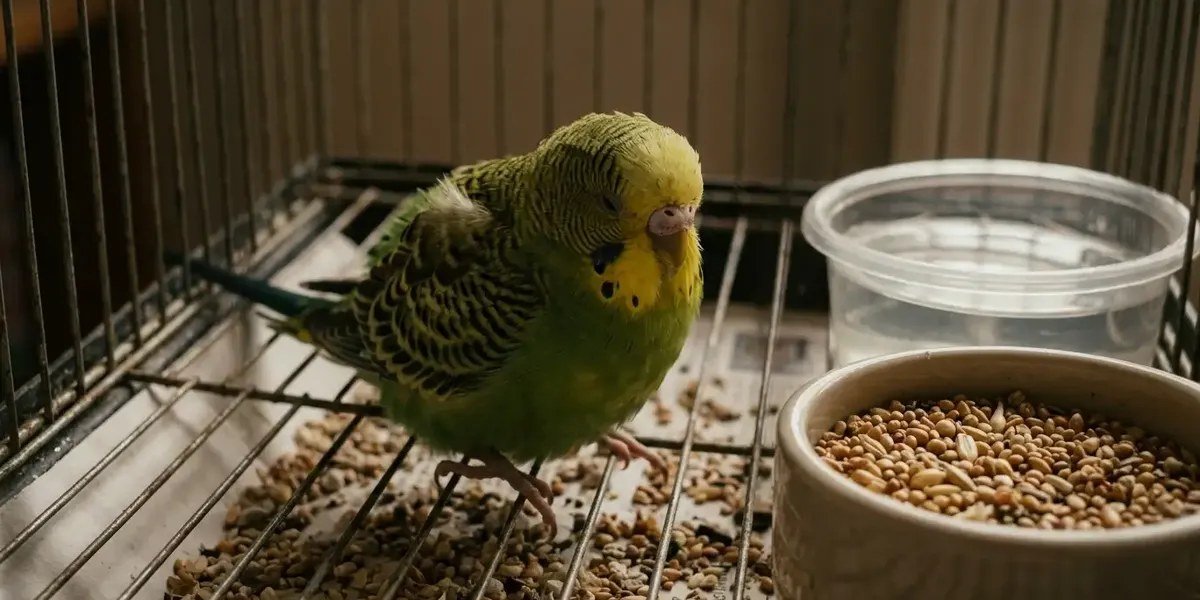
Why Is My Budgie Not Eating? Causes & What to Do
A budgie that will not eat is an emergency in slow motion. These tiny birds burn energy fast, and they cannot go for long without food. If you are asking why is my budgie not eating, the first thing to know is that the answer depends on one question: is this a new budgie, or a bird that has lived with you for a while and suddenly stopped?
A new budgie that will not eat for a day is usually just scared, and it will settle. A budgie that has eaten well for months and suddenly stops is a bird that needs help fast. This guide will help you tell the two apart, check whether your bird is eating at all, and work through the causes in the right order.
A budgie that stops eating can become dangerously weak within 24 hours, so do not wait and hope. First check whether it is secretly eating when you are not watching, then offer its favourite food, and if an established budgie still refuses food for a full day, call an avian vet. A new budgie gets 24 to 48 hours to settle; an old friend gets one day.
The 24-Hour Rule: Why Speed Matters
Budgies have one of the fastest metabolisms of any pet. A healthy adult budgie eats many small meals through the day and needs roughly 10 to 15 percent of its body weight in food every day. Its body stores very little fat, so it cannot coast through a missed meal the way a dog or a cat can.
After about 12 hours without food, a budgie starts to weaken. After 24 hours, it is in real danger. Small parrots like budgies can die within 24 to 48 hours of not eating, and baby budgies fade even faster, within hours. That is why the 24-hour rule matters: if your budgie has eaten nothing for a full day, it is a vet matter, not a wait-and-see matter.
This does not mean you should panic at the first missed meal. A budgie that skips one meal but eats the next is fine. The rule is about a full day with no food at all, or a bird that is clearly fading. If you are unsure whether your bird has eaten, the seed-hull check in the next section will give you the answer in minutes.
Water matters just as much as food. A budgie can survive a little longer without food than without water, but dehydration makes everything worse. Always check the water first. A bird that will not drink is in more urgent danger than a bird that will not eat, and it needs a vet the same day.
First, Check: Is Your Budgie Eating at All?
Many owners think their budgie is not eating when it is actually eating in secret. Budgies are shy eaters, especially new ones. They often wait until the room is empty, the lights are low, and nobody is watching. Before you worry, check the evidence.
The seed-hull test is the fastest way to know. Budgies crack seeds open and drop the empty hulls. Look at the bottom of the seed dish and the cage floor. If you see fresh, empty hulls, your bird is eating. If the dish is full of untouched seeds and there are no hulls anywhere, your bird really is not eating.
Weigh the food if you want to be sure. Put a measured amount of seed in the dish in the morning and weigh what is left at night, hulls and all. A budgie eats about 2 to 3 grams of seed a day, plus vegetables. If the dish barely changes over a full day, the bird is not eating enough.
Droppings are the second clue. A budgie that eats produces many droppings through the day, dark green or brown with a white cap. A budgie that has stopped eating produces very few droppings, and they become small, dark, and scanty, or watery with no solid part. Count the droppings over a few hours. Very few droppings plus a full seed dish means the bird is not eating.
Watch the bird itself. A budgie that is eating will have a full crop, the small pouch at the base of the throat, after a meal. You can sometimes see the crop bulge slightly after eating. A bird that has not eaten will have a flat, empty crop and may sit hunched and quiet. If you see the bird crack seeds and swallow, it is eating, even if it only does it when you leave the room.
Why Is My Budgie Not Eating? The Causes
Once you know your budgie really is not eating, work through the causes from the most common to the most serious. Start with the simple ones. Most cases turn out to be stress, a food change, or a new home, and all three are fixable at home.
1. New home stress
This is the most common cause of all. A new budgie has just left everything it knows: its parents, its flock, its cage, and its routine. The new home is full of strange sounds, strange smells, and a giant stranger who keeps staring at it. Many new budgies will not eat properly for the first 24 to 48 hours.
This is normal, and it usually fixes itself. Keep the cage in a quiet, warm corner, cover three sides with a light cloth so the bird feels hidden, and leave it alone as much as you can. Put the same food the breeder or shop was feeding in the dish, and add a spray of millet, which most budgies cannot resist. The bird will usually start eating when the house goes quiet.
2. A sudden food change
Budgies are stubborn about food. If you switch from seeds to pellets overnight, or change the brand of seed mix, many budgies will simply refuse the new food. Some will starve rather than eat something they do not recognise. This is not the bird being difficult. In the wild, a strange food could be poisonous, so caution is a survival instinct.
Never change a budgie’s food all at once. Mix the new food with the old food, starting with three parts old to one part new, and shift the balance slowly over one to two weeks. If your bird has stopped eating after a food change, put the old food back at once. You can try the change again later, slowly.
3. Stress in the home
Budgies stop eating when they feel unsafe. Loud noises, a new pet, a moved cage, building work, or a cat that sits and stares at the cage can all kill a budgie’s appetite. Even a new piece of furniture near the cage can unsettle a nervous bird.
Think about what changed in the last few days. Did the cage move? Did a new person arrive? Is there a new appliance making noise? Move the cage back to its old spot, keep other pets out of the room, and give the bird a quiet corner to hide in. Appetite usually returns within a day of the stress going away.
4. Loneliness and grief
Budgies are flock birds, and they eat together. A budgie that has lost a cage mate may stop eating from grief and loneliness. A single budgie that is left alone all day may also lose interest in food, because eating alone feels wrong to a flock animal.
If your budgie lost a companion, spend extra time with it, talk to it softly, and offer its favourite foods by hand. Some birds need a new companion, and some need time. If the bird is alone for most of the day and has stopped eating, the kindest fix may be a second budgie, or much more of your time.
5. Illness — the cause you must not miss
If an established budgie suddenly stops eating and there is no obvious stress or food change, illness is the most likely cause. Budgies hide sickness well, so a lost appetite is often the first sign an owner sees. The list of possible illnesses is long: respiratory infections, sour crop, candidiasis, psittacosis, liver disease, and gut parasites are among the most common.
Look for the other signs that come with illness. Sleeping much more than usual, sitting fluffed up for hours, tail bobbing, discharge from the eyes or nostrils, vomiting, or droppings that are watery, black, or full of undigested seed all point to a vet visit. A budgie that is not eating and also looks sick needs an avian vet within a day. Do not try home remedies first.
6. Parasites
Gut parasites like worms and giardia can steal a budgie’s appetite and its nutrients. External parasites like mites can make a bird so itchy and stressed that it stops eating. Parasites are more common in birds from pet shops or breeders with crowded conditions, and in birds that share a cage with a new, untested bird.
The signs are subtle at first: the bird eats less, loses weight, and its droppings change. Weight loss is the key clue, and it is hard to see under feathers. Weigh your budgie regularly on a small kitchen scale, in grams, so you can spot a drop early. A budgie that has lost 10 percent of its body weight needs a vet, and a droppings test can confirm parasites quickly.
7. Beak, crop, or mouth problems
Sometimes the bird wants to eat but cannot. An overgrown or misaligned beak makes it hard to crack seeds. A blocked or infected crop makes swallowing painful. A sore inside the mouth, or a seed husk stuck in the throat, can stop a bird eating in an instant.
Watch how your budgie tries to eat. Does it pick up a seed and drop it? Does it chew and then shake its head? Does it try to eat and then stop, as if something hurts? These are signs of a mouth or crop problem, and they need a vet. Never try to force food into a bird’s beak or crop yourself, because it is easy to choke a small bird.
8. Molting and old age
Molting takes a lot of energy, and some budgies eat a little less during a heavy molt. This is usually a small dip, not a full stop, and the bird still eats its favourite foods. Old age also slows appetite gradually. A senior budgie may eat less and move less, but it still eats every day.
A full stop is never normal, even during a molt or in old age. If your molting budgie has eaten nothing for a day, treat it the same as any other budgie that is not eating. Use our budgie age calculator to check your bird’s age in human years, because what is normal for a young bird is different for a senior.
New Budgie or Established Budgie? The Key Difference
The same symptom means two different things depending on how long the bird has lived with you. This table is the heart of the whole article, because it stops owners from panicking over a normal new bird, and stops them from waiting too long over a sick old friend.
| New budgie (first week home) | Established budgie (sudden stop) | |
|---|---|---|
| How long without food is normal? | Up to 24–48 hours while settling in | Not normal at all — act within a day |
| Most likely cause | Stress of a new home and new people | Illness, pain, or a sudden stress |
| What to do first | Quiet room, cover three sides of the cage, offer millet and the old food | Check seed hulls and droppings, offer favourite food, call the vet |
| When to call the vet | If still not eating after 48 hours, or if the bird looks weak or fluffed up | If no food for 24 hours, or at once if there are other illness signs |
| What NOT to do | Do not handle, grab, or stare at the bird | Do not wait three days to see if it gets better on its own |
What to Do Step by Step
Work through these steps in order. Each one takes a few minutes, and most budgies start eating again by step three or four. If you reach step six without any eating, call the vet.
Step one: check the food and water. Throw out old seed and put in fresh seed, the same kind the bird is used to. Change the water for fresh, clean water at room temperature. Wash the dishes. A dirty dish or stale seed is enough to put some budgies off their food.
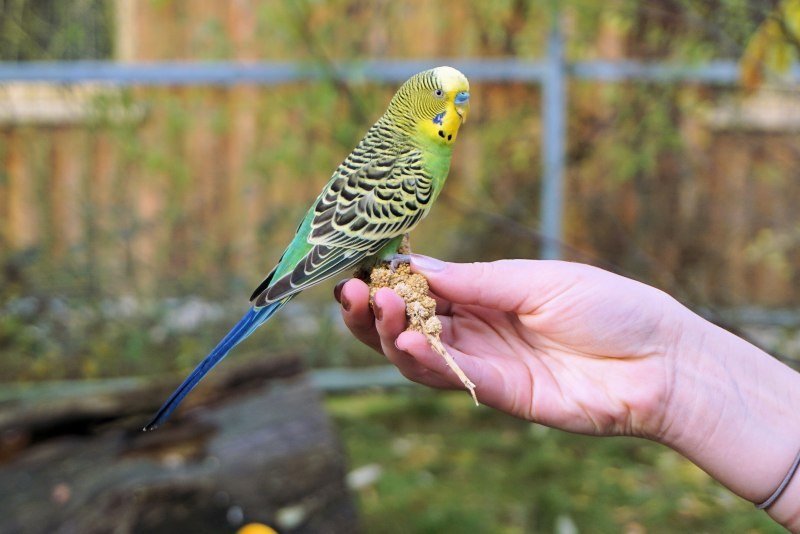
Step two: offer millet spray. Millet is the budgie equivalent of comfort food, and most birds will eat it even when they refuse everything else. Hang a small spray near the bird’s favourite perch. Our guide to how much millet a budgie can eat per day explains the right amount, because too much millet can spoil the appetite for proper food.
Step three: make the room calm and warm. Move the cage to a quiet corner, cover three sides, and keep the room warm, around 20 to 25 degrees Celsius. Keep cats, dogs, and loud children out of the room. Talk softly near the cage, or play gentle music, so the bird gets used to your voice without being stared at.
Step four: offer soft, easy foods. Cooked egg, softened pellets, sprouted seeds, and finely chopped vegetables are easier to eat than hard seed, and they tempt a bird that has lost its appetite. Put the soft food in a shallow dish near the perch. Remove uneaten fresh food after two to four hours so it does not spoil.
Step five: check the bird’s weight and droppings. Weigh your budgie on a kitchen scale and write the number down. Count the droppings over a few hours. If the weight is dropping and the droppings are few and scanty, the bird is not eating enough, even if it pecks at food now and then.
Step six: call an avian vet. Tell the vet exactly how long the bird has not eaten, what the droppings look like, and whether there are other signs. Do not wait for the bird to get worse. A vet can give fluids, check the crop, test the droppings, and, if needed, feed the bird safely. The Merck Veterinary Manual’s pet bird guide explains what a vet checks when a small parrot stops eating.
While you wait for the vet, keep the bird warm and quiet. A sick budgie loses body heat fast, so a gentle heat source, like a warm room or a heat lamp kept at a safe distance, can help. Do not force water or food into the beak. A weak bird can choke, and the vet needs to see the bird as it is, not after a stressful feeding attempt.
Vet Red Flags — When to Go Today
Some signs mean “vet today,” not “vet this week.” Go at once if your budgie has not eaten for 24 hours and is also fluffed up, sleepy, or sitting on the cage floor. Go at once if the bird is vomiting, has discharge from its eyes or nostrils, or is breathing with its beak open or its tail bobbing hard.
Go at once if the droppings are black, bloody, or full of undigested seed. Go at once if the bird has had a seizure, cannot perch, or has a swollen or sore-looking foot or wing. Go at once if a baby budgie has not been fed for more than a few hours. Baby birds have almost no reserves, and hours matter for them.
Food and water checks help the vet too. Use our budgie food calculator to work out the right daily amount and our bird water intake calculator to check hydration. Bring the numbers to the vet visit, along with a note of how long the bird has not eaten and what the droppings look like.
Frequently Asked Questions
Why is my budgie not drinking water?
A budgie that will not drink is often scared of the water dish itself. Young budgies can be nervous about dipping their heads down to drink, because the position feels exposed, and some birds do not recognise a new dish or a water bottle.
Other birds dislike the taste of tap water, especially if it has a strong chlorine smell, and will refuse it until it is changed. Try a shallow dish placed near the bird’s favourite perch, and offer filtered or bottled water at room temperature.
If the bird still will not drink for a full day, or if it is also not eating, call an avian vet at once, because dehydration in a budgie becomes dangerous fast. Our guide to how much water a budgie drinks per day explains normal drinking and how to spot a problem early.
Why is my budgie not eating from my hand?
A budgie that will not eat from your hand is usually a budgie that does not trust hands yet. Eating from a hand means coming close to a large, warm, moving object, and a prey bird will not do that until it feels safe.
This is completely normal for a new budgie, and it can take weeks of patient work before the bird will take food from your fingers. Start by offering millet through the cage bars, then hold the millet just inside the cage door, and only later offer food from your open palm.
If a budgie that used to eat from your hand suddenly stops, it may be scared by something that happened during handling, or it may be unwell, so watch for other changes too.
How much should a budgie eat per day?
A healthy adult budgie eats about 2 to 3 grams of seed a day, which is roughly a teaspoon to a teaspoon and a half, plus a small amount of fresh vegetables and the occasional treat. The exact amount depends on the bird’s size, age, and how active it is.
A flying budgie eats more than a cage-bound one, and a molting budgie eats more than a resting one. The best way to check is to weigh the food. Put a measured amount in the dish each morning and see what is left at night, remembering that the bird leaves empty hulls behind.
A budgie that is eating far less than 2 grams a day, or far more than 4 grams, is worth watching, and a sudden change in either direction is a reason to check the bird’s health.
Why is my budgie eating less in winter?
Budgies often eat a little less in winter, and there are a few reasons. Shorter days and colder rooms slow a bird down, so it moves less and burns less energy. A bird that is kept in a cool room may also spend more time fluffed up and resting, which uses less energy than flying and playing.
A small dip in appetite during cold weather is usually normal, as long as the bird still eats every day and stays active. What is not normal is a full stop. If your budgie eats nothing for a day in winter, treat it the same as in summer.
Check the room temperature too: a budgie in a cold, draughty room can become chilled, and a chilled budgie stops eating. Keep the room at 20 to 25 degrees Celsius and away from draughts.
A budgie that will not eat is telling you something, and the message is urgent. Check the seed hulls, check the droppings, offer millet, and give a new bird time to settle. If an established bird still will not eat after a day, call the vet.
Most cases turn out to be stress or a food change, and most birds are eating again within a day or two of the fix. For more on keeping your budgie’s diet right, read our guide to how much millet a budgie can eat per day, and Lafeber’s budgie species guide for the full picture of budgie care.
Acting fast is the kindest thing you can do for a bird that has stopped eating.