Why Is My Tortoise Digging All the Time? 7 Reasons
If your tortoise spends hours scraping at the soil with its front legs, you have probably wondered whether it is happy, bored, or trying to tell you something. Tortoises dig a lot, and most of the time it is normal. So why is my tortoise digging all the time, and when should the digging worry you?
Digging is normal tortoise behaviour. Wild tortoises dig burrows to sleep, to escape heat and cold, to hide from predators, and to lay eggs. Your tortoise digs for the same reasons. It only becomes a problem when the digging never stops, the tortoise stops eating or drinking, or a female digs frantically with her back legs and cannot lay eggs.
The key skill is reading which legs your tortoise is using. Front-leg digging and back-leg digging mean very different things, and mixing them up is the most common mistake owners make. This guide gives you a simple decoder, the seven reasons tortoises dig, species differences, and the red flags that mean a vet visit.
Front Legs or Back Legs? The Digging Decoder
Watch your tortoise for one minute before you do anything else. Which legs is it using, and what is its body doing? The answer tells you more than any other clue.
| What you see | What it usually means | What to do |
|---|---|---|
| Front legs scraping, head down | Burrowing, cooling off, or hiding | Check temperatures and hides |
| Back legs digging, body raised at the front | Female preparing a nest to lay eggs | Provide a deep, warm nesting area |
| Digging in a corner, pushing at walls | Enclosure too small, or wants out | Check enclosure size and enrichment |
| Digging in the evening, then settling in | Making a sleeping burrow for the night | Normal — leave it alone |
| Digging in autumn, eating less, slowing down | Preparing for brumation | Check health first, then allow or prevent brumation safely |
| Frantic digging, no eating, no drinking | Stress, illness, or egg-bound female | Vet visit — do not wait |
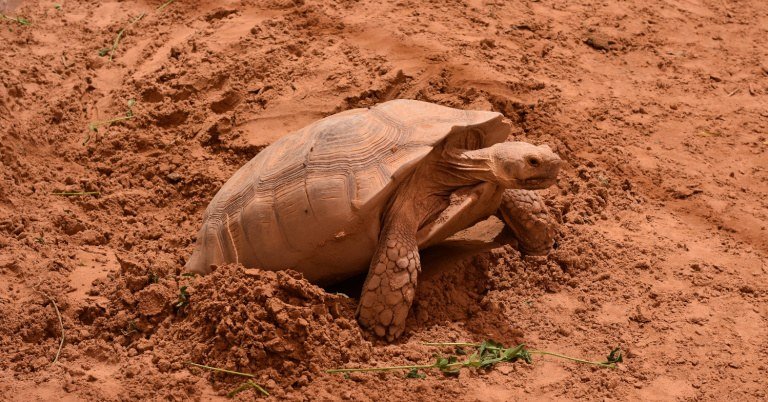
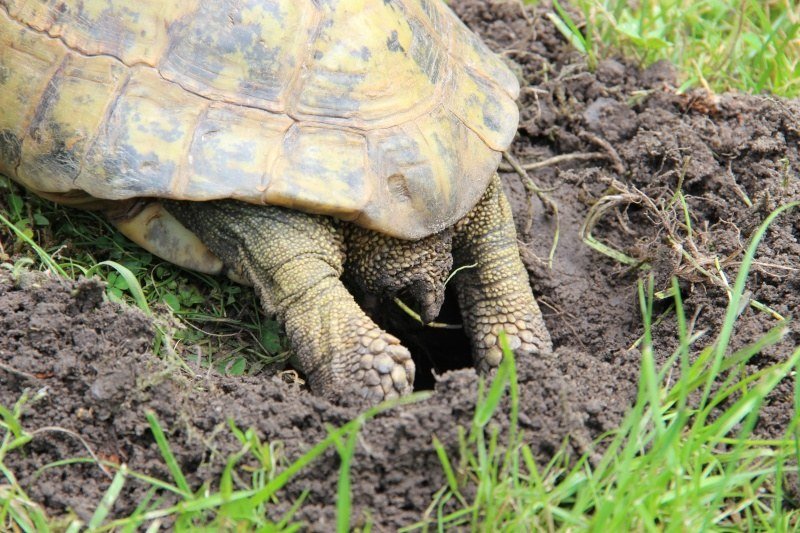
Front-leg digging is the everyday kind. The tortoise scrapes soil backwards with its front claws, pushes its head into the hole, and slowly works its way under. Back-leg digging is different: the tortoise raises its front end, reaches back with one hind leg at a time, and scoops soil out behind it. That second pattern is nesting, and it only happens in females.
Why Is My Tortoise Digging All the Time? The 7 Reasons
Tortoises dig for seven main reasons, and most of them are healthy instincts, not problems. The list runs from the most common to the most urgent, so read it in order.
1. Cooling down on a hot day
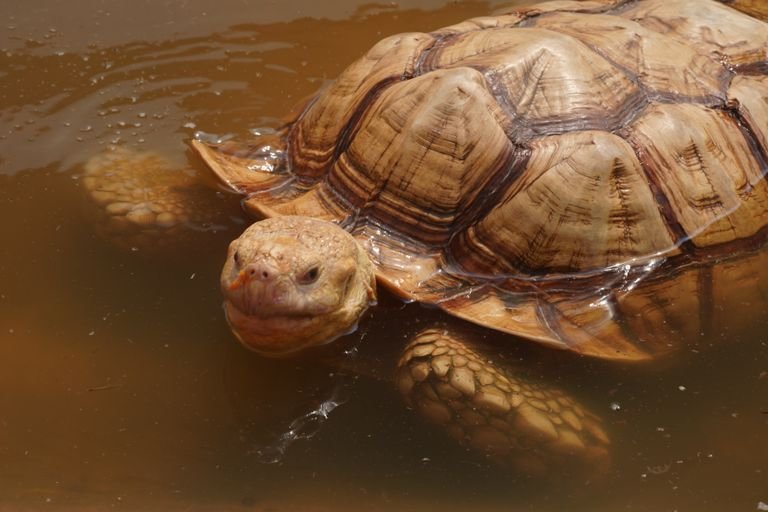
Tortoises cannot sweat, and they cannot pant like a dog. When the sun is strong, the soil a few inches down is much cooler than the surface. A tortoise digs a shallow scrape, settles its belly into the cool earth, and lets the ground pull the heat out of its body. This is called aestivation when it happens in summer, and it is completely normal.
You will see this most in outdoor tortoises on hot afternoons, and in indoor tortoises under a basking lamp that runs too hot. The basking spot for most pet tortoises should read 90 to 95 degrees Fahrenheit, with a cool side around 70 to 75. If the whole enclosure is above 85, your tortoise has nowhere cool to go, so it digs to find coolness.
Make sure there is always shade and a cool, damp area available. A shallow water dish big enough to climb into, a shady hide, and damp soil in one corner all help. If your tortoise digs every afternoon and then basks normally in the morning, it is managing its temperature well. If it digs all day and never basks, the enclosure is too hot overall.
2. Making a burrow to sleep and hide
In the wild, tortoises sleep in burrows. A burrow is dark, humid, and safe from predators, and it holds a steady temperature through the night. Pet tortoises keep the same instinct. Many dig a sleeping scrape each evening, settle into it, and stay there until morning.
This is especially common in sulcata tortoises, which are famous diggers. A sulcata can dig a burrow several feet deep in a garden, and it will use the same burrow for years. Russian tortoises and Hermann’s tortoises dig smaller burrows, but the instinct is just as strong. Even a tortoise with a perfect hide will often prefer a hole it dug itself.
Give your tortoise somewhere to dig. A substrate depth of at least 4 to 6 inches lets most small species make a proper scrape. Loose, slightly damp topsoil mixed with coco coir works well. If the substrate is only an inch deep on a hard floor, your tortoise will scratch at the floor in frustration, because it cannot do the job properly.
3. A female preparing to lay eggs
This is the reason owners most often miss, and the one that matters most. Female tortoises lay eggs whether or not a male is present, just as a hen lays eggs without a rooster. The eggs are infertile, but the female still has to lay them. If she cannot, she can become egg-bound, which is a life-threatening emergency.
Nesting digging looks different from burrowing. The female uses her back legs, not her front legs. She backs into the spot, raises her front end, and scoops soil out with alternating hind feet. She may dig several test holes over a few days before choosing one. She often stops eating one to two weeks before laying, paces restlessly, and looks swollen or top-heavy.
Most pet tortoises lay in late spring and summer, but indoor tortoises can lay at any time of year. If your adult female starts back-leg digging, give her a nesting area at once: soil at least as deep as her shell length, warm, slightly damp, and in a quiet, sunny spot.
Never press on her belly to feel for eggs, and never dig up a nest to check. If she digs for days without laying, stops eating entirely, or strains without producing eggs, see a reptile vet the same day.
The Tortoise Trust’s nesting guide at tortoisetrust.org gives species-by-species nesting depths and soil mixes, and it is the best free reference for this topic.
4. Preparing for brumation
Brumation is the reptile version of hibernation. In autumn, as days shorten and temperatures fall, many temperate tortoises — Russians, Hermann’s, and marginated tortoises in particular — start digging deeper burrows and eating less. They are preparing to sleep through the cold months.
This digging is slow and purposeful. The tortoise digs a little, rests, digs a little more, and settles in for longer stretches. It may come out to drink on warm days and then return to the burrow. That pattern is normal for a healthy adult of a brumating species.
But brumation is only safe for a healthy tortoise. A sick, underweight, or very young tortoise should not brumate, because it may not wake up. Before you allow brumation, get a vet check, confirm the tortoise is a species that brumates, and make sure it has been eating and drinking well. Tropical species such as red-footed tortoises do not brumate at all, and digging in a red-foot in autumn means something else.
Our reptile brumation calculator can help you work out whether the timing and temperatures are right for your species. If you are unsure, a reptile vet can advise in a single visit.
5. An enclosure that is too small or too boring
A tortoise that digs in the same corner every day, pushing at the walls, is usually telling you the space is too small. In the wild, tortoises roam over large areas to graze. A small tank gives them nowhere to go, so they try to dig their way out.
The minimum for a small adult tortoise is a tortoise table of at least 4 feet by 2 feet, and bigger is always better. Sulcatas need far more: an adult sulcata needs a garden, not a table. A tortoise kept in a glass tank often digs at the glass because it can see through it and does not understand the barrier. Solid walls on at least three sides help.
Boredom adds to the problem. A bare enclosure with one hide and a food dish gives a tortoise nothing to do. Add variety: a second hide, a pile of rocks to climb, a patch of edible weeds to graze, and a shallow water dish to soak in. Scatter the food instead of putting it in one bowl, so the tortoise has to forage. A busy tortoise digs less, because it has better things to do.
6. Hunting and foraging
Tortoises are grazers, but they also dig for food. In the wild they uncover roots, fungi, fallen fruit, and the occasional worm. A pet tortoise that scratches at the substrate in the morning may be looking for something to eat, especially if it has finished its greens and is still hungry.
This kind of digging is shallow and scattered. The tortoise scrapes here, sniffs there, and moves on. It is not the deep, focused digging of a burrow or a nest. It is often paired with a healthy appetite and normal droppings, which is a good sign.
If your tortoise digs for food constantly, check the diet. Most pet tortoises need a pile of leafy greens and weeds roughly the size of their shell every day, plus calcium. A tortoise that is always hungry may need more food, or a better mix. Our reptile feeding schedule calculator can help you plan regular feeding amounts and times.
7. Stress or feeling unsafe
The last reason is stress. A tortoise that feels exposed, handled too much, or kept near loud noises and other pets may dig frantically to escape. This digging looks different from the calm, purposeful kind: it is fast, it goes on for hours, and the tortoise does not eat, drink, or bask in between.
Common stress triggers are a new home, a new enclosure layout, a dog that barks at the glass, or children tapping on the tank. Tortoises are shy animals. They need a quiet spot, a hide they can fully disappear into, and handling kept to a minimum. If the digging started right after a change, the change is probably the cause.
Give the tortoise a week of quiet. Cover three sides of the enclosure, keep handling to feeding and cleaning only, and move the enclosure away from busy areas. If the frantic digging continues, or if the tortoise also stops eating, book a vet visit. Stress alone rarely causes a tortoise to stop eating entirely, so that combination points to illness.
Species Differences: Not All Tortoises Dig the Same Way
How much your tortoise digs depends a lot on its species, and knowing the species norm stops you worrying about normal behaviour. Sulcata tortoises are the champion diggers. In the wild they dig burrows up to 30 feet long, and a pet sulcata will happily dig under a fence, a shed, or a garden wall if it can.
Russian tortoises and Hermann’s tortoises are strong diggers too, but on a smaller scale. They make burrows a foot or two deep, and they use them for sleeping and for brumation. Marginated tortoises dig moderately. Red-footed tortoises and yellow-footed tortoises, which come from humid South American forests, dig the least. They prefer leaf litter and hiding under plants to digging deep burrows.
Match your setup to the species. A sulcata needs an outdoor space with a buried barrier around the edges, or it will escape. A Russian tortoise needs deep substrate and a cool burrow area. A red-foot needs humidity and leaf litter more than it needs digging depth. Our reptile humidity calculator can help you set the right humidity for your species, since the forest species need far more moisture than the desert ones.
Indoor or Outdoor: What Changes
Indoor tortoises dig for the same reasons as outdoor ones, but the enclosure limits them. Indoors, the most common causes are a too-small table, a too-hot basking spot, or substrate that is too shallow to dig in. The fixes are simple: a bigger table, a cooler gradient, and deeper substrate.
Outdoor tortoises have more room, so their digging is usually natural burrowing, nesting, or temperature control. The risks outdoors are different: escape under a fence, a burrow that floods in heavy rain, or a dog that digs the tortoise out. Bury a barrier at least 12 inches deep around the edges of an outdoor pen, and check burrows after rain.
For more on the basics of tortoise care, see our articles on how often to soak a tortoise and why a tortoise stops pooping. Both cover the hydration and digestion issues that often sit behind digging behaviour.
Setting Up a Digging-Friendly Enclosure
The easiest way to cut down on problem digging is to give your tortoise a proper place to dig. Start with depth. Small species such as Hermann’s and Russian tortoises need at least 4 to 6 inches of substrate. Larger species need 8 inches or more. A sulcata kept indoors, even as a juvenile, needs the deepest substrate you can fit.
Use the right mix. Plain topsoil with no fertiliser or perlite, mixed with coco coir, holds a burrow shape well and stays slightly damp. Avoid sand on its own, because dry sand collapses and gets into the eyes and the food. Keep one corner of the substrate slightly damper than the rest, so the tortoise can choose between dry ground and moist ground.
Add a digging corner on purpose. Pick the quietest corner of the enclosure, pile the substrate deeper there, and place a hide over part of it. Your tortoise will learn that this is the digging spot, and it will use it instead of the corners by the glass.
Outdoors, leave a patch of bare, loose soil in a sunny spot, and keep the grass short around it so the tortoise can see what it is doing.
Red Flags: When Digging Means a Vet Visit
Most digging is normal, but a few patterns need a vet. The top one is a female that has been back-leg digging for several days without laying eggs, especially if she has stopped eating, strains, or looks swollen. Egg binding can kill a tortoise, and it needs veterinary treatment, sometimes surgery.
Frantic, non-stop digging with no eating or drinking is the second red flag. So is digging paired with runny droppings, a swollen eye, a soft shell, or weight loss. These signs together point to illness, parasites, or a nutritional problem, not to a behavioural quirk.
Go the same day if your tortoise is digging and also dragging a leg, has a cracked shell, or has been out in cold rain and is now lethargic. A tortoise that cannot use a leg properly may have an injury or a metabolic bone disease, and cold, wet tortoises can develop respiratory infections quickly.
For background on tortoise health, the Merck Veterinary Manual’s reptile section at merckvetmanual.com is a reliable reference. To find a vet who treats tortoises, the Association of Reptile and Amphibian Veterinarians keeps a directory at arav.org.
Frequently Asked Questions
How deep can a tortoise dig?
It depends on the species and the soil. A sulcata tortoise can dig a burrow 10 to 30 feet long in soft garden soil, sloping down several feet underground. A Russian or Hermann’s tortoise usually digs one to two feet deep.
Pet tortoises in enclosures are limited by the substrate depth you give them, which is usually 4 to 8 inches. If you keep a sulcata outdoors, bury a barrier at least 18 to 24 inches deep around the pen, or the tortoise will eventually dig under the fence and escape into the neighbourhood.
Do tortoises dig at night?
Tortoises are daytime animals, so most of their digging happens in the morning and late afternoon. At night they settle into a burrow or a hide and sleep. If your tortoise is digging at night, it is usually finishing a burrow it started during the day, or it is restless because something disturbed it — a light left on, a noise, or a temperature drop.
A tortoise that digs all night, every night, is likely stressed or too cold, and the enclosure needs checking. Make sure the lights go off at the same time each evening and the night temperature stays in the right range for the species.
Why does my tortoise dig more after rain?
Rain softens the soil, and soft soil is far easier to dig than dry, baked earth. After a heavy shower, a tortoise can move much more soil with the same effort, so it often digs more. Rain also brings out smells: wet earth, worms, and fresh growth, all of which interest a foraging tortoise.
The digging itself is normal, but check the burrows after rain. A burrow can fill with water or collapse, and a tortoise trapped in a flooded burrow is in danger. If your outdoor pen floods, raise the sleeping area or add drainage before the next storm.
Should I stop my tortoise from digging?
No, you should not stop normal digging — it is a natural behaviour, and preventing it causes stress. What you should do is give the digging a safe place to happen. Provide deep, slightly damp substrate indoors, or a digging corner outdoors with loose soil.
Add hides and shade so the tortoise has other options. The only digging to interrupt is frantic, non-stop digging paired with not eating, which is a sign of stress or illness, and nesting digging in a female that has no suitable place to lay. In those cases, fix the cause rather than blocking the behaviour.
Digging is your tortoise’s oldest instinct, and most of the time it is a sign of a healthy animal behaving exactly as nature designed it. Learn which legs it is using, give it somewhere proper to dig, and you will rarely need to worry. And when the digging does change — frantic, non-stop, or a female that cannot lay — you will know it early, and that early warning is worth everything.