Why Does My Horse Shake His Head? Causes & Help
You are riding along quietly when your horse suddenly flips its head up and down, snorts, and rubs its nose on its foreleg. It does it again, and again, until the ride is ruined. Or maybe it only happens in the field, on bright sunny days, and the horse seems fine the rest of the time. Head shaking in horses ranges from a normal flick at a fly to a painful nerve condition — and knowing which one you are looking at changes everything.
So why does my horse shake his head? Most often it is something simple: flies, an itch, dust, or a badly fitting bridle. But when the shaking is violent, repeated, and happens for no clear reason, it can be headshaking syndrome, a painful condition caused by an over-sensitive nerve in the face. This guide shows you how to tell the difference, what to log for your vet, and what actually helps.
Direct answer: A horse usually shakes his head to get rid of flies, dust, or an itch, and a few shakes are completely normal. It becomes a concern when the shaking is violent, repeated, and happens without any clear trigger — especially under saddle, in bright light, or with snorting and nose rubbing. That pattern can mean headshaking syndrome, a painful condition of the trigeminal nerve in the face. There is no cure, but nose nets, fly masks, and management changes help many horses, and your vet should rule out teeth, ear, and eye problems first.
Why Does My Horse Shake His Head? Normal Shakes vs Headshaking
The first step is to work out which kind of shaking you are seeing. Normal shaking and headshaking syndrome look different, happen at different times, and mean different things. Find the row that matches your horse in the table below, then read the section that follows for the full detail.
| What you see | Most likely cause | What to do first |
|---|---|---|
| A few shakes, then stops, usually around flies or dust | Normal — flies, itch, or dust | Fly control, clean the bridle, check the fit |
| Shakes only when the bridle goes on or during riding | Bit, bridle, or dental pain | Check tack fit and book a dental exam |
| Shakes, snorts, and sneezes, with a runny nose | Nasal irritation or allergy | Note when it happens; ask your vet |
| Violent vertical flicking, snorting, rubbing the nose, no clear trigger | Headshaking syndrome (trigeminal nerve) | Call your vet; start a diary of episodes |
| Shaking only in bright sunlight, better indoors or at night | Photic headshaking — light-triggered | Try a UV fly mask; ride indoors or at dusk |
| Shaking that started suddenly in a horse that was fine | New pain — teeth, ears, eyes, or injury | Vet check straight away |
| Shaking with head tilt, ear rubbing, or discharge | Ear infection, mites, or ticks | Vet check of the ears |
Keep this table in mind as you read on. The rest of the article explains each row, so you can watch your horse and work out which one you are dealing with.
What Normal Head Shaking Looks Like
Every horse shakes its head sometimes, and most of the time it means nothing at all. A horse cannot swish its tail at a fly on its face, so it shakes its head instead. A fly lands on the muzzle, the horse gives a sharp flick, and the fly leaves. That is normal, and it is not a problem.
Horses also shake their heads to clear dust from their nostrils, to scratch an itch they cannot reach, and to shake off water after drinking or rain. A horse that shakes its head a few times after you put the bridle on may just be settling the bit in its mouth. A horse that shakes after a roll in the field is getting the dust out of its ears. All of this is normal.
Normal shaking has a clear pattern. It is brief — a few flicks and then it stops. It has an obvious trigger, like flies, dust, or the bridle. It does not get in the way of riding, eating, or rest. And the horse looks relaxed between shakes, with soft eyes and normal breathing.
If your horse only shakes its head in fly season, and the shaking stops when you use a fly mask or bring it indoors, you almost certainly have a normal horse with a fly problem, not a sick horse. Fly control is cheap and easy: a good fly mask, fly spray, and turnout away from muck heaps and standing water will cut the shaking right down.
Headshaking Syndrome: When the Trigeminal Nerve Misfires
Headshaking syndrome is different, and it is a medical problem, not a bad habit. It is also called trigeminal-mediated headshaking, and it affects about one horse in every hundred. The cause is the trigeminal nerve, the large nerve that carries feeling from the face, lips, and nose to the brain.
In a healthy horse, this nerve only fires when something touches the face. In a headshaker, the nerve has become over-sensitive, and it fires on its own, or at the slightest touch of wind, light, or dust. The horse feels a burning, tingling, or stinging sensation in its muzzle, as if a bee had flown up its nose. It shakes its head to make the feeling stop, but the feeling does not stop, so it shakes again, and again.
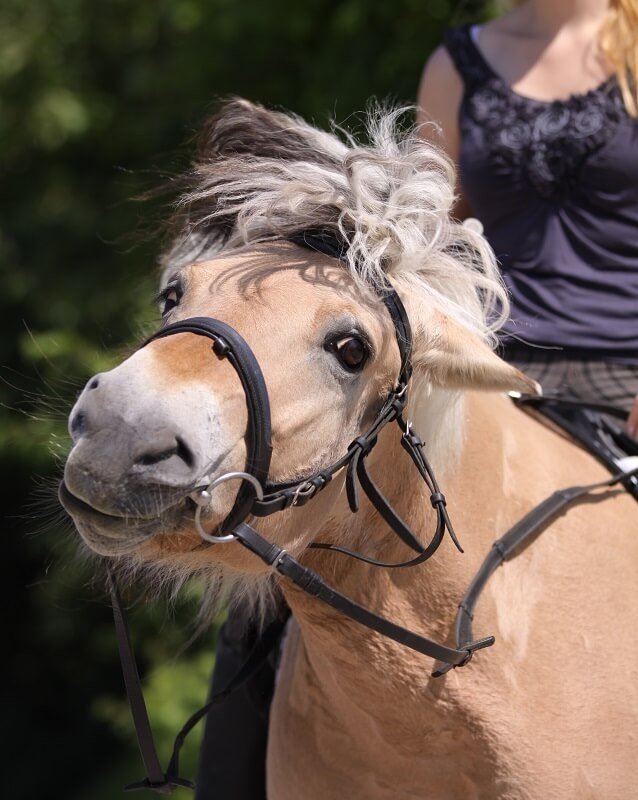
The signs are hard to miss once you know them. The horse flips its head up and down, sharply and repeatedly, usually in a vertical nodding motion. About nine out of ten headshakers shake vertically rather than side to side. The horse snorts and sneezes, rubs its nose on its forelegs or on fences and walls, and may strike at its own face with a front foot. Its face looks anxious, and it may be hard to ride, because the shaking starts or gets worse with exercise.
The shaking usually happens most when the horse is working, and less when it is at rest. That is what makes it dangerous. A horse that starts shaking violently under saddle can unbalance its rider, shy, or bolt. Some horses become so distressed that they cannot be ridden at all. This is not disobedience. The horse is in pain, and it cannot help what it is doing.
It is important to say this clearly: headshaking syndrome is not a behaviour problem, and it is not the horse being naughty. It is a painful nerve condition, and punishing a headshaker for shaking is wrong and useless. The horse needs a vet, not a firmer hand.
The Common Triggers: Light, Wind, Exercise and More
Most headshakers have triggers — things that set off an episode or make it worse. The most common trigger is bright sunlight. About half of affected horses are worse in bright light, and these are called photic headshakers. They shake more outdoors on sunny days, and less indoors, in the shade, or at night. A UV-blocking fly mask often helps these horses a great deal.
Wind is another common trigger. Air moving across the muzzle seems to set the nerve off, and a horse that is fine in still air may shake badly on a windy day. Rain, dust, and pollen can have the same effect, because they all stimulate the lining of the nose.
Exercise makes it worse for many horses. The shaking often starts a few minutes into a ride and gets stronger the harder the horse works. This is one of the most useful clues for your vet. A horse that shakes in the field but never under saddle is less likely to have the syndrome than a horse whose shaking starts every time you pick up the trot.
Other triggers are more individual. Some horses are set off by loud sounds, by vibrations, or by changes in the weather. Some are worse after a change of yard, a new feed, or a stressful event. That is why a diary is so useful. Write down the date, the time, the weather, where the horse was, and what it was doing when it shook. After a few weeks, the pattern usually shows itself, and that pattern helps your vet enormously.
Teeth, ears, and eyes can also cause shaking, and these must be ruled out before anyone calls it headshaking syndrome. A horse with sharp teeth, a cracked tooth, or a sore mouth may shake its head when the bit moves. A horse with an ear infection or ear mites will shake its head and rub its ears. A horse with a painful eye will flinch and shake. Our guide to why a horse sneezes a lot covers the nasal side of this, and our article on why a horse grinds its teeth explains how dental pain shows up in the mouth and under saddle.
How Vets Work Out the Cause
There is no single test for headshaking syndrome. Your vet will diagnose it by ruling out everything else, and that takes time. The first step is a full examination: teeth, ears, eyes, and the whole head, plus a look at the bridle and bit. A dental exam is essential, because dental pain is one of the most common causes of shaking that looks like the syndrome.
Your vet may want to look inside the nose and throat with an endoscope, a thin camera on a flexible tube. This can show up sinus infections, growths, or damage in the airways that could be causing the shaking. X-rays or a CT scan of the head may be needed if the vet suspects a tooth root problem or a sinus issue. These are expensive, but they can find a cause that is actually treatable, which is the best possible outcome.
Nerve blocks are another tool. Your vet can numb a branch of the trigeminal nerve with a local anaesthetic and watch what happens. If the shaking stops while the nerve is numb, it confirms that the nerve is involved. This does not cure anything, but it helps your vet be sure of the diagnosis.
Blood tests are sometimes done to check for infection or for low levels of magnesium, which some vets believe plays a role. Your vet will also want your diary — the record of when the horse shakes, in what weather, and under what conditions. A good diary can save weeks of guesswork, so start it the day you first notice the problem.
If every test comes back clear and the shaking fits the pattern, your vet will call it trigeminal-mediated headshaking. That is not a failure. It is a diagnosis, and it means you can stop searching for a hidden cause and start managing the condition.
What Helps: Nose Nets, Masks and Management
There is no cure for headshaking syndrome, and anyone who promises one is selling something. But there are things that help many horses, and the first ones to try are the simplest and cheapest.
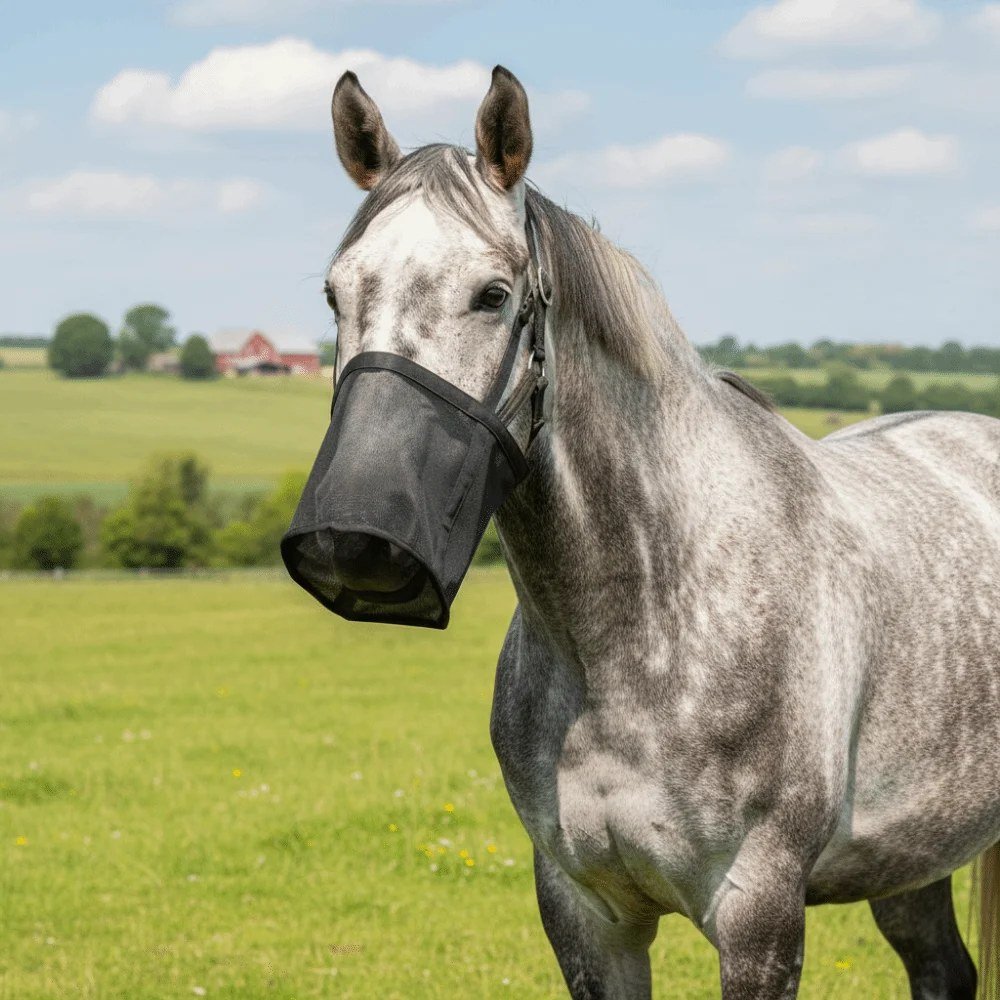
A nose net is the single most useful tool for many headshakers. It is a fine mesh that fits over the muzzle and changes the way air flows into the nostrils. The gentle, constant feeling of the net seems to distract the nerve from the painful signals, a bit like rubbing a bumped elbow. Many horses improve a lot with a nose net, and some can be ridden normally with one on. They are cheap and easy to fit.
A UV fly mask helps the light-sensitive horses. Look for a mask that blocks ultraviolet light, not just flies, and use it whenever the horse is outside in bright sun. Some owners also ride in the early morning or evening, when the light is softer, or school indoors on the worst days. These small changes cost nothing and can make a real difference.
Some vets try medication. Melatonin, a hormone that is linked to daylight, is sometimes used for light-sensitive horses. Cyproheptadine, an antihistamine, can help some horses. Magnesium supplements are a newer idea, and early results are promising, but the evidence is still thin. Gabapentin, a drug used for nerve pain in people, is sometimes tried for severe cases. All of these need your vet’s guidance. Do not buy supplements or drugs online and try them yourself, because the doses matter and some of them are banned in competition.
A newer treatment is called PENS, which stands for percutaneous electrical nerve stimulation. It involves placing fine needles near the nerve under sedation and passing a small electric current through them, repeated over several sessions. Early results from the University of Bristol are encouraging, with some horses going into remission for months. It is not widely available yet, and it does not work for every horse, but it is worth asking your vet about if the simple measures are not enough.
Management matters as much as medicine. Keep the horse’s routine calm and predictable. Avoid dusty arenas and pollen-heavy fields on bad days. Make sure the horse is fit, but do not push it hard on a day when it is shaking badly. A horse that is overworked and stressed will shake more, not less. If you need to check your horse’s weight before a vet visit, for example to work out a medication dose, our horse weight calculator gives a quick estimate from a tape measurement. Age can also be a factor in how a horse copes with a long-term condition, and our horse age calculator can help you think about what stage of life your horse is in.
Can You Still Ride a Headshaker?
Many headshakers can still be ridden, and many owners carry on happily with a nose net and a few management changes. But it depends on how bad the shaking is, and honesty is essential here. A horse that shakes mildly in bright sun and settles with a nose net is a very different animal from a horse that shakes violently every time it trots.
Be honest with yourself about safety. If the shaking makes the horse unpredictable, if it throws its head so hard it unbalances you, or if it has bolted or reared during an episode, you should not ride it until your vet has assessed it. A fall from a headshaking horse can cause serious injury, and no ride is worth a broken bone.
If you do ride, ride with a plan. Use the nose net or mask that helps. Choose your time of day and your route. Warm up gently and watch for the first signs of shaking. If the horse starts to shake badly, stop, walk, and go home. Pushing through an episode does not help the horse, and it puts you at risk. A short, calm ride that ends well is worth more than a long ride that ends in a fight.
Tell anyone else who rides your horse about the condition. A friend, a sharer, or a groom who does not know the horse is a headshaker may think it is being naughty and punish it. Make sure everyone who handles the horse knows what to look for and what to do when it happens.
When to Call the Vet
Call your vet straight away if the shaking started suddenly, if it is violent or getting worse, if the horse is distressed, or if it has any other signs of illness, such as a fever, a runny nose, or a swollen face. A sudden onset in a horse that was fine yesterday is a vet visit, not a wait-and-see.
Call the vet the same week if the shaking happens regularly, if it interferes with riding, or if it happens without any clear trigger. The sooner the cause is found, the sooner the horse can be helped, and the sooner you will know whether you are dealing with a simple problem or the syndrome.
When you call, have your diary ready. Tell the vet when the shaking started, how often it happens, what the weather is like when it happens, whether it is worse under saddle, and whether the horse snorts, sneezes, or rubs its nose. A clear, short report gets you the right advice faster than a long, worried description, and it may save your vet a visit.
Frequently Asked Questions
What breeds are most likely to develop headshaking?
Any breed can develop headshaking, but some are affected more often than others. Thoroughbreds and warmbloods are over-represented in the cases vets see, which may be partly because they are the breeds most often in ridden work, where the shaking is noticed. Geldings are affected more often than mares, and the condition most often starts when the horse is between six and twelve years old, in the prime of its working life. None of this is a reason to avoid a breed, and none of it proves a horse will develop the condition. It is simply a pattern vets have noticed, and it can help an owner of a young Thoroughbred gelding take early shaking a little more seriously.
Does headshaking get worse in summer?
Often, yes. About six in ten affected horses are seasonal, and for most of them summer is the worst time. The long, bright days, the strong sunlight, the wind, and the pollen all add up to more stimulation for an already over-sensitive nerve. Many owners find their horse is fine through the winter and starts shaking again in spring as the days lengthen. The good news is that the same pattern works in reverse: when the days shorten in autumn, many seasonal headshakers improve on their own. That is why a diary matters.
If your horse is bad from April to September and fine from October to March, you are almost certainly looking at a seasonal, light-triggered pattern, and a UV mask and a nose net are likely to help most.
Are nose nets legal in competition for headshakers?
It depends on the sport and the level. Nose nets are allowed in many competitions, including British Dressage and British Eventing at most levels, and in show jumping, where they are commonly seen. But the rules change between organisations and between countries, and some competitions require a vet’s letter or a special dispensation for a headshaking horse. The rules also change over time, so never assume. Check the rulebook for your own sport and level before you enter, and ask the competition secretary if you are unsure. If nose nets are not allowed in your sport, a UV fly mask, careful management, and your vet’s advice are the next best options.
Can headshaking go away on its own?
Sometimes, but it is not something to count on. Some horses, especially seasonal ones, go into remission — the shaking stops for months, sometimes for a whole winter — and then comes back when the days lengthen again. A few horses seem to recover completely, though vets are cautious about calling it a cure, because the condition can return years later. Remission is not the same as a cure. The nerve is still over-sensitive, and the shaking can come back. If your horse’s shaking stops, enjoy it, keep the management in place, and keep your diary going, so you will spot it early if it returns.
Head shaking in horses is usually nothing to worry about — a flick at a fly, a shake after a drink, a toss of the head to settle the bit. But when the shaking is violent, repeated, and without a clear reason, it deserves a vet’s attention, because it may be the one nerve condition that looks like a behaviour problem. Learn the pattern, keep a diary, and rule out teeth, ears, and eyes first.
For the nasal side of the picture, see our guide to why a horse sneezes a lot, and for the dental side, our article on why a horse grinds its teeth. The Wikipedia article on headshaking in horses gives a good plain overview of the trigeminal nerve explanation and the treatments that have been tried.