Why Does My Dog Bring Me His Food Bowl? Answered
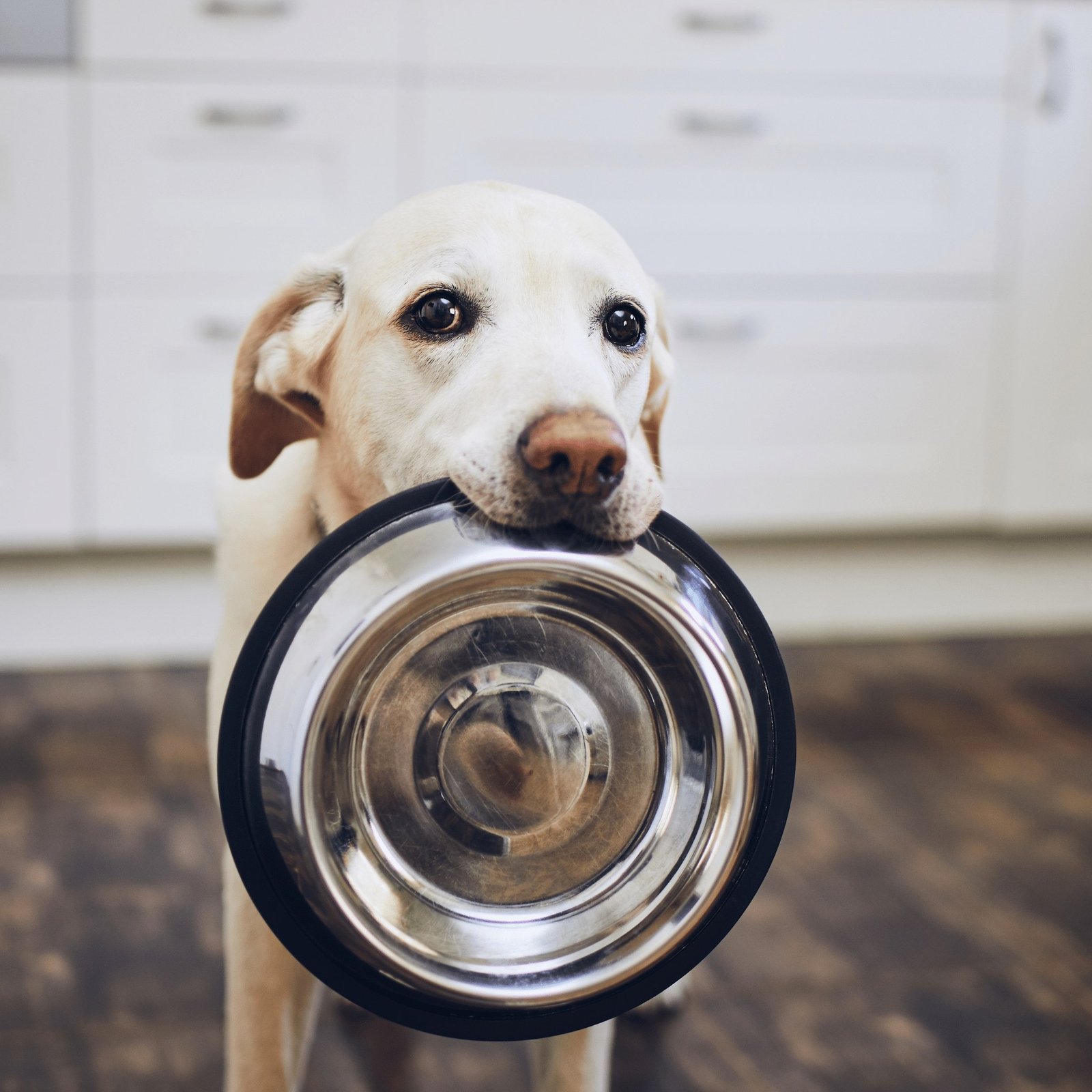
You fill the bowl, set it down, and turn away for one second. When you look back, your dog is trotting into the living room with the whole bowl in its mouth. Or the bowl is still in the kitchen, but the food is now in a neat pile on your favourite rug. If you have ever asked why does my dog bring me his food bowl, you are watching one of the strangest and most charming habits dogs have.
Carrying a bowl is not random, and it is not your dog being silly. It is communication, and it usually means one of a few clear things: your dog wants more food, it has learned that the bowl gets your attention, it does not like the bowl itself, or it wants to eat somewhere safer or closer to you.
This guide explains the seven reasons dogs carry their bowls, how to read what your dog is telling you, and how to fix the habit without a fuss. It also covers the feeding-station changes that solve most cases, and the warning signs that mean the bowl carrying is a health problem, not a quirk.
Direct answer: Dogs bring you their food bowl because the bowl is the fastest way to get a reaction from you. Most of the time it means “I am still hungry,” “I want attention,” or “I do not like this bowl or this spot.” Some dogs carry the bowl to a quieter place because of an old instinct to protect food from competitors, and retriever breeds often carry it simply because carrying things is what they were bred to do. It is usually harmless. It only needs a vet visit if it starts suddenly, or comes with eating less, dropping food, drooling, or weight loss.
Before you try to stop the behaviour, work out which reason fits your dog. A dog that is still hungry needs a portion check, not training. A dog that hates a noisy metal bowl needs a different bowl, not a scolding. Fix the cause, and the bowl usually stays put on its own.
Why Does My Dog Bring Me His Food Bowl? The Short Answer
The food bowl is the most valuable object in your dog’s life, after you. It is the thing that delivers food, and food is the thing your dog cares about most. When your dog picks up the bowl and brings it to you, it is using the most powerful tool it has to get your attention and to make a request.
The simplest reading is usually the right one. An empty bowl at your feet means “more, please.” A bowl carried to the living room means “I want to eat near you.” A bowl carried to a quiet corner means “I want to eat in peace.”
There is also an older layer underneath. Wild canines carry food away from the kill site to eat in safety, away from stronger pack members. Your dog’s brain still carries that program, even though there is no pack to steal its dinner. That is why the behaviour looks so purposeful, even when there is no real reason for it.
The bowl itself can also be the problem. A light metal bowl slides across a hard floor, clangs against tiles, and clicks when the dog’s collar tag hits the rim. Some dogs hate that noise. Others dislike the feel of metal on their teeth, or the way a deep bowl presses against their whiskers. When the bowl is the problem, the dog solves it the only way it can: by moving the food somewhere better.
The 7 Reasons Dogs Bring You Their Food Bowl
Here are the seven reasons, from the most common to the least. Most bowl carriers fall into the first three.
1. “I am still hungry” or “I want more”
This is the most obvious reason, and often the right one. Your dog finishes its meal, looks at the empty bowl, and brings it to you as a polite but very clear request for seconds. It has learned that the bowl, delivered to your feet, gets a reaction, and sometimes that reaction is food.
This happens most in homes where feeding times are inconsistent, or where portions are a little small for the dog’s activity level. A dog that is growing, very active, or recovering from illness may genuinely need more food than it is getting. Before you train the behaviour away, check the portion first.
Our dog food calculator can help you check whether your dog’s daily portion matches its weight and activity level. If the portion is right and the dog is still bringing the bowl, the request is probably a habit rather than real hunger. In that case, the fix is to stop rewarding it, as explained later in this guide.
2. A learned habit that earns attention
Dogs are brilliant at learning what works. If your dog brought you the bowl once and you laughed, spoke to it, or added a handful of kibble, it learned a powerful lesson: bowl equals attention. Dogs repeat behaviours that pay off, and a bowl delivery pays off almost every time.
The habit often starts by accident. A puppy picks up a light bowl, carries it a few steps, and the whole family laughs. The puppy has just been rewarded for carrying the bowl, and it will do it again tomorrow. Within a few weeks, the bowl delivery is a daily routine.
The bowl is also noisy, which helps. A metal bowl clanging across a hard floor is impossible to ignore, and that is part of the point. Your dog has found a dinner bell that it can ring itself. The fix is to make the bell stop working: react calmly, do not add food, and do not make a fuss. The behaviour fades when it stops paying off.
3. The bowl itself is the problem
Sometimes the dog is not asking for anything. It simply does not like the bowl. Light stainless steel bowls slide, tip, and clang. Glass bowls click. Deep bowls press against a dog’s whiskers, which some dogs find uncomfortable. A bowl that is too small forces a large dog to cram its face in, and a bowl that is too big makes a small dog stretch.
Watch how your dog eats. Does it paw at the bowl, nudge it across the floor, or pull food out one piece at a time? Does it eat happily from a flat plate or a mat, but not from the bowl? These are signs that the bowl, not the food, is the issue. The fix is simple: try a heavy ceramic bowl with a rubber base, or a wide, shallow dish.
4. “I want to eat near you”
Dogs are social eaters. In the wild, canines eat together, and your dog sees your family as its pack. If the food bowl is tucked away in a lonely corner of the kitchen or the laundry room, your dog may simply feel isolated while it eats. Bringing the bowl to you is its way of joining the group.
You will see this most in dogs that only carry the bowl when you are in another room. The dog takes a mouthful, trots to your feet, drops it, and eats while looking up at you. Or it brings the whole bowl and sets it down beside the sofa. The message is not about the food. It is about being near you.
The fix is to move the bowl, not the dog. Put the feeding station in a place where the family spends time, or at least where the dog can see you. Many dogs stop carrying their bowls the day the bowl moves into the living room or the kitchen’s busy corner. Dogs eat better with company, and they are calmer for it.
5. Protecting food: the caching instinct
Some dogs carry their bowls to a quiet corner, under a table, or behind the sofa, and then eat there. This is the old survival instinct at work. In a wild pack, a lower-ranking animal that stays at the kill site risks losing its share to a stronger animal. Carrying food away is the safer choice.
This is more common in multi-dog homes, where the presence of another pet raises the sense of competition, even if the dogs get along well. It is also common in rescue dogs and dogs that once had to compete for food. The behaviour is not aggression. It is caution, and it is deeply built in.
6. Breed instinct: born to carry
Some breeds carry things because that is what they were made to do. Retrievers such as Labradors and Golden Retrievers were bred over generations to pick up game gently and bring it back to their handler. Carrying is in their nature, and a food bowl is simply the nearest carryable object.
Spaniels, Poodles, and other retrieving breeds do the same. They may carry the bowl, a shoe, a toy, or anything that fits in their mouth, and bring it to you as a gift or an invitation to play. Retrievers also love to stash prized items away, as covered in our guide on why dogs bury treats in the couch. It is not a problem to solve. It is a breed trait to manage, with plenty of proper carrying games such as fetch and retrieve training.
If your retriever carries its bowl, give it a job that uses the same instinct. A daily fetch session, a retrieve game, or a toy it is allowed to carry will often cut the bowl carrying in half. A dog that gets to carry the right things is less interested in carrying the wrong ones.
7. Anxiety or stress
A dog that is anxious may carry its bowl to a den-like spot, such as under a table or into a corner, because it feels safer there. This often happens after a move, a new pet in the house, loud building work, or a change in routine. The bowl carrying is the dog’s way of coping with a world that feels uncertain.
Stress carrying usually comes with other signs: pacing, panting, hiding, licking lips, or eating less. The dog may also carry the bowl and then not eat at all, which is a sign that anxiety, not hunger, is driving the behaviour. If the bowl carrying started suddenly after a change in the home, look at the change first.
Help an anxious dog by making the feeding spot calm and predictable. Feed at the same times each day, in the same quiet place, away from noise and foot traffic. A covered crate with the door open, or a quiet corner, can give the dog the safe feeling it is looking for.
The Bowl Decoder: What the Carry Means
Match what you see to a row. The destination and the timing tell you more than the carry itself.
| What you see | What it usually means | First fix |
|---|---|---|
| Empty bowl dropped at your feet after a meal | Still hungry, or a learned request for more | Check the portion with a food calculator; do not add food on demand |
| Bowl carried to the living room, dog eats beside you | Wants to eat near the family | Move the feeding station to a busier spot |
| Bowl carried to a quiet corner or under a table | Protecting food; wants a safe spot | Feed in a quiet place; separate dogs at meal times if needed |
| Bowl picked up, carried around like a toy | Play, habit, or breed carrying instinct | Give a proper carrying game; use a heavier bowl |
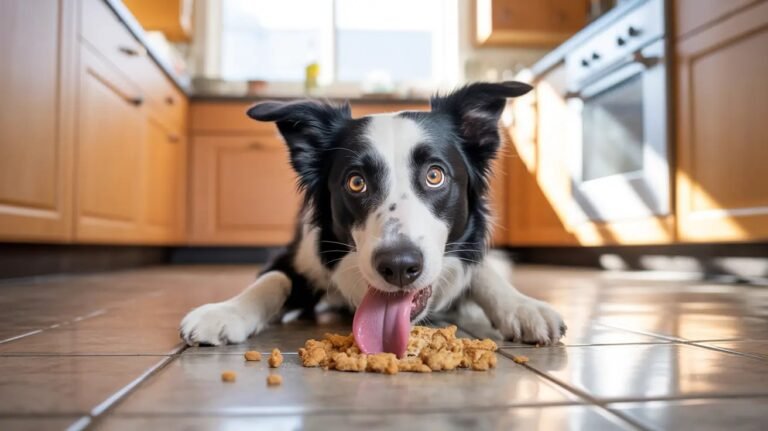
| Food pulled out one piece at a time onto the rug | Dislikes the bowl or the floor surface | Try a heavy ceramic bowl or a flat mat; check for slippery floors |
| Bowl carried only when guests or another pet are near | Competition or social stress | Feed in a calm, separate spot; keep meal times predictable |
| Sudden bowl carrying plus eating less or dropping food | Possible dental pain or illness | See a vet promptly |
How to Stop the Bowl Carrying
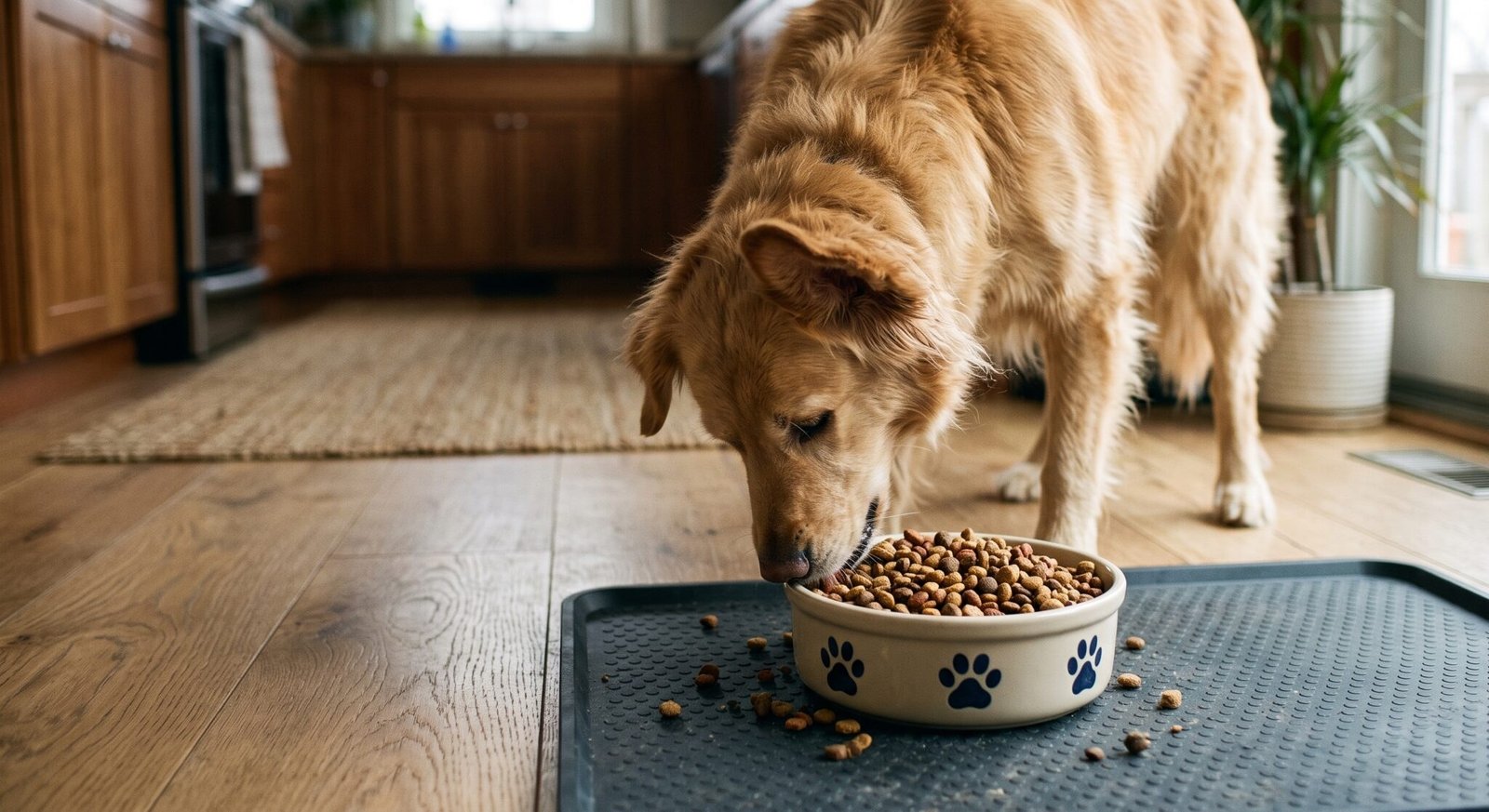
Start by fixing the easy causes. Check the portion, change the bowl, and move the feeding station. These three changes solve most cases on their own, and they cost almost nothing. A heavy ceramic bowl on a rubber mat, in a spot where the family spends time, is the setup most dogs are happiest with.
Next, stop rewarding the delivery. When your dog brings you the bowl, stay calm. Do not laugh, do not talk to the dog, and do not add food. Pick the bowl up quietly, put it back in its place, and walk away. The dog will try again a few times, because the habit has always worked before. Stay consistent, and it will fade.
Feed on a fixed schedule. Two or three meals a day, at the same times, in the same place, with the same portion, teaches your dog that food arrives on a schedule it can trust. A dog that trusts the schedule does not need to ask for food with a bowl. Use our dog calorie calculator to set the portion, and stick to it for at least two weeks before judging the result.
If the bowl carrying is about eating near you, the simplest fix is to eat together. Move the bowl to the room where you spend the evening, and let the dog eat while you are nearby. Many owners find that this one change ends the behaviour completely. Dogs are social animals, and a shared mealtime is a small thing that makes a big difference.
Feeding-Station Fixes That Work
The feeding station is where most bowl-carrying problems are solved. Start with the bowl. A heavy ceramic bowl with a wide, shallow shape and a rubber base is the best choice for most dogs. It stays put, it does not clang, and it does not press on the whiskers. Avoid light metal bowls on hard floors, which slide and make a noise with every bite.
Choose the spot carefully. The best feeding spot is quiet but not isolated, away from the busiest walkway but close enough that the dog can see the family. A corner of the kitchen, near where you sit, works well. A laundry room at the far end of the house does not, because the dog feels alone there.
Feed each dog separately in a multi-dog home. Even friendly dogs feel competition at meal times, and separate feeding spots remove the pressure. Give each dog its own bowl, its own mat, and its own quiet corner, and pick the bowls up when the meal is over. A dog that cannot guard an empty bowl will not try to.
When Bowl Carrying Is a Warning Sign
Most bowl carrying is harmless. A few patterns are not. The most important one is a sudden change. If your dog has eaten quietly from its bowl for years and suddenly starts carrying it, dropping food, or eating in a new place, something has changed, and it is worth finding out what.
Dental pain is the most common medical cause. A dog with a sore tooth, a cracked tooth, or gum disease may drop food, chew on one side, or carry the bowl to a softer surface. It may also drool more, paw at its mouth, or refuse hard kibble while still eating soft food. If your dog drops food it used to eat happily, check its mouth, and book a vet visit.
Other warning signs include eating much less than usual, losing weight, vomiting, diarrhoea, or seeming tired and withdrawn. A dog that carries the bowl and then does not eat at all may be nauseous, in pain, or stressed. These signs together mean a vet visit, not a training plan.
Older dogs deserve extra attention. As dogs age, their teeth wear, their jaws weaken, and their senses fade. A senior dog that starts carrying its bowl may be struggling to see it, to grip the food, or to chew comfortably. Softer food, a raised bowl, and a vet dental check can all help.
Before the vet visit, note when the carrying started, whether the dog eats less, and whether it drops food or chews differently. A short video of the dog eating is very helpful. If the vet finds nothing wrong, the next step is a behaviourist, who can tell a habit from anxiety and build a plan for your dog. The AKC’s feeding guide is a good reference for how often and how much dogs should eat at each life stage.
Frequently Asked Questions
Why does my dog flip his food bowl over?
Flipping the bowl is a close cousin of carrying it, and it usually has a simpler cause. A light bowl flips easily when a dog paws at it, and some dogs flip the bowl on purpose when they are finished, as a way of saying “done.” Others flip it because they are frustrated, bored, or trying to get to the last pieces stuck underneath. A heavy ceramic bowl with a rubber base is the simplest fix, because it is hard to flip. If the flipping comes with not eating, pawing at the mouth, or drooling, check for dental pain, because a sore mouth can make a dog bat at its bowl.
Why does my dog eat so fast then throw up?
Fast eating, called gulping, is common in dogs that once competed for food, in multi-dog homes, and in breeds that love food. A dog that gulps swallows a lot of air with its food, and the air and the full stomach together trigger vomiting, usually within minutes of the meal.
A slow-feeder bowl, a puzzle feeder, or spreading the kibble on a flat tray all slow the dog down. Feeding smaller meals more often also helps. If the vomiting happens every meal, or comes with weight loss, lethargy, or blood, see a vet, because it can signal a stomach or oesophagus problem. The Merck Vet Manual’s guide to oesophagus disorders in dogs explains the serious causes in plain language.
Should I feed my dog from a raised bowl?
Raised bowls help some dogs and hurt others, so the answer depends on your dog. A raised bowl can help a tall dog, a senior dog with arthritis, or a dog with a neck or back problem, because it does not have to bend so far down. But raised bowls are not right for every dog. Some research has linked raised feeders to a higher risk of bloat in large, deep-chested breeds such as Great Danes and German Shepherds, although the evidence is not settled. As a rule, feed most dogs from a bowl on the floor, and only use a raised feeder if your vet recommends it.
Why does my dog drop food on the floor and not eat it?
Dropping food and leaving it is different from carrying food to eat elsewhere, and it usually means something is wrong with the food or the mouth. The dog may dislike the taste, the food may be stale, or a sore tooth may make chewing painful. Some dogs drop food when they are full, or when they are distracted by something more interesting.
Watch the pattern: a dog that drops the same kibble every day but eats treats happily probably does not like the food. A dog that drops food, chews on one side, or cries while eating needs a vet dental check. If the dog drops food and walks away from a full bowl, check the portion and the feeding schedule before changing the food.
Why does my dog carry his bowl only when guests are over?
Guests change the social picture at home, and some dogs respond by moving their food. A dog that carries its bowl when visitors arrive may be protecting its meal from new people, seeking a quieter spot away from the noise, or looking for attention in a house full of distractions. Give the dog a calm feeding spot away from the guests, feed before visitors arrive, and do not make a fuss about the carrying.
A dog that brings you its food bowl is not being difficult. It is talking to you in the clearest way it knows how, with the most valuable object it owns. Listen to what the bowl is saying: check the portion, change the bowl, and move the feeding spot. Do that, and the bowl will usually stay where it belongs.