Why Does My Cat Sleep in the Bathtub? 7 Reasons
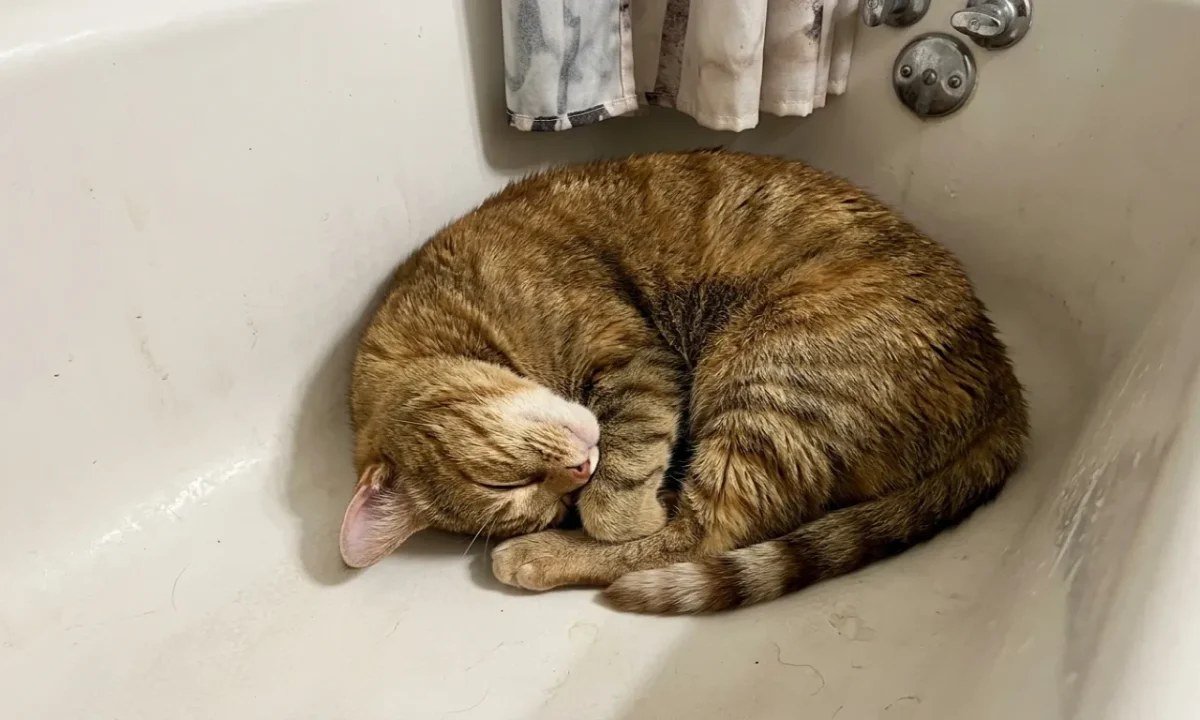
You walk into the bathroom, and there she is. Your cat is curled up in the empty bathtub, fast asleep, as if it were the most normal bed in the house.
It looks strange, but it is very common. So why does my cat sleep in the bathtub? The short answer is that the tub gives her two things at once: a cool surface and a safe, enclosed hiding place.
Your cat sleeps in the bathtub because the cool porcelain helps her control her body heat, and the high walls make her feel safe, like a den. Most of the time it is a harmless habit. It only becomes a worry if the behaviour starts suddenly, especially in a senior cat, or comes with changes in eating, drinking, or litter box habits.
Cats are picky about where they sleep. They test dozens of spots in a home and keep the ones that feel right. The bathtub passes their test for reasons that make perfect sense once you see the world through a cat’s eyes.
This guide explains the seven real reasons, how to read your cat’s posture to tell cooling from hiding, when the habit is a warning sign, and a simple seven-day plan to win your tub back if you want it.
Why Does My Cat Sleep in the Bathtub? 7 Reasons
No single reason explains every cat. Most tub sleepers are chasing a mix of two or three of the reasons below. Watch when your cat uses the tub, and how she lies in it, and the reason usually gives itself away.
1. The Porcelain Is Cool
Cats run hotter than we do. A healthy cat’s body temperature sits around 100 to 102.5 degrees Fahrenheit, or 37.8 to 39.2 degrees Celsius.
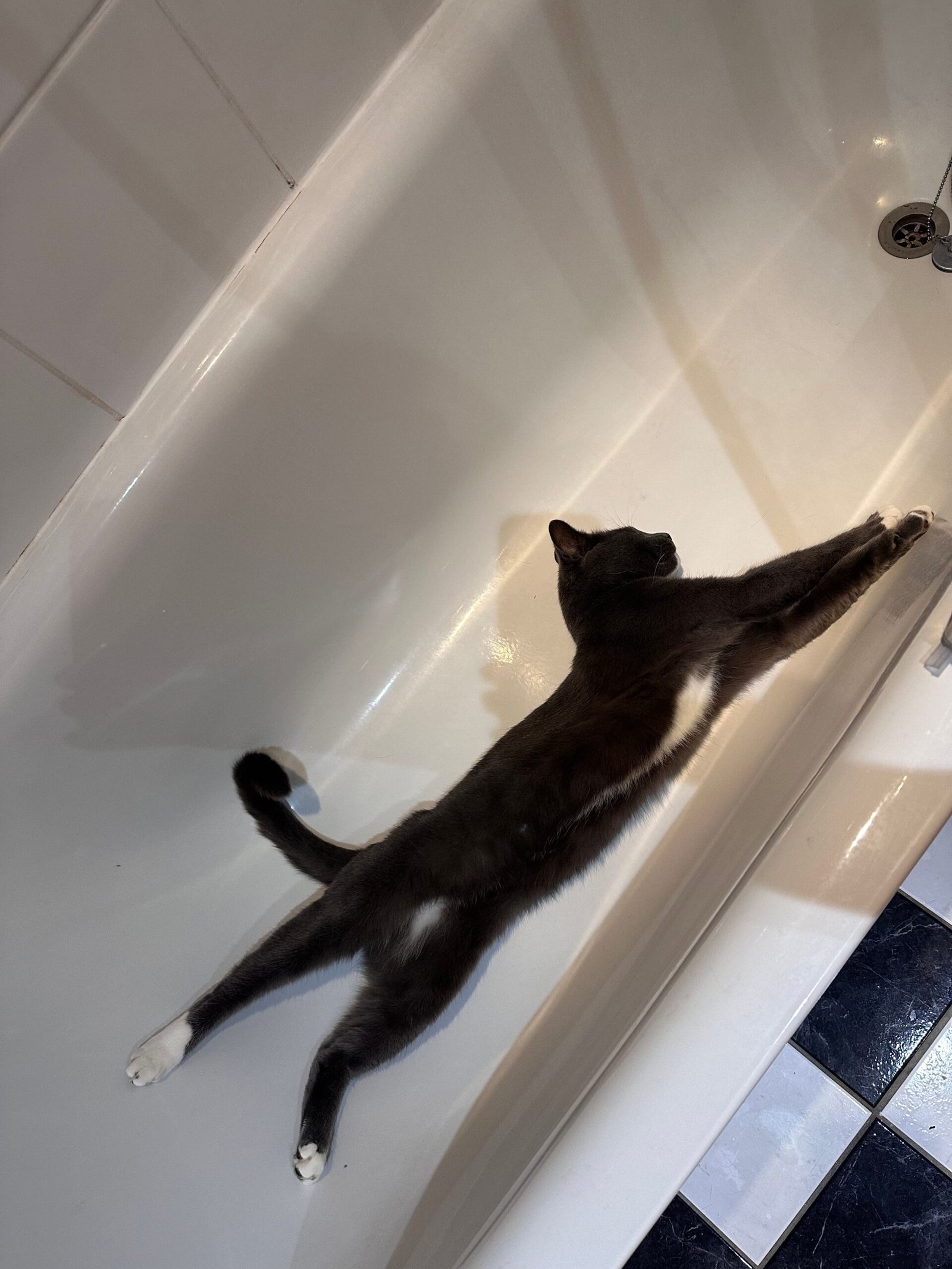
Porcelain and enamel pull heat away from the body fast. On a warm day, a bathtub works like a cooling pad. Your cat stretches out on it to dump heat through her belly and flanks.
This is the top reason in summer, or in warm houses. If your cat only uses the tub on hot days, cooling is almost certainly the answer. A cat who wants to cool down will lie flat and spread out, with as much body touching the surface as possible.
2. The Tub Feels Like a Den
Cats are both hunters and prey animals. Even a safe indoor cat carries the old instinct to sleep somewhere with walls around her and one way in.
A bathtub gives her that. It has high sides on three sides, a clear view of the door, and nothing can creep up behind her. For a nervous cat, that shape feels safer than an open bed in the middle of a room.
This is why the tub is popular after a stressful event. A new pet, a visitor, building noise, or a change in routine can send a cat looking for a den. The bathroom is often the quietest room in the house, which adds to the appeal.
3. The Bathroom Is the Quietest Room
Bathrooms get little foot traffic. There is no television, no cooking noise, and no one walking past every few minutes. For a cat who wants a long, undisturbed nap, that quiet matters.
Cats sleep 12 to 16 hours a day, and older cats can sleep up to 20 hours. They need a spot where they will not be stepped on, petted awake, or startled. The tub, inside a quiet room with a door that closes, is a good deal.
If your cat sleeps in the tub mostly during busy hours, she is probably buying peace and quiet. She is not being odd. She is being smart.
4. It Smells Like You
Cats live by smell far more than we do. Your cat has about 200 million scent receptors in her nose, while humans have around 5 million. Scent is how she maps safety.
Your bathtub carries your scent. Shampoo, soap, and your own skin leave traces that say this place belongs to her favourite person. That familiar smell is calming, especially for a cat who is a little anxious.
This also explains why some cats sleep on their owner’s clothes. The tub is the same idea in a harder, cooler form. It smells like home, and it smells like you.
5. Water Is Close By
Cats have a strong instinct to prefer running water over still water. In the wild, moving water is fresher and safer to drink than a still pool. Many cats will ignore a full water bowl and drink from a dripping tap instead.
The bathtub sits next to taps and a shower head. A cat who sleeps there is never far from the sound and smell of water. Some cats even lick drips from the tap after a shower.
This reason matters more if your cat also hangs around sinks. If your cat drinks a lot more water than usual and sleeps near water sources, read the warning-sign section below. Extra thirst can be a health clue.
6. It Became a Habit
Cats are creatures of routine. Once a cat finds a spot that works, she will return to it again and again. The tub was comfortable once, so it stays on her list.
Habit also explains why some cats use the tub at the same time every day. Your cat may have a daily route: sunny window in the morning, your bed in the afternoon, the tub in the evening. It is simply part of her schedule now.
Old habits are hard to break in cats. That is good news if you like the quirk, and useful to know if you want to change it. You will need to offer a better spot, not just block the tub.
7. Sleeping There Gets a Reaction
Cats learn fast. If you gasp, laugh, take a photo, or scoop her up with a cuddle every time she is in the tub, she learns that the tub gets attention.
Attention is a reward, even when you think you are just reacting. A cat who wants interaction will repeat whatever worked last time. The tub becomes her stage.
This is the least likely reason on its own. But if your cat looks at you, meows, or waits for you to notice her in the tub, attention may be part of the mix.
The Posture Test: Is Your Cat Cooling Off or Hiding?
The tub offers two very different things: a cold surface or a safe hiding place. Your cat’s posture tells you which one she wants. This is the cheapest check you have, and it takes five seconds.
| What you see | What it usually means | What to do |
|---|---|---|
| Lying flat on her side, legs stretched out, belly pressed to the porcelain | She is dumping heat. She feels warm and wants to cool down. | Offer a cool tile, a cooling mat, or a shady spot. Check the room temperature. |
| Curled tight in a ball, tucked into the plug end or a corner | She wants a den. She is hiding, resting, or feeling unsure. | Look for what changed at home. Offer a covered bed in a quiet corner. |
| Loaf position, paws tucked, eyes half closed, facing the door | She is resting and watching. She feels safe enough to doze but wants to monitor the room. | Nothing. She is comfortable. Let her be. |
| Flat and stretched in a cool house, or shivering | Something is off. A cat who seeks cold when she is already cold may be unwell. | Call your vet, especially if she is also eating less or hiding more. |
Posture is a clue, not a diagnosis. One flat nap on a hot day means nothing. A pattern — flat every day in a cool house, or curled tight every day for a week — is worth a closer look.
Also note the time of day. Cooling naps cluster in the warm afternoon. Hiding naps cluster after a stressful event, like visitors arriving or a loud noise. The timing often confirms what the posture suggests.
Why Kittens and Senior Cats Use the Tub Differently
Age changes the reason. Kittens and senior cats both end up in the tub, but they are usually there for opposite reasons, and knowing which one applies to your cat helps you read the habit.
Kittens use the tub as a playground first and a bed second. A kitten will climb in, slide around, chase a drip of water, and then fall asleep where she lands. The tub is a new space to explore, and kittens explore everything. A kitten who sleeps in the tub is usually just a kitten who got tired mid-game.
For kittens, the main job is safety. A dry tub is safe, but a wet one is not. Always keep the tub dry and free of soap residue when a kitten is in the house. Check that she can climb out on her own. A very small kitten can get stuck in a deep tub, so leave a folded towel draped over the edge as a step until she grows.
Senior cats use the tub for comfort and safety, not play. An older cat may have stiff joints, weaker muscles, or poorer eyesight. The tub is low, enclosed, and easy to reach from the floor. It is one of the few spots where a senior cat can rest without climbing or jumping.
Arthritis changes sleeping spots in a clear pattern. A cat who used to sleep on top of the wardrobe moves to the bed, then to the floor, then to the tub. Each move is a step down to somewhere easier to reach. If your senior cat has moved to the tub in the last few months, watch how she moves. Hesitating before jumps, or struggling with stairs, points to joint pain that a vet can help with.
Senior cats also feel the cold more, and the tub is a poor bed for a cold cat. If your older cat sleeps in the tub in winter, give her a warm alternative nearby, like a heated pad or a bed next to a radiator. She may be choosing the tub for safety while quietly wishing it were warmer.
When Tub Sleeping Is a Warning Sign
Most tub sleeping is harmless. But a sudden change in where a cat sleeps is one of the earliest signs owners notice when something is wrong. Cats hide illness well, so a new habit deserves attention.
Call your vet promptly if the tub sleeping started suddenly and comes with any of these changes. A cat who never hid before, especially one over seven years old, should be checked rather than watched.
Eating less, or not eating at all for more than a day, is a red flag. Drinking much more water than usual, or visiting the litter box far more often, can point to kidney disease, diabetes, or an overactive thyroid.
Hiding more than usual, grooming less, or sleeping far more than normal are also warning signs. So is a cat who lies flat in the tub in a cool house, as if she is trying to lose heat she does not have.
Senior cats deserve extra care here. Older cats can develop kidney disease, hyperthyroidism, or feline cognitive dysfunction. All three can change where a cat sleeps and how much she hides. A vet check with bloodwork can rule out the treatable causes.
You can learn how old your cat is in human terms with our cat age calculator. It helps you judge whether “senior” applies to your cat, since a large breed ages differently from a small one.
Keep a simple log for a week if you are unsure. Note the time, the posture, and whether your cat ate, drank, and used the litter box normally. A vet finds a short log far more useful than a vague “she has been acting strange.”
How to Win Your Bathtub Back in 7 Days
If you like the habit, you do not need to change it. The tub is safe as long as it is dry and free of cleaning chemicals. But if you want your bathtub back, do not just block it. Offer a better spot instead.
Day one and two: put a cool ceramic tile or a cooling mat in a quiet corner of the same bathroom. Cats who use the tub for cooling will often switch to the tile within a day or two.
Day three and four: add a covered bed or a cardboard box with a soft blanket in a low-traffic room. Cut a doorway in the box so it feels like a den. Cats who use the tub for hiding usually accept a box fast.
Day five: move the new bed to the spot your cat actually likes, not the spot you wish she liked. If she naps near the bathroom door, put the bed there. Location matters more than the bed itself.
Day six: make the tub slightly less inviting without scaring her. A folded towel laid across the tub changes the cool surface she wants. Never use sticky tape, loud alarms, or sprays to punish her.
Day seven: keep the new spot in place and be patient. Most cats switch within a week once a better option exists. If she returns to the tub, she is telling you the new spot is not good enough yet. Try a different location.
Fresh water helps too. A clean bowl, or a cat water fountain, near her new bed removes one reason to hang around the bathroom. You can check how much your cat should drink each day with our cat water intake calculator.
What Not to Do When Your Cat Sleeps in the Tub
Do not lock your cat out of the bathroom as a first step. A closed door removes part of her territory, and that often raises stress. She may start hiding somewhere worse, like under the bed or behind furniture.
Do not punish her for sleeping in the tub. Cats do not connect punishment with a sleeping spot. A spray of water or a loud noise will only teach her to fear you, not to avoid the tub.
Do not leave cleaning products, bleach, or bath oils in the tub. Cats lick their paws when they groom, so any residue on the porcelain can end up in their mouth. Rinse the tub well after cleaning, and keep products in a closed cupboard.
Do not ignore a sudden change. A cat who has slept on your bed for six years and suddenly moves to the tub is sending a message. The message may be simple, like a new noise in the house, or it may be medical. Either way, it deserves a look.
If you want more on strange cat sleeping spots, our guide on why cats sit in the sink covers the smaller cousin of the tub habit. And if your cat’s sleeping positions puzzle you, see why cats sleep with their paws over their face.
For a wider view of normal and worrying cat behaviour, the ASPCA’s guide to common cat behavior issues is a solid, vet-reviewed starting point.
You can also check whether your cat is sleeping a normal amount for her age with our cat sleep calculator. It gives a quick sense of what is normal for a kitten, an adult, or a senior cat.
Frequently Asked Questions
Why does my cat choose the bathtub over the sink?
Size is the main difference. A sink fits a small cat curled tight, while a bathtub fits a cat who wants to stretch out flat. Larger cats, and cats who want to cool down by spreading out, pick the tub.
The tub is also lower and easier to get into than a pedestal sink. Older cats with stiff joints often switch from the sink to the tub as they age. If your cat used the sink as a kitten and the tub as an adult, she probably just outgrew the sink.
Why does my cat use the bathtub after I shower?
The warm steam and the smell of your soap make the tub interesting right after a shower. The surface is warm for a short time, and the damp air carries scent well.
Some cats also like the sound of dripping water after a shower. It is the same running-water instinct that draws cats to taps. Wait until the tub is dry and cool before you worry about it. A cat who only uses the tub after showers is chasing steam and scent, not hiding.
Can cleaning products left in the bathtub harm my cat?
Yes, they can. Bleach, mould removers, and bath oils leave residue on porcelain. Cats groom their paws, so they can swallow that residue. Even small amounts can upset a cat’s stomach.
Always rinse the tub with plain water after cleaning, and let it dry before your cat can reach it. Store bottles in a closed cupboard, not on the edge of the tub. If your cat drools, vomits, or paws at her mouth after walking through a freshly cleaned tub, call your vet.
Why does my cat sleep in the bathtub in winter?
Winter tub sleeping is usually about safety, not cooling. In cold months, a cat in the tub is almost always curled tight in a corner, using the tub as a den. The bathroom is quiet, the walls block draughts, and the tub feels protected.
Some cats also like the tub in winter because it sits near warm pipes or a heated towel rail. If your cat sleeps in the tub in winter and stretches out flat, that is unusual, and it is worth a vet check. A cat who seeks cold in cold weather may be running a fever.