Why Does My Cat Stare at the Wall? 7 Causes
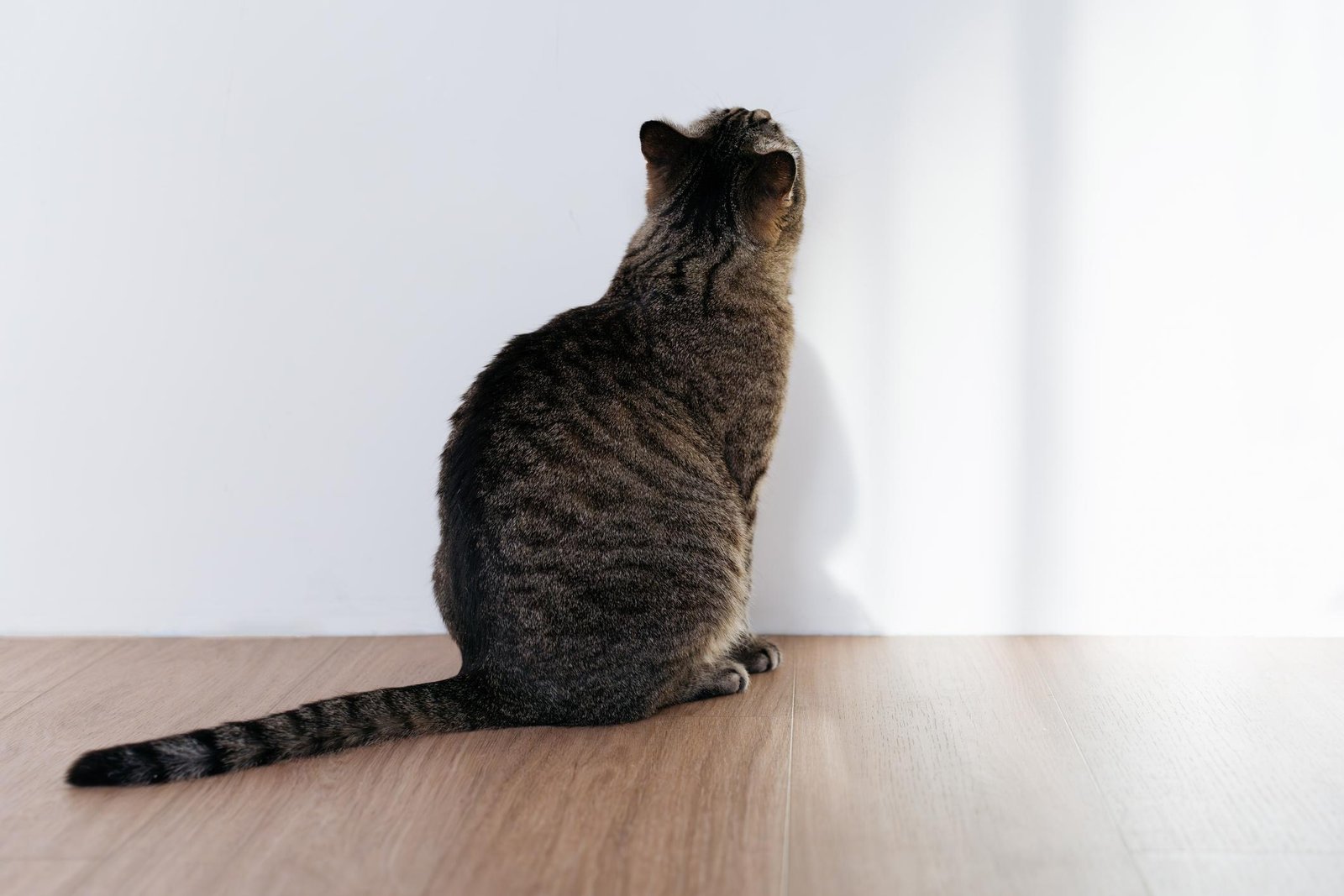
You glance across the room, and your cat is sitting perfectly still, facing a blank wall. She has been staring at it for minutes. There is nothing there, as far as you can tell.
It looks spooky, but it usually has a plain explanation. So why does my cat stare at the wall? Most of the time, she is hearing or seeing something you cannot detect, or she is bored. In older cats, it can also be a sign of age-related brain changes.
Your cat stares at the wall because her senses are far sharper than yours — she may hear mice in the wall, see dust or a tiny insect, or notice light you cannot see. Brief, occasional staring is normal. Staring that is new, long, or comes with confusion, night yowling, or head pressing needs a vet visit, urgently in the case of head pressing.
Cats live in a different sensory world from us. They hear sounds up to 64,000 hertz, while we stop at about 20,000. They see six times better than us in dim light. A blank wall to you can be full of information to them.
This guide covers the seven real causes, a 60-second test you can do at home, the difference between staring and the emergency sign called head pressing, and the senior-cat checklist vets use.
Why Does My Cat Stare at the Wall? 7 Causes
Most wall staring is harmless. But the cause matters, because the fix is different for a bored young cat and a confused senior cat. Start with the most common reasons, and work down the list.
1. She Hears Something Inside the Wall
This is the top cause. Cats can hear mice, insects, and pipes inside walls. They can also hear a neighbour’s television, water running through pipes, or a faint electrical hum.
Watch her ears. If they are pricked forward and swivelling, she is listening, not looking. She may move along the wall as the sound moves, or paw at one spot. Families have found mice nests after their cat stared at the same patch of wall for days.
If the staring spot is near a pipe, an outlet, or the baseboard, sound is the likely cause. A quick knock on the wall will not help you hear what she hears, but her ears will tell you if the sound changed.
2. She Sees Something You Cannot
Cats see movement we miss. Dust in a sunbeam, a tiny spider, a shadow from a tree outside, or a flicker of light can hold a cat’s attention for a long time. Their eyes have far more rod cells than ours, which makes them very sensitive to small movements.
Cats can also see some ultraviolet light, which human eyes block. A wall that looks plain to you may have patterns of light your cat can see clearly. This is why cats often stare at walls near windows, where shifting light plays across the surface.
If her eyes track something, following a small movement across the wall, she is watching prey or play, not zoning out. Her pupils will be wide, and her body will be tense and ready.
3. She Is Bored
A bored cat stares at nothing. Indoor cats with little to do can spend long spells looking at a wall, a corner, or into space. It is the cat version of staring out of a window on a rainy day.
Boredom staring usually happens at the same time each day, often in the late afternoon or evening. The cat looks relaxed, not tense. She will break off easily if you offer a toy or a treat.
Young indoor cats are the most likely to do this. If your cat has no window perch, no puzzle feeder, and no daily play session, boredom is a strong suspect. A 10-minute play session twice a day often ends the habit.
4. She Is Hunting by Sound
Cats are patient hunters. A cat who thinks prey is behind the wall will sit and wait, sometimes for a very long time. She is not confused. She is working.
This looks different from a blank stare. The cat is crouched low, her tail may twitch, and her whiskers point forward. She is locked on one spot. If the sound stops, she may lose interest at once.
Do not be surprised if she returns to the same spot for days. Cats remember where they heard or saw something interesting, and they check back. Our guide on why cats bring toys at night explains the hunting sequence behind this patience.
5. Feline Cognitive Dysfunction
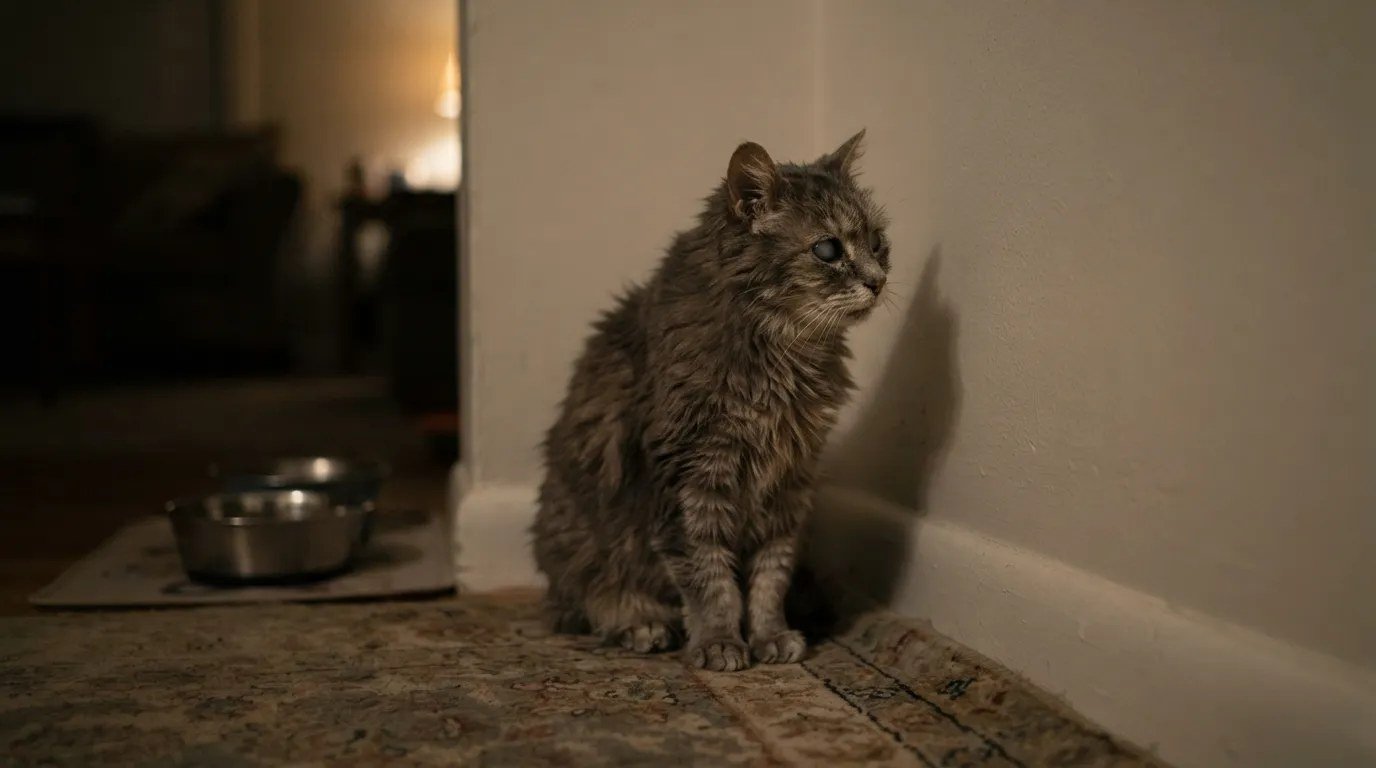
In cats over 11 years old, blank staring can be a sign of feline cognitive dysfunction, the cat version of dementia. The brain ages, and memory, learning, and spatial awareness fade.
The staring looks different from hunting. The cat gazes blankly, not at a spot but into space. She may seem lost in a room she has lived in for years, or get stuck in a corner. She may not respond when you call her name softly.
Studies suggest more than half of cats aged 11 to 15 show some signs of cognitive decline, and over 80 percent of cats aged 16 to 20. It is common, but it is not the only explanation, and several of its lookalike causes are treatable. That is why a vet check matters.
6. Pain, Vision Loss, or Hearing Loss
A cat who cannot see or hear well may stare at walls because she is confused about where she is. High blood pressure can damage the retina and take a cat’s sight quickly. Arthritis pain can make a cat stop exploring and sit still for long periods.
Kidney disease, an overactive thyroid, and high blood pressure all change behaviour in older cats. They can cause the same staring, restlessness, and night crying that people blame on dementia. Many of these conditions can be treated, which is why you should rule out the body before you blame the brain.
Watch for other changes: bumping into furniture, hesitating in dim rooms, eating less, or drinking much more. Any of these with new staring means a vet visit soon.
7. Feline Hyperesthesia Syndrome
This is a rare condition, but it fits the pattern well. Cats with feline hyperesthesia have trance-like periods of staring at a wall, between bursts of strange behaviour. Their skin ripples along the back, they may bite at their tail, and they can suddenly race around the house.
The staring episodes look blank and fixed, and the cat may be hard to distract during them. Between episodes, the cat acts normal. If this pattern sounds familiar, see your vet without delay. The condition needs a vet to diagnose it, and treatment options exist.
The 60-Second Stare Test
You can learn a lot in one minute. The next time your cat stares at the wall, try this simple test. It tells you whether she is focused on something real, or whether her attention itself is the problem.
First, stand quietly and watch her for 15 seconds. Are her ears moving? Do her eyes track anything? A cat who is listening or watching will show small movements. A cat who is blank will be still.
Next, say her name softly, once. A cat who is focused on a sound will flick an ear or turn her head briefly. A cat with cognitive trouble may not respond at all, or may respond slowly.
Then hold a treat a few inches to one side of her face. A healthy, focused cat will track it with her eyes. A cat who cannot see it, or who does not notice it, may have a vision problem.
Finally, watch how she walks away. Does she move normally, or does she seem lost, walk in circles, or bump into things? Normal movement is reassuring. Wandering or getting stuck is a reason to book a vet visit.
Repeat the test on another day if the first result is unclear. One odd result means little. A pattern over a week means a lot. Write down what you see, and take a short video if you can. Vets find videos very helpful.
Staring vs Head Pressing: Know the Difference
Staring at a wall is usually harmless. Pressing the head against a wall is an emergency. Owners mix the two up, so here is the difference in plain terms.
| Behaviour | What it looks like | How urgent is it? |
|---|---|---|
| Staring at a wall | Cat sits or stands facing the wall, eyes open, not touching it. She can be distracted. | Usually not urgent. Watch for a pattern and other changes. |
| Rubbing the cheek on a wall | Cat presses her cheek or chin against the wall and rubs. This is scent marking. | Normal behaviour. No worry. |
| Resting the forehead on a wall | Cat leans her head against the wall while sleeping or dozing. | Usually fine if she is relaxed and can be woken easily. |
| Head pressing | Cat pushes her forehead hard against a wall or corner and holds it there, often for minutes. She seems unable to stop. May come with circling, pacing, or seizures. | Emergency. Call an emergency vet now. |
Head pressing can signal brain tumours, head trauma, poisoning, liver disease, or infection of the brain. It is not a behaviour to watch and wait on. If your cat is pressing her head and cannot be distracted, get help the same day.
The key test is simple: can you break it? A staring cat will turn to a treat or a sound. A head-pressing cat keeps pushing, even when you call her or touch her gently. That difference is what makes one normal and the other urgent.
Senior Cats and the DISHA Checklist
Vets group the signs of feline cognitive dysfunction under the memory aid DISHA. Each letter stands for one area of life that can change. If your senior cat shows changes in two or more areas over several weeks, book a vet visit.
D is for disorientation. Your cat seems lost in familiar places, gets stuck in corners, stares blankly at walls, or forgets where the food bowl or litter box is.
I is for altered interactions. Your cat becomes clingier than before, or withdraws and no longer greets you, seeks attention, or enjoys petting the way she used to.
S is for sleep-wake changes. Your cat sleeps most of the day and becomes restless, pacing or yowling at night. The day-night rhythm flips, which is tiring for everyone in the house.
H is for house soiling. Your cat starts missing the litter box, or forgets where it is. This can also be caused by kidney disease or arthritis, so it needs a vet check either way.
A is for activity changes. Your cat plays less, grooms less, explores less, or repeats odd behaviours like pacing the same route or staring for long periods.
There is no cure for cognitive dysfunction, but there is a lot you can do. Vets may suggest a diet rich in antioxidants and omega-3 fatty acids, daily play, and puzzle feeders. Keeping furniture in the same place helps a confused cat navigate. Night lights in hallways can reduce night-time confusion.
Before you assume dementia, your vet will check for the treatable lookalikes. Bloodwork, a blood pressure check, and a dental exam can find kidney disease, thyroid problems, high blood pressure, or painful teeth. Fixing those can restore much of your cat’s old self.
The Cornell Feline Health Center’s guide to cognitive dysfunction explains the condition in more depth, including how vets diagnose it.
How Vets Work Out the Cause
If you take a wall-staring cat to the vet, it helps to know what will happen. The visit is usually simple, and most of it is talking. Your vet will ask when the staring started, how long each episode lasts, and whether anything else has changed.
Bring your notes and your video. A short clip of the staring is worth more than a long description. Note the time of day, how long the stare lasted, and whether your cat responded to her name. That detail helps the vet separate a sensory cause from a brain cause.
The exam itself covers the eyes, ears, mouth, and joints. The vet will check your cat’s vision with a simple menace test, waving a hand near the eye to see if she blinks. They will look in the ears for mites or infection, and check the teeth for pain.
Bloodwork is the next step for most senior cats. A basic panel checks kidney function, thyroid levels, and blood sugar. High blood pressure is measured with a small cuff on the leg or tail, and it matters because it can damage the eyes and the brain. These tests are quick, and they find the treatable causes that look like dementia.
If everything comes back normal and the staring fits the pattern, the vet may diagnose cognitive dysfunction by ruling everything else out. There is no single test for it. The diagnosis is a process of elimination, which is why the bloodwork comes first.
Ask your vet what to watch for at home after the visit. A short list of changes to report — appetite, thirst, litter box habits, sleep, and interaction — turns you into the vet’s eyes between visits. That list is the most useful thing you will take home.
What to Do When Your Cat Stares at the Wall
Start with the simplest step: check the room. Look for a tiny insect, a flickering light, or a draught moving a curtain. Shine a torch along the baseboard. You may find the thing she is watching in seconds.
Next, give her something better to do. A window perch with a bird feeder outside, a puzzle feeder, or a 10-minute play session can end boredom staring fast. Cats who hunt and play during the day stare at walls far less.
If your cat hides from visitors and then stares at walls, stress may be the cause. A quiet room with her bed, food, and litter box can help her cope. Our guide on why cats hide when visitors come has practical steps for shy cats.
Book a vet visit if the staring is new, happens often, or lasts a long time. Book one sooner if your cat is over 11, or if staring comes with any other change: appetite, thirst, sleep, litter box habits, or how she interacts with you.
Call an emergency vet at once if your cat is pressing her head against the wall, circling, having a seizure, or suddenly collapsed or confused. Those signs need help the same day, not next week.
You can also check whether your cat’s sleep pattern is normal for her age with our cat sleep calculator, and see how old she is in human years with our cat age calculator. Both help you judge whether age is part of the picture.
Appetite changes often travel with the conditions that cause staring. Our cat food calculator can help you check whether your cat is eating the right amount for her weight and age.
Frequently Asked Questions
Do cats stare at walls because they see ghosts?
No. There is no evidence that cats see ghosts or spirits. What looks supernatural is usually biology. Cats hear sounds up to 64,000 hertz and see movement we cannot detect, so a blank wall can be full of signals for them.
The ghost idea is popular because cats stare so intently at nothing we can see. But every case that has been checked has turned out to have a normal cause: a mouse in the wall, a tiny insect, a draught, or a health problem. If your cat stares often, look for the real cause first.
Why does my cat stare at walls at night?
Night staring has a few extra causes. Cats are crepuscular, which means they are most active at dawn and dusk. A cat who is restless at night may be following her natural rhythm, especially if she sleeps all day.
In senior cats, night staring often comes with cognitive dysfunction. The sleep-wake cycle flips, so the cat is awake and confused in the small hours. Night yowling, pacing, and getting stuck in corners often come with it.
Night noises also play a part. Mice are active at night, and pipes creak as the house cools. If the staring only happens after dark, try a play session before bed and a small meal. A tired, fed cat sleeps better.
Why does my cat stare at the ceiling?
The ceiling is the same behaviour aimed upward. Cats stare at ceilings for the same reasons they stare at walls: sounds in the loft, insects, shifting light, or boredom. Ceiling fans, shadows from passing cars, and flies all draw a cat’s eyes upward.
The same rules apply. Brief, occasional ceiling staring with normal behaviour is fine. Long, blank staring with confusion, or staring that starts suddenly in a senior cat, deserves a vet check. Head pressing against a wall is still the emergency sign, wherever the cat looks.
Can staring at the wall be a sign of a stroke in cats?
A stroke can cause sudden confusion, circling, head tilt, and staring, but strokes are uncommon in cats. More common causes of sudden staring are seizures, high blood pressure, and poisoning. All of them need a vet quickly.
The key word is sudden. A cat who is suddenly confused, cannot walk straight, has one pupil bigger than the other, or has a seizure needs emergency care. A cat who has stared at the same wall on and off for months is far less likely to have had a stroke.
Do not try to diagnose a stroke at home. If the change is sudden and your cat seems unwell, call your vet or an emergency clinic and describe exactly what you see. A video of the episode helps a lot.