Why Does My Cat Drool When Purring? Happy or Sick?
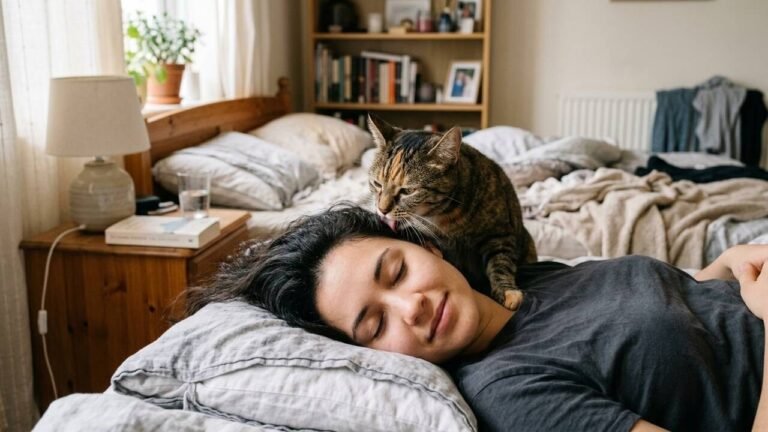
She climbs onto your lap, starts purring like a small engine, kneads your jumper — and then you feel it: a warm drip on your hand. If you have ever wondered why does my cat drool when purring, you are looking at one of the oldest reflexes in a cat’s life switching itself back on. For most cats, a little drool during purring is a sign of deep contentment. But drool is also a symptom vets take seriously in other contexts, so it pays to know exactly which kind you are seeing.
Direct answer: Most cats drool when purring because purring, kneading and salivation are wired together in kittenhood — kittens purr and drool while nursing — and deep relaxation in adulthood reactivates the whole circuit, while relaxed jaw muscles let a little saliva escape. A few drops of clear drool that appear only during petting or kneading, in a cat who eats and behaves normally, are harmless. Heavy, constant, bad-smelling or new drooling — especially with pawing at the mouth, reduced appetite or drooling when she is not purring — is not happy drool and needs a vet.
Why Does My Cat Drool When Purring? The Nursing Circuit Explained
The three behaviours arrive together because they were born together. A newborn kitten is blind and deaf, but she can purr within days of birth, and nursing kittens purr almost constantly — a signal to the queen that all is well, and a vibration the mother returns. While she feeds, the kitten kneads the mammary tissue to stimulate milk let-down, and her salivary glands are active as she suckles. Purr, knead, drool: one feeding circuit, switched on by warmth, closeness and contentment. It is also why so many owners ask: why does my cat drool when purring?
Adulthood does not delete the wiring. When your adult cat is stroked on a favourite spot — under the chin, along the cheeks where the facial scent glands sit — and sinks into that trance-like state, the kitten circuit re-engages. The salivary glands produce a little extra saliva, the jaw and mouth muscles relax, and because a deeply relaxed cat does not bother swallowing as often, a drip escapes.
Some cats drool every time they are petted from kittenhood to old age. Others never drool once. Both are normal individuals; drooling tendency varies like any other trait, and it appears across breeds and moggies, though famously affectionate, people-focused breeds such as Ragdolls, Burmese and Siamese are often champion dribblers. That reactivated circuit is why does my cat drool when purring in adulthood, too.
This is the same kitten behaviour family as kneading a blanket with a mouthful of fabric — if your cat does that too, our guide to why does my cat knead and bite a blanket explains where normal suckling behaviour ends and pica begins.
Happy Drool vs Problem Drool: How to Tell Them Apart
When you ask why does my cat drool when purring, context is everything. Happy drool is brief, clear and tied to pleasure. Problem drooling — vets call excess salivation ptyalism or hypersalivation — happens at the wrong times, in the wrong amounts, or with other signs attached. Use this comparison before you worry:
| Feature | Happy drool (normal) | Problem drool (see a vet) |
|---|---|---|
| When it happens | Only while purring, kneading or being petted | At rest, while eating, or all the time |
| Amount | A few drops, damp chin | Strings of saliva, soaked chest, puddles |
| Appearance and smell | Clear, watery, no smell | Thick, foamy, bloody or foul-smelling |
| How long | Stops within minutes of petting ending | Constant or recurring daily without petting |
| Cat’s mood | Relaxed, purring, slow-blinking | Pawing at mouth, head shaking, hiding, irritable |
| Eating | Normal appetite, chews both sides | Drops food, chews one side, refuses hard food |
If your cat ticks the left-hand column and always has, you can relax and keep a tissue handy. If she ticks anything on the right — or her drooling is new in a cat who never used to drool — that is a vet appointment, not a wait-and-see. Sudden change is the single most useful rule in cat health: the behaviour itself matters less than the fact that it is different. That is the quickest way to answer why does my cat drool when purring in your own home.
Dental Disease: The Most Common Medical Cause of Drooling
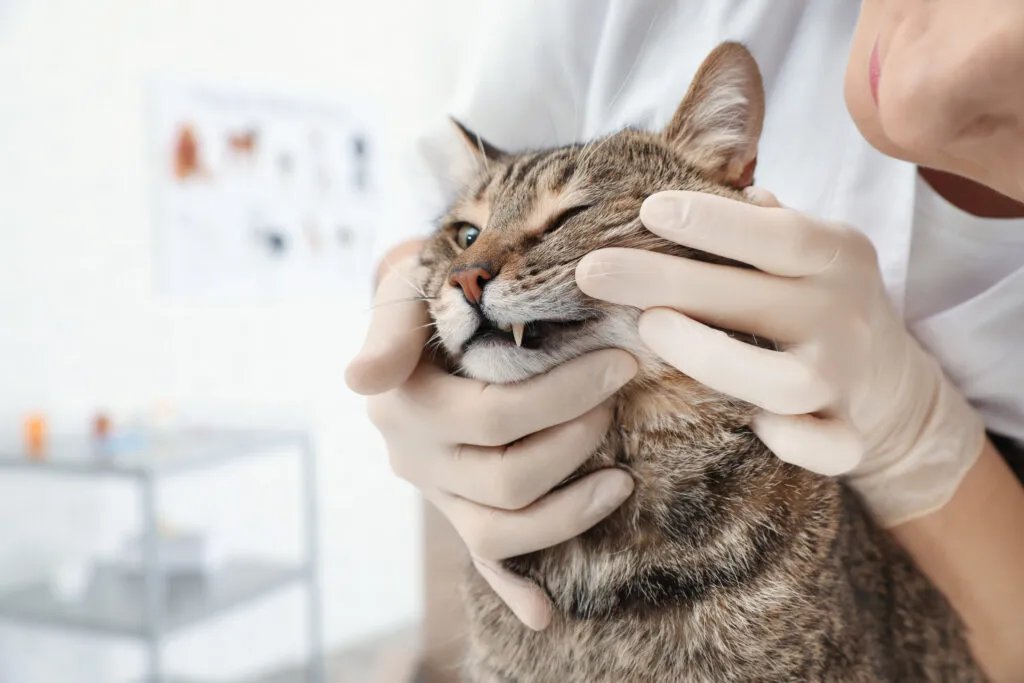
When drooling is medical, the mouth is the first place a vet looks, and for good reason. Dental disease is extremely common in cats: most cats show some periodontal disease by middle age, and older cats are frequently affected. Inflamed gums (gingivitis), advanced gum disease (periodontitis), mouth ulcers and loose or broken teeth all hurt, and pain in the mouth commonly produces drool. That is why vets take why does my cat drool when purring seriously when it is new or constant.
One condition deserves a name because owners rarely hear it until their cat has it: feline tooth resorption. In this painful condition the tooth is gradually broken down and resorbed, exposing sensitive structures. Affected cats may drool, drop food, chew on one side, or flinch when a particular tooth is touched — and many show almost no sign at all until the lesion is advanced. Stomatitis, a severe inflammation of the whole mouth seen in some cats, causes heavy drooling with very bad breath and a cat who wants to eat but cries or backs away from the bowl.
You cannot fully check this at home, but you can look for clues: bad breath that is worse than normal cat breath, red or bleeding gums, yellow-brown tartar on the back teeth, and drool that is tinged pink. Prevention is the part you control — dental diets, brushing with cat toothpaste where tolerated, and regular checks. Our cat dental calculator can help you plan a realistic home dental routine by age. The Merck Veterinary Manual and your own vet’s dental assessments remain the reference points for anything beyond routine care.
Other Medical Reasons a Cat Drools
If the mouth itself is healthy and you still wonder why does my cat drool when purring, drooling points elsewhere. These are the causes vets work through next:
- Nausea. A nauseous cat often drools just before vomiting, and may lick her lips, swallow repeatedly and go off food. Causes range from a hairball or eating too fast to kidney disease, liver problems and pancreatitis — which is why new drooling plus appetite loss is always worth a visit. If she is also drinking and urinating much more than usual, check her intake against our cat water intake calculator and tell your vet the numbers.
- Something stuck in the mouth. A splinter of bone, a piece of toy, string wound around the tongue, or a grass blade lodged at the back of the throat can all cause sudden, heavy drooling with pawing at the face. This is urgent, especially with string, which can saw into the tongue and gut.
- Toxins and bitter tastes. Many household substances — some essential oils, cleaning products, certain houseplants, and human medications — irritate the mouth or poison the cat, with drooling as an early sign. Bitter-tasting cat medications can also cause dramatic but short-lived frothing and drooling; that version settles within minutes and is well known to anyone who has pilled a cat.
- Respiratory infection. Feline herpesvirus and calicivirus — the two main “cat flu” viruses — can cause mouth ulcers, and ulcer pain produces drool alongside sneezing and runny eyes. Keeping vaccinations current is the main protection.
- Heatstroke and stress. Cats drool and pant when dangerously overheated, and some cats drool in the car or at the vet purely from stress and motion sickness. Drooling with open-mouth breathing at rest is an emergency sign, not a personality trait.
Why Some Cats Drool and Others Never Do
Owners often ask whether a non-drooling cat is less happy. She is not. Whether the nursing circuit spills over into visible drool depends on individual anatomy and habit: how much saliva her glands produce under parasympathetic stimulation, how tightly her lips seal, how deeply she relaxes her jaw, and simply how strongly the kitten pattern persisted into adulthood. Cats weaned very early or hand-reared sometimes keep stronger oral comfort behaviours — suckling, kneading and drooling — but plenty of normally weaned cats drool happily too. The same circuit explains why does my cat drool when purring and another cat never does.
What matters is consistency. A lifelong dribbler who drools on your lap every evening is showing you her normal. A cat who has never drooled and starts at age 9 is showing you a change, and change at that age most often means teeth. Senior cats deserve a lower threshold for a dental check, not a higher one.
A small practical note: happy drool is not a reason to stop the petting session that caused it — your cat is, by definition, enjoying herself. If the drips bother you, a washable throw over your lap solves the problem. And if she drools over treats as well as strokes, keep portions honest with our cat treat calculator — anticipation drool at food is another normal variant, but the treats themselves should still stay within about 10% of her daily calories.
When Drooling Means Vet Today, Not Vet Sometime
Book a prompt appointment — same day where you can — if drooling comes with any of the following: she cannot or will not eat, she paws at her mouth or shakes her head, the drool is bloody, thick or foul-smelling, she has bad breath with red gums, she is drooling constantly rather than during cuddles, or you suspect she has chewed a plant, chemical or medication. Treat it as an emergency if drooling arrives with open-mouth breathing, collapse, repeated vomiting, or a visible foreign object or string in the mouth — do not pull string; let the vet do it.
The Cornell Feline Health Center advises that appetite loss in cats should never be ignored for more than a day or so, and drooling that stops a cat eating falls squarely in that category. Most medical droolers, once the tooth is treated or the nausea cause is found, go straight back to drooling only for the happy reason.
Frequently Asked Questions
Is it normal for a cat to drool when purring?
Yes. A little clear drool during purring, kneading or petting is a well-recognised sign of deep relaxation, linked to the nursing reflex kittens show when feeding. It is normal if it is brief, only happens during affection, and your cat eats and behaves normally the rest of the time. That is the normal answer to why does my cat drool when purring.
Why does my cat drool when I pet her but not at other times?
Because petting triggers the contentment circuit: salivary glands activate, jaw muscles relax and she swallows less often, so a drip escapes. Drool that is strictly tied to petting sessions, and stops soon after, is the classic happy pattern. That pattern is the classic answer to why does my cat drool when purring during petting.
Why has my cat suddenly started drooling?
Sudden drooling in a cat who never used to drool is a change worth a vet visit. The most common causes are dental pain (including tooth resorption and gum disease), nausea, something lodged in the mouth, or irritation from something she has licked or chewed. Do not assume it is happiness if it is new. That is when why does my cat drool when purring needs a vet, not a shrug.
Can dental problems really cause a cat to drool?
Yes — dental disease is one of the most common medical causes. Gingivitis, periodontitis, mouth ulcers, stomatitis and feline tooth resorption are all painful, and mouth pain commonly produces drooling, bad breath, dropping food and chewing on one side. Many cats need a dental examination under anaesthetic to find the full extent. That is why dental pain is a common answer to why does my cat drool when purring.
Should I stop petting my cat when she drools?
No. If the drool comes with purring, kneading and relaxed body language, your cat is enjoying herself — the drool is part of the enjoyment, not a request to stop. Put a washable blanket on your lap if you want to protect your clothes, and carry on. That enjoyment is the whole point of why does my cat drool when purring on your lap.