Why Is My Ball Python Yawning? 7 Reasons & Red Flags
The first time you see your ball python open its mouth wide, it looks alarming. The jaw drops, the mouth gapes open for a second or two, and the snake looks like it is yawning at you. So it is no surprise that owners ask: why is my ball python yawning, and does it mean my snake is sick?
Most of the time, a ball python yawning is a normal jaw stretch. Your snake opens its mouth wide to realign its jaw after eating, to prepare for a meal, to stretch after resting, or to taste the air. It becomes a worry only when the yawning is frequent, lasts more than a few seconds, or comes with wheezing, mucus, bubbles, or a refusal to eat.
The tricky part is that a harmless yawn and open-mouth breathing can look almost the same at first glance. This guide explains the seven reasons ball pythons yawn, shows you how to tell a normal yawn from a breathing problem in ten seconds, and gives you a clear list of red flags that mean a vet visit.
Yawn or Breathing Problem? The 10-Second Check
A real yawn is short and silent. Open-mouth breathing is long and noisy. Use this table the next time you see your snake’s mouth open, and you will know which one you are looking at.
| What to check | Normal yawn | Breathing problem |
|---|---|---|
| How long the mouth stays open | One or two seconds, then closes | Stays open, or opens again and again |
| Sound | Silent | Wheezing, clicking, or gurgling |
| Mucus or bubbles | None | Mucus, saliva, or bubbles at the mouth or nose |
| Head position | Normal, relaxed | Head raised, neck stretched up |
| When it happens | Before or after feeding, after resting | At rest, for no clear reason |
| Afterwards | Snake moves normally, tongue flicks | Snake stays still, looks weak, or refuses food |
If every row matches the left column, your snake just yawned. If two or more rows match the right column, treat it as a breathing problem and read the red-flag section at the end. Ball pythons are obligate nose breathers, which means they are built to breathe through their nostrils. A snake that breathes through its mouth is struggling for air.
Why Is My Ball Python Yawning? The 7 Reasons
Ball pythons yawn for seven main reasons. The first four are normal and healthy. The last three are health problems, and they always come with extra signs beyond the yawn itself. Learning to sort them is the whole skill.
1. Realigning the jaw after eating
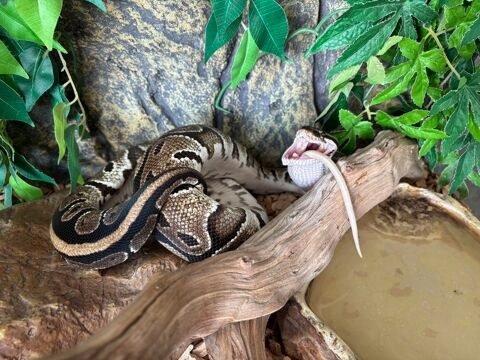
This is the most common reason by far. A ball python swallows its prey whole, and its jaw stretches far wider than a mammal’s jaw ever could. The two halves of the lower jaw are joined by stretchy ligaments, not by a fixed bone joint. After a meal, the snake yawns once or twice to pull those ligaments back into place.
You will usually see this yawn within an hour or two of feeding. The snake opens its mouth wide, holds it for a second, and closes it again. It may repeat the yawn two or three times. Then it settles down to digest. This is healthy, and it is a good sign that the feeding went well.
The jaw reset can take a few minutes after a large meal. A snake that eats a rat close to its own body width will stretch further and may yawn more often. That is normal too, as long as the yawns stop once the jaw feels right again. Choosing the right prey size helps: our snake prey size calculator can help you match the prey to your snake’s size.
2. Preparing to feed
Ball pythons also yawn before they eat. When your snake smells a rat, its feeding response wakes up. It may open its mouth wide as it gets ready to strike. The yawn stretches the jaw muscles and tests the range of movement before the strike.
This pre-feeding yawn often comes with other hunting signs. The snake’s tongue flicks faster, its neck pulls into an S-shape, and its eyes lock onto the prey. If you see this pattern on feeding day, your snake is simply getting ready. Offer the prey as usual.
Some snakes yawn when they smell food but are not fed. If you handle a rat and then walk past the enclosure, your snake may yawn at the scent. This is scent-driven anticipation, not hunger pain. Keep feeding on a steady schedule, and the behaviour stays predictable.
3. Stretching after resting
Ball pythons spend most of the day curled in a hide, barely moving. When they wake up at dusk, they stretch. The yawn is part of that stretch, just like a person yawning and reaching after a nap. The jaw, the neck, and the body all loosen up together.
A post-rest yawn is brief and relaxed. The snake opens its mouth, closes it, and then starts to explore. It may flick its tongue, cruise the enclosure, and look for water. There is no sound, no mucus, and no repeat yawning. If your snake yawns once when it wakes and then acts normally, it is just waking up.
This is also why yawning after handling is usually fine. You have woken the snake and moved it, so it stretches as it settles back into its hide. As long as the yawn is single and silent, there is nothing to fix.
4. Tasting the air
Snakes gather scent information with their tongues and a special organ in the roof of the mouth, called the Jacobson’s organ, or vomeronasal organ. A wide mouth opening can help move air across this organ and sharpen the scent picture. Some yawns are really scent checks.
You will see this kind of yawn when something new enters the enclosure: a new hide, a cleaned water bowl, or your hand after you have handled another animal. The snake opens its mouth, tastes the air, and decides whether the new smell matters. It is a normal part of how snakes read their world.
Scent yawning is easy to tell apart from a sick yawn. It happens once, it is silent, and the snake’s tongue flicks normally right after. A sick snake does not flick its tongue much, because its mouth and airways are full of mucus.
5. A warning before regurgitation
Sometimes a wide mouth opening is not a yawn at all. It is the start of a regurgitation. A ball python that is about to bring up a meal may gape, stretch its neck, and make heaving movements. This looks like yawning, but it repeats and it escalates.
Regurgitation usually has a cause. The prey may have been too large, the enclosure may be too cold to digest, or the snake may have been handled too soon after feeding. Stress, mites, and illness can also trigger it. One regurgitation is a warning, not an emergency, but repeated regurgitation always needs a vet.
If your snake regurgitates, do not feed it again for at least ten to fourteen days. Let the stomach lining recover. Check the warm spot temperature and the prey size before the next feed. If it happens twice in a row, book a vet visit, because repeated regurgitation can point to an infection or a blockage.
6. Respiratory infection
This is the reason owners worry about most, and rightly so. A respiratory infection, often called an RI, is common in ball pythons kept too cold, too dry, too wet, or in a dirty enclosure. The infection fills the airways with mucus, and the snake opens its mouth to pull in more air.
The key difference is that RI yawning is not a single, silent stretch. It repeats. The mouth stays open longer, the breathing sounds wet or whistling, and you may see bubbles at the nostrils or mucus in the mouth. The snake often holds its head up higher than usual, which helps keep fluid out of the airways. It may also eat less and move less.
Temperature and humidity are the usual culprits. The warm spot should read 88 to 92 degrees Fahrenheit, the cool side 75 to 80, and the humidity 50 to 60 percent, rising to 60 to 70 percent during a shed.
Low temperatures slow the immune system, and dirty, wet substrate breeds bacteria. If you suspect an RI, warm the enclosure to the correct range, keep it clean and dry, and call a reptile vet. RIs need antibiotics, and they do not clear up on their own.
Our ball python weight calculator can help you track your snake’s condition while it recovers, since weight loss is one of the clearest signs that an illness is getting worse. For more on the other behaviours that can signal illness, see our article on why a ball python soaks in its water bowl, which also covers RI as a cause.
7. Mouth rot and inclusion body disease
The last two causes are rarer, but they are serious, so you should know their names. Mouth rot, or infectious stomatitis, is a bacterial infection of the mouth and gums. The gums turn red or purple, a cheesy white material builds along the gum line, and the mouth smells bad. The snake may drool or hold its mouth open because the tissues are swollen and sore.
Inclusion body disease, or IBD, is a viral disease caused by reptarenaviruses. It affects pythons and boas, and it is fatal and contagious between snakes. Early signs include frequent yawning, poor feeding, and regurgitation. Later signs include stargazing, where the snake holds its head up and stares, corkscrewing, and an inability to right itself when flipped over.
Neither condition can be diagnosed from a yawn alone, and neither can be treated at home. Mouth rot needs veterinary cleaning and antibiotics. IBD has no cure, and a suspected case must be kept away from every other snake in the house. If your snake yawns constantly and shows any of these extra signs, a vet visit is urgent, and quarantine is essential.
How a Snake’s Jaw Actually Works
Many owners think a yawning snake has dislocated its jaw. It has not. A ball python’s jaw is built to stretch. The lower jaw has two halves joined at the chin by an elastic ligament, and the jaw connects to the skull through a long, movable bone called the quadrate. This design lets the mouth open wide enough to swallow prey much wider than the snake’s own head.
That is why a yawn looks so dramatic. The snake is not in pain. It is using a joint that can swing open like a hinge and stretch sideways at the same time. The yawn resets the ligaments and muscles after they have been stretched to their limit by a meal.
Understanding this helps you stay calm. A single wide yawn after feeding is the jaw doing its job. A mouth that hangs open at rest, with no meal in sight, is the jaw doing nothing — and that is the one that should worry you.
The Husbandry Check: Temperature and Humidity
Because most yawning problems trace back to the enclosure, check these numbers whenever yawning increases. Measure the warm spot with a digital thermometer or an infrared temperature gun, not with a stick-on dial. The warm hide should sit at 88 to 92 degrees Fahrenheit, and the cool side at 75 to 80.
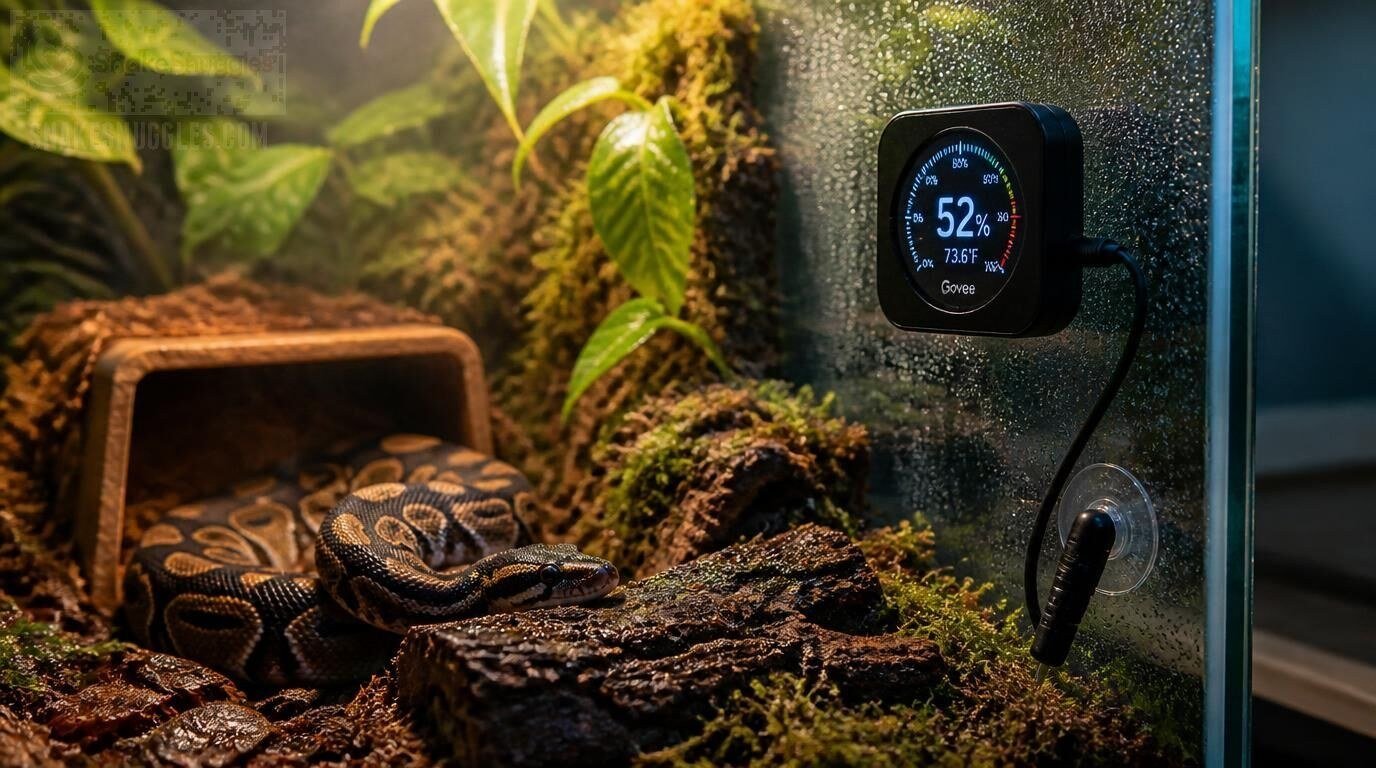
Check humidity with a digital hygrometer placed in the middle of the enclosure. Aim for 50 to 60 percent in normal weeks, and 60 to 70 percent while your snake is in shed. Humidity that is too low causes bad sheds and dry airways. Humidity that is too high, with wet substrate, breeds bacteria and can cause scale rot.
Also check ventilation and cleanliness. Stale, damp air in a sealed tub is a classic RI setup. Spot-clean waste daily, change the water every day or two, and do a full substrate change on a regular schedule. A clean, warm, well-ventilated enclosure prevents more yawning problems than any supplement ever will.
For more on reading your snake’s behaviour as a whole, see our article on why a ball python hides all the time, which covers stress and husbandry clues that overlap with yawning.
What to Do the First Time You See Your Snake Yawn
If this is the first yawn you have ever seen, do not panic. Follow four steps, in order, and you will have your answer within a minute. First, check the clock and the context. Did the yawn happen within a couple of hours of feeding, or just after the snake woke up? If so, it is almost certainly a normal jaw reset or a waking stretch.
Second, listen. Stand close to the enclosure in a quiet room and wait for the next breath. A healthy yawn is silent. Any wheeze, click, or gurgle changes the picture completely, and you should move to step four. Third, look at the mouth and nose. A clean mouth with no mucus, no bubbles, and a tongue that flicks normally afterwards means the airways are clear.
Fourth, check the enclosure numbers. Read the warm spot, the cool side, and the humidity, and write them down. If the warm spot is below 88 degrees Fahrenheit or the humidity is far from the 50 to 60 percent range, fix the setup and watch for a day.
If the yawning repeats often, or any red flag from the next section appears, call a reptile vet. Logging the date and the context of each yawn helps the vet enormously, because a pattern of one yawn after every feed is reassuring, while a pattern of yawning at rest is not.
Red Flags: When to See a Reptile Vet
Call a reptile vet promptly if your snake yawns more than a few times a day for more than two days, or if any of these signs appear alongside the yawning. Wheezing, clicking, or crackling sounds during breathing are the clearest early warning of a respiratory infection.
Mucus or bubbles at the mouth or nostrils, a mouth that stays open at rest, and a head held high off the ground all point to breathing trouble. Add food refusal, weight loss, or lethargy, and the case becomes urgent. A snake that yawns and then cannot strike or swallow properly may have mouth rot or a neurological problem.
Go the same day if you see stargazing, corkscrewing, or an inability to right itself. These are neurological signs, and they can mean inclusion body disease or a severe infection affecting the nervous system. Keep the snake warm, keep handling to a minimum, and keep it away from any other snakes until the vet has seen it.
To find a vet who treats snakes, the Association of Reptile and Amphibian Veterinarians keeps a directory at arav.org. For background on snake respiratory health, the Merck Veterinary Manual’s reptile section at merckvetmanual.com is a reliable reference. Bring notes: when the yawning started, how often it happens, the temperatures and humidity, and the date of the last feed.
Frequently Asked Questions
Do ball pythons yawn when they are stressed?
Yes, stress can make a ball python yawn more often, but it is rarely the only sign. A stressed snake usually hides constantly, refuses food, and may soak in its water bowl for long periods. Common stress triggers are a new enclosure, too much handling, loud noises, or a cage mate.
If the yawning started right after a move or a change in routine, and the snake is otherwise healthy, give it a week of quiet with correct temperatures and minimal handling. If the yawning continues after the snake has settled, look for a health cause instead.
Do ball pythons yawn in their sleep?
Ball pythons do not yawn while they are asleep, because they do not sleep the way mammals do. They rest with their eyes open, since snakes have no eyelids, and they enter a quiet, still state rather than a deep sleep.
The yawns you see happen when the snake wakes up from that resting state, not during it. If you see your snake’s mouth open while it is curled up and still, that is not a sleepy yawn — it is open-mouth breathing, and it should be checked by a vet.
What does stargazing look like in a ball python?
Stargazing is when a snake holds its head and neck raised and still, pointing upward, for long periods, as if it is looking at the stars. A healthy snake raises its head to explore and then moves on. A stargazing snake holds the pose, seems unaware of its surroundings, and may tilt or wobble when it tries to move.
It is a neurological sign, not a behaviour quirk. In ball pythons it is most often linked to inclusion body disease, but severe infections and overheating can also cause it. Any snake that stargazes needs a vet visit the same day, and it must be kept separate from other snakes.
How long does a respiratory infection take to clear in a ball python?
With veterinary treatment, a mild respiratory infection usually improves within two to four weeks, but full recovery can take four to eight weeks. The vet will normally prescribe antibiotics, often by injection, for several weeks, and you must finish the full course even if the snake looks better after a few days.
At home, keep the enclosure warm and clean, raise the humidity slightly, and offer food only when the snake is breathing quietly and showing interest. A snake that is still wheezing or bubbling after two weeks of treatment needs a follow-up visit, because the infection may need a different antibiotic or a longer course.
A ball python yawning is usually just a snake resetting its remarkable jaw. Learn the ten-second check, keep the temperatures and humidity right, and you will know the difference between a normal stretch and a real problem. When in doubt, a quick vet visit is always cheaper than a late one.