How to Keep Horse Water From Freezing Without Electricity
You walk out to the field on a freezing morning and the trough is solid. Your horse stands next to it, nosing at the ice, and there is nothing to drink.
It is one of the most common winter problems horse owners face, and it is also one of the most dangerous, because a horse that cannot drink is a horse at risk of impaction colic. So how to keep horse water from freezing without electricity? The honest answer is that no non-electric trick stops water freezing in a hard freeze. But the right combination of a bigger trough, sun, insulation, and a moving surface can buy you many extra hours, and a simple twice-a-day routine can keep your horse drinking all winter.
This guide covers the methods that actually work, ranked by how much time they buy you, and it is blunt about the ones that do not. It explains why frozen water is a health emergency rather than a chore, how to set up a whole-yard winter water system, what never to put in the water, and what to do when the cold beats every trick you have.
Direct answer: To keep horse water from freezing without electricity, use a large, dark, rubber trough in full sun, insulate the sides with straw bales or foam board, cover half the surface, and float a ball on the water to keep it moving. These methods delay freezing by hours, not days, so check and break the ice at least twice a day and haul warm water when the temperature stays below freezing. In a long hard freeze, no non-electric method keeps water liquid on its own, and a tank heater or an energy-free ground-heat waterer is the only reliable fix.
How to Keep Horse Water From Freezing Without Electricity: The Methods That Work
The table below ranks the methods by how much freezing time they buy you. No single trick is enough on its own. The owners who get through winter without power combine three or four of them, and they still check the water twice a day.
| Method | What it does | Best for | Its limit |
|---|---|---|---|
| Bigger trough (100 gallons or more) | More water holds heat longer and freezes slower | Every yard; the single best first step | Still freezes solid in a long hard freeze |
| Black rubber trough in full sun | Dark rubber soaks up winter sun and warms the water | Sunny yards; easy to flex and pop ice out | Useless on cloudy days and at night |
| Insulation: straw bales, foam board, double wall | Slows heat loss through the sides and base | Windy, exposed yards | Insulation holds heat in; it cannot make heat |
| Half lid or cover | Shields half the surface from cold air and wind | Any trough; cheap and quick | Ice still forms on the open half |
| Floating ball | Movement breaks the surface film and delays ice | Mild frosts, down to a few degrees below freezing | Stops working once the surface starts to freeze |
| Hauling warm water twice a day | Starts the water warm and gives the horse a drink window | Small yards, stables, single horses | Hard work; water cools again within hours |
| Energy-free ground-heat waterer | Uses warmth from below the frost line | Permanent pasture setups | Costs money and needs installation |
Read the table as a menu, not a single answer. A big black trough in the sun, wrapped in straw bales, with half a lid on it, will stay open far longer than any one of those tricks alone.
Why Frozen Water Is an Emergency, Not a Chore
A horse at rest drinks around 10 to 12 gallons of water a day, and a horse in work or a lactating mare drinks more. In winter that need does not fall. In fact it can rise, because dry hay holds only about 10 per cent moisture while fresh pasture holds up to 80 per cent, so the horse must replace far more water by drinking.
When a horse cannot drink, the contents of the gut dry out. Dry feed moves slowly through the large intestine, and it can pack into a solid blockage. That is impaction colic, and it is the most common winter colic. Vets consistently name lack of fresh, unfrozen water as the number one cause of colic in winter, and colic is the leading cause of death in horses.
Cold water makes the problem worse even before it freezes. Research from the University of Minnesota found that horses drink about 40 per cent more water when it is offered at 45 to 65°F (7 to 18°C) instead of near freezing. A horse faced with ice-cold water often drinks less, and some horses stop drinking almost entirely.
The Honest Truth First: Delay, Not Prevention
Every non-electric method in this guide does the same thing: it slows down heat loss. None of them adds heat to the water. That matters, because it sets the limit of what they can do. In a mild frost, a few degrees below freezing overnight, a good setup can keep the water open until morning. In a week of temperatures well below freezing, every unheated trough will freeze, however well it is insulated.
That is not a reason to skip the tricks. Delaying freezing by six hours can be the difference between a horse that drinks at dawn and a horse that waits until you break the ice at lunchtime. But it is a reason to be honest with yourself about your climate. If your winters regularly drop far below freezing for days at a time, plan for a heater, an energy-free waterer, or a hauling routine, and treat the insulation tricks as backup, not as the plan.
Bigger Troughs, Darker Troughs
Size is the single most useful change you can make, and it costs nothing if you already own a large trough. A 100-gallon trough takes far longer to freeze than a 20-gallon bucket, because the larger volume of water holds more heat. The top layer may freeze, but the body of water underneath stays liquid for hours longer, and a big trough is unlikely to freeze solid overnight in a normal frost.
Small buckets are the worst option in winter. A 5-gallon bucket can freeze solid in a single cold night, and a stabled horse with only a frozen bucket has no water at all until you arrive. If you use buckets in the stable, use the largest you can, and bring them inside to fill with warm water.
Colour and material matter too. A black plastic or rubber trough soaks up heat from the winter sun, while a shiny galvanised metal tank reflects it away. On a sunny winter day, a dark trough can be several degrees warmer than a metal one.
Put the Sun and the Wind to Work
Winter sun is free heat, and where you put the trough decides how much of it you get. Place the trough where it catches the most sun during the shortest days of the year, which usually means a south-facing spot in the northern hemisphere. A trough tucked against a south-facing wall gets sun and shelter at the same time.
Wind is the enemy, because moving air strips heat from the water surface far faster than still air. A trough in an open, windy corner of the field will freeze hours before the same trough behind a hedge, a barn wall, or a three-sided shelter. If you cannot move the trough, build a windbreak around it with straw bales, pallets, or a fence panel.
Think about the ground too. A trough sitting on frozen, exposed ground loses heat through its base. Setting it on a bed of straw, or sinking it slightly into the ground where the earth is warmer than the air, slows that loss.
Insulate the Trough
Insulation works the same way a coat works: it slows heat loss, it does not create heat. The simplest version is stacking straw bales around the outside of the trough, tight against the walls. Straw is cheap, easy to find on a yard, and a good insulator, and a ring of bales also acts as a windbreak.
Foam board is the more effective option if you want a neater job. Cut panels to fit around the outside of the trough and fix them in place, then cover them so the horses cannot chew them. Two inches of foam board makes a real difference to how long the water stays open.
The double-wall trick is the homemade version of an insulated trough. Put a smaller trough or bucket inside a larger one, and pack the gap between them with straw, old feed sacks, or foam. The air and straw trapped in the gap slow heat loss from the inner container, and the outer container takes the wind.
Whatever you use, cover the insulation itself. Horses chew foam and pull straw out of gaps, so box it in with plywood or a second skin of rubber, and check it every few days.
Keep the Surface Moving
Still water freezes faster than moving water, because ice needs a calm surface to form its first skin. That is the whole idea behind the floating ball trick. Drop a rubber ball, a sealed plastic bottle, or a piece of wood into the trough, and every time the horse nudges it, or the wind moves it, the surface breaks and the ice has to start again.
It is a small effect, and it only helps in a mild frost. Once the temperature drops a few degrees below freezing and the surface starts to set, a ball cannot break through. But on a borderline night, it can be the difference between a thin skin of ice you can lift off and a solid sheet.
Covering half the trough works on the same idea. A sheet of plywood or an old feed sack laid across half the surface shields that half from the cold air and the wind, and the covered water stays warmer. Leave the other half open so the horses can drink, and lift the cover each morning to check underneath.
Haul Warm Water and Check Twice a Day
When the cold is too deep for tricks, hauling warm water is the most reliable no-electricity method there is. Fill buckets with warm tap water, carry them to the trough, and pour them in. The warm water raises the temperature of the whole trough, melts thin ice, and gives the horses a window of drinkable water.
Do it twice a day, morning and evening, and make it part of the feeding routine so it never gets skipped. A horse that drinks at 7 a.m. and 5 p.m. is far safer than a horse that waits until the next morning. If you can only manage one trip, make it the evening one, because the longest cold stretch is overnight.
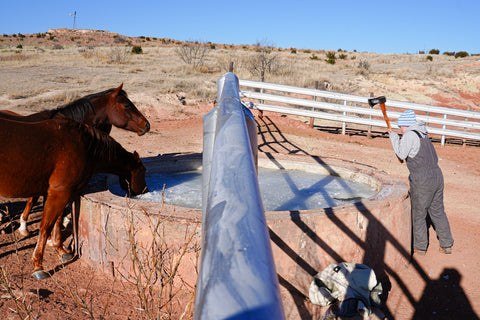
Breaking the ice is the other half of the routine. When you find a sheet of ice, crack it and lift the pieces out rather than pushing them under. Keep a rubber mallet or a short handled tool by the trough so the job takes a minute instead of ten.
The Horse Water Intake Calculator gives you a daily target for your horse’s size and workload, so you can tell whether the hauling is keeping up. If the trough level is barely dropping, the horse is not drinking enough, and you need to act.
Energy-Free Waterers: The Permanent Fix Without Power
If your field has no electricity at all, and you are tired of hauling buckets every winter, an energy-free waterer is worth looking at. These are insulated, purpose-built drinkers that use warmth from the ground below the frost line to keep the water above freezing. The trough sits over a buried chamber, and the earth’s steady temperature does the heating.
They work well in moderate winters and they need no power, no heater, and no daily ice breaking. But they are not magic. In a long, deep freeze they can still ice over, they cost several hundred pounds or dollars to buy and install, and they need the ground dug out and the unit bedded in properly. They suit a permanent pasture setup, not a rented field you might leave next year.
If You Do Have Power: Heaters in Brief
This guide is about life without electricity, but it would be dishonest not to say that a heater is the best answer when power is available. A floating tank heater, a sinking heater, or a heated bucket keeps the water at around 40°F (4°C) all winter, and the horse always has liquid water.
Floating heaters are the most effective for large troughs, because they heat the surface where the ice forms. Sinking heaters are cheaper and sit on the bottom, out of the horse’s way. Heated buckets are the simplest option for a single stabled horse. All of them need a safe outdoor power supply, a residual current device or ground fault interrupter, and chew-proof cables, and they should be checked daily for stray electricity, which can put a horse off drinking entirely.
What Never to Put in the Water
When the trough keeps freezing, owners start looking for shortcuts, and some of them are dangerous. The most common bad idea is adding salt to the water to lower its freezing point. It does not work at the amounts a horse could safely drink, and it can put the horse off drinking altogether, which is the opposite of what you want.
Antifreeze is the dangerous one. Ethylene glycol antifreeze is sweet tasting, and a horse that drinks it can die. It has no place anywhere near a water trough, and neither do de-icing salts meant for roads or paths. Keep all of them locked away from the yard.
Hot water from a kettle is safe in small amounts, but pouring a kettle of boiling water into a frozen trough and leaving it can scald a horse’s mouth, and the thin layer of warm water on top cools within minutes. Warm tap water, added in bucketfuls, is the safe version of the same idea.
Do not rely on snow either. Horses will eat snow when they are thirsty, but they cannot eat enough of it to meet a 10-gallon daily need, and melting snow in the gut costs the horse body heat it cannot spare in winter. Penn State Extension is clear on this point: fresh, clean, unfrozen water must always be available, and snow is not a substitute.
Frozen Taps and Pipes: The Rest of the System
A trough that stays open is no use if the tap that fills it is frozen solid. Winter water is a whole system, and the tap, the hose, and the pipes freeze before the trough does. Insulate outdoor taps with a tap cover or an old sack, drain hoses after every use, and store them indoors instead of leaving them coiled outside.
If you fill troughs from a standpipe, keep a spare length of hose inside so it is flexible when you need it. A frozen hose left outside will split, and you will find out on the coldest morning of the year. The same goes for automatic waterers: check them daily, because a frozen float valve can leave a horse with an empty bowl and no way to tell you.
When Frozen Water Becomes an Emergency
Call your vet the same day if your horse shows signs of impaction colic: pawing at the ground, looking round at its belly, lying down and getting up repeatedly, rolling, not eating, or passing little or no manure. A horse that has not drunk all day and has stopped eating is an emergency, not a wait-and-see.
Also call the vet if the horse is dull, depressed, or standing with its head low and showing no interest in feed or water. Dehydration in a horse is harder to spot than in a dog, because a horse’s skin does not tent as obviously, but dry gums, sunken eyes, and dark, scant urine are all warning signs.
While you wait, offer warm water in a bucket, offer a wet mash made with warm water and soaked feed, and keep the horse moving gently if it is safe to do so. Do not offer a frozen trough and hope for the best.
Prevention is the whole point of this guide. A horse that always has liquid water rarely gets impaction colic in winter. The Horse Hay Calculator helps you work out the forage ration, because a horse eating plenty of hay also drinks more, and the fibre fermenting in the hindgut generates heat that keeps the horse warm from the inside. Our guide to senior horses not drinking enough water in winter covers the horses most at risk, because older horses drink less, feel the cold more, and are the first to suffer when the water freezes.
Winter water is a daily job, and on the coldest mornings it is a cold and thankless one. But it is also the single most useful thing you can do for your horse all winter. A big dark trough in the sun, straw bales round the sides, a ball on the surface, and a warm bucket twice a day will carry most yards through most winters. And on the morning when none of it works, the fact that you checked is what saves the horse. Clean water matters as much as unfrozen water, and our guide to how often to clean a horse water trough covers the cleaning routine that keeps horses drinking.
The RSPCA’s winter care guide for horses gives the same core advice — clean water free from ice, checked regularly — and Penn State Extension’s equine winter wellness tips explain the water temperature research and the impaction colic risk in full. Both are worth bookmarking before the first frost.
Frequently Asked Questions
How cold does it have to be for a horse trough to freeze?
Water starts to freeze at 32°F (0°C), but a large trough in a sheltered spot can stay open for hours below freezing, especially if the water is deep and the day was sunny. A small bucket can freeze solid in a single night at just a few degrees below freezing, while a 100-gallon trough in the sun may stay open until the temperature drops well below freezing for a full day or more. Wind makes a big difference: a windy night at 28°F can freeze a trough faster than a still night at 20°F.
Will a horse drink from a trough with ice on top?
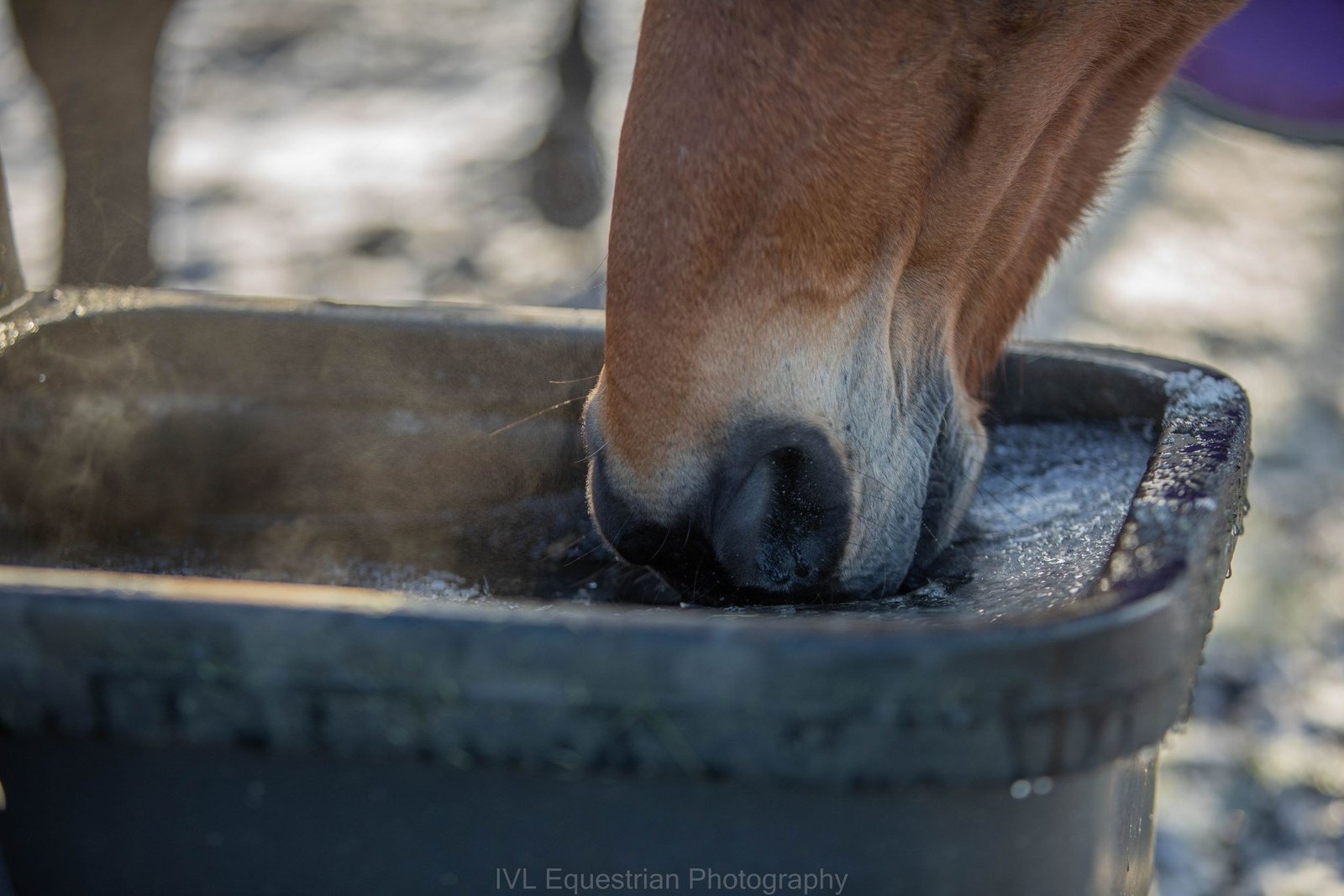
Most horses will not push their nose through a sheet of ice, and some will not even try. A horse may nose at the ice or lick it, but it cannot drink enough that way, and it will usually give up and walk away. Even a thin skin of ice is enough to stop a horse drinking, which is why breaking the ice and lifting the pieces out matters more than just cracking it. If the horse has to work to get to the water, it will drink less, and in winter less drinking is the start of impaction colic.
How much snow would a horse have to eat to replace its daily water?
Far more than any horse could manage. Snow is mostly air: roughly 10 inches of snow melts down to about 1 inch of water, so a horse needing 10 to 12 gallons of water a day would have to eat something like 100 gallons of snow.
On top of that, melting snow inside the body costs heat the horse needs to stay warm, so eating snow can leave the horse colder and still thirsty. Horses will eat snow when they are thirsty, but it is a sign that they have no liquid water, not a solution. Penn State Extension states plainly that fresh, clean, unfrozen water must always be available.
Is it safe to leave the ice pieces in the trough after breaking it?
It is better to lift them out. Ice left floating in the water melts and cools the water further, which makes it freeze again sooner, and large pieces can block a horse from getting its muzzle down to drink. Lift the sheets out with a bucket or a net, stack them beside the trough, and leave a clear patch of open water. It takes an extra minute, and it buys the horse an extra hour or two of drinking time.