Why Is My Horse Head Shy? Causes & Fixes
You reach out to stroke your horse’s face, and the head shoots up. You lift the bridle toward its ears, and it pulls back, spins away, or flings its head so high you cannot reach it. Grooming its face feels like a battle, and bridling takes three people and ten minutes. That is head shyness, and it is one of the most common handling problems horse owners face.
So why is my horse head shy? Most often it is fear or pain. A horse may have been hurt around the head in the past, handled roughly, or startled one too many times while being bridled. Or something hurts right now — sore teeth, an ear infection, a bridle that pinches, or poor eyesight. This guide shows you how to work out which one it is, and how to fix it step by step.
Direct answer: A horse is usually head shy because it expects something around its head to hurt or frighten it. The cause is most often rough or rushed handling in the past, or pain right now from teeth, ears, eyes, or badly fitting tack. Always rule out pain with your vet first, then rebuild trust slowly with short, calm sessions that reward the horse for standing still. There is no overnight fix, and how fast it improves depends on the cause.
Why Is My Horse Head Shy? The Main Causes
Head shyness is not one problem. It is a label for several different problems that all look the same from the outside. The fastest way to find your horse’s cause is the table below. Find the row that matches what you see, then read the section that follows for the full detail.
| What you see | Most likely cause | Check first |
|---|---|---|
| Flinches only when you touch the ears, fine everywhere else | Ear pain, ear mites, ticks, or an old ear injury | Vet check of the ears and poll |
| Pulls away when you lift the bridle or touch the mouth | Sore teeth, sharp enamel points, or a bit that pinches | Equine dentist or vet dental exam |
| Shies from objects on one side only, bumps into things | Poor eyesight or blindness in one eye | Vet eye exam |
| Fine with you, flinches with new people or fast hands | Fear from rushed or rough handling | Slow, calm retraining (see the plan below) |
| Suddenly head shy after years of being fine | New pain — teeth, ears, poll, or a new bridle | Vet check first; check tack fit |
| Head shy since you bought it, history unknown | Past handling, or a habit learned long ago | Vet check, then patient retraining |
| Flinches at clippers, sprays, or anything near the face | Bad experience with one of those things | Desensitise to that one thing, slowly |
Keep this table in mind as you read on. The rest of the article explains each row, so you can watch your horse and work out which one you are dealing with.
What Head Shyness Looks Like Day to Day
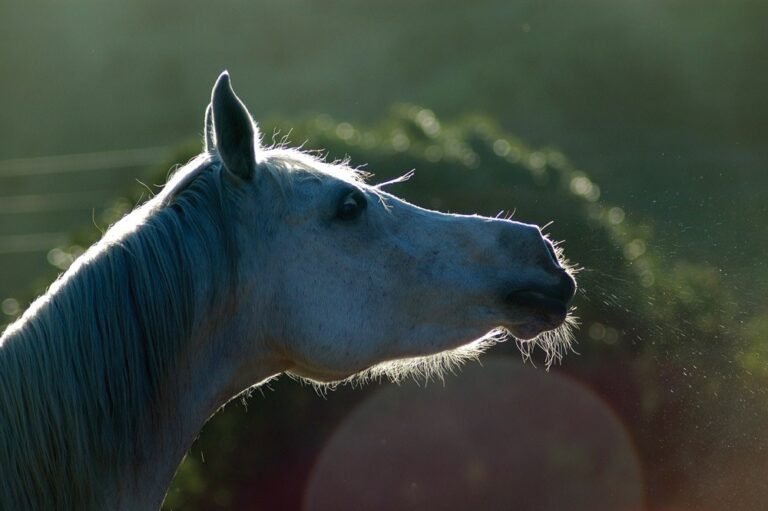
A head shy horse does not always panic. Sometimes the signs are small, and owners miss them for months. The horse turns its head away when you reach for its face. It raises its nose just out of reach when you try to put the halter on. It steps back when you lift a brush toward its forehead.
Some horses are more dramatic. They throw their heads up so hard they hit the stable roof or the person holding them. They pull back against the lead rope, spin away, or rear up when you try to bridle them. A few will strike out with a foreleg or snap at the air. These horses are dangerous to handle, and they need a professional, not a brave amateur.
Watch for the quiet signs too. A horse that holds its head high and stiff when you approach is tense. A horse that pins its ears, shows the whites of its eyes, or tightens its lips is telling you it is worried. A horse that lets you touch its neck but not its face is drawing a clear line. That line is where your work starts.
Head shyness often shows up most around the ears and the poll, which is the bony bump between the ears at the top of the head. The ears are sensitive, and many horses hate having them handled even when nothing is wrong. The poll is where the bridle sits, so a horse that has been hurt by a bridle will guard that spot. If your horse is fine with its nose and cheeks but not its ears, the problem is probably specific, and that is good news. A specific fear is easier to fix than a general one.
Pain First: Rule Out the Body Before You Train the Mind
Every head shy horse needs a vet check before any training starts. This is not optional. If something hurts, no amount of patient handling will fix the fear, because the horse is right to be afraid. The pain must be found and treated first, and then the fear usually fades on its own.
Teeth are the most common hidden cause. A horse’s teeth grow and wear all its life, and sharp enamel points can cut the cheeks and tongue. A cracked tooth, a wolf tooth, or a sore gum can make bridling agony. A horse that was fine last year and is suddenly head shy may simply need its teeth floated. Your vet or equine dentist can check the mouth in a few minutes, and a dental exam should be part of every head shyness investigation.
Ears are the second place to look. Ear infections, ear mites, ticks, and old injuries can all make a horse guard its ears. A horse with an ear problem will often shake its head, rub its ears on fences, or hold one ear oddly. The ear canal of a horse is shaped like an L, so it is hard to see into, and your vet may need special tools. Never poke anything into a horse’s ear yourself.
Eyes are easy to forget and important to check. A horse that is going blind in one eye, or has a painful eye ulcer, will flinch at things coming from that side. It may shy at objects it cannot see clearly, or bump into fences and doorways. If your horse only flinches on one side, ask your vet to check its eyes. A horse that cannot see your hand coming is not being naughty. It is startled.
Finally, check the tack. A bridle that is too tight across the poll, a browband that pulls the ears forward, a bit that is too wide or too narrow, or a noseband cranked tight can all cause pain. Try the bridle on without the bit first, and watch the horse’s reaction. If the horse is calm with the headpiece alone but flinches when the bit goes in, the bit or the mouth is the problem, not the horse’s temper.
Age matters here too. Young horses are still learning what hands mean, and older horses may have worn teeth or sore joints in the neck. If you are not sure how old your horse is, or how its age affects its teeth and handling, our horse age calculator can help you work out its age in human years and what stage of life it is in.
Fear and Bad Handling: How Horses Learn to Flinch
Once pain is ruled out, the cause is usually learned fear. Horses learn fast, and they learn from single events. One rough bridling, where the bit bangs against the teeth, can teach a horse to throw its head up every time it sees a bridle. A slap on the face, even once, can teach a horse that hands near its head mean trouble.
In most cases the trigger is a single frightening moment or a pattern of rushed handling. A child who grabs at the ears, a helper who pulls the bridle off too fast, a vet visit where the horse was twitched roughly, a clipper that nicks the skin — any of these can start it. The horse is not holding a grudge. It is simply protecting a part of its body that has hurt before.
Horses also learn from what works. If a horse throws its head up and the person gives up and walks away, the horse has learned that throwing its head up makes the scary thing go away. The next time, it will throw its head up sooner and harder. This is why head shyness gets worse when people avoid the problem. The horse is not being stubborn. It is doing what has worked before.
Some horses are simply more sensitive than others. A nervous, high-strung horse will become head shy more easily than a calm, confident one. Young horses that were not handled much as foals may never have learned that hands near the head are safe. A horse that lives alone, with little human contact, may be head shy simply because it is not used to being touched. These horses need more time, not more force.
The good news is that learned fear can be unlearned. Horses are forgiving animals, and a horse that learns hands are safe will usually keep that lesson for life. The fix is slow, boring, and repetitive — and that is exactly why it works.
The Step-by-Step Fix: A Calm Desensitisation Plan
Before you start, make the area safe. Work in a quiet stable or a small enclosed yard, not in a busy barn aisle. Wear a hard hat and gloves. Have a helper nearby if the horse is strong or panicky. Never tie the horse short for this work — a tied horse that panics can injure itself badly. Use a halter and lead rope, and hold the horse yourself or have your helper hold it.
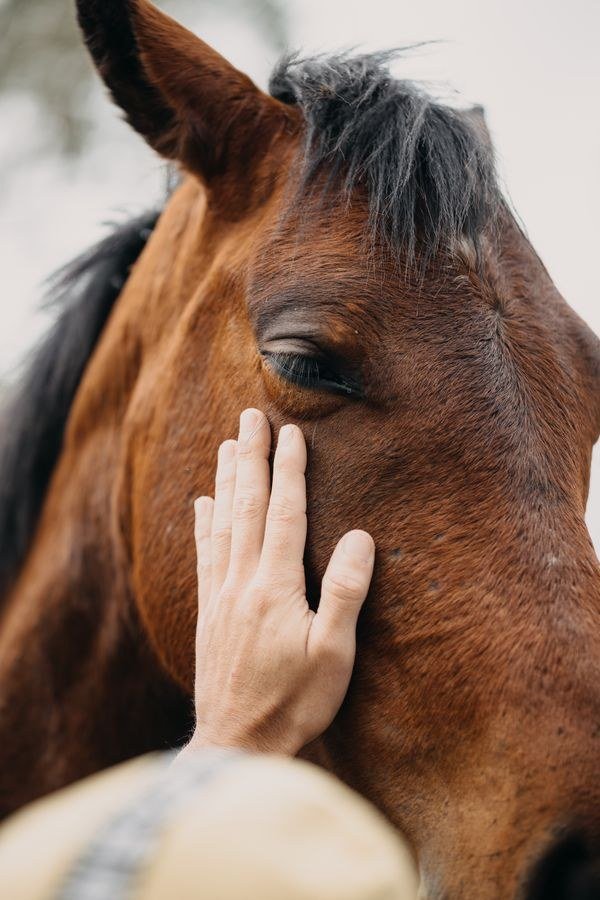
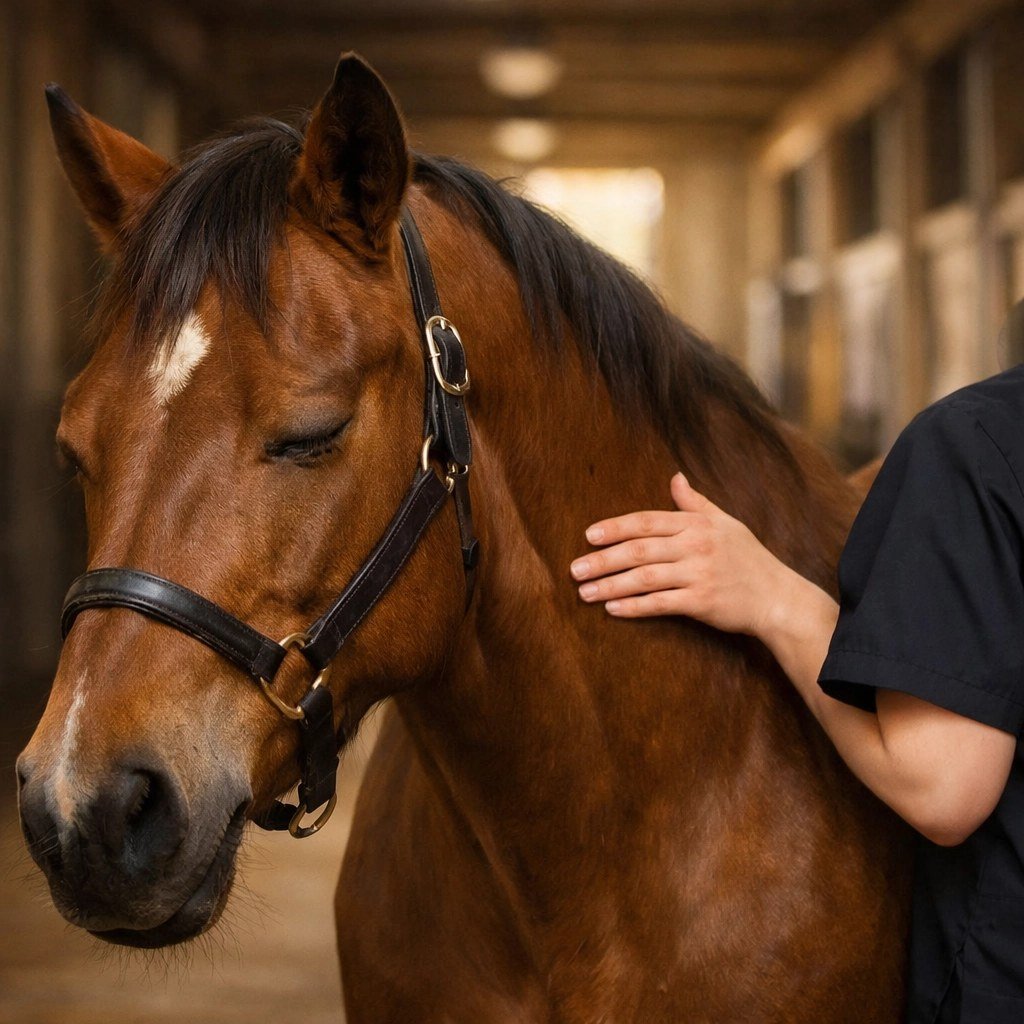
Start where the horse is comfortable. That may be the neck or the shoulder. Stroke the neck slowly and calmly, and reward the horse with a quiet word and a small treat when it stands still. Do not rush to the head. Spend the whole first session on the neck and shoulder if that is what the horse can handle. A good session ends with the horse relaxed, not with you reaching the ears.
Move closer in tiny steps. On the next session, move your hand a few inches toward the cheek. Stroke the cheek once, then go back to the neck. If the horse tenses or moves away, do not chase it. Just wait, let it settle, and try again more slowly. The rule is simple: you only move forward when the horse is calm, and you never punish it for moving away.
Use the approach and retreat method. Raise your hand toward the head, and before the horse reacts, lower it again. Repeat this many times. The horse learns that the hand comes up and goes away without anything bad happening. Each time, go a little closer or stay a little longer. This is slow work, but it is the fastest way to build trust, because it never scares the horse.
Work on the ears last. The ears are the hardest part for most horses, so leave them until the horse accepts your hand on its forehead, cheeks, and poll. Touch the base of the ear first, not the tip, and only for a second. A horse that accepts ear handling needs a treat and a rest right away, so it learns that ears mean good things.
Practice bridling separately, in small pieces. First, just hold the bridle near the horse’s head and let it sniff it. Next, slip the reins over the neck and hold the headpiece near the ears without putting the bit in. Then, offer the bit on an open palm with a little honey or molasses on it, and let the horse take it in its own time. Only when the horse takes the bit calmly should you do up the bridle. If the horse rushes or panics at any step, go back one step and stay there until it is calm.
Keep every session short — ten to fifteen minutes at most. A tired or bored horse learns nothing. End each session with something the horse can do well, even if that is just standing quietly while you stroke its neck. Do a little every day rather than a lot once a week. Short, calm, daily sessions beat long, tense ones every time.
If your horse is frightened of the bit itself, remember that teeth problems and bit pain are closely linked. A horse that grinds its teeth or tosses its head when ridden may be telling you its mouth hurts. Our guide to why a horse grinds its teeth explains the difference between a dental problem and a training problem, and when to call the dentist.
Mistakes That Make a Head Shy Horse Worse
The most common mistake is moving too fast. People want the problem fixed this week, so they push the horse to accept ear handling on day one. The horse panics, the person gets frustrated, and the horse learns that people near its head are unpredictable and frightening. Slow is fast with a head shy horse. If you think you are going slowly enough, go slower.
Never hit a horse on the head, even lightly, and never smack it for flinching. A horse that is hit for being afraid becomes more afraid, not less. It also learns that hands near its head can hurt, which is the opposite of what you want. If you feel angry, walk away and come back another day. Losing your temper with a head shy horse can undo weeks of good work in seconds.
Do not sneak around the horse’s head. Some owners try to bridle a head shy horse by moving very slowly and quietly, hoping the horse will not notice. The horse always notices, and sneaking makes it more anxious, because it cannot predict what will happen next. Move normally, speak calmly, and let the horse see your hands coming. Predictable is safe.
Do not tie the horse up and force the issue. A horse that is tied and frightened will pull back, and it can break the halter, injure its neck, or flip over. A horse that is held loosely by a helper can move away when it needs to, and that freedom is what lets it learn to stay. The goal is a horse that chooses to stand still, not a horse that cannot move.
Do not use a twitch as a shortcut. A twitch, which is a rope loop tightened on the horse’s upper lip, can hold a horse still for a short procedure, but it does not teach the horse anything. A horse that is twitched regularly for bridling will become more head shy, not less, because it learns that bridling means being restrained. Save the twitch for the vet, and only when it is truly needed.
Staying Safe While You Work With a Head Shy Horse
A head shy horse can hurt you without meaning to. A sudden throw of the head can break a nose, knock out a tooth, or knock you to the ground. Always stand to the side of the horse’s head, near its shoulder, never directly in front of it. That way, if the head flies up, it misses you.
Wear a hard hat every time you handle a head shy horse, even for grooming. Gloves protect your hands from rope burns if the horse pulls back. Sturdy boots protect your feet. These are not overreactions. They are the basic safety kit for a horse that is afraid of being touched around the head.
Know when to stop. If the horse is rearing, striking out, or spinning in a panic, you are out of your depth. Step back, let the horse calm down, and call a professional trainer or behaviourist. There is no shame in this. A dangerous horse needs an expert, and a good expert will teach you how to carry on the work yourself afterwards.
Children should not work with a head shy horse. The horse’s reactions are too fast and too strong for a child to handle safely. Keep children away from the head until the horse is reliably calm, and even then, supervise every interaction.
When to Call a Professional
Call your vet first if the head shyness came on suddenly, if the horse is in pain, or if it has any other signs of illness. A sudden change in a horse that was fine before is almost always pain, and pain needs a vet, not a trainer.
Call a professional trainer or equine behaviourist if the horse is dangerous — rearing, striking, or bolting when you touch its head — or if you have worked patiently for a month with no progress. A professional can read the horse’s body language in ways that take years to learn, and can spot a pain problem or a handling mistake you might have missed.
Choose the professional carefully. Ask how they work with fearful horses, and avoid anyone who promises a quick fix or uses force. A good trainer will show you the steps, explain what they are doing, and leave you able to carry on the work yourself. If a trainer will not let you watch, or will not explain their methods, find another one.
Finally, remember that a horse lying down more than usual, going off its feed, or showing other signs of pain may be telling you about a bigger problem. Our guide to why a horse lies down more than usual explains the warning signs that mean a vet visit cannot wait.
Frequently Asked Questions
How long does it take to fix a head shy horse?
It depends on the cause and on how deep the fear runs. A horse that is head shy because of a single bad experience, with no pain involved, often improves a lot in one to two weeks of short daily sessions. A horse that has been afraid for years, or one that was badly handled, can take two to three months of patient work, and some horses always need a little extra care around the ears. The honest answer is that you should judge progress week by week, not by a date on the calendar. If the horse is calmer this week than last week, the plan is working.
Does head shyness mean my horse was abused?
Not necessarily, and in most cases the answer is no. Most head shy horses were not abused. They were handled clumsily, rushed while being bridled, or hurt once by accident — a bit banging on the teeth, a clipper nicking the skin, a halter pulled off too fast. Abuse is possible, and a horse with a truly unknown history could have been mistreated, but it is far less common than simple bad luck and poor handling. What matters is not what happened in the past, which you may never know, but whether pain is ruled out now and whether the horse is given calm, patient retraining.
Should I buy a head shy horse?
It depends on the cause, the price, and your skill level. A horse that is head shy because of a tooth problem or a bridle that does not fit may be a bargain — fix the cause and the problem often goes away. A horse that is dangerously head shy, rearing or striking when handled, is a poor buy for most riders, and it could cost you more in training fees and vet bills than you save on the price. Before you buy, have your own vet check the horse’s teeth, ears and eyes, and ask to see it haltered and bridled. If the seller will not let you do that, walk away.
Why is my horse head shy with strangers but fine with me?
Because trust is personal. Your horse has learned that your hands are safe, but it has no reason to trust a stranger’s hands. New people move differently, smell different, and often reach for the horse’s head too fast because they do not know its history. The fix is the same as for any head shyness, but the stranger has to start from the beginning: stroke the neck first, move slowly, and let the horse come to them. Tell anyone who handles your horse that it is head shy, and show them the slow approach that works.
Head shyness is a problem with a cause, and a cause can be found. Rule out pain first, then rebuild trust in small, calm steps, and never punish a frightened horse for being frightened. The horse that flinches today can be the horse that lowers its head into the bridle next month. It just needs you to be slower, quieter, and more patient than the thing that scared it.
For more on the mouth problems that often sit behind head shyness, see our guide to why a horse grinds its teeth, and if you need to check your horse’s weight for a vet visit or a sedative dose, our horse weight calculator gives a quick estimate from a tape measurement. The Merck Veterinary Manual’s guide to behavioral problems of horses is also a useful authority reference on how fear and handling problems develop.